






The Toronto Maple Leafs have been navigating a precarious situation as their offensive catalyst William Nylander deals with a lower-body injury that ended his remarkable 267-game consecutive regular-season appearance streak. The Swedish forward, who left Friday’s contest against the Buffalo Sabres after a hit from Jason Zucker, has become a game-time decision for multiple contests as the team carefully manages his return to full health. His absence has highlighted just how essential he’s become to Toronto’s offensive structure, especially as the team continues to find its rhythm under head coach Craig Berube’s system.
The injury comes at a particularly crucial time, with Nylander leading the team in scoring with 14 points and 11 assists through the season’s opening games. His chemistry with center Auston Matthews was just beginning to flourish after being reunited on the top line, making his absence even more conspicuous. As the Maple Leafs face opponents looking to capitalize on any weaknesses, the status of their most consistent forward remains a pressing concern that extends beyond simple box score statistics.
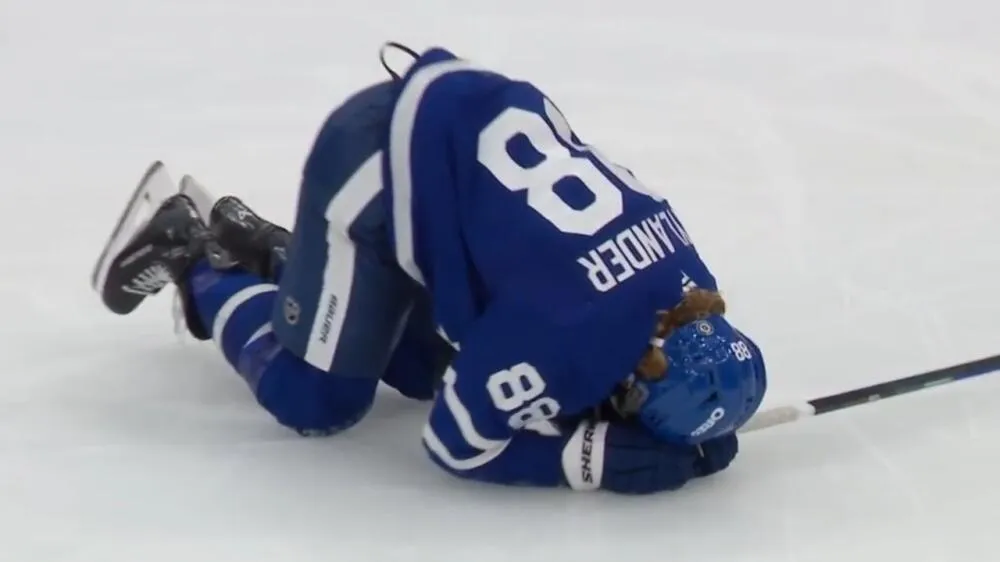
The Toronto Maple Leafs Nylander injury update 2025: timeline and severity
When Nylander went down in Buffalo during the third period of Friday’s game, initial concerns centered on whether this would be a short-term issue or something more problematic. The 29-year-old forward participated in Saturday’s morning warmup and took line rushes in his usual spot, creating optimism that he would push through and play. However, when the official lineup card emerged, Nylander’s name was conspicuously absent, forcing him to miss his first regular-season game since April 4, 2022, due to a non-COVID-related illness.
Head coach Craig Berube has been cautiously optimistic about Nylander’s recovery timeline. Following Monday’s practice session, Berube expressed encouragement after watching Nylander complete the full practice. “I’m glad he stayed out there the whole practice and participated, which is good,” Berube stated. “That’s good news, so I think obviously he’s getting better. We’ll see where he’s at tomorrow morning.”
The lower-body injury has not been officially classified as long-term, which provides some relief to a team already managing multiple injury concerns. During Monday’s practice, Nylander rotated on the first line with Bobby McMann and Nick Robertson taking the bulk of repetitions alongside Matthews. Significantly, Nylander did participate in the club’s first power-play unit, suggesting his mobility and conditioning are improving.
The team has maintained a “game-time decision” designation for Nylander across multiple contests, indicating their medical staff is taking a cautious approach rather than rushing their top scorer back prematurely. This conservative management reflects lessons learned from past situations where players returned too quickly and suffered setbacks. The previous concern over Nylander’s health demonstrated how quickly the team’s offensive dynamics can shift when key contributors are sidelined.
Impact of Nylander’s absence on Toronto Maple Leafs offense
Nylander’s void in the lineup has created ripple effects throughout Toronto’s offensive structure. The winger entered the injury sitting in a tie for fourth place in NHL points, demonstrating his elite production level. His 11 assists through just eight games showcased his playmaking ability and vision, attributes that can’t simply be replaced by shuffling depth forwards into elevated roles.
The partnership with Matthews was showing promising signs before the injury interrupted their chemistry. Matthews, who has recorded five goals and three assists through nine games with a staggering 35 shots on goal—11 more than the next closest Maple Leaf in John Tavares—was beginning to find his offensive rhythm. The two stars playing together represented Berube’s strategic adjustment to jumpstart both players’ production, and early returns suggested the experiment was working.
Without Nylander, the Maple Leafs have had to rely on their depth forwards to step up. Nick Robertson seized his opportunity in Saturday’s contest, scoring in a 4-3 overtime victory against Buffalo. Bobby McMann also received increased ice time alongside Matthews, though neither possesses Nylander’s unique combination of speed, skill, and hockey IQ. Veteran Calle Jarnkrok drew back into the lineup to provide stability, but the team’s offensive flow noticeably changed without their leading point producer.
The power play has also felt Nylander’s absence. His positioning on the first unit provides a shooting threat from the flank while his patience with the puck creates time and space for his linemates. Finding someone to replicate those qualities on the man advantage has proven challenging, even as other skilled players attempt to fill the void. The game against Buffalo where Nylander was injured exposed some of these vulnerabilities as Toronto struggled to maintain offensive pressure in key moments.
The statistical impact extends beyond simple points. Nylander’s possession metrics typically rank among the team’s best, and his ability to control play in the offensive zone creates extended pressure that wears down opponents. His absence has forced Toronto to rely more heavily on transition offense rather than sustained zone time, a subtle but significant shift in their approach.
Craig Berube’s strategy for managing the Toronto Maple Leafs Nylander injury update 2025
Berube has approached Nylander’s injury with a philosophy that prioritizes long-term health over short-term gains. Rather than pressure his star forward to play through discomfort, the first-year Maple Leafs coach has emphasized that Nylander needs to feel completely ready before returning. “He needs to feel right,” Berube explained, acknowledging that playing through a lower-body injury could compromise Nylander’s effectiveness or risk aggravating the problem.
This patient approach represents a potential cultural shift for the Maple Leafs. In previous seasons, there was sometimes pressure—whether external or internal—for star players to battle through injuries, occasionally to the team’s detriment. Berube’s willingness to list Nylander as a game-time decision multiple times suggests he’s comfortable waiting for complete health rather than rushing back a compromised player.
The coaching staff has used Nylander’s absence as an opportunity to evaluate depth players in expanded roles. Robertson’s promotion to the top line provided valuable information about his ability to handle increased responsibility. McMann received extended auditions alongside elite talent, giving coaches data on various line combinations that might prove useful later in the season when injuries inevitably pile up.
Berube has also carefully managed practice loads during Nylander’s recovery. The decision to have him participate fully in Monday’s session while rotating through various line combinations allowed medical staff to assess his mobility and comfort level in game-like situations. His inclusion on the power-play unit during practice served as both a conditioning tool and a test of his readiness to perform at full speed.
The “game-time decision” designation has become Berube’s preferred method for handling uncertainty around Nylander’s status. This approach keeps opponents guessing while providing maximum flexibility for the team’s medical staff to make final determinations based on how the player feels on game day. It also protects Nylander from external pressure by making the decision a medical one rather than a test of toughness.
Depth tested: How Toronto is coping without their leading scorer
The silver lining of Nylander’s absence has been the opportunity to stress-test Toronto’s organizational depth earlier than expected. Robertson’s performance against Buffalo provided exactly the kind of response Berube hoped to see—a younger player seizing an opportunity and delivering results. His goal in the overtime victory demonstrated confidence and finishing ability that the team needs from its secondary scorers.
McMann has embraced his expanded ice time with Matthews, though the adjustment to playing alongside one of the NHL’s premier centers requires time and adaptation. His physical style and net-front presence offer different dimensions than Nylander’s finesse game, forcing opponents to defend different threats. While the production hasn’t matched Nylander’s pace, McMann has provided solid two-way play and maintained defensive responsibility.
The inclusion of Jarnkrok back into the lineup added a veteran stabilizing presence. Though Jarnkrok himself has dealt with injury concerns that make him unlikely to play in upcoming games, his brief insertion provided depth insurance when the team’s needed bodies. This rotating cast of supporting forwards has given Berube multiple looks at different personnel combinations, information that will prove valuable during the long season ahead.
Toronto’s victory over Buffalo without Nylander also demonstrated improved resilience under Berube’s guidance. According to The Hockey Writers, the win showed that Toronto’s supporting cast could rise when one of its stars wasn’t available—something the team hasn’t always managed in recent seasons. That mental toughness and ability to grind out results despite adversity reflects the culture Berube is trying to establish.
The defensive structure has remained relatively intact without Nylander, suggesting the team’s commitment to Berube’s system extends beyond individual personnel. While the offensive creativity may be diminished, the Maple Leafs have maintained their structural integrity and competed hard in difficult circumstances.
Historical context: Nylander’s remarkable durability streak
Before this injury, Nylander had quietly compiled one of the most impressive availability streaks in franchise history. His 267 consecutive regular-season games played represented not just good health, but a professional commitment to being ready every night. That consistency had become an underappreciated aspect of his value, allowing coaches to build systems and line combinations knowing Nylander would be available.
The streak began on April 5, 2022, following a previous absence due to non-COVID illness. Since that date, Nylander had not missed a single regular-season contest, playing through the inevitable bumps, bruises, and minor ailments that accumulate over an NHL campaign. That iron-man mentality had made him one of the league’s most reliable forwards during that span.
His durability stands in contrast to earlier perceptions of Nylander as a perimeter player who avoided contact. Instead, he’s evolved into a complete forward who engages physically when necessary while maintaining his elite skill level. The hit from Zucker that caused this injury actually occurred because Nylander was engaged along the boards in a competitive situation—far from the soft reputation some critics once assigned him.
The end of the streak, while unfortunate, shouldn’t overshadow the remarkable consistency Nylander had displayed. Playing 267 straight games in the modern NHL, with its increased speed and physicality, represents a significant achievement. It’s a testament to his conditioning, injury prevention work, and ability to manage his body through the rigors of an 82-game schedule.
Most recently, Nylander had missed the first three games of the 2024 Stanley Cup first-round playoff series against the Boston Bruins due to eye migraines. That absence highlighted his importance during the postseason, as Toronto struggled without his offensive creativity before he returned to help salvage the series. The current situation echoes those concerns about how much the team relies on his two-way contributions.
Looking ahead: What the Toronto Maple Leafs Nylander injury update 2025 means for the season
As Toronto navigates the early stages of the 2025 season, Nylander’s health status will remain a critical factor in their success. His expected return should provide an immediate boost to the team’s offensive capabilities, particularly if he can resume his chemistry with Matthews on the top line. The pairing’s potential was just beginning to emerge before the injury, and resuming that development will be a priority once he’s cleared for action.
The careful management of this injury could pay dividends later in the season. By refusing to rush Nylander back prematurely, the Maple Leafs are investing in his long-term availability. A few games missed now to ensure complete healing is preferable to recurring problems that could linger or worsen throughout the campaign. This conservative approach reflects organizational maturity and a commitment to sustainable success.
The lessons learned during Nylander’s absence will shape how Berube deploys his roster moving forward. Robertson’s emergence as a legitimate top-six option provides versatility and depth that championship teams require. McMann’s ability to contribute in various roles adds another layer of lineup flexibility. These discoveries might not have occurred as quickly if Nylander had remained healthy and locked into his usual spot.
The Hockey News reports that Berube remains hopeful about Nylander’s return against Calgary, which would represent a relatively short absence for a lower-body injury. If he does return on schedule, it will demonstrate the effectiveness of the team’s cautious approach and their medical staff’s ability to properly manage his recovery.
Beyond the immediate impact on wins and losses, this situation has reinforced Nylander’s importance to the organization. His absence has made his contributions more visible—both the obvious offensive production and the subtle ways he controls pace and creates space. When healthy, he’s not just a complementary scorer but a driving force who elevates the performance of his linemates and the team’s overall structure. The urgency to get him back in the lineup is matched only by the determination to ensure he returns at full strength, ready to help Toronto compete for a championship.

Par Mike Jonderson
Mike Jonderson is a passionate hockey analyst and expert in advanced NHL statistics. A former college player and mathematics graduate, he combines his understanding of the game with technical expertise to develop innovative predictive models and contribute to the evolution of modern hockey analytics.