











The young forward making waves on the Montreal Canadiens’ third line this season carries more than just a hockey stick onto the ice. Oliver Kapanen brings with him a Finnish hockey lineage that reads like a Nordic hall of fame—his father Kimmo, uncle Sami, and cousin Kasperi all carved successful professional careers. Yet despite this impressive pedigree, the 22-year-old center’s path to NHL relevance has been anything but straightforward. After bouncing between Montreal, the AHL’s Laval Rocket, and European leagues last season, Kapanen has finally found his footing where it matters most: anchoring the Canadiens’ third line with a maturity and two-way acumen that belies his age.
Standing 6-foot-2 and 194 pounds, Kapanen possesses the ideal frame for the modern NHL center position. But it’s what he does with that frame—his positioning, his defensive reads, his calm decision-making in critical moments—that has transformed him from a promising prospect into a genuine contributor. Through the opening stretch of the 2025-26 season, he’s accumulated four goals and seven points in just seven games, production that has exceeded even the most optimistic projections from Canadiens management. More importantly, he’s doing it while maintaining defensive responsibility, racking up hits and blocked shots that earn him trust on the penalty kill and in late-game situations.
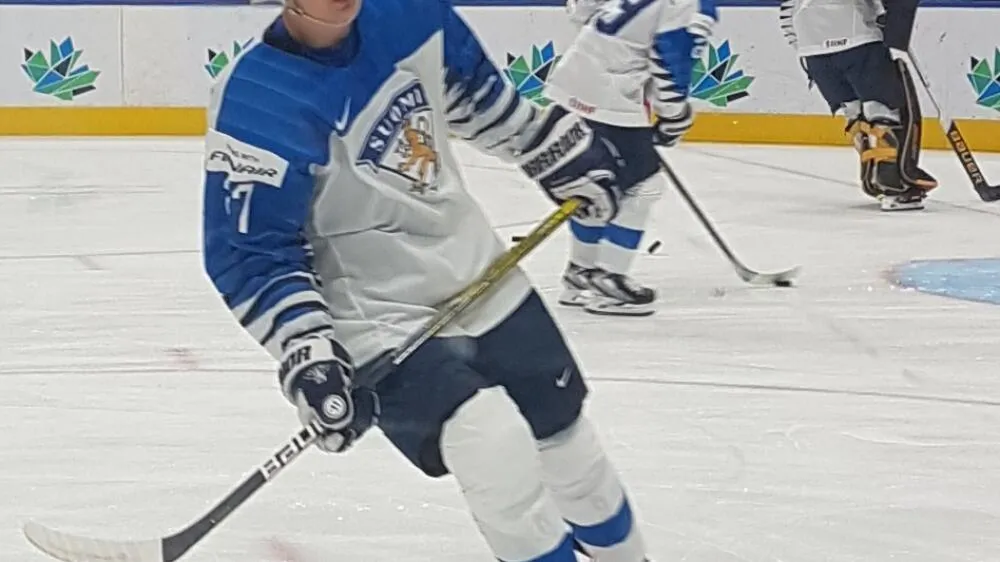
Why Oliver Kapanen is thriving as the Montreal Canadiens’ third-line center
The transformation didn’t happen overnight. Kapanen’s journey from second-round pick in 2021 to reliable NHL center required detours through Finland’s Liiga with KalPa Kuopio and Sweden’s SHL with Timrå IK. Each stop added layers to his game—Liiga taught him the tactical discipline that defines Finnish hockey, while the SHL experience, where he nearly hit point-per-game production alongside Jonathan Dahlén and Filip Hållander, demonstrated he could produce against professional competition on the larger Olympic-sized ice surface.
When Harvey-Pinard went down with injury last season, Kapanen got his first real taste of NHL action, appearing in 12 games but managing just two assists. The production wasn’t there, but the learning experience proved invaluable. He returned to Timrå and dominated, finishing near point-per-game territory in one of Europe’s most defensively structured leagues. That success carried over when he rejoined the Canadiens and Laval system later in the season, where observers noted he looked “fully involved in the action” and “more in tune with the game.”
This season, that evolution has crystallized into consistent performance. Against the Nashville Predators, Kapanen tied the game late in the third period with the kind of composed finish that suggests a player comfortable in pressure situations. Against the Buffalo Sabres, he opened scoring in a 4-2 victory. Even in a 6-5 loss to the Edmonton Oilers, he contributed two assists, showcasing the playmaking dimension of his game that sometimes gets overlooked given his defensive responsibilities.
What makes Kapanen particularly valuable as a third-line center is his versatility. He’s not just a defensive specialist or an offensive catalyst—he’s both, depending on what the situation demands. His faceoff prowess, honed during his SHL stint where he posted a 53.3% win rate over 708 draws, gives Montreal possession advantages in crucial moments. He won 56% of offensive zone faceoffs and 52% in his own end, numbers that translate to tangible ice-time advantages over the course of a game.
The Finnish hockey IQ that sets Oliver Kapanen apart for the Montreal Canadiens’ third-line center role
Hockey IQ remains one of those intangible qualities that scouts love to reference but struggle to quantify. In Kapanen’s case, it manifests in his ability to read developing plays before they unfold. In the defensive zone, he positions himself to cut off passing lanes rather than simply chasing the puck carrier. Through the neutral zone, he creates space for himself and his linemates, using his skating ability to gain separation and provide passing options.
According to The Hockey Writers, Kapanen’s style blends “Finnish structure and Swedish creativity,” a combination that makes him unpredictable for opponents trying to anticipate his next move. He calculates risk carefully but isn’t afraid to make assertive plays when opportunities present themselves. This measured aggression shows up in front of the net, where his hand-eye coordination allows him to tip pucks and pounce on rebounds.
One fascinating tactical adjustment observers have noted: Kapanen occasionally switches sides on faceoffs to throw opponents off their preparation. When asked about this unconventional approach, he explained that after an opponent did it to him successfully, he incorporated it into his own repertoire. It’s the kind of adaptive thinking that separates players who simply execute systems from those who understand the chess match within the game.
The third-line center role in Montreal’s current structure demands more than just filling minutes. With the Canadiens still navigating their rebuild and establishing a new identity under head coach Martin St. Louis, players in that middle-six range need to provide stability while also creating offensive sparks. Kapanen fits that profile perfectly—he won’t be mistaken for a first-line superstar, but he brings the discipline, intelligence, and versatility that successful teams require from their depth pieces.
His penalty-killing contributions have been particularly noteworthy. In today’s NHL, where special teams often determine outcomes in tight games, having a center who can win defensive-zone faceoffs and make smart reads in shorthanded situations is invaluable. Kapanen’s willingness to block shots and engage physically despite not being known as an enforcer-type demonstrates the compete level that coaches value.
How Oliver Kapanen’s European experience prepared him for the Montreal Canadiens’ third-line center position
The circuitous route through European professional leagues that once seemed like a setback now appears to have been crucial development time. While some prospects rush into the NHL and struggle to adapt, Kapanen took the scenic route, building a complete game against men rather than juniors. His SHL experience against playoff-caliber opposition—particularly his strong performance in Timrå’s series against Frölunda—proved he could elevate his game when stakes were highest.
That maturity shows in how he processes the game at NHL speed. The jump from European ice to North American rinks isn’t just about dimensions—it’s about pace, physicality, and the compressed decision-making window players have with the puck. Kapanen’s adjustment period last season, when he looked tentative at times, gave way this year to a player who anticipates plays rather than reacting to them.
His ranking at #13 in the Canadiens’ Top 25 Under 25 list reflected growing organizational confidence in his trajectory. After debuting at 16th in 2021 and even falling outside the Top 25 in 2023, his steady climb mirrors his actual development curve—not a meteoric rise, but consistent growth that suggests sustainable success rather than a flash-in-the-pan performance.
The offensive numbers through seven games—four goals and seven points—represent unsustainable production for a third-line center over a full season. Regression is inevitable. But even when the goals dry up, Kapanen’s value proposition remains intact because it’s built on foundation skills: faceoffs, defensive positioning, penalty killing, and situational awareness. The scoring is a bonus; the complete 200-foot game is the baseline.
What Oliver Kapanen’s emergence means for the Montreal Canadiens’ third-line center depth chart
Montreal’s center depth has been a question mark for years during this rebuild. While Nick Suzuki anchors the top line and younger prospects like Ivan Demidov capture headlines, the unglamorous middle-six roles needed reliable occupants. Kapanen’s emergence addresses that need without requiring a trade or expensive free-agent acquisition. He’s cost-controlled, still developing, and demonstrating that his ceiling might be higher than initially projected.
The Kapanen family legacy adds a compelling narrative layer to his success. His father Kimmo had a respectable career in Finnish leagues and European competitions. Uncle Sami Kapanen played over 800 NHL games, winning a Stanley Cup with the Carolina Hurricanes in 2006. Cousin Kasperi Kapanen, a first-round pick, has carved out a solid NHL career as a skilled winger. Oliver represents the latest generation of Kapanens to make their mark, carrying forward a tradition of smart, two-way hockey.
For a franchise steeped in history and tradition like the Montreal Canadiens, these family connections resonate with fans who remember previous dynasties built on both star power and reliable depth. Oliver Kapanen won’t be confused with Jean Béliveau or Guy Lafleur, but his steady, professional approach recalls the unsung contributors who filled crucial roles on championship teams—players whose names don’t dominate highlight reels but whose presence made winning possible.
The question facing the Canadiens now is whether Kapanen has secured this third-line center role permanently or whether he’ll face competition as the season progresses and the lineup evolves. His waiver-exempt status means management could send him to Laval without risk of losing him, but his early-season performance makes that scenario increasingly unlikely unless roster crunches force difficult decisions.
Martin St. Louis, known for his player development acumen and willingness to trust young players, appears to have found a reliable piece in Kapanen. The ice time allocation reflects growing confidence—Kapanen is getting meaningful shifts in important situations, not just garbage-time minutes when games are already decided. That trust typically takes months or even seasons to earn; Kapanen built it in a matter of weeks through consistent, responsible play.
As the season unfolds, Kapanen’s role will likely evolve based on team needs and how other players develop. He might see power-play time if injuries create opportunities, or he might become a shutdown center tasked with neutralizing opponents’ top lines in certain matchups. The versatility to fill multiple roles without looking out of place is what separates NHL regulars from AHL tweeners, and Kapanen has shown he belongs in the former category.
The journey from Swedish-born Finnish prospect to Montreal Canadiens third-line center has been winding and occasionally uncertain. But for Oliver Kapanen, those detours through European professional leagues and brief AHL stints weren’t setbacks—they were the necessary steps in building a complete game that translates to NHL success. With four goals and seven points through seven games, a strong two-way foundation, and a hockey IQ that coaches trust in critical situations, Kapanen has transformed from prospect to legitimate NHL contributor. For a Canadiens team still finding its identity in the midst of a rebuild, that kind of reliable, intelligent center depth is exactly what the development plan ordered.

Par Mike Jonderson
Mike Jonderson is a passionate hockey analyst and expert in advanced NHL statistics. A former college player and mathematics graduate, he combines his understanding of the game with technical expertise to develop innovative predictive models and contribute to the evolution of modern hockey analytics.