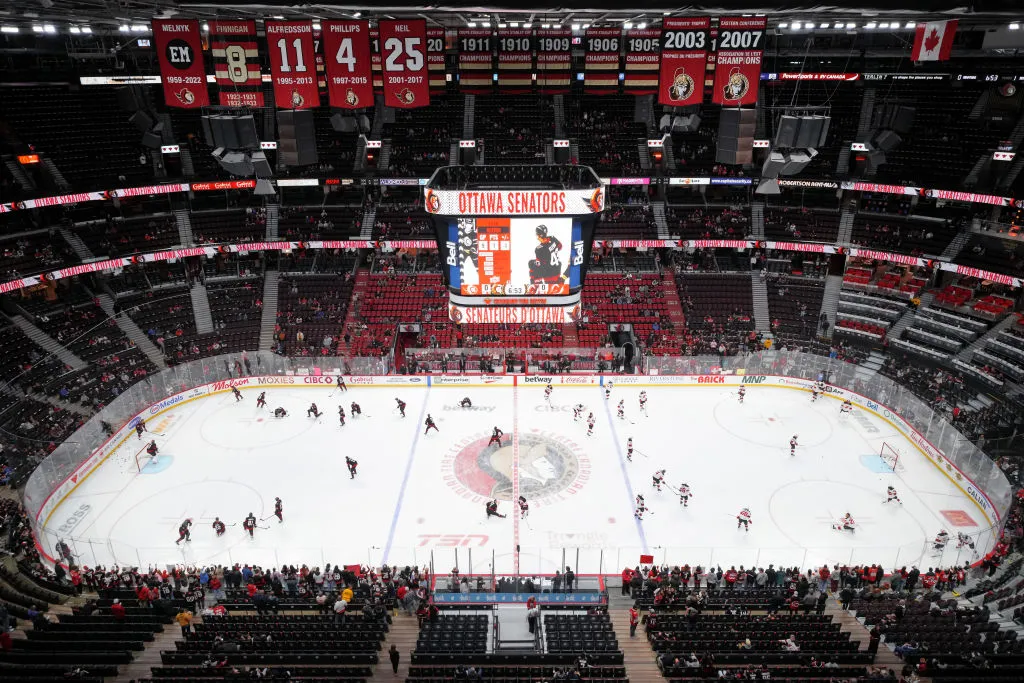
The PWHL’s Ottawa Charge is in constructive discussions with the Ottawa Senators to potentially secure a permanent home at the Canadian Tire Centre. This comes amid uncertainty over the team’s current venue at TD Place, where planned renovations will slash seating capacity.[1][2]
PWHL senior VP of business operations Amy Scheer highlighted the growing relationship during a recent call. The Charge have already booked one game there against Montreal on April 3, with tickets selling briskly.[3]
Challenges at TD Place arena
The Ottawa Charge have called TD Place home since the PWHL’s inception, sharing it with the OHL’s Ottawa 67’s. The centrally located facility holds about 8,500 for hockey, drawing solid crowds from the start.
Attendance has been strong, averaging around 7,000 fans in the first two seasons and climbing to 7,225 over the first nine home games this year. This success underscores the team’s popularity in Canada’s capital.
However, city-approved renovations will reduce seating to roughly 5,700, plus 900 standing spots. PWHL officials deem this financially unviable given the demand.[4][5]
Scheer emphasized in November that the league won’t accept a step backward. Earlier concerns led to relocation talks, but recent developments point toward stability.[6]
The aging arena’s limitations have forced the Charge to explore alternatives. Fans have voiced frustration online, pushing for better facilities to match the team’s growth.
Budding partnership with the Senators
Talks with the Senators focus on making the Canadian Tire Centre a long-term hub for Charge games. Scheer praised Senators president Cyril Leeder as “a gem to work with” and noted meetings with owner Michael Andlauer at the Milan Cortina Olympics.[1]
The April 3 matchup against Montreal marks the first collaboration, shifted from TD Place and already a hot ticket. “The game is selling really well, so hopefully that’s the first of a really positive road for us to skate down,” Scheer said.
Located 40 minutes from downtown, the arena offers modern amenities despite the drive. The Senators are planning a new downtown venue, which could influence future arrangements.
This partnership builds on shared momentum in women’s hockey. It aligns with the PWHL’s push for sustainable venues amid expansion.
The Senators have not commented publicly yet, but the collaboration signals mutual benefits.
Charge’s performance and league growth
As one of the PWHL’s original six teams, the Charge have built a loyal base. Their attendance rivals top markets, proving viability in Ottawa.
The league expanded to eight teams this season, with 2-4 more planned next year. Strong fan support like Ottawa’s is crucial for new franchises.
Recent highlights include competitive play, with players representing Team USA in the 2025 Rivalry Series. Off-ice, a blockbuster trade with Vancouver added depth.
The full 2025-26 schedule shows multiple homes at TD Place, but the CTC game hints at transition.[2]
Scheer remains optimistic: “We’ve got a long ways to go to figure out where we are for the future of Ottawa, but the relationship with the Senators has blossomed.”
Looking ahead: Stability or relocation?
Options include full-time at CTC, hybrid scheduling, or waiting for the Senators’ new arena. Relocation remains a last resort, though floated last fall.
City plans for Lansdowne 2.0 prioritized the 67’s, sidelining PWHL needs. A 5,850-seat arena was called “disappointing” by officials.
Fan campaigns and media coverage, like this analysis, urge investment in women’s hockey infrastructure.[7]
The PWHL prioritizes growth without compromise. Success at CTC could lock in Ottawa’s status.
Positive early signs suggest the Charge will stay put. A thriving partnership with the Senators promises brighter days for fans and players alike, ensuring top-tier hockey remains in the capital. What it means for the league: Venue security bolsters expansion ambitions.
Frequently Asked Questions

Par Mike Jonderson
Mike Jonderson is a passionate hockey analyst and expert in advanced NHL statistics. A former college player and mathematics graduate, he combines his understanding of the game with technical expertise to develop innovative predictive models and contribute to the evolution of modern hockey analytics.