






Now I have enough information to write a comprehensive blog post about the Ottawa Senators November survival guide. Let me create the article with the internal and external links integrated naturally.
Ottawa Senators November survival guide: navigating the most challenging month
November has become a month of infamy for the Ottawa Senators. Over the past 48 games played during this dreaded month, the team has managed just 15 victories, a statistic that haunts the franchise and its faithful supporters. The pattern is undeniable: a 1-10-1 record in 2021-22, a 5-8-1 mark in November 2024, and a combined 15-31-2 November record across four seasons entering 2024-25. For a team desperately trying to establish itself as a playoff contender, the calendar flipping to November has historically meant disaster. This year, with the Senators sitting at 6-5-2 and in third place in the Atlantic Division, the stakes couldn’t be higher to finally break this curse.
The challenge ahead is daunting. With 12 games remaining in November 2025, including a grueling West Coast road trip and matchups against some of the league’s top teams, the Senators need every advantage they can muster. Between Brady Tkachuk’s six-to-eight-week absence and ongoing goaltending inconsistencies, this Ottawa Senators November survival guide offers the roadmap for how the team can defy history and emerge from the month with their playoff hopes intact.
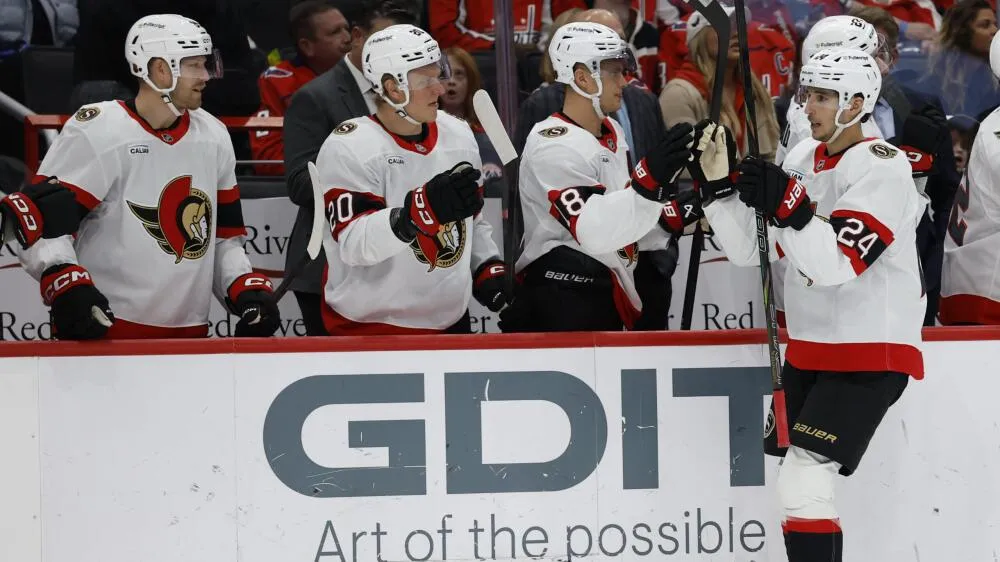
Key to the Ottawa Senators November survival guide: offensive firepower must continue
The brightest spot for Ottawa entering this crucial stretch has been their offensive production, particularly from their top-line talent. Drake Batherson has been absolutely sensational, recording 15 points through the first 10 games and earning NHL Second Star of the Week honors. His chemistry with Tim Stützle has been electric, creating consistent scoring chances and providing the offensive punch the team desperately needs. Dylan Cozens and Shane Pinto have also stepped up admirably, with Pinto leading the NHL in goals early in the season before cooling slightly.
Even without captain Brady Tkachuk in the lineup, the Senators’ forward group has maintained impressive production. This depth scoring is critical for any team navigating a difficult stretch, but it becomes absolutely essential during November’s gauntlet. The team’s ability to generate offense from multiple lines takes pressure off any single player and makes Ottawa much harder to defend. When opponents can’t simply focus on shutting down one line, the entire offensive structure becomes more sustainable over the long haul.
The Senators have shown they can score in bunches, but consistency will be the true test. During their historically poor November stretches, scoring has often dried up at the worst possible moments. Drake Batherson and Tim Stützle lead Ottawa Senators offensive surge, providing a foundation that gives reason for optimism. This year’s forward corps appears different, more mature and capable of shouldering the load when games get tight.
Special teams will also play a crucial role in maintaining offensive output. Power-play opportunities need to be converted at a high rate, especially in close games against quality opponents. The Senators have talented playmakers who can execute on the man advantage, but discipline and execution will determine whether those chances translate into crucial goals during November’s challenging schedule.
Defensive stability: the unsung hero of the Ottawa Senators November survival guide
While offense draws headlines, the Senators’ defensive improvement has been equally impressive this season. The team’s expected goals against per 60 minutes (xGA/60) sits at 2.18, ranking fourth-best in the entire league. This represents a significant departure from previous campaigns when defensive lapses often snowballed into extended losing streaks. Jake Sanderson and Thomas Chabot have formed a reliable top pairing, eating significant minutes and providing stability in all three zones.
The defensive corps has also contributed offensively without sacrificing their primary responsibilities. This two-way play creates additional scoring depth and helps maintain puck possession, both crucial elements during the compressed November schedule. When defensemen can join the rush effectively and contribute to offensive zone time, it takes pressure off the forwards and creates a more balanced attack that’s difficult for opponents to counter.
Team defense extends beyond just the blue line. The Senators’ forward group has bought into a more complete defensive system, backchecking with purpose and supporting their defensemen in all situations. This five-man unit approach has dramatically reduced the high-danger chances against that plagued Ottawa in previous seasons. Maintaining this defensive structure throughout November’s grueling schedule will be essential, particularly during the challenging West Coast swing.
However, one area demanding immediate attention is the penalty kill. The Senators have surrendered 15 power-play goals in just 13 games, including three in a recent loss. This hemorrhaging on special teams cannot continue if Ottawa hopes to survive November intact. Opposing teams are capitalizing at an alarming rate, and fixing this issue has become mission-critical. The coaching staff must find solutions, whether through personnel changes, scheme adjustments, or improved discipline to avoid taking unnecessary penalties.
Goaltending: the make-or-break factor in the Ottawa Senators November survival guide
Linus Ullmark was supposed to be the answer between the pipes. Acquired to provide the elite goaltending Ottawa has lacked for years, his $8.25 million salary reflects those expectations. Unfortunately, through the season’s first month, Ullmark has ranked dead last among 70 NHL goaltenders in goals saved above expected (GSAx), according to MoneyPuck’s advanced metrics. This represents a significant concern as the team enters its most challenging month.
The positive signs are there if you look closely. Ullmark’s recent performances have shown improvement, suggesting he may be finding his rhythm after adjusting to a new team, new defensive structure, and new expectations. As a proven veteran with a Vezina Trophy on his resume, there’s reason to believe he can rediscover the form that made him one of the league’s elite netminders. His track record suggests this early-season struggle is more aberration than indicator of future performance.
Anton Forsberg provides a capable backup option, but the Senators cannot afford to lean on him too heavily during November’s 12 remaining games. The compressed schedule demands that Ullmark shoulder the majority of starts, making his performance absolutely critical to the team’s success. If he can elevate his game to even league-average levels, combined with Ottawa’s improved team defense, the Senators would give themselves a legitimate chance in every game.
The mental aspect cannot be overlooked either. Ullmark needs to feel the confidence from his teammates and coaching staff while also holding himself to the high standards that have defined his career. Finding that balance between support and accountability will be crucial. One strong performance can build momentum, and as we saw during their recent matchup against Montreal, the team is competitive when goaltending gives them a chance. November will reveal whether Ullmark can be that difference-maker the Senators desperately need.
Navigating the Ottawa Senators November survival guide schedule: the West Coast gauntlet
The schedule presents perhaps the biggest challenge in this Ottawa Senators November survival guide. After dropping their November opener 4-3 in overtime to Montreal, the Senators faced a quick turnaround with road games against Boston and Philadelphia. These divisional matchups carry extra weight, as Ottawa finished ahead of both teams last season and needs to maintain that superiority to secure a playoff position. The early-start matinee game in Philadelphia poses additional concerns, as the Senators have historically struggled in afternoon contests.
A four-game homestand follows, featuring Utah, Dallas, Boston (again), and Los Angeles. According to The Hockey Writers, extracting six of eight possible points from this stretch would be a solid result. The home ice advantage should help, particularly against teams traveling from different time zones. The Dallas Stars represent a legitimate Stanley Cup contender, making that game particularly challenging, but the other three matchups are all winnable with solid execution.
Then comes the notorious West Coast road trip. The Senators have struggled historically when traveling to California and Nevada, where jet lag, long travel days, and difficult building environments have all contributed to poor results. This trip includes stops in San Jose, Los Angeles, and Vegas before games in St. Louis and Dallas. It’s a grinding stretch that will test the team’s depth, conditioning, and mental fortitude. The third-longest road trip in franchise history couldn’t come at a worse time.
The month concludes with a trip to Montreal on December 1st, a rivalry game that always carries extra intensity. By that point, the Senators will know whether they’ve successfully navigated November or fallen into their familiar pattern of collapse. Realistically, capturing 16 points from the 12 remaining November games would represent a successful month. Anything less puts playoff aspirations at serious risk, while exceeding that total could finally put the November curse to rest.
Health and depth: overlooked elements of the Ottawa Senators November survival guide
Brady Tkachuk’s six-to-eight-week absence looms large over November. The captain’s leadership, physical presence, and scoring ability create a significant void that cannot be filled by any single player. However, the Senators have shown surprising resilience in his absence, with other players stepping into larger roles and accepting additional responsibility. This “next man up” mentality will be tested repeatedly throughout November’s compressed schedule.
Through 13 games, Ottawa has lost just 13 man-games to injury, a remarkably healthy start to the season. Maintaining this good fortune is partially luck, but it also reflects improved strength and conditioning programs, better practice management, and perhaps a bit of divine intervention. If the injury bug strikes during November’s challenging stretch, depth players will need to step up immediately without the luxury of an adjustment period.
The bottom-six forward group and third defensive pairing will be asked to contribute more than just energy and defense. In games where top players are neutralized or facing heavy checking, secondary scoring becomes essential. Players like David Perron, Michael Amadio, and others must seize opportunities when they arise. Special teams roles also provide chances for depth players to make significant impacts that can swing tight games.
Load management will test the coaching staff’s judgment. With back-to-back games and limited practice time, deciding when to rest players versus pushing through becomes increasingly important. The wrong decision can lead to fatigue-related injuries or poor performances at critical moments. Travis Green and his staff must balance short-term needs with long-term health, all while trying to accumulate as many points as possible during this defining stretch.
The Ottawa Senators November survival guide ultimately comes down to execution, resilience, and a bit of luck. History suggests this month will challenge everything the team has built through October. But this year’s roster appears different—more mature, more balanced, and more capable of withstanding adversity. If the offense continues producing, the defense maintains its improved structure, Ullmark finds his game, and the team stays relatively healthy, there’s genuine reason to believe November 2025 could mark the turning point where Ottawa finally exorcises these demons. The next few weeks will determine whether this team is ready to take the next step or destined to repeat the mistakes of seasons past.

Par Mike Jonderson
Mike Jonderson is a passionate hockey analyst and expert in advanced NHL statistics. A former college player and mathematics graduate, he combines his understanding of the game with technical expertise to develop innovative predictive models and contribute to the evolution of modern hockey analytics.