



At 40, Alex Ovechkin signed a one-year $4.25 million extension with the Washington Capitals for his 22nd season, citing Messi and Ronaldo as proof that aging athletes can maintain elite levels.
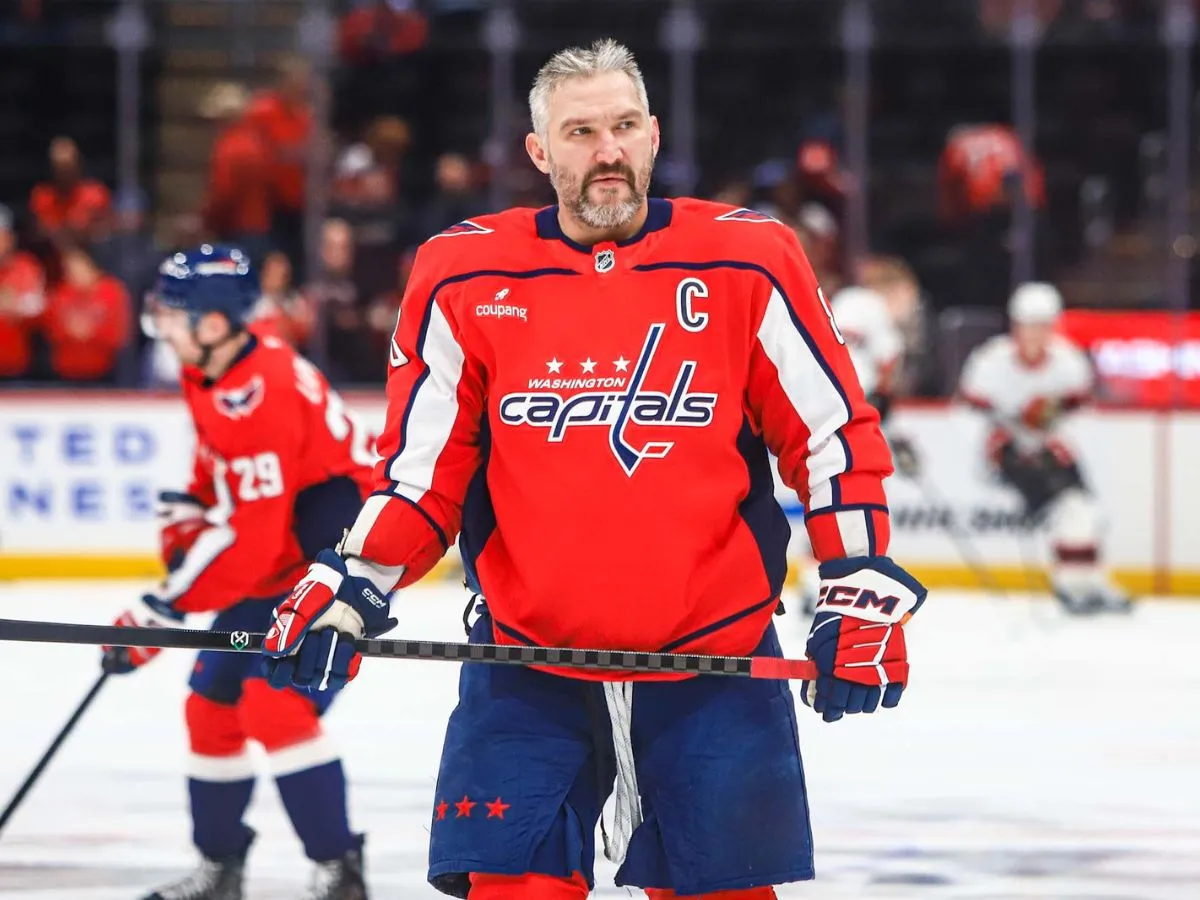
Ovechkin’s contract choice contrasts typical retirement timelines
Ovechkin posted 32 goals and 64 points in the 2025-26 season before committing to another year. The one-year deal at $4.25 million keeps him under contract through age 41. Most NHL players retire by their late 30s, yet Ovechkin rejected that pattern.
His decision followed a 21-season career that already produced the NHL’s all-time goal record. The extension length matches the short-term commitments Messi and Ronaldo have accepted in recent years. Ovechkin explicitly referenced their continued play as the model he follows.
The Capitals added young prospects Ryan Leonard and Cole Hutson, whose energy Ovechkin credited for his renewed motivation. Those additions created a contrast between the veteran’s experience and the newcomers’ speed. Ovechkin stated the locker-room atmosphere now pushes him to match their pace daily.
Pressure management also shifted across decades. At 22 or 23, external criticism weighed differently than it does at 40. Ovechkin noted he now filters outside noise through self-knowledge rather than reaction.
Inspiration from soccer icons shapes hockey veteran’s mindset
Ovechkin watched Messi and Ronaldo perform at the highest level and concluded skill retention trumps calendar age. He described their consistency as “tremendous” during a Monday press conference. That observation directly influenced his choice to continue rather than retire after the 2025-26 campaign.
Both soccer stars maintained elite output into their late 30s and early 40s through disciplined routines. Ovechkin mirrored that approach by emphasizing daily preparation and focus on team success over individual milestones. The parallel extends beyond statistics to the refusal to accept predetermined expiration dates.
The 2025-26 totals of 32 goals and 64 points provided concrete evidence he could still contribute at an above-average rate. Those numbers sit well above replacement-level production for a 40-year-old forward. Ovechkin treated them as validation rather than a farewell.
Young teammates accelerated the team’s competitive window and simultaneously extended Ovechkin’s personal timeline. He described absorbing their energy during practices and games. This two-way dynamic replaced the isolation older players often experience.
Future target remains 1,000 career goals
Ovechkin enters the new season 68 goals short of 1,000 regular-season tallies. Reaching that figure would require roughly 34 goals per season at his current pace. The 22nd season therefore carries both personal and historical weight.
He dismissed age-related questions by focusing on controllable elements: preparation, teammates, and in-game decisions. That mindset echoes the sustained excellence Messi and Ronaldo displayed on the international stage. Ovechkin’s approach prioritizes process over speculation about decline.
The Capitals’ prospect infusion supplies immediate on-ice support and long-term organizational stability. Ovechkin benefits from both. His continued presence bridges eras while the younger core gains experience alongside a proven winner.
Ovechkin will turn 41 during the 2026-27 season. The one-year deal positions him to reassess after that campaign. Historical precedent from soccer suggests further short extensions remain possible if production holds.
Frequently Asked Questions
Sources

Par Mike Jonderson
Mike Jonderson is a passionate hockey analyst and expert in advanced NHL statistics. A former college player and mathematics graduate, he combines his understanding of the game with technical expertise to develop innovative predictive models and contribute to the evolution of modern hockey analytics.