







The Pittsburgh Penguins wrapped up the 2025-26 regular season better than many expected, securing second place in the Metropolitan Division with 98 points and ending a three-year playoff drought.[1][2] Their reward was a first-round matchup against the rival Philadelphia Flyers, which ended in disappointment with a 1-0 overtime loss in Game 6 on April 29.[3] Now, as general manager Kyle Dubas eyes the summer, rumors swirl about the futures of aging stars and a potential shift from retooling to rebuilding.
This early exit has intensified debates over the Penguins’ direction. With significant cap space and draft assets at their disposal, Dubas faces tough choices on unrestricted free agents and trade candidates. Observers wonder if the core can muster one more run or if it’s time for sweeping changes.
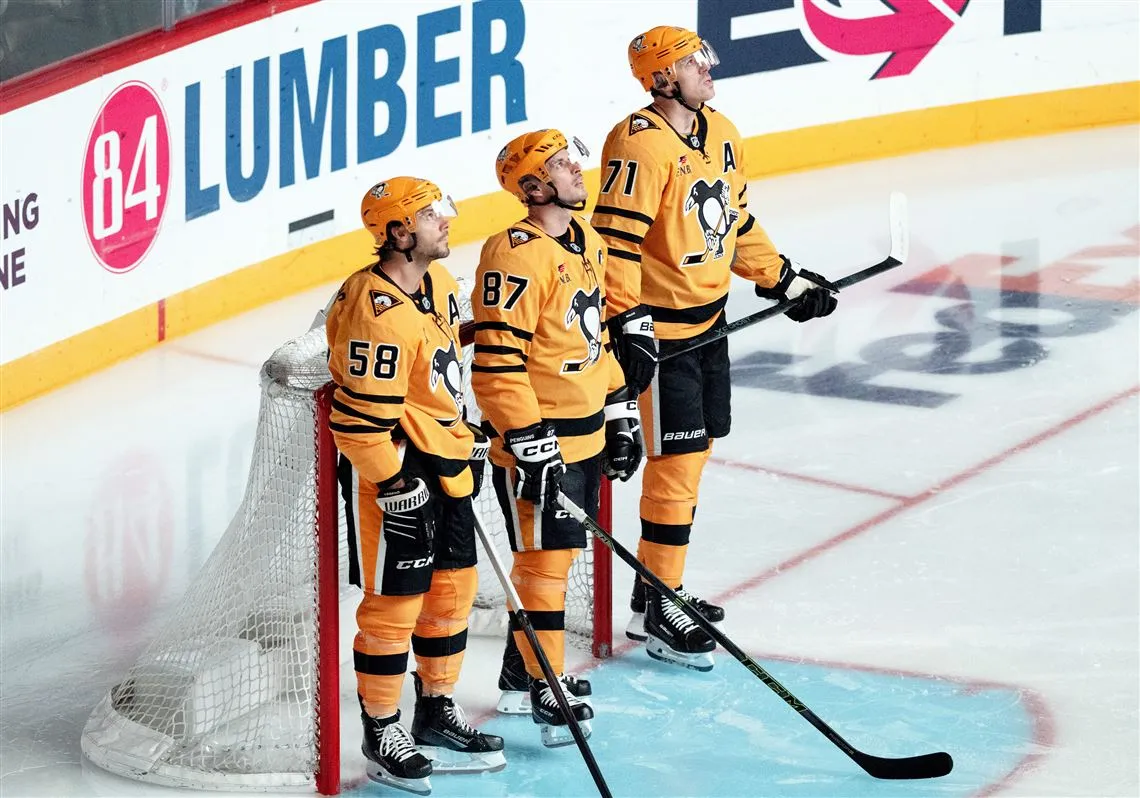
Recapping the 2025-26 campaign
Pittsburgh’s regular season was marked by offensive firepower, ranking third in the league at 3.54 goals per game. Sidney Crosby and Bryan Rust each notched 29 goals, while Evgeni Malkin and Rickard Rakell remained potent threats. Anthony Mantha enjoyed a breakout with 33 goals and 64 points, and midseason acquisition Egor Chinakhov fit seamlessly into the lineup.[2]
The power play clicked at seventh overall (24.1 percent), and first-year coach Dan Muse guided the team from seventh to second in the Metro. Yet defensive woes persisted, with the Penguins ninth in goals against at 3.15 per game. Goaltending from Stuart Skinner (.885 save percentage) and Arturs Silovs (.888) was shaky, often masked by scoring.
Injuries plagued key players like Crosby, who missed time after the 2026 Winter Olympics, and Malkin with an upper-body issue. Midseason moves, such as trading Tristan Jarry to Edmonton for Skinner, aimed to stabilize the crease but highlighted ongoing flux.
The playoffs exposed vulnerabilities. Against a speedy Flyers squad, Pittsburgh scored just four goals in the first three games and none in the clincher. Defensive cycling failed, and the team appeared “old and slow,” unable to adapt to Philadelphia’s system.[4]
Ownership changes added intrigue, with Fenway Sports Group selling to the Hoffmann family for $1.7 billion in December. Rookies like Ben Kindel emerged as bright spots, hinting at youth potential amid veteran reliance.
Veteran contracts under scrutiny
Evgeni Malkin headlines the free-agent decisions as a 39-year-old UFA after a bounce-back year. Despite his desire to stay, Dubas has shown reluctance for extension talks. Letting him walk could free cap space but impact Crosby’s mindset.[2]
Sidney Crosby has one year left at $8.7 million with a full no-movement clause, giving him veto power. Analysts suggest trading him could net more draft picks, as he may not want to lead a rebuild. Kris Letang, 39, has two years remaining at $6.1 million AAV, but a 10-team trade list starts next season—unlikely to draw suitors for the fading defenseman.
Erik Karlsson’s situation intrigues most. His $11.5 million cap hit continues into 2026-27, but actual salary drops to $7.5 million ($1.5 million base plus $6 million July 1 signing bonus). A full no-movement clause persists, though his solid season boosted trade value.[5]
Other UFAs include Mantha and Skinner, complicating Dubas’ plans. Bryan Rust and Rakell round out veterans drawing scrutiny.
Pittsburgh Hockey Now’s Dan Kingerski argues for moving them all: “If the star players are not able to carry the team, what’s the point?”[4]
Trade rumors and cap outlook
Projected cap space exceeds $45 million, offering flexibility amid a rising ceiling.[2] Karlsson becomes more affordable dollar-for-dollar next year, potentially attracting contenders despite his NMC.
Crosby trade speculation dominates ESPN’s offseason preview. Kristen Shilton notes four picks in the first three rounds—1st, 2nd, 2nd (from Winnipeg), 3rd, 6th (Nashville)—could grow via deals.
- Key assets: Ample cap room for UFAs or trades.
- Trade targets: Karlsson for picks/prospects; Letang unlikely.
- Challenges: NMCs limit options; youth integration needed.
Kingerski pushes shedding the past for youth like Kostin and Kindel. Pittsburgh Hockey Now details the case for change.
Rakell and Rust face similar questions after playoff struggles.
Draft picks and youth infusion
Dubas prioritizes young talent, with four early picks as a foundation. Trading veterans could add more ammunition in a strong 2026 draft class.
Emerging players like Ben Kindel (11th overall 2025) showed Calder promise. Prospects Owen Pickering and Harrison Brunicke bolster defense.
The Penguins’ path echoes past retools, but playoffs underscored urgency.
Retaining coach Muse and pieces like Parker Wotherspoon provides stability.
Voices diverge on the rebuild debate
Analysts split on direction. Kingerski demands “sweeping changes,” citing the Flyers series as proof veterans can’t adapt.[4]
Tribune-Review’s Seth Rorabaugh urges Dubas to weigh Malkin’s re-signing alongside Mantha and Skinner, questioning 2026-27 priorities in this analysis.
Joe Starkey counters: veterans like Malkin and Letang earned support, not pink slips, after strong Flyers showings.
ESPN warns without overhaul, playoffs are out of reach; running it back risks missing.[2]
Dubas’ history favors transition, starting with Malkin.
As summer nears, the Penguins stand at a crossroads. A full rebuild could reset for contention, but one more veteran push tempts. Dubas’ moves will define whether Pittsburgh chases nostalgia or embraces the future—what it means for the franchise hinges on balancing experience with renewal. Fans await clarity amid the rumor mill.
Frequently Asked Questions

Par Mike Jonderson
Mike Jonderson is a passionate hockey analyst and expert in advanced NHL statistics. A former college player and mathematics graduate, he combines his understanding of the game with technical expertise to develop innovative predictive models and contribute to the evolution of modern hockey analytics.