







The blockbuster trade that sent JJ Peterka from the Buffalo Sabres to the Utah Mammoth on June 26, 2025, immediately sparked debate across the hockey world. In exchange for the 23-year-old forward who had just recorded a career-high 68 points, Buffalo acquired defenseman Michael Kesselring and forward Josh Doan. At first glance, many questioned whether the Sabres had given away too much offensive firepower without adequate compensation. Four months into the 2025-26 season, however, the narrative has shifted dramatically as both franchises appear to have found exactly what they needed from this three-player swap.
The deal represented more than just a simple exchange of assets. For Utah, it signaled their commitment to building a sustainable contender in their inaugural season under the Mammoth name, complementing their young core with an established scorer. For Buffalo, the trade addressed critical weaknesses on their blue line and provided an opportunity to add grit and leadership to their forward group. As the season progresses, the Peterka trade impact on Buffalo Sabres and Utah Mammoth continues to reveal itself as a rare win-win scenario in professional hockey.
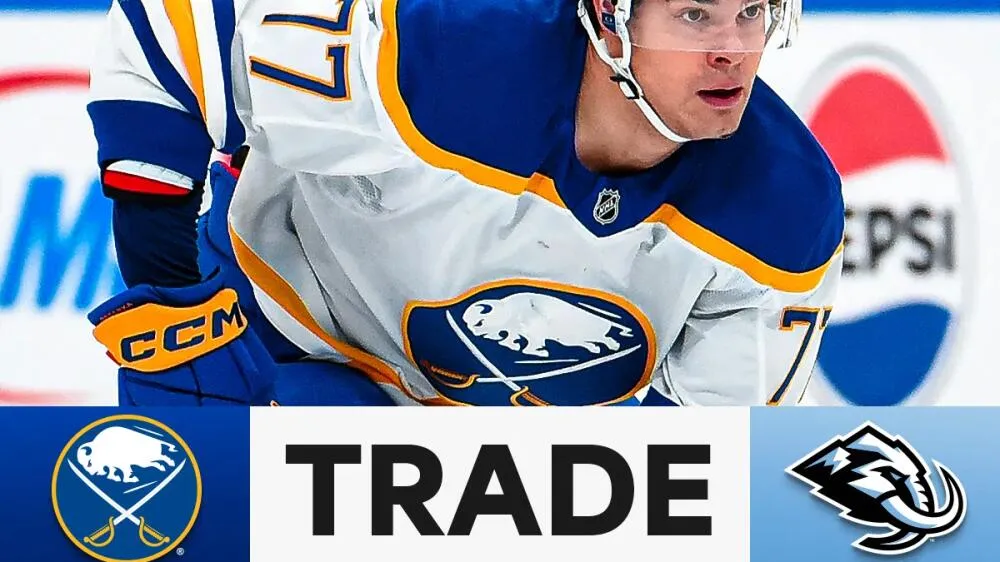
How the Peterka trade impact on Buffalo Sabres and Utah Mammoth shaped Utah’s scorching start
The Utah Mammoth have exceeded all expectations through the first quarter of the 2025-26 season, sitting atop the highly competitive Central Division with an impressive 8-2-0 record. Their seven-game winning streak has positioned them as one of the NHL’s most surprising success stories, and Peterka’s contributions have been instrumental in this rapid ascent. The German forward has seamlessly integrated into Utah’s second line alongside Logan Cooley and Dylan Guenther, forming one of the league’s most dynamic young trios.
Through the first ten games, Peterka posted nine points with three goals and six assists, demonstrating the offensive production Utah’s management envisioned when they committed to a five-year, $38.5 million contract extension. More impressively, his plus/minus rating remains firmly in positive territory, indicating that the Mammoth control play at both ends of the ice when he’s on the ice. This two-way reliability has proven crucial for a team trying to establish its identity in a new market.
The chemistry between Peterka, Cooley, and Guenther has developed faster than anyone anticipated. Over an eight-game stretch, Utah’s second line outscored opponents 8-0 when on the ice together, showcasing dominance at 5-on-5 play that few projected from such a young unit. One particular sequence against the Winnipeg Jets epitomized Peterka’s hustle and hockey IQ: after finding himself in a 3-on-1 disadvantage, he managed to outmaneuver the opposition, clear the puck to open ice, and absorb a hit to maintain possession. This effort allowed Cooley to execute a no-look pass to Guenther, who buried the late third-period winner against 2025 Hart Trophy winner Connor Hellebuyck.
“JJ is a highly skilled, creative, young forward with extremely high upside,” said Utah general manager Bill Armstrong at the time of the trade. “He will help solidify our scoring and add to what is already a great young core of forwards on the roster.” Those words have proven prophetic as the Utah Mammoth’s inaugural season continues to surprise skeptics and delight fans.
The financial commitment Utah made to Peterka—$7.7 million per season through 2030—looked aggressive at the time but increasingly appears shrewd. By locking down a player entering his prime years at a reasonable cap hit, the Mammoth have secured a cornerstone piece while maintaining flexibility to build around their young core. In today’s salary cap environment, finding production at that price point becomes increasingly difficult, especially for a player who hasn’t yet reached his peak.
The defensive upgrade Buffalo desperately needed from the Peterka trade
When the trade was announced, many observers focused solely on the offensive production the Sabres were surrendering. Peterka’s 27 goals and 68 total points represented significant firepower that would seemingly be difficult to replace. However, this analysis overlooked Buffalo’s most glaring weakness: their defensive depth, particularly on the right side. The acquisition of Michael Kesselring directly addressed this deficiency and has positioned the Sabres to finally ice one of the NHL’s most complete blue lines.
The 25-year-old defenseman brings exactly what Buffalo lacked—a reliable right-handed shot who can play meaningful minutes on the second pairing. Kesselring’s partnership with 2021 first overall pick Owen Power creates a formidable duo that combines offensive instincts with defensive responsibility. Power, who had struggled at times to find consistent chemistry with various partners, now has a clear-cut second-pairing complement who understands how to support his offensive creativity while covering defensively.
Kesselring’s impact extends beyond basic statistics. His 82 games played last season with Utah demonstrated durability, while his 29 points proved he could contribute offensively. More importantly, his presence allows Buffalo to deploy their defensive pairings more strategically, reducing the burden on their top pairing and creating favorable matchups throughout the lineup. When healthy, he provides the kind of steady, two-way play that championship contenders require from their second pairing.
An undisclosed injury has prevented Kesselring from appearing in Buffalo’s first ten games, making any comprehensive evaluation of the trade premature. His anticipated return will provide a significant boost to a defensive corps that has already shown improvement this season. The Sabres’ management believes that once Kesselring hits the ice, the full value of the Peterka trade will become even more apparent, transforming their blue line from a weakness into a position of strength.
The patience required while waiting for Kesselring’s return hasn’t diminished Buffalo’s enthusiasm for the acquisition. General manager Kevyn Adams emphasized this at the trade announcement: “Michael fits the mold of the right-handed defensemen we have been looking for, and we are thrilled he brings both size and compete. We believe he will help add balance to our blue line while elevating the rest of the D corps.” The organization remains confident that Kesselring will justify their faith once he’s fully healthy.
Josh Doan emerges as the Peterka trade’s unexpected catalyst for Buffalo
While Kesselring represented the centerpiece of Buffalo’s return in the Peterka deal, Josh Doan has quickly established himself as far more than a throw-in piece. The 23-year-old son of former Arizona Coyotes captain Shane Doan has not only cracked Buffalo’s lineup but has shown he possesses the tools to remain there long-term. His physical style and scoring touch have provided the Sabres with a dimension they sorely lacked, particularly in offensive zone battles and board play.
Doan’s 38 points during his final season as captain at Arizona State University hinted at offensive potential, but his transition to consistent NHL production has exceeded expectations. His power forward capabilities—combining crushing body checks with aggressive stick play—have fortified Buffalo’s forechecking game. Last season, the Sabres posted a mediocre 39.3% offensive zone time, a statistic that undermined their otherwise potent offense. Doan’s tenacity on the boards has helped address this weakness, creating more sustained pressure in the attacking zone.
The young forward’s willingness to embrace physical confrontation has energized his teammates and changed Buffalo’s identity. While the Sabres ranked ninth in goals scored last season, much of their production came from rush chances rather than sustained offensive zone possession. To emulate successful franchises like the two-time defending Stanley Cup champion Florida Panthers, who excel at controlling play in the attacking zone, Buffalo needed players like Doan who win battles and create second chances.
Beyond the statistics, Doan brings leadership pedigree that Buffalo’s management specifically targeted. “Josh is a player that has shown the ability to win at multiple levels and brings great leadership pedigree to our organization,” Adams stated. “He’s a strong two-way player who we believe will be able to provide versatility to our group.” Growing up around NHL locker rooms and learning from his father’s 21-year career has given Doan unique insight into what it takes to succeed at hockey’s highest level.
Doan’s connection with Kesselring adds another layer to this trade’s dynamics. The two players lived together for two years in Utah, developing a close friendship that should ease both players’ transitions to their new organization. “Kess and I are really close,” Doan explained. “We’ve lived together for two years now, so we’ve got to know each other, and he’s someone that I’ll always lean on when things happen, so to go into this together is something really cool.” This built-in chemistry and support system may prove invaluable as both players adjust to new roles in Buffalo.
Why the Peterka trade impact on Buffalo Sabres and Utah Mammoth defies conventional wisdom
Traditional trade evaluation often focuses on which team “won” the deal, creating artificial winners and losers from every transaction. The Peterka trade challenges this binary thinking, demonstrating how smart general managers can construct deals that genuinely benefit both organizations. By identifying complementary needs and finding players who fit specific organizational holes, Bill Armstrong and Kevyn Adams crafted a rare transaction that addresses real problems for both franchises without anyone getting fleeced.
For Utah, the decision to part with Kesselring and Doan represented a calculated risk based on organizational depth and priorities. Armstrong acknowledged this reality: “If you want something really great, you got to give up something at the end of the day. And we do have a lot of good picks coming through the door that are from previous drafts.” With prospects like Dmitriy Simashev and Daniil But ready to contribute, the Mammoth could afford to trade NHL-ready talent in exchange for a proven top-six scorer entering his prime.
The timing of this trade deserves particular scrutiny. Both Peterka and Doan were entering the final years of their respective contracts, while Kesselring had one year remaining on his deal. This created urgency for Utah to either extend these players or risk losing them for nothing. By consolidating assets into a single star player they could immediately sign long-term, the Mammoth demonstrated sophisticated asset management that maximized value while addressing their most pressing need.
Buffalo’s perspective reveals equally sound reasoning. Despite Peterka’s career year, the Sabres possessed organizational depth at forward but desperately needed defensive help and more physical presence. Trading from a position of strength to address weaknesses represents basic roster construction logic, yet many teams struggle to execute such deals effectively. The fact that Buffalo received two players who directly address specific deficiencies rather than generic “value” speaks to Adams’ clear understanding of his roster’s needs.
The contract situations also favored Buffalo’s timeline. By acquiring players with expiring deals, the Sabres maintain flexibility while evaluating fit. If Kesselring and Doan prove they belong in Buffalo’s long-term plans, extensions can be negotiated. If not, the Sabres haven’t committed to lengthy contracts that hamstring their cap situation. This calculated approach to risk management demonstrates sophisticated front-office thinking that considers both immediate impact and future flexibility.
Perhaps most importantly, both organizations secured players who wanted to be there. Peterka immediately signed a five-year extension with Utah, signaling his enthusiasm for the opportunity. Kesselring and Doan expressed genuine excitement about joining Buffalo’s young core and contributing to the franchise’s turnaround. This mutual desire to make new situations work often proves as valuable as any skillset, creating positive organizational chemistry that statistics cannot measure.
Long-term implications of the Peterka trade for both franchises
While early-season success provides encouraging signs, evaluating this trade’s ultimate impact requires examining how it shapes both organizations’ trajectories over the next several years. For Utah, securing Peterka through 2030 provides offensive stability as they navigate their inaugural season and establish themselves as legitimate playoff contenders. His presence alongside Cooley and Guenther creates a core young enough to grow together while experienced enough to produce immediately—a rare combination that accelerates competitive timelines.
The Mammoth’s aggressive approach to their first season sets a precedent for how they’ll operate moving forward. Rather than accepting a patient rebuild or settling for mediocrity, management has shown willingness to make bold moves that signal championship ambitions. This approach should resonate with fans in a new market while attracting future free agents who want to play for an organization committed to winning. Peterka’s extension and immediate impact validate this philosophy, suggesting Utah won’t settle for simply making the playoffs but aims to contend for championships.
For Buffalo, the trade represents a philosophical shift toward building a more complete roster rather than simply accumulating offensive talent. The Sabres have historically struggled with defensive depth and physical presence, leading to repeated playoff absences despite possessing skilled forwards. By addressing these weaknesses—even at the cost of a productive scorer—Buffalo demonstrates organizational maturity and a clearer understanding of what championship rosters require.
The Kesselring-Power pairing could anchor Buffalo’s blue line for years if both players reach their potential. Power’s offensive creativity combined with Kesselring’s defensive reliability creates balance that elite teams need from their second pairing. As both players continue developing, this duo could become one of the NHL’s most effective pairings, providing tremendous value relative to their cap hits and allowing Buffalo to allocate resources elsewhere.
Doan’s emergence as more than a complementary piece adds another dimension to Buffalo’s long-term outlook. If he continues developing his two-way game while maintaining his physical edge, the Sabres will have secured a valuable middle-six forward who excels in playoff-style hockey. His leadership qualities and familiarity with winning cultures could prove particularly valuable as Buffalo’s talented young core matures and pursues postseason success.
The precedent this trade sets for future NHL transactions also deserves consideration. In an era where blockbuster deals often involve draft picks and prospects, this player-for-players swap demonstrates that teams can still construct meaningful trades using NHL-ready talent. The success both organizations have found through complementary fits rather than raw value exchanges may encourage other general managers to think more creatively about roster construction and asset allocation.
As the 2025-26 season continues unfolding, the Peterka trade stands as a testament to what intelligent roster management can achieve when both parties accurately identify their needs and execute accordingly. Utah’s surging start and Peterka’s seamless integration validate their aggressive approach to building a winner in their inaugural campaign. Buffalo’s improved defensive depth—once Kesselring returns—and Doan’s unexpected emergence as a catalyst suggest the Sabres finally possess the complete roster necessary for sustained success.
Perhaps the most refreshing aspect of this trade is how it defies the zero-sum mentality that dominates sports media discourse. Rather than debating which general manager outsmarted the other, both fan bases can legitimately celebrate how their teams improved through this exchange. Four months after the deal, early returns suggest both the Sabres and Mammoth found exactly what they needed, proving that thoughtful trades can benefit everyone involved. As both franchises push toward the playoffs, the legacy of this transaction will continue evolving, but the foundation has already been laid for it to be remembered as one of the 2025 offseason’s most successful moves for both organizations.

Par Mike Jonderson
Mike Jonderson is a passionate hockey analyst and expert in advanced NHL statistics. A former college player and mathematics graduate, he combines his understanding of the game with technical expertise to develop innovative predictive models and contribute to the evolution of modern hockey analytics.