The Philadelphia Flyers wrapped up a promising 2026 season by reaching the second round of the Stanley Cup playoffs, exceeding expectations despite a sweep by a stronger opponent.[1] They knocked out the Pittsburgh Penguins in the first round, showcasing the young core GM Daniel Briere has built ahead of schedule. Now, with the offseason underway, attention turns to re-signings, trades and bolstering weaknesses like a top center and power-play quarterback.
Briere faces a busy summer, armed with significant cap flexibility and a roster brimming with trade assets. Rumors are swirling about blockbuster moves, but the focus remains on sustainable growth rather than splashy free-agent gambles.[2]
Re-signing restricted free agents
Trevor Zegras and Jamie Drysdale top the Flyers’ priority list as restricted free agents. Zegras thrived in his first full season with Philadelphia after arriving via trade, posting career highs that made him a cornerstone of the offense. Both sides appear eager to extend, with Briere praising the fit publicly.[1]
Drysdale, meanwhile, delivered his best campaign in years, stabilizing the blue line amid injury challenges elsewhere. Retaining him is crucial for depth on defense. Backup goaltender Samuel Ersson also enters RFA status after a solid if unspectacular year, potentially complicating goaltending plans if Dan Vladar returns as the starter.
The Flyers boast over $38.5 million in projected cap space for 2026-27, with just 17 players under contract.Projected cap details here. This affords Briere room to lock in Zegras and Drysdale without sacrificing future flexibility. Negotiations could drag into July, but early deals would signal stability.
Other RFAs like Nikita Grebenkin and Emil Andrae add layers, but the big two dominate headlines. Securing them prevents arbitration risks and keeps the core intact. Fans recall past bridge deals gone sour; Briere seems intent on long-term commitments this time.
Success here sets the tone. A swift Zegras extension could fuel optimism, especially after the team’s playoff surge as detailed in their path to the 2026 playoffs.
Targeting a high-end center
A true No. 1 center remains elusive for Philadelphia, prompting trade speculation. The 2026 UFA class lacks elite options, pushing Briere toward the market. Names like Auston Matthews from Toronto have surfaced amid Leafs’ uncertainty.Matthews trade buzz.
Matthews, a 28-year-old superstar with multiple 60-goal seasons, could transform the lineup despite his injury-shortened year. Toronto’s new regime eyes retooling, making him available for a steep price. The Flyers’ young wingers intrigue, but Briere might balk at gutting the prospect pool.
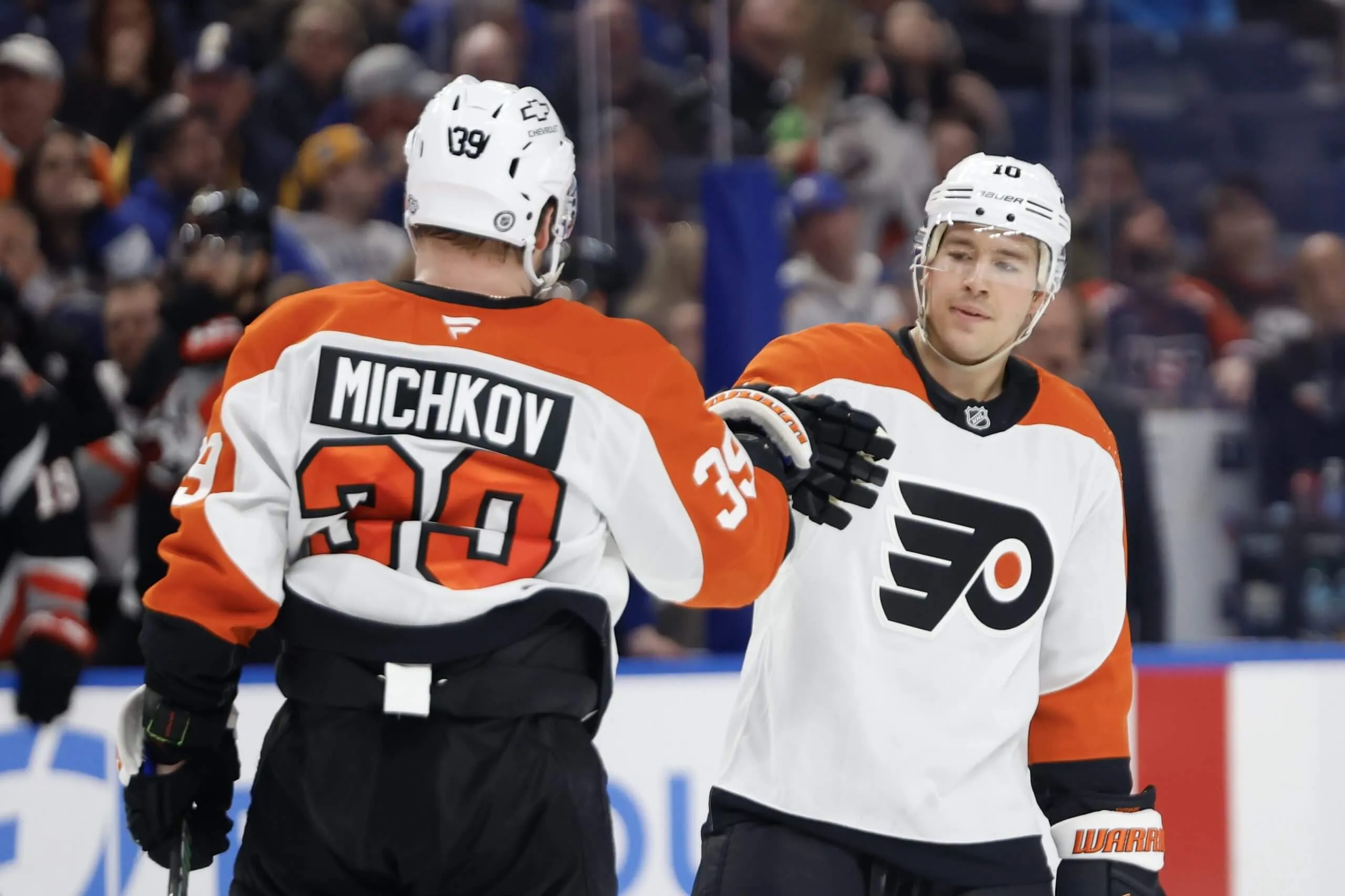
More realistic targets include Matty Beniers, Charlie Thomas or even Bruins prospects like Dean Letourneau and Matthew Poitras.[3] These players offer upside without breaking the bank. Philadelphia’s wing depth—Porter Martone, Matvei Michkov, Alex Bump—serves as ideal bait.
Sam Carchidi of The Hockey News emphasized the need, noting slim UFA pickings. Trading a veteran like Owen Tippett, who drew rumors all season, could net center help. Tippett’s 28 goals make him valuable, but excess wingers allow deals.
Briere’s history favors calculated risks. A center acquisition elevates the Flyers from playoff team to contender, especially post their playoff race surge.
Addressing defense and power play woes
Beyond centers, a power-play quarterback tops the wishlist. The Flyers ranked near the bottom at 15.7 percent, plummeting further in playoffs.[1] Drysdale helps, but a true orchestrator like a Quinn Hughes type eludes them.
Trade candidates include Rasmus Ristolainen, whose name lingers on boards despite solid play.[4] Moving him frees cap and brings returns. Depth pieces like Nick Seeler or Bobby Brink could also move for upgrades.
Prospects Emil Andrae and Oliver Bonk offer internal hope, but external help accelerates contention. Briere’s draft capital—multiple first-rounders—sweetens packages.
Avoiding long-term vet deals is key, per analysts. Focus on youth aligns with the rebuild’s next phase. Recent transactions, like recalling prospects in April, hint at this philosophy.[5]
Power-play fixes might involve coaching tweaks alongside personnel. Success transforms offenses; failure stalls progress.
Trade assets and cap flexibility
Philadelphia’s strength lies in trade chips. Tippett headlines veterans, with Ersson as a goaltending flip. Youngsters Martone, Michkov and Bump dazzle, drawing interest from rebuilding teams.
Cap space near $39 million enables aggression without overcommitting.[6] Only 14-17 core players count against it, per projections. This mirrors smart management seen in past offseasons.
Rumors link outgoing deals for incoming stars, avoiding the thin free-agent pool. Briere traded for Zegras previously; expect similar creativity.
Prospects bolster hauls, preventing overpays. Fans eye win-now moves after playoff validation.
The offseason tests Briere’s vision. Balancing youth retention with upgrades defines the Flyers’ trajectory.
The Flyers enter 2026-27 with momentum, poised for deeper playoffs. Prioritizing Zegras, Drysdale and a center positions them as East threats. While Matthews dreams captivate, pragmatic trades yield contention. Cap room and assets make it feasible—watch for fireworks by draft time.
Frequently Asked Questions

Par Mike Jonderson
Mike Jonderson is a passionate hockey analyst and expert in advanced NHL statistics. A former college player and mathematics graduate, he combines his understanding of the game with technical expertise to develop innovative predictive models and contribute to the evolution of modern hockey analytics.