The Philadelphia Flyers wrapped up a surprising playoff run with a 3-2 overtime loss to the Carolina Hurricanes in Game 4, getting swept but pushing the eventual conference finalists hard. After upsetting the Pittsburgh Penguins in six games in the first round, the Flyers ended a five-year postseason drought and showed real promise under coach Rick Tocchet. Dan Vladar emerged as a stellar No. 1 goalie, posting a 2.18 GAA and .922 save percentage, but offensive woes and defensive gaps were exposed against Carolina’s forecheck.
Youngsters like Porter Martone, Alex Bump and Denver Barkey gained invaluable experience, while GM Danny Briere faces a pivotal summer to build on 98 points in a rebuilding year. With $38.5 million in projected cap space, the Flyers can target upgrades without mortgaging the future.
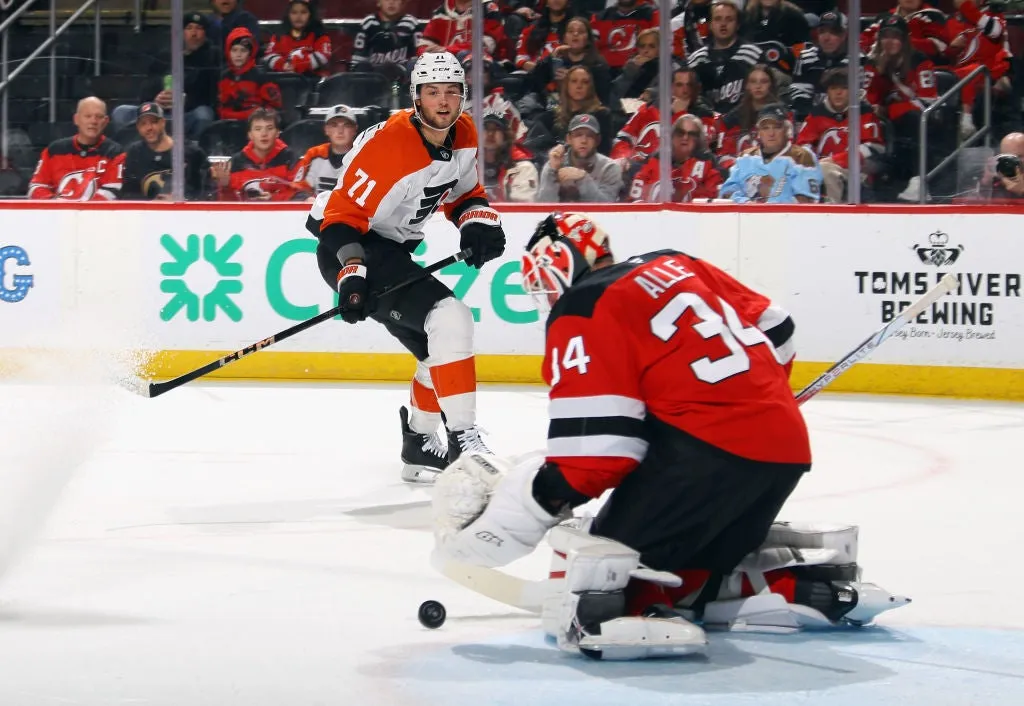
Playoff takeaways and areas for growth
The Flyers managed just four goals from centers across 10 playoff games, highlighting a glaring need down the middle. Carolina allowed only five goals total in the sweep, dominating puck battles and the forecheck. Tocchet praised the growth: “I saw a lot of growth, a lot of learning. Obviously we’ll learn a lot from this series.”
Power play inefficiency plagued them at 15.7 percent, last in the league for the fourth time in five years. Travis Konecny noted the staff’s efforts: “They give us great plans, and we have to execute a little better… We’re going to go into the summer as a group and make sure we’re better next year.”
Injuries hit hard in the second round, forcing shifts like Denver Barkey to center. Exit interviews revealed optimism, with Alex Bump vowing to bulk up and sharpen his 200-foot game after a key playoff goal. Matvei Michkov, benched twice, meets Briere soon to refocus after a sophomore dip from 63 to 51 points.
Fans chanted “Let’s Go Flyers!” post-game, fueling motivation. Tocchet called it “amazing” and a sign the organization is back on the map. This hunger will drive summer workouts.
The second-round push, including two OT losses, puts Philly on radars. As Konecny said, “We want people to want to come here.”
Navigating cap space and key contracts
Projections show $38.4 million available for 2026-27 after expiring deals, per PuckPedia. This affords flexibility for re-signings and splurges, but Briere must avoid overcommitting.
RFAs like Trevor Zegras, Jamie Drysdale, Emil Andrae and Samuel Ersson top the list. Zegras, open to wing or center, eyes extension after 67 points. Drysdale could lock in long-term on defense.
Vladar, with one year left, seeks extension talks: “I’m interested… talk to Danny.” Ersson’s post-Olympic surge makes him a priority backup.
UFAs like Noah Juulsen offer depth options, but youth focus rules. Recent trades, like acquiring Zegras last summer, stocked wings for potential deals.
Bonuses loom at $6 million, so prudent spending preserves contention windows.
Prioritizing a high-end center
Centers scored sparingly in playoffs, underscoring the top need. Briere may trade a surplus winger for middle-six help. Targets include Boston prospects Matthew Poitras and Dean Letourneau, per rumors.
Matty Beniers of Seattle offers 50-point upside but carries a $7.14 million AAV; Flyers balked at cost before deadline. Robert Thomas fits perfectly as a second-line pivot at $8.125 million through 2031, though St. Louis demands four firsts equivalent.
Assistant Derek Jones hinted at trades, free agency and offer sheets. Zegras’ versatility helps, but a true No. 1/2 guy elevates wings like Konecny and Michkov.
Injuries exposed depth; Dvorak battled through, but upgrades beckon. Couturier embraces physical role, freeing cap for splash.
Free agency lacks stars, pushing trades. Briere’s summer wizardry ended the drought before.
Strengthening the defense and power play
A power-play quarterback tops the blue-line wishlist; UFA Darren Raddysh tempts, but experts warn against overpaying for 30-year-old career years. Internal options like Oliver Bonk or David Jiricek could emerge.
Rasmus Ristolainen ranks high on trade boards after healthy offseason ahead. Andrae eyes top-six trust, focusing on explosiveness. Drysdale extension stabilizes right side.
Travis Sanheim anchors at 30. Tocchet and Reirden demand higher standards. NHL.com exit notebooks stress collaboration.
Juulsen as UFA adds bottom-pair. Youth infusion fixes 15.7 percent PP.
Building around the young core
Martone’s five playoff points, including GWGs vs. Penguins, excite. “Eye-opening” playoffs fuel growth. Bump bounced back with net-front grit; Tocchet lauded his response to errors.
Barkey adds lower-body strength post-physicality test. Michkov reverts to rookie form via summer grind. Jett Luchanko and Bonk loom for full seasons.
Vladar anchored: “He came here as a backup… terrific athlete.” Ersson’s “new chapter” solidifies tandem.
Tocchet instilled hunger: “It makes you know what I’m going to work on.” Fans’ support motivates.
This core, plus vets like Konecny (68 points), positions Philly as contender.
The Flyers enter summer with momentum, cap flexibility and clear targets. Briere’s moves could vault them toward Cup contention, blending youth and vets wisely. As Tocchet noted, playoff taste breeds drive—watch Philly emerge stronger in 2026-27.
Frequently Asked Questions

Par Mike Jonderson
Mike Jonderson is a passionate hockey analyst and expert in advanced NHL statistics. A former college player and mathematics graduate, he combines his understanding of the game with technical expertise to develop innovative predictive models and contribute to the evolution of modern hockey analytics.