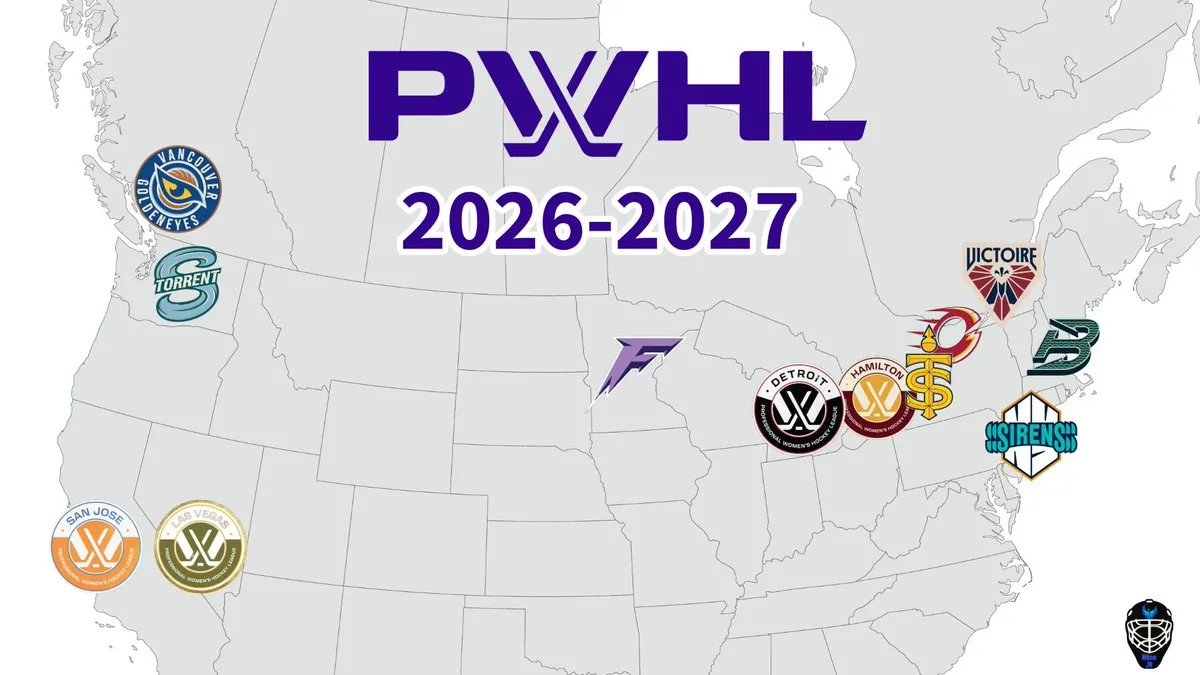
The professional women’s hockey league continues its impressive growth trajectory. With the announcement of four new expansion franchises, the PWHL will feature 12 teams starting in the 2026-27 campaign. This move comes amid soaring demand across attendance, merchandise, sponsorships and broadcasting rights.
Detroit and Hamilton stand out among the additions alongside Las Vegas and San Jose. The league doubled its size from the original six-team format launched in 2023. Fans in these markets have shown strong interest through takeover tour games and prior expressions of support.
Rapid growth fuels expansion decisions
The PWHL has proven it can handle swift expansion without missing a beat. Metrics like ticket sales and media interest indicate the product is in high demand. Advisory board member Stan Kasten noted that a line of cities is eager to join the league.
- Detroit will play at Little Caesars Arena
- Hamilton secured its spot as a key Canadian market
- Las Vegas brings the league to T-Mobile Arena
- San Jose completes the Pacific Time Zone presence at SAP Center
This westward push and inclusion of Detroit as a bridge market reflect strategic planning. Both Las Vegas and San Jose expressed early interest, with San Jose even pursuing a team the previous year. The single-entity model under the Mark Walter Group allows partnerships rather than full ownership transfers, which helped secure these venues.
Staff and operations take shape ahead of draft
New general managers in the expansion cities are focusing on hiring coaches and hockey operations personnel. The PWHL draft is set for June 17 in Detroit, creating a tight timeline for preparations.
In Detroit, connections to local hockey run deep. Rheaume’s background with Little Caesars Hockey and her Michigan residency made her a natural fit for the role. Las Vegas selected Dominique DiDia from CAA Sports, leveraging her ties to top players like Alex Carpenter and Natalie Spooner.
San Jose and Hamilton have staff in place already. Announcements are timed around the ongoing Walter Cup finals between the Montreal Victoire and Ottawa Charge. These hires will guide roster building through signing windows rather than a traditional expansion draft.
Player pool and future plans remain in focus
The league plans to pause expansion after reaching 12 teams to let the player pool and fan base stabilize. The NCAA’s fifth-year eligibility ruling will impact the 2027 draft class, shifting top talent to later years.
The 2026 draft class looks particularly strong by comparison. Officials expect the league could grow to 16 teams before the current collective bargaining agreement expires in 2031. For now the roster of markets includes Boston, Detroit, Hamilton, Las Vegas, Minnesota, Montreal, New York, Ottawa, San Jose, Seattle, Toronto and Vancouver.
The 2026-27 season will start right after the World Championship in Denmark this November. This schedule keeps momentum high while the new franchises integrate.
What this means for the league moving forward
The expansion solidifies the PWHL as the premier destination for women’s professional hockey. Markets like Detroit and Hamilton will benefit from immediate infrastructure and passionate local support.
PWHL expansion to Detroit ushers in new era for Motown hockey highlights how these additions create fresh opportunities across North America.
As the league settles into its expanded footprint, expectations point to continued record crowds and commercial success. The focus now shifts to building competitive rosters that deliver on the growing excitement around the sport.
Frequently Asked Questions

Par Mike Jonderson
Mike Jonderson is a passionate hockey analyst and expert in advanced NHL statistics. A former college player and mathematics graduate, he combines his understanding of the game with technical expertise to develop innovative predictive models and contribute to the evolution of modern hockey analytics.