










The New York Rangers announced Tuesday that they have placed captain J.T. Miller on injured reserve due to an upper-body injury.[1] The injury occurred during Monday’s 5-4 overtime loss to the Columbus Blue Jackets and is described as a new issue, unrelated to previous ailments Miller has managed this season. In his first year as captain, Miller has been a key leader on a struggling team.
Placement on IR means Miller will miss at least the next seven days, covering three crucial games for the Rangers. This comes at a pivotal time as the NHL trade deadline looms on Friday.[1]
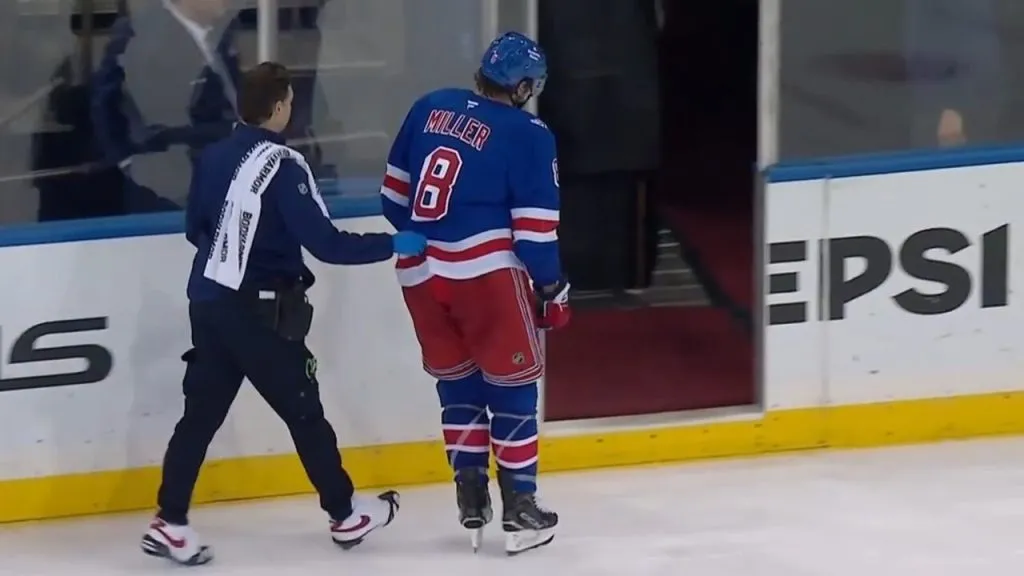
Details of the injury
Reports indicate the injury happened in the waning moments of regulation against Columbus, where Miller got tangled up with opponents.[1] Despite the incident, he logged 19:23 of ice time and even picked up an assist in the game, showing no immediate signs of distress. Sources close to the team confirmed it’s a fresh problem, separate from the nagging issues he’s battled since training camp.
Miller had just returned from the Olympic break, where he helped Team USA secure a gold medal. He played in all three Rangers games following that tournament, maintaining his top-six role without missing a shift due to this specific injury.
The exact nature of the upper-body injury remains undisclosed, but its timing adds uncertainty. Rangers coach has not commented publicly yet, but the minimum IR stint aligns with protocol for evaluation and recovery.[2]
This isn’t Miller’s first brush with injuries this year; he missed time earlier in the season but returned strong. Fans are hopeful for a quick turnaround, given his resilience.
J.T. Miller’s impact this season
Miller has been a cornerstone for the Rangers, posting 14 goals and 38 points in 51 games.[1] His plus/minus rating sits at minus-24, reflecting the team’s broader struggles rather than individual play.
- Key stats:
- Goals: 14
- Assists: 24
- Points: 38
- Games played: 51
- Average time on ice: ~19 minutes
With an $8 million cap hit and four years remaining on his contract, Miller anchors the top-six forward group.[3] His leadership as captain has been vital during a transitional period.
Off the ice, his Olympic heroics boosted morale. Back with the Rangers, he continued producing, including the assist against Columbus.
The Rangers’ retool and trade activity
New York is enduring a disappointing campaign, on track to miss the playoffs for the first time in years. GM Chris Drury declared a “retool,” signaling a shift in roster construction.[1]
Already, the team traded star winger Artemi Panarin to the Los Angeles Kings in February, along with defenseman Carson Soucy to the Islanders.[4] These moves cleared cap space and brought in prospects and picks.
Speculation swirls around veteran Vincent Trocheck as a potential trade chip before Friday’s deadline. More deals could follow if the Rangers prioritize youth.
The retool aims to build sustainability, but injuries like Miller’s complicate the process. Roster depth from Hartford may get tested soon.[3]
What lies ahead without Miller
The Rangers face a tough three-game stretch without their captain:
- vs. Toronto Maple Leafs
- vs. New Jersey Devils
- vs. Philadelphia Flyers
These matchups will challenge the lineup’s resilience. Filling Miller’s top-six spot might involve call-ups like Brett Berard or internal shifts.
The trade deadline adds pressure; his absence could lower trade value for others or prompt buys for depth. Fantasy owners note he’ll miss at least these games, possibly more.[2]
Youngsters could seize the opportunity, aiding the retool narrative.
As the Rangers navigate this setback, Miller’s leadership will be missed off the ice too. A swift recovery could stabilize the final stretch, but the focus remains on future building blocks. Expect updates from ESPN’s coverage as his status evolves.[1] The retool continues amid uncertainty—what it means for next season’s contention push.
Frequently Asked Questions

Par Mike Jonderson
Mike Jonderson is a passionate hockey analyst and expert in advanced NHL statistics. A former college player and mathematics graduate, he combines his understanding of the game with technical expertise to develop innovative predictive models and contribute to the evolution of modern hockey analytics.