
Ted Turner, the visionary media mogul who launched CNN and pioneered the 24-hour news cycle, passed away on Wednesday, May 13, 2026, at the age of 87.[1][2] Beyond his broadcasting empire, Turner left an indelible mark on sports, particularly hockey. As the founding owner of the Atlanta Thrashers, he brought the NHL back to Atlanta in 1999 and set in motion events that would resurrect professional hockey in Winnipeg over a decade later.[1]
His involvement in the NHL underscores a lesser-known chapter of his legacy. Turner’s decision to expand into hockey through his Turner Sports division not only tested the sport’s viability in the U.S. South but also created ripple effects across the league. The Thrashers’ story, from inception to relocation, highlights both ambition and the challenges of NHL expansion.
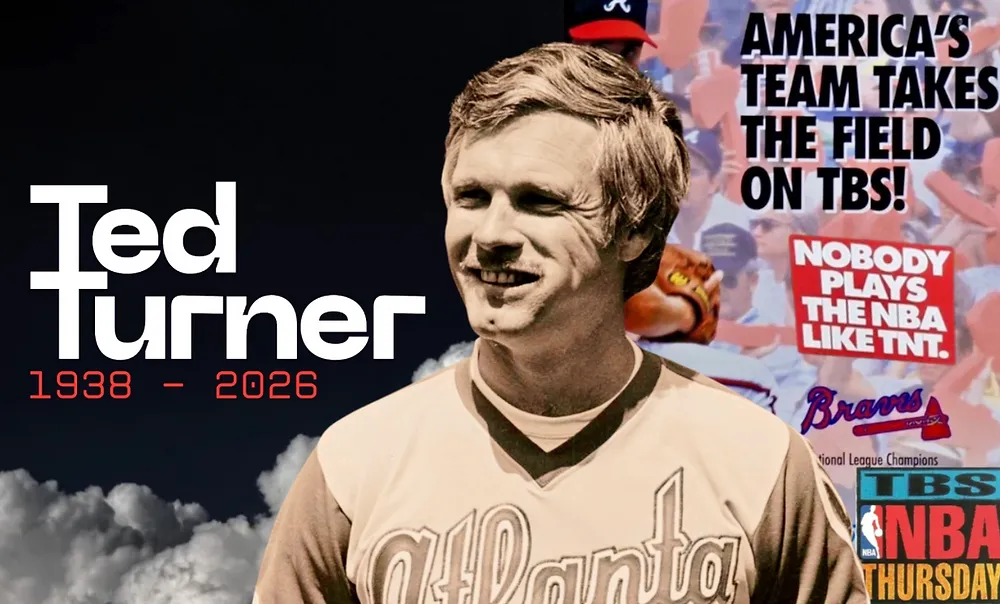
Ted Turner’s path to sports ownership
Ted Turner built his fortune in media, turning a small UHF station into the superstation WTBS and later founding CNN in 1980. By the 1970s, he eyed sports as content goldmines for his networks. In 1976, he purchased the Atlanta Braves, transforming them into national sensations via cable broadcasts. The Braves won the 1995 World Series under his stewardship.[3]
A year later, in 1977, Turner acquired the Atlanta Hawks of the NBA, further bolstering his programming slate. These moves were strategic; sports filled airtime and drew viewers nationwide. Turner’s hands-on style was legendary—he even managed the Braves for one game in 1977, a stint cut short by league rules.[3]
His sports portfolio expanded into wrestling with World Championship Wrestling (WCW) and philanthropy, but hockey beckoned in the late 1990s amid NHL expansion fever. Atlanta had hosted the Flames from 1972 to 1980, leaving a hockey footprint Turner aimed to revive.
Through TBS, Turner committed to an expansion franchise, securing NHL approval for the Thrashers. This was no side venture; it aligned with his vision of Atlanta as a multisport hub. The team debuted in Philips Arena, sharing space with the Hawks.
Turner’s ownership reflected his bold personality. He named the team after Georgia’s state bird, the brown thrasher, embedding local pride. Yet, his direct control waned as AOL Time Warner absorbed Turner Broadcasting.
Launching the Atlanta Thrashers in 1999
The Thrashers entered the NHL as the league’s 27th team, paying a $80 million expansion fee. Turner, via TBS, fronted the effort, hiring GM Don Waddell and coach Curt Fraser. The inaugural season saw a 14-30-12-6 record, but excitement buzzed with stars like Damian Rhodes in net.[4]
Attendance averaged over 16,000, buoyed by Atlanta’s growing sports scene. Turner leveraged his media empire for coverage on TBS and TNT, exposing hockey to southern audiences unused to the sport. Key draft picks like Ilya Kovalchuk in 2001 signaled ambition.
The team improved marginally, reaching the playoffs once in 2006-07, upsetting the Rangers before falling to the Devils. This lone postseason run peaked fan interest.
Financially, challenges loomed. Expansion diluted talent, and southern markets struggled with hockey’s appeal amid football and baseball dominance. Turner sold the Thrashers, Hawks, and partial Braves interest to Atlanta Spirit LLC in 2004 for $250 million.[5]
Under new ownership, woes mounted: arena disputes, losing seasons, and $130 million losses since 2005. By 2011, relocation talks intensified.
The Thrashers’ struggles and relocation saga
Atlanta Spirit’s tenure was turbulent. No playoffs after 2007, with stars like Kovalchuk departing in 2010. Attendance dipped below 12,000 by 2010-11. Owner disputes paralyzed operations, blocking arena upgrades.
The NHL Board of Governors approved sale to True North Sports & Entertainment on June 21, 2011, for $170 million. True North, led by Mark Chipman and David Thomson, moved the franchise to Winnipeg’s MTS Centre (now Canada Life Centre).[4]
Winnipeg, bereft of NHL since the original Jets left for Phoenix in 1996, erupted in joy. Sellouts persist today, with the Jets drawing top attendance. The “Jets 2.0” inherited Thrashers’ history from 1999 onward.
This quick relocation was pivotal. Without Atlanta’s second NHL stint—sparked by Turner—the league might not have eyed the South again post-Flames. Needing a stable home, Winnipeg filled the void perfectly.
Here’s a timeline of key events:
- 1972-1980: Atlanta Flames play, relocate to Calgary.
- 1999: Ted Turner launches Thrashers.
- 2004: Sold to Atlanta Spirit.
- 2011: Relocated to Winnipeg as Jets.
The move revived a passionate market, contrasting Atlanta’s struggles.
Ted Turner’s enduring NHL legacy
Turner’s Thrashers experiment tested hockey’s U.S. expansion limits. Though short-lived, it paved paths for teams like Nashville and Tampa Bay. His media savvy broadcast games widely, growing the sport’s footprint.[1]
Philanthropy defined his later years—United Nations honors, land conservation—but sports remained core. As The Hockey News noted, without Turner, no Thrashers, no Jets revival.[1]
Fans debate: was Atlanta viable? For details, see the Atlanta Thrashers Wikipedia page.[4]
His indirect gift to Winnipeg endures. The Jets thrive in 2026 playoffs context, a testament to that 2011 pivot.
Turner’s life blended bravado and innovation. From yacht racing to bison ranches, he reshaped industries. In hockey, his legacy bridges Atlanta’s ambition and Winnipeg’s passion.
As the NHL evolves amid 2026 playoffs, Turner’s story reminds us of expansion’s risks and rewards. Winnipeg’s faithful chant “Go Jets Go,” unknowingly thanking a southern mogul who started it all. His impact lingers on the ice.
Frequently Asked Questions

Par Mike Jonderson
Mike Jonderson is a passionate hockey analyst and expert in advanced NHL statistics. A former college player and mathematics graduate, he combines his understanding of the game with technical expertise to develop innovative predictive models and contribute to the evolution of modern hockey analytics.