








The Philadelphia Flyers tendered a five-year $90 million offer sheet carrying an $18 million AAV to Anaheim Ducks center Leo Carlsson before free agency opened.
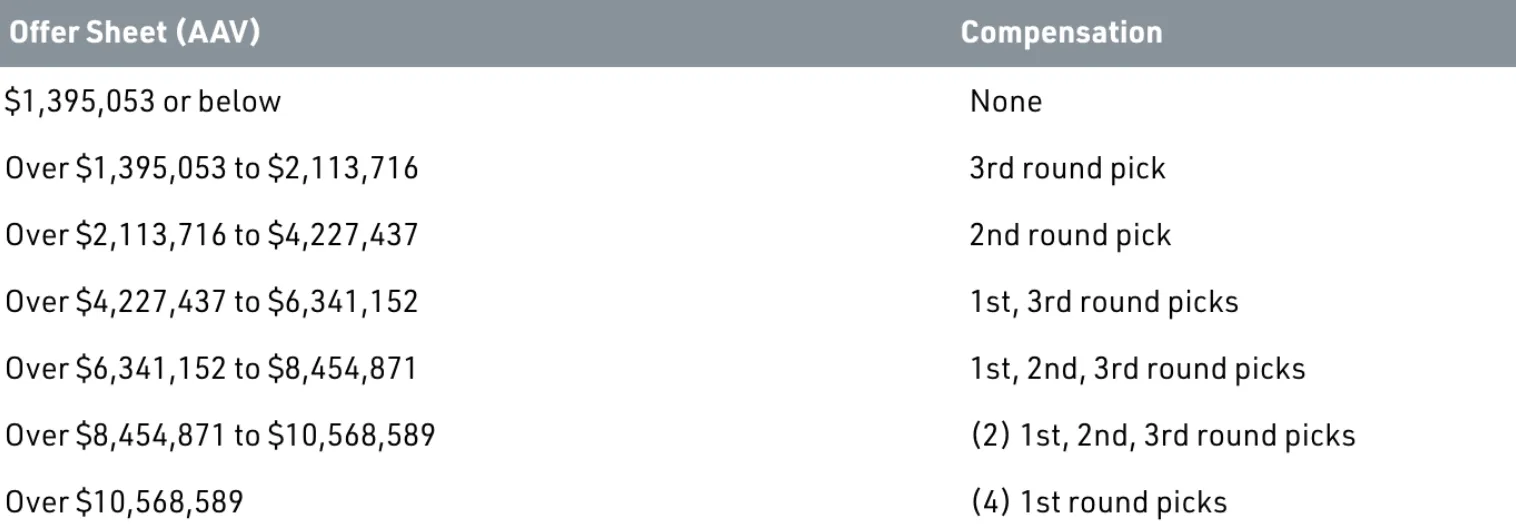
Offer Sheet Door Now Open
The $104 million cap ceiling for 2026-27 represents a $12 million jump from the prior season and immediately altered RFA strategy across the league. Leo Carlsson’s matched deal equals 17.31 percent of the new cap and temporarily made him the highest-paid player against the cap. Anaheim retained its star center but the precedent set by Philadelphia means every projected offer-sheet candidate now carries measurable risk.
Dallas moved Mavrik Bourque to Nashville three hours before free agency opened precisely because he sat atop offer-sheet lists. The trade occurred after two seasons of speculation yet only three hours of actual window. Nashville immediately signed Bourque to an extension that removed him from the market before any rival could submit paperwork.
General managers now face a binary choice on every comparable talent. Extend early at market rates or risk losing a first-round pick in compensation when an offer sheet lands. Christ Johnston noted on The Chris Johnston Show that teams must accelerate extensions because the growing cap makes previously unthinkable contracts routine for mid-tier players.
The same dynamic already produced additional trades in the final fortnight before July 1. Teams with limited cap space chose to move assets rather than gamble on matching or losing the player outright. This pattern contrasts sharply with the flat-cap era when extensions were routinely delayed until after the draft.
Accelerated Extensions and Remaining Free Agents
Cap space projections show the Flyers entered the Carlsson situation with roughly $29.6 million before the $18 million hit reduced their flexibility to $11.6 million. Remaining unsigned free agents now confront tighter markets because teams have committed resources to preempt offer sheets. Several projected $5 million to $6 million deals have already been adjusted downward in preliminary conversations.
Julian McKenzie observed that the rising cap forces GMs to pay their own players faster to avoid losing them to offer sheets. The Bourque example illustrates the mechanism: a player viewed as an offer-sheet candidate for two years received a trade and extension within hours of eligibility. This causal chain will repeat for any RFA whose projected AAV exceeds the second-round pick compensation threshold.
Teams without first-round capital or with late firsts now hold structural advantages in the new environment. A playoff contender can absorb the compensation cost more easily than a rebuilding club. The result is a redistribution of leverage away from the drafting team toward aggressive spenders.
Historical data from the last flat-cap years shows only one successful offer sheet in the prior decade. The Carlsson filing broke that drought and cannot be reversed. Every subsequent RFA negotiation will reference the $18 million benchmark even if actual salaries settle lower.
Longer-Term Cap Trajectory
Projections place the 2027-28 cap at $113.5 million, adding another layer of pressure. Contracts signed this summer will occupy smaller percentages of future ceilings and therefore appear more affordable in real time. GMs who lock in extensions now gain multi-year cost certainty before the next jump.
The combination of higher ceilings and the proven offer-sheet mechanism creates a feedback loop. Players receive larger nominal deals while teams lose flexibility for depth signings. Remaining free agents entering July 12 must therefore accept shorter or lower-value terms than they anticipated two weeks earlier.
The 2026 offseason therefore marks the first sustained period of salary-cap inflation since 2019. Its effects will compound annually until the next collective-bargaining reset.
Frequently Asked Questions
Sources

Par Mike Jonderson
Mike Jonderson is a passionate hockey analyst and expert in advanced NHL statistics. A former college player and mathematics graduate, he combines his understanding of the game with technical expertise to develop innovative predictive models and contribute to the evolution of modern hockey analytics.