






Now I have enough information to write the comprehensive blog post about Ross Johnston’s Gordie Howe Hat Trick for the Anaheim Ducks. Let me create the article in markdown format.
When Ross Johnston stepped onto the ice at Bridgestone Arena in Nashville on October 21, 2024, few anticipated the career night that was about to unfold. The 30-year-old fourth-liner, known primarily for his physical presence and willingness to drop the gloves, delivered a performance that hockey purists dream about—a Gordie Howe hat trick that included a goal, two assists, and a fight. For a player who had entered the game with minimal offensive production throughout his NHL career, this three-point outburst represented not just a personal milestone but a statement that even the most unheralded players can have their moment in the spotlight.
The Anaheim Ducks’ 5-2 victory over the Nashville Predators was punctuated by Johnston’s remarkable evening, earning him the team’s Bombay jacket—the coveted item given to the player of the game after a win. It was a night that showcased the unpredictable beauty of hockey, where role players can suddenly become stars and the enforcer becomes the catalyst for offensive success.
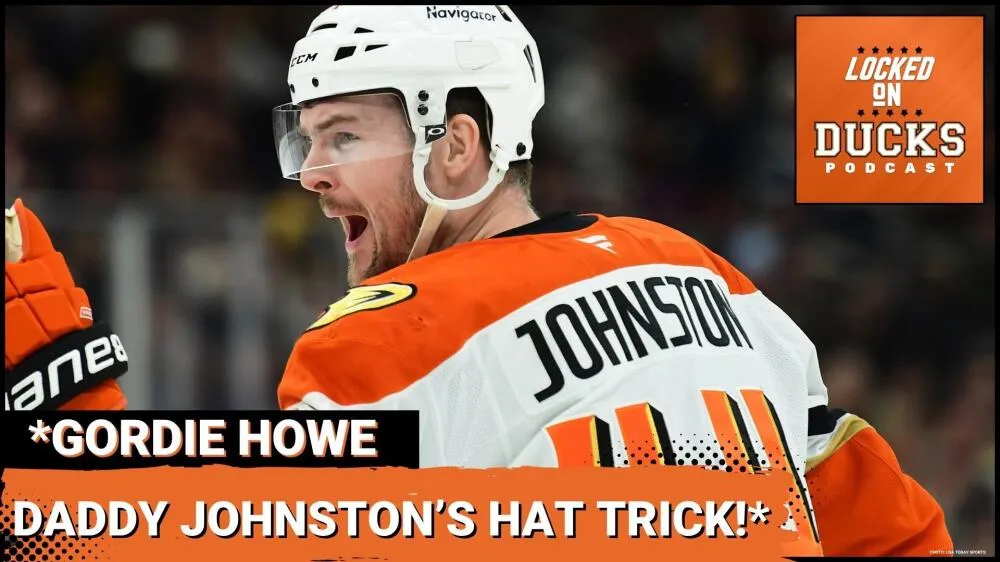
Ross Johnston’s Gordie Howe hat trick ignites the Anaheim Ducks offense
The opening goal of the game came from an unlikely source when Johnston found the back of the net, setting the tone for what would become his career night. For a player who had registered just 32 points in 213 NHL games prior to joining the Ducks, scoring first in a road game against a Western Conference opponent was already noteworthy. But Johnston was just getting started.
In the second period, he demonstrated a playmaking ability that had rarely surfaced during his time with the New York Islanders or in his early stint with Anaheim. Johnston registered the secondary assist on rookie Beckett Sennecke’s goal, showcasing the kind of hockey IQ that often goes unnoticed when a player’s primary role is physical enforcement. The assist demonstrated his ability to read the play and contribute to the offensive zone cycle, skills that are essential even for bottom-six forwards.
The third period brought another assist, this time on Troy Terry’s long-awaited first goal of the season. Terry, the Ducks’ captain and offensive catalyst, had been struggling to find the scoresheet through the early games of the season. Johnston’s involvement in breaking that drought added another layer of significance to his performance, as it helped relieve pressure on one of the team’s most important players.
The final component of the Gordie Howe hat trick came with 6:29 remaining in regulation when Johnston dropped the gloves with Nashville’s Michael McCarron. The fight, which earned him a five-minute major penalty, completed the trifecta that honors one of hockey’s greatest legends. Named after Gordie Howe—though ironically, Mr. Hockey only accomplished the feat twice in his illustrious career—the combination of a goal, an assist, and a fight represents the complete old-school hockey player.
Understanding the significance of achieving a Gordie Howe hat trick
The Gordie Howe hat trick holds a special place in hockey culture, representing a blend of skill, toughness, and versatility that defines the sport’s traditional values. While the modern NHL has evolved toward speed and skill, with fighting becoming increasingly rare, the accomplishment still resonates with players and fans who appreciate hockey’s physical roots. For Johnston, achieving this milestone validated his role on the team and demonstrated that enforcers can contribute beyond just protecting their teammates.
The rarity of the Gordie Howe hat trick in today’s NHL makes Johnston’s achievement even more remarkable. As The Hockey Writers reported, the combination of offensive production and physical confrontation is increasingly uncommon as the league has de-emphasized fighting and emphasized skill-based hockey. Players who can still deliver this type of performance represent a bridge between hockey’s past and present.
Johnston’s career trajectory makes the accomplishment particularly meaningful. Drafted by the New York Islanders in 2009, he spent years developing in the minor leagues before establishing himself as a reliable fourth-liner. His role has always been clear: provide energy, physicality, and protection for skill players. That he could expand beyond that role for one special night speaks to the depth of talent required to play in the NHL, even for those who don’t regularly appear on highlight reels.
The timing of Johnston’s breakout game couldn’t have been better for the Ducks. Playing the second game of a five-game road trip, Anaheim needed contributions from throughout the lineup to sustain momentum. When depth players like Johnston step up with career performances, it galvanizes the entire roster and demonstrates the kind of team-wide commitment that can define successful seasons.
The Anaheim Ducks’ Ross Johnston proving his value beyond fighting
While Johnston’s fight with McCarron fulfilled the fighting requirement for the Gordie Howe hat trick, his offensive contributions revealed dimensions to his game that analytics and traditional statistics had previously overlooked. The three-point performance was more than an anomaly; it was evidence that the Ducks’ coaching staff had identified untapped potential in their fourth-liner.
Head coach Greg Cronin has emphasized a system that allows all four lines to contribute offensively while maintaining defensive responsibility. Johnston’s success within this framework suggests that even players with limited offensive pedigrees can thrive when given opportunities and put in positions to succeed. The coaching staff’s trust in deploying Johnston in situations where he could contribute offensively paid dividends against Nashville.
The game also highlighted Johnston’s chemistry with his linemates and his ability to read the offensive zone. Both of his assists came from smart positional play rather than individual skill, demonstrating the hockey sense that scouts value even in physical players. His ability to be in the right place at the right time, coupled with his willingness to go to the difficult areas of the ice, created opportunities that more skilled players could capitalize on.
Beyond the statistics, Johnston’s performance exemplified the complete team effort that characterized the Ducks’ victory. Jacob Trouba recorded his first and second points of the season with assists on Leo Carlsson’s and Cutter Gauthier’s goals. Ryan Poehling registered his first assist of the season. The collective contributions from players throughout the lineup demonstrated the depth and balanced attack that successful NHL teams require.
How Ross Johnston’s career night impacts the Anaheim Ducks’ season momentum
The victory over Nashville, powered by Johnston’s Gordie Howe hat trick, represented more than just two points in the standings. It provided the Ducks with tangible proof that their roster construction and system implementation could generate offense from unexpected sources. This depth of scoring is crucial for a team that expects significant contributions from young players still developing their NHL games.
Johnston’s performance also created a template for how the Ducks’ fourth line could function throughout the season. Rather than simply serving as energy providers or defensive specialists, the line demonstrated it could contribute offensively while maintaining its physical edge. This versatility gives the coaching staff additional options in terms of deployment and matchups, particularly during the grind of the regular season.
The psychological impact on the roster shouldn’t be underestimated. When a player like Johnston—someone who has never been confused with an offensive threat—can produce a three-point game in the NHL, it sends a message to the entire team that anything is possible on any given night. This type of performance can be contagious, inspiring other role players to expand their games and contribute beyond their traditional comfort zones.
Looking ahead, the Ducks faced a challenging road trip with games against the Boston Bruins, Tampa Bay Lightning, and Florida Panthers still remaining. The momentum generated from the Nashville victory, particularly the team-wide offensive contributions, would prove valuable as they faced these opponents. While expecting Johnston to replicate his three-point performance every game would be unrealistic, the confidence gained from proving he could contribute offensively could pay dividends throughout the season.
The lasting legacy of the Anaheim Ducks Ross Johnston Gordie Howe hat trick
Career nights like Johnston’s October 21 performance become part of franchise lore, the kind of unexpected achievements that fans remember years later. For the Ducks organization, it represented a moment that encapsulated the unpredictable nature of hockey and the importance of roster depth. These are the performances that, while perhaps not defining entire seasons, create memories and demonstrate the human drama that makes sports compelling.
Johnston’s humble response to his achievement reflected the character of a player who understands his role and appreciates the opportunity to exceed expectations. In post-game comments, he acknowledged the career milestone while quickly redirecting credit to his teammates and emphasizing the team victory. This type of professionalism reinforces why coaches value players like Johnston beyond just their on-ice contributions—they provide leadership and perspective that helps maintain proper focus on team goals.
The performance also provided a reminder of why the Gordie Howe hat trick remains relevant in modern hockey culture. Even as the NHL evolves and fighting becomes less common, there’s still appreciation for players who can contribute in multiple dimensions. Johnston’s ability to score, set up teammates, and engage physically when necessary represents a complete game that honors hockey’s traditions while fitting within contemporary team structures.
For Anaheim’s rebuild and development of young players, having veterans like Johnston who can deliver unexpected performances provides invaluable lessons. Young players like Sennecke, Carlsson, and Gauthier witnessed firsthand how preparation, opportunity, and execution can combine to create career moments. These lessons often resonate more powerfully than any coaching speech or video session could deliver.
As the Ducks continue building toward contention, Johnston’s Gordie Howe hat trick will stand as evidence that success requires contributions from every roster spot. While star players garner the headlines and command the largest contracts, championships are built on depth and the ability of role players to exceed expectations at crucial moments. On one October night in Nashville, Ross Johnston proved that even the most unlikely heroes can author unforgettable performances that remind us why we love this game.

Par Mike Jonderson
Mike Jonderson is a passionate hockey analyst and expert in advanced NHL statistics. A former college player and mathematics graduate, he combines his understanding of the game with technical expertise to develop innovative predictive models and contribute to the evolution of modern hockey analytics.