








The Seattle Kraken will be without veteran defenseman Brandon Montour for at least the next four weeks as the team announced Wednesday that the 30-year-old blueliner has been placed on injured reserve following successful hand surgery. The procedure, performed earlier this week, addresses an injury that had been bothering Montour since training camp and finally reached a point where surgical intervention became unavoidable.
Montour’s absence creates a significant void on the Kraken’s blue line, particularly on the power play where his offensive instincts and right-handed shot have been valuable assets since his arrival in Seattle. The timing of the injury couldn’t be worse for a Kraken squad that has been battling inconsistency through the first quarter of the season and now must navigate a challenging upcoming schedule without one of their most experienced defensemen.
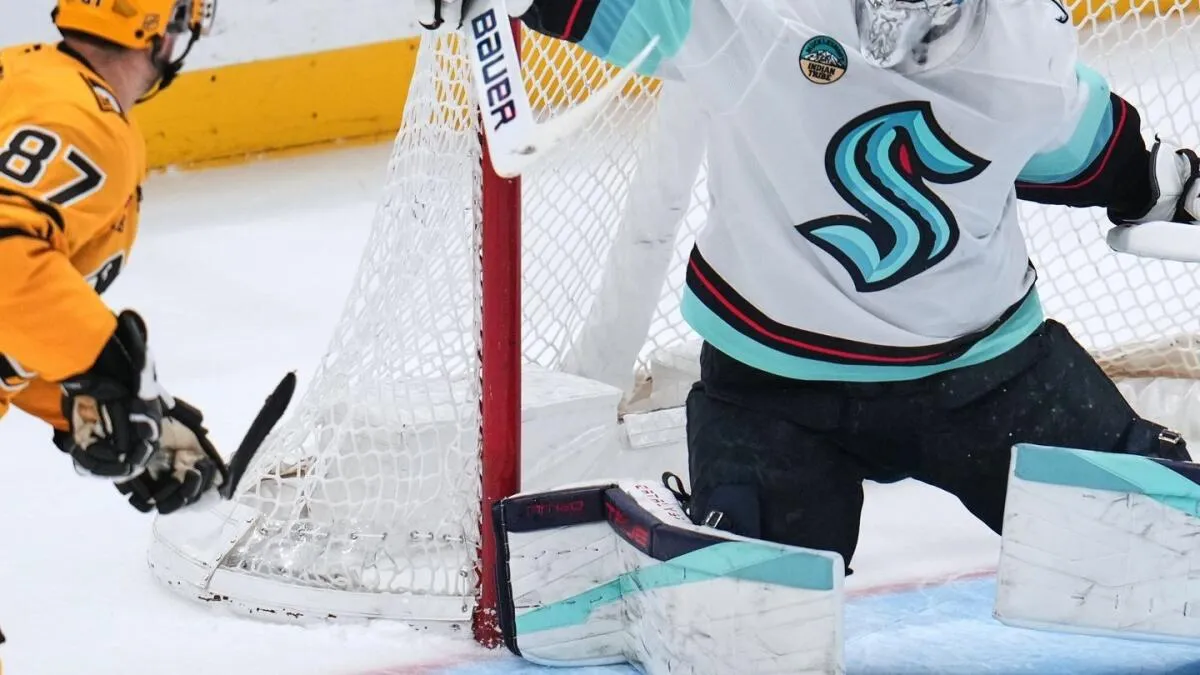
Impact of Brandon Montour injured reserve hand surgery four weeks Seattle Kraken on defensive pairings
Head coach Dave Hakstol will need to shuffle his defensive combinations significantly with Montour sidelined. The veteran had been skating primarily on the second pairing alongside Jamie Oleksiak, providing a steadying presence while also quarterbacking the second power-play unit. His ability to transition the puck and contribute offensively from the back end is not easily replaced from within the current roster.
The most likely internal candidate to absorb Montour’s minutes is 24-year-old defenseman Ryker Evans, who has shown promise in limited NHL action and possesses a similar skill set as a mobile, puck-moving blueliner. Evans has been honing his craft with the Coachella Valley Firebirds in the AHL this season, logging significant minutes in all situations, and his recall seems imminent.
Alternatively, Hakstol could opt for a more experienced option like Brian Dumoulin to take on expanded responsibilities, though this would require adjusting the top pairing that has featured Dumoulin alongside Adam Larsson. The coaching staff’s approach will likely depend on whether they prioritize stability or offensive upside in Montour’s absence.
Timeline and recovery expectations for Brandon Montour’s hand surgery
The four-week timeline represents the minimum recovery period following hand surgery, with the Kraken medical staff likely taking a cautious approach given the nature of the injury. Hand injuries for hockey players are particularly problematic as they affect stickhandling, shooting, and the ability to absorb contact along the boards. Rushing back too soon could risk re-injury or compromise Montour’s effectiveness upon his return.
Seattle’s head athletic trainer, Chris Bindel, noted in the team’s official statement: “The procedure went as planned, and Brandon is already beginning his rehabilitation process. We’ll monitor his progress closely over the coming weeks and increase his activity level as the healing allows.”
The recovery protocol typically progresses from immobilization and swelling reduction to grip strength exercises, followed by stickhandling drills, and finally full-contact practice. Each stage requires medical clearance, and setbacks are not uncommon with hand injuries. The Kraken will likely target a return in late December or early January, potentially giving Montour a buffer period to regain his conditioning during the holiday break.
Offensive production void left by Montour’s injury
Through 18 games this season, Montour had contributed modestly offensively with 2 goals and 5 assists, but his impact extended beyond raw point totals. His presence on the power play opened opportunities for teammates, and his shot from the point created valuable second-chance opportunities through traffic.
The Kraken’s power play has struggled with consistency this season, operating at roughly 18% efficiency, ranking in the bottom third of the league. Montour’s absence removes one of the key options from the point, forcing the team to rely even more heavily on Oliver Bjorkstrand and Vince Dunn to generate offense from the blue line.
This situation creates an opportunity for young defensemen like Evans or even 23-year-old Niklas Kokko to potentially earn power-play time if recalled. The development aspect could prove valuable long-term, though it may come with growing pains in the short term as inexperienced players adjust to NHL-level penalty kill pressure.
How Seattle’s schedule complicates the situation
The timing of Montour’s surgery coincides with one of the most demanding stretches of Seattle’s season. The Kraken face a grueling road trip through the Eastern Conference, including matchups against playoff-caliber teams like the Carolina Hurricanes, Florida Panthers, and New York Rangers. These games will test Seattle’s defensive depth and ability to compete without a top-four defenseman.
Compounding matters, the injury occurred just as the team was beginning to find some rhythm, having won three of their previous four games before the announcement. The chemistry that was developing between Montour and Oleksiak will need to be replicated by another pairing, and the coaching staff’s ability to maintain momentum through this adversity will be crucial.
The schedule does offer one small silver lining: Seattle has only three sets of back-to-back games during this four-week window, limiting the physical toll on their remaining defensemen. However, the parity in the Western Conference means every point is precious, and dropping games during this stretch could have significant playoff implications come April.
Salary cap implications and roster maneuvering
Placing Montour on long-term injured reserve (LTIR) provides Seattle with important salary cap flexibility. His $7.14 million cap hit can be replaced with recalled players, allowing general manager Ron Francis to potentially add depth pieces without exceeding the upper limit. This flexibility becomes particularly valuable if the Kraken decide to explore the trade market for a short-term defensive replacement.
However, the LTIR designation also means Seattle cannot accrue cap space during Montour’s absence, which could limit their ability to make larger moves at the trade deadline. Francis and his management team must balance the immediate need to stay competitive with the long-term goal of maintaining financial flexibility for potential postseason acquisitions.
The most likely scenario involves internal promotions supplemented by affordable depth signings. The Kraken’s AHL affiliate in Coachella Valley boasts several defensemen with NHL experience, including Gustav Olofsson and Brogan Rafferty, who could provide stable, if unspectacular, minutes during this stretch.
Brandon Montour’s injury history and long-term outlook
This hand surgery represents Montour’s first significant injury since joining the Kraken as a free agent in July 2023. The durable defenseman had previously missed minimal time throughout his career, playing at least 75 games in four of his previous five full NHL seasons. His reliability had been a key selling point when Seattle signed him to a seven-year, $50 million contract.
The nature of hand injuries in hockey often depends on which specific bones or soft tissues were affected. While the Kraken have not disclosed the exact procedure performed, typical surgical interventions include fixing fractures with pins or plates, repairing tendon damage, or addressing joint issues. The four-week timeframe suggests a relatively minor procedure, though the team is understandably being cautious with their significant investment.
Historically, defensemen returning from hand surgery have required additional time to rediscover their shooting accuracy and passing touch. Montour’s offensive game relies heavily on his wrist shot and ability to make quick, firm passes, so his rehabilitation will focus extensively on regaining those specific skills before he returns to game action.
What this means for Seattle’s playoff positioning
The Kraken enter this challenging period holding a wildcard position in the competitive Pacific Division, but several teams are within striking distance. Losing Montour for an extended stretch tests Seattle’s organizational depth and could ultimately determine whether they maintain their postseason positioning through the holiday season.
Success during this four-week window will require exceptional goaltending from Joey Daccord and Philipp Grubauer, along with increased production from the forward group to offset the defensive shortcomings. The team’s penalty kill, currently operating at an impressive 83% success rate, becomes even more critical as it can mitigate some of the pressure that will inevitably come with a less experienced defensive corps.
If the Kraken can maintain a .500 record during Montour’s absence, they’ll be well-positioned for a second-half push once he returns. However, a significant losing streak could force management to reconsider their approach to the trade deadline, potentially shifting from buyers to sellers if the playoff gap widens.
Internal options to replace Brandon Montour’s minutes
Seattle’s development system will face its first real test at the NHL level. Ryker Evans leads the list of potential call-ups, having impressed during his five-game stint with the Kraken last season. The 2021 second-round pick has 3 goals and 12 assists in 15 AHL games this year, showcasing the offensive upside that made him an attractive prospect.
Another intriguing option is 25-year-old defenseman Peetro Seppala, who has NHL experience from his time with the Arizona Coyotes. While not as offensively gifted as Montour, Seppala provides reliable defensive zone coverage and could be a stabilizing presence on the third pairing.
The Kraken could also choose to rotate multiple players through the lineup, using a committee approach rather than asking one individual to replicate Montour’s 22 minutes per game. This strategy would allow younger players to gain NHL experience while managing their ice time and not exposing them to consistently difficult matchups.
Historical context of hand injuries in NHL defensemen
Hand injuries have impacted several notable defensemen in recent seasons, providing a template for what Seattle might expect. Last year, Pittsburgh Penguins defenseman Kris Letang missed six weeks following hand surgery and required approximately two additional weeks to regain his offensive form upon returning. Similarly, Colorado Avalanche’s Cale Makar missed five weeks with a hand injury and noted difficulties with his shot accuracy for several games after his comeback.
These examples illustrate that while the baseline recovery might be four weeks, the true timeline to return to peak performance often extends beyond the initial medical clearance. The Kraken will need to monitor Montour’s effectiveness in practice sessions before reinserting him into the lineup, potentially giving him a brief conditioning stint in the AHL if necessary.
The organization’s approach should prioritize Montour’s long-term health over short-term gains. With nearly six years remaining on his contract, ensuring he returns at full strength is more important than rushing him back for a few games in December.
Seattle’s medical staff has earned praise around the league for their conservative approach to player health, which should serve Montour well during his rehabilitation. The team’s investment in advanced recovery protocols and its partnership with regional medical specialists provide the infrastructure needed for a successful comeback.
As the Kraken prepare for life without Montour, the focus shifts to collective responsibility. Defensemen will need to share the increased workload, forwards must commit to stronger backchecking support, and goaltenders must deliver their best performances. The organization’s depth will be tested, but adversity often reveals character, and this stretch could ultimately strengthen the team’s resolve for a postseason push.
Frequently Asked Questions

Par Mike Jonderson
Mike Jonderson is a passionate hockey analyst and expert in advanced NHL statistics. A former college player and mathematics graduate, he combines his understanding of the game with technical expertise to develop innovative predictive models and contribute to the evolution of modern hockey analytics.