







The Seattle Kraken delivered one of the most thrilling comebacks of their young season on Tuesday night, erasing a three-goal deficit in the final 12 minutes of regulation at Climate Pledge Arena. Yet despite Brandon Montour’s heroics and Shane Wright’s clutch scoring, the Kraken fell 4-3 in overtime to the Montreal Canadiens when Cole Caufield struck just 44 seconds into the extra period. The loss marked the second time in two weeks that Seattle had succumbed to Montreal in overtime, leaving a bitter taste despite earning a valuable point in the standings.
The dramatic finish couldn’t mask what had been a largely forgettable performance for the first 48 minutes. Seattle managed just 10 shots through two periods and looked disjointed in their own building before mounting a desperate third-period rally. As highlighted in the Montreal Canadiens at Seattle Kraken projected showdown October 28, 2025, this matchup featured two teams heading in different directions, and for much of the night, the Canadiens controlled the tempo while the Kraken struggled to find their game.
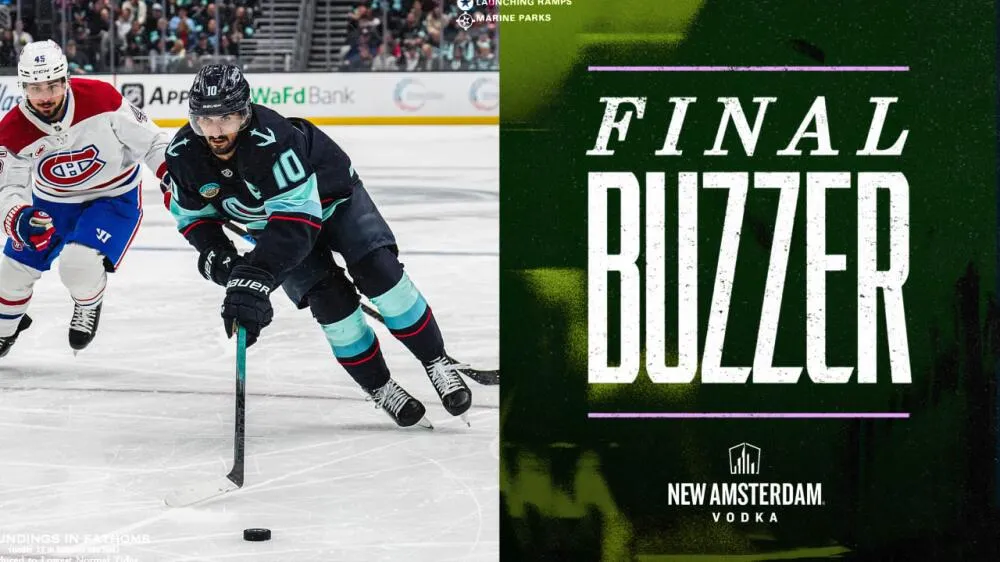
Seattle Kraken Montreal Canadiens overtime loss takeaways: slow start nearly costs everything
The Kraken’s first 40 minutes were as poor as any they’ve played this season. After consistently starting games well through the early portion of their campaign, Seattle looked flat, disorganized, and completely out of sync against a Montreal team that came to play from the opening puck drop.
“I’m pretty sure that the players have probably talked about the fact that we weren’t very good, certainly in the first period,” head coach Dan Bylsma said after the game. “There’s no excuse for it. You know, we’ll have to be better. We’ve started games pretty well consistently so far in this season, but this was not one of them. And, you know, you can’t afford to do that.”
The statistics painted an even uglier picture. Seattle managed just five shots in the first period and five more in the second, combining for a paltry 10 shots through 40 minutes of play. The lack of offensive pressure allowed Montreal to control the pace and build confidence, particularly on special teams where they capitalized on Kraken mistakes.
Shane Wright acknowledged the team’s struggles candidly in his postgame comments. “I think we were just off tonight,” Wright said. “Just weren’t making plays, weren’t handling pucks well and just weren’t created much offensively. And then, you know, kind of got desperate there in the last 10 minutes.”
The opening goal came directly off a Seattle turnover in the offensive zone, a careless mistake that led to a quick transition and an easy finish for Cole Caufield on the backdoor. From there, the Canadiens added a power-play goal late in the first period and another early in the third to build what appeared to be an insurmountable 3-0 lead with just over 11 minutes remaining in regulation.
Seattle Kraken Montreal Canadiens overtime loss takeaways: Montour’s emotional performance
Brandon Montour’s performance stood as the brightest spot in an otherwise difficult night for the Kraken. The defenseman, who had just returned from a leave of absence following the death of his brother Cameron from ALS, delivered three points including two goals and an assist to nearly single-handedly drag Seattle back into the game.
Montour’s first goal came with 11:03 remaining in the third period, a power-play blast from the point that deflected off Alexandre Carrier’s stick and past Montreal goaltender Jakub Dobeš. The goal gave the Kraken life and sparked what would become a furious rally over the final stretch of regulation.
With the game still at 3-1 and time running out, Montour set up Wright for the second Seattle goal during four-on-four play. Wright had been left completely unguarded in the slot, and Montour found him with a perfect feed that Wright buried to make it a one-goal game with 4:43 remaining.
Then, with goaltender Joey Daccord pulled for an extra attacker and just 1:43 left on the clock, Montour delivered the tying goal. From the blue line, he ripped a slap shot through traffic that Dobeš never saw thanks to a screen from Carrier. The goal was Montour’s 300th career NHL point, a milestone achieved in the most dramatic fashion possible.
“Just getting the shot,” Montour said of his approach. “I mean, I don’t even know at that time, we might have had 12 shots on net, 11 shots on net. Didn’t give that goalie much work tonight, but Schwartzy, guys in front of the net, just try to get it there and kind of find a lane. Nice to see them go through.”
Wright spoke with evident admiration about Montour’s ability to perform under such difficult personal circumstances. “It’s pretty amazing to see,” Wright said. “You know, what he’s been through the last couple of weeks here, to even just be here, let alone, you know, playing as well as he is, and perform at a level he always performs that day in, day out is really special.”
Seattle Kraken Montreal Canadiens overtime loss takeaways: momentum shift sparked by physicality
While Montour’s goals provided the offensive spark, a physical confrontation midway through the third period seemed to provide the emotional fuel Seattle needed to complete their comeback attempt. After Kirby Dach delivered what the Kraken considered a dangerous hit on Ben Meyers into the end boards, Jani Nyman immediately jumped Dach while Meyers also got into the scrum.
Both Nyman and Dach received roughing penalties, creating a four-on-four situation, but the message had been sent. Seattle would not allow their players to be run over without a response, and that assertiveness seemed to galvanize the entire bench.
“I think it was fantastic,” Bylsma said of the response. “We have to be team tough and when one of our teammates gets hit, which we consider to be a dirty hit, we have to stand up for him. And I thought it was a good momentum turner.”
The play directly preceded Wright’s goal that made it 3-2, and from that point forward, Climate Pledge Arena erupted with energy that had been absent for most of the evening. The crowd, which had been subdued during Seattle’s listless first two periods, suddenly became a factor as the building sensed a potential comeback.
This type of team toughness has been an element that successful playoff teams consistently display. While the Kraken are still building their identity, moments like Nyman’s willingness to stand up for a teammate demonstrate the kind of culture that can carry a team through difficult stretches of a long season. Similar to what was seen in the Winnipeg Jets 3-0 loss to Seattle Kraken takeaways, sometimes physicality and standing up for teammates can change the complexion of a game entirely.
The question now becomes whether Seattle can channel that intensity from the opening puck drop rather than waiting until desperation sets in during the third period. The Kraken showed they have the character to battle back, but relying on late-game heroics is not a sustainable recipe for success.
Seattle Kraken Montreal Canadiens overtime loss takeaways: Caufield’s continued overtime magic
For all of Seattle’s late-game heroics, Cole Caufield remains their nemesis in overtime situations. The diminutive sharpshooter now has 11 career overtime goals for Montreal, a franchise record, and two of them have come against the Kraken in the span of two weeks.
Caufield’s winner came just 44 seconds into the extra period, a remarkably quick strike that gave Seattle no time to settle into three-on-three play. He carried the puck behind the net and executed a brilliant wraparound, tucking the puck behind Joey Daccord’s skate and hacking it across the goal line before anyone could react.
For Daccord, who had made 32 saves including a crucial stop on Josh Anderson in the final five seconds of regulation, the overtime goal was a frustrating end to an otherwise solid performance. Daccord had kept Seattle in the game during the first two periods when his team provided virtually no offensive support, and he had no chance on Caufield’s winner.
Montreal’s overtime success against Seattle this season has become a troubling pattern. Both games followed similar scripts: competitive regulation play followed by Caufield heroics in the extra period. The Kraken will need to figure out how to contain Montreal’s star winger if they meet again this season.
Seattle Kraken Montreal Canadiens overtime loss takeaways: special teams and shot volume concerns
Beyond the dramatic finish, Seattle’s special teams and shot generation remain areas of concern that cannot be overlooked. The Kraken’s power play scored one crucial goal late in the third period, but they also surrendered two power-play goals to Montreal that dug them into the 3-0 hole.
Coach Bylsma addressed the shot volume issues after the game, noting that his team passed up too many opportunities to get pucks on net. “I thought we passed up too many shots, or opportunities, I guess, to shoot in the first little bit,” Bylsma said. “We found ways to get a few more pucks to the net and get them in, obviously. We did a really good job six-on-five. Our power play scored a big goal for us to get us going and again, it’s just another shot. There was power plays at the start of the game where we just passed it around. We’ve got to get pucks to the net.”
The tendency to overpass rather than shoot has been a recurring theme for Seattle throughout the early portion of the season. While attempting to make the perfect play can occasionally yield highlight-reel goals, more often it results in lost opportunities and allows opposing defenses to reset. Generating shots creates rebounds, screens, and chaos in front of the net—all elements that can lead to goals even when the initial shot isn’t perfect.
The Kraken’s power play particularly needs to adopt a shoot-first mentality. Against Montreal, Seattle’s man-advantage units spent too much time looking for the perfect passing lane rather than testing Dobeš with volume. The Canadiens’ young goaltender had faced minimal work through two periods, allowing him to stay comfortable and confident in his crease.
Seattle’s penalty kill also showed vulnerability, surrendering two goals on Montreal’s three power-play opportunities. While special teams will naturally have ups and downs over the course of a season, the Kraken need to be more disciplined to avoid giving skilled opponents like the Canadiens multiple chances with the man advantage.
Seattle Kraken Montreal Canadiens overtime loss takeaways: finding the silver lining in defeat
Despite the loss, Seattle can take several positives from their performance in the final 12 minutes of regulation. The ability to mount such a dramatic comeback demonstrates character and resilience that will serve the team well as the season progresses. Many teams would have folded down 3-0 late in the third period, but the Kraken fought until the final horn and earned a valuable point in the standings.
Montour’s performance, in particular, provides hope that Seattle’s defensive corps can contribute offensively even when the forwards are struggling. Having a defenseman who can quarterback the power play and jump into the rush creates additional dimensions to the Kraken’s attack that opposing teams must account for.
Wright’s continued development also offers encouragement. The young center has shown flashes of his high draft pedigree and appears to be growing more comfortable in his role. His positioning to receive Montour’s feed on the second goal demonstrated hockey IQ and spatial awareness that should improve as he gains more NHL experience.
The physicality Seattle displayed after the hit on Meyers also suggests this team is developing the kind of identity that can win tight games. Skilled teams that also play with an edge are difficult to handle, and if the Kraken can consistently bring that combination, they will be a handful for any opponent.
However, the concerning elements cannot be ignored. Starting games slowly and relying on third-period comebacks is exhausting and unsustainable. Seattle needs to find a way to bring the intensity and desperation they showed late in this game from the opening faceoff. The shot volume issues must be addressed through a more aggressive offensive approach, and special teams need to become more consistent on both sides of the puck.
As the Kraken move forward from this overtime loss, they face a crucial stretch of games that will define their early season. The ability to rebound from disappointing defeats often separates playoff teams from lottery teams, and Seattle must prove they can learn from this experience. The comeback showed they have the talent and character to compete with anyone in the league. Now they need to demonstrate they can play a complete 60 minutes rather than waiting until desperation forces their hand. For Montour and the rest of the roster, honoring the moment means channeling that third-period energy into sustained excellence rather than sporadic brilliance.

Par Mike Jonderson
Mike Jonderson is a passionate hockey analyst and expert in advanced NHL statistics. A former college player and mathematics graduate, he combines his understanding of the game with technical expertise to develop innovative predictive models and contribute to the evolution of modern hockey analytics.