






The United Center will host a compelling Western Conference matchup Thursday night as the Chicago Blackhawks welcome the Seattle Kraken for an 8 p.m. ET puck drop. With Chicago holding a slight edge in the standings at 10-5-4 compared to Seattle’s 9-5-5 record, both teams enter this contest separated by just three points in what promises to be a tightly contested battle. The Blackhawks look to capitalize on home ice advantage while the Kraken aim to build momentum following roster adjustments that include an exciting NHL debut.
This game carries additional intrigue as both clubs navigate injury challenges while integrating young talent into their lineups. Chicago’s remarkable turnaround continues behind sophomore sensation Connor Bedard, who leads the team with 29 points, while Seattle counters with their own emerging star Matty Beniers anchoring the top line. The projected lineups reveal fascinating tactical decisions from both coaching staffs that could determine the outcome in this crucial November meeting.
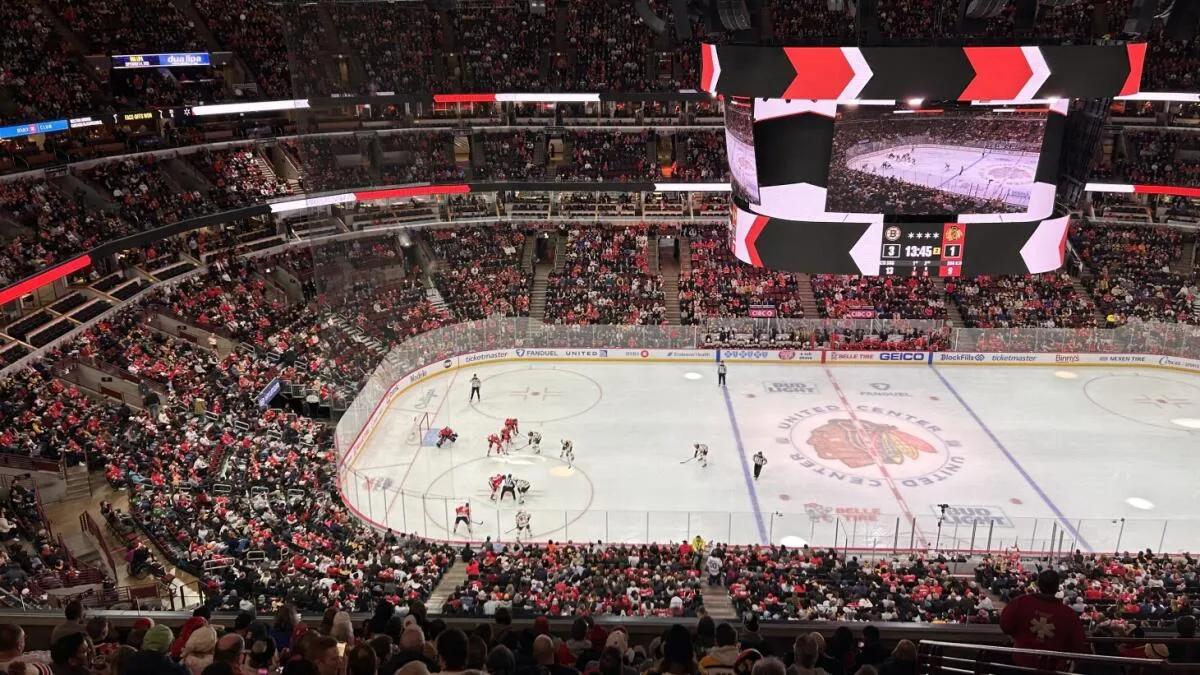
Seattle Kraken projected lineup November 20 2025 against Chicago Blackhawks
The Kraken arrive in Chicago with a reconfigured forward group that reflects both roster necessity and strategic opportunity. Head coach Dave Hakstol has had to shuffle his combinations due to injuries to key veterans, creating openings for younger players to step into larger roles. The morning skate indicated Seattle would ice 12 forwards and six defensemen, maintaining standard roster construction despite their health concerns.
Forward lines and offensive chemistry
Seattle’s top line projects as Mason Marchment flanking Matty Beniers and Jordan Eberle on the right wing. This trio combines physical presence, playmaking vision, and scoring touch in a balanced attack. Beniers, the 2022 Calder Trophy winner, continues developing into Seattle’s franchise center, while Eberle provides veteran stability and Marchment adds net-front disruption. The second line features Jaden Schwartz with Chandler Stephenson centering rookie Berkly Catton, giving Seattle a mix of experience and youthful energy.
The bottom six showcases Seattle’s organizational depth, with Eeli Tolvanen, Freddy Gaudreau, and Shane Wright forming a capable third line that can check opponents while contributing offensively. Wright, the 2022 fourth overall pick, continues his development as a pro, playing a responsible two-way game. The fourth line presents the night’s most intriguing storyline: Oscar Fisker Molgaard will make his NHL debut between Tye Kartye and Ryan Winterton after his recall from Coachella Valley of the AHL. This marks a significant milestone for the 2023 second-round pick who impressed in training camp.
Defensive pairings and goaltending situation
Seattle’s blue line remains their strength despite missing Jared McCann’s forward contributions. Vince Dunn and Adam Larsson form the established top pairing, providing both offensive spark and defensive reliability. The second pairing of Ryan Lindgren and Brandon Montour brings a blend of physicality and puck-moving ability, while Ryker Evans partners with Jamie Oleksiak on the third unit. Evans continues rounding out his NHL game after a promising rookie campaign.
In net, Joey Daccord gets the starting nod with Philipp Grubauer backing him up. Daccord’s 2.65 goals-against average and .910 save percentage have given Seattle consistent goaltending, while Grubauer’s experience provides insurance. The Kraken’s defensive structure will be tested against Chicago’s high-powered attack, requiring disciplined gap control and smart breakout passes.
Injury report and roster notes
The Kraken face significant absences as Jared McCann (lower body) and Kaapo Kakko (lower body) remain sidelined. McCann participated in the morning skate but remains day-to-day, representing a substantial loss as Seattle’s second-leading scorer behind Beniers. Kakko’s absence removes a physical presence from the wing. Defenseman Matt Murray also nurses a lower-body injury, though Seattle’s depth has absorbed his absence.
With McCann unavailable, Fisker Molgaard’s recall proves timely. The Danish center posted 8 goals and 14 assists in 18 AHL games this season, demonstrating readiness for his NHL opportunity. His debut provides Seattle with an additional center option and penalty killing capability, areas that could prove decisive against Chicago’s skilled power play.
Chicago Blackhawks projected lineup November 20 2025 against Seattle Kraken
The Blackhawks enter this matchup riding high after a 5-2 victory over Calgary, where Connor Bedard recorded his second hat trick of the season. Head coach Anders Sorensen has settled on a lineup configuration that maximizes his team’s strengths while managing roster limitations caused by injuries. Chicago will dress 11 forwards and seven defensemen, providing flexibility on the back end while concentrating offensive talent up front.
Forward lines and scoring depth
Chicago’s top line anchors the attack with Ryan Greene centering Connor Bedard and Andre Burakovsky on the left wing. This combination has torched opponents recently, with Bedard’s 13 goals and 16 assists leading all rookies and sophomores league-wide. Burakovsky’s 11 points provide excellent secondary scoring, while Greene’s two-way awareness allows Bedard to freelance creatively. The trio combines for 42 points in 19 games, representing one of the NHL’s most productive lines.
The second unit features Oliver Moore between Frank Nazar and returning winger Tyler Bertuzzi, who missed two games with an undisclosed injury. Bertuzzi’s 15 points in 17 games give Chicago another proven scorer, while Moore and Nazar represent the organization’s future. The third line of Teuvo Teravainen, Ryan Donato, and Ilya Mikheyev brings veteran experience and defensive responsibility, capable of matching up against Seattle’s top scorers.
The unconventional fourth line consists solely of Colton Dach and Sam Lafferty, as dressing seven defensemen forces Chicago to short their forward complement. Both players kill penalties effectively and can provide energy shifts while the top nine receive heavier minutes. This roster construction speaks to Chicago’s confidence in their defensive depth and their desire to roll three scoring lines consistently.
Defensive structure and special teams
Chicago’s blue line has become a surprising strength, led by Alex Vlasic and Louis Crevier forming a shut-down top pairing. Vlasic’s plus-8 rating leads the team, while Crevier’s physical presence discourages opposing forwards. The second pairing features Wyatt Kaiser with rookie sensation Artyom Levshunov, who leads Chicago defensemen with 10 assists and has quickly adapted to NHL pace.
Matt Grzelcyk and Connor Murphy provide veteran stability on the third pairing, while Sam Rinzel serves as the seventh defenseman, offering insurance against fatigue or special teams situations. Chicago’s penalty kill ranks ninth in the league at 83.2%, with this group of defensemen playing significant roles in that success. The Blackhawks will need that kill to be sharp against Seattle’s power play, which converts at 22.4% efficiency.
Goaltending matchup and netminder rotation
Spencer Knight receives the start in goal as he continues establishing himself as Chicago’s workhorse. Knight’s 10-4-3 record with a 2.45 goals-against average and .918 save percentage places him among the league’s better starters. His positioning and rebound control have improved dramatically from his rookie season, providing Chicago with confidence in critical moments. Arvid Soderblom backs up Knight, having posted solid numbers in limited action.
The goaltending duel presents an interesting contrast: Knight’s technical proficiency against Daccord’s athletic style. Both teams allow roughly 2.8 goals per game, suggesting this matchup could be decided by which goaltender makes the key save at the crucial moment. Chicago’s defense must limit second-chance opportunities against Seattle’s gritty forward group.
Key matchups and tactical battles to watch
When examining the Seattle Kraken vs Chicago Blackhawks projected lineups for November 20 2025, several individual matchups stand out as potential game-deciders. The coaching chess match between Dave Hakstol and Anders Sorensen will unfold through line changes and tactical adjustments, particularly in how each team deploys their top players against opposing strengths.
Young superstars collide: Bedard versus Beniers
The marquee matchup features two franchise centers at different career stages. Connor Bedard, already an established elite scorer in his sophomore season, brings 29 points and momentum from his recent hat trick. His ability to create offense from anywhere in the offensive zone forces defenses to account for him constantly. Matty Beniers, while less flashy statistically, drives Seattle’s possession game and provides exemplary two-way play.
This head-to-head battle extends beyond individual statistics. Beniers will likely draw the defensive assignment against Bedard when Seattle has last change, testing his defensive awareness against Bedard’s creativity. Conversely, when Beniers’ line attacks, Chicago’s Vlasic-Crevier pairing must contain Seattle’s balanced attack. The team that wins this center-versus-center war likely wins the game.
Seattle’s physical forecheck against Chicago’s transition game
Seattle’s third and fourth lines, featuring players like Tye Kartye and Ryan Winterton, play a heavy forechecking style designed to disrupt clean breakouts. This approach directly challenges Chicago’s defensive corps, particularly young players like Artyom Levshunov who excel at transition passing. If Seattle can force turnovers below the goal line, they’ll generate high-danger scoring chances against Knight.
Chicago must counter by utilizing their mobile defensemen, particularly Kaiser and Levshunov, to make quick outlet passes that bypass Seattle’s forecheck. The Blackhawks’ ability to stretch the ice vertically could neutralize Seattle’s grinding game, creating odd-man rushes that favor Bedard’s line. This tactical battle may determine which team controls territorial advantage.
Special teams advantage
Both teams feature dangerous power play units, with Chicago converting at 24.1% (seventh in NHL) and Seattle at 22.4% (11th). The Blackhawks’ man advantage revolves around Bedard’s one-timer from the left circle, while Seattle spreads the puck across their top unit with Dunn quarterbacking from the point. Chicago’s penalty kill has been more consistent, ranking ninth compared to Seattle’s 18th-place finish at 78.9%.
Whichever team draws more penalties and capitalizes on their opportunities will gain a significant edge. Seattle must avoid putting Bedard on the power play, where his 12 power-play points rank among league leaders. Conversely, Chicago must contain Dunn’s point shot and Marchment’s net-front presence to prevent Seattle from gaining momentum.
Strategic implications and game flow expectations
Analyzing the projected lineups for Seattle Kraken vs Chicago Blackhawks on November 20 2025 reveals distinct strategic philosophies that will clash at the United Center. Chicago’s approach emphasizes offensive creativity and youth-driven energy, while Seattle relies on structural discipline and collective responsibility. These contrasting styles should create an entertaining, back-and-forth contest.
Chicago’s high-event hockey
The Blackhawks average 3.37 goals per game while surrendering 2.89, indicating their preference for high-scoring, open-ice games. Dressing seven defensemen allows Chicago to maintain fresh legs on the back end, enabling their defensemen to jump into the play aggressively. This strategy creates numerical advantages in the offensive zone but leaves them vulnerable to counter-attacks if forwards don’t backcheck diligently.
Sorensen’s decision to load up the top line with Bedard, Burakovsky, and Greene demonstrates Chicago’s belief that their best defense is controlling possession with their best players. This approach has worked recently, as evidenced by their 5-2 win over Calgary, but Seattle’s defensive structure presents a sterner test than many opponents.
Seattle’s methodical approach
The Kraken play a lower-event style, averaging 2.94 goals for and 2.78 against, relying on limiting opponents’ quality chances while capitalizing on their own limited opportunities. This formula proved effective in previous road games, including their recent matchup against Detroit. Fisker Molgaard’s debut fits this philosophy perfectly—he’s known for responsible defensive play and smart positioning rather than flashy offense.
Hakstol’s system prioritizes gap control and forcing shots to the perimeter, trusting Daccord to handle low-danger chances while the defense collapses to prevent second opportunities. Against Chicago’s skilled forwards, Seattle must execute this plan flawlessly, as Bedard can convert even marginal chances when given time and space.
Expected pace and possession patterns
Early game flow likely features feeling-out period as both teams test their systems. Chicago will attempt to establish their transition game through the neutral zone, while Seattle will dump pucks deep and hammer Blackhawks defensemen with their physical fourth line. As the game progresses, the team that establishes the first two-goal lead will force their opponent to adjust strategy.
If Chicago leads, expect them to continue their aggressive forecheck, trusting Knight to make saves. If Seattle leads, they’ll likely trap through the neutral zone and force Chicago to chip pucks in rather than carrying with speed. Third-period coaching decisions around pulling goaltenders and timeout usage could prove decisive in what’s projected as a one-goal game.
The playoff implications cannot be overstated. Both teams sit in wild-card contention in the Western Conference, making every point crucial. Chicago’s recent surge has them trending upward, while Seattle’s consistent play keeps them in the mix. The winner gains not only two points but also the tiebreaker advantage should these teams finish even in the standings.
Oscar Fisker Molgaard’s NHL debut adds a human element to the tactical discussion. As he told reporters after morning skate, “I’ve dreamed of this moment since Seattle drafted me. The coaches just told me to play my game—responsible defensively, hard on the forecheck, and trust my instincts.” His presence energizes the Kraken lineup while providing a reminder of how quickly prospects can impact NHL rosters when injuries create opportunities.
Connor Bedard’s recent scoring surge has Chicago feeling confident. “We know what we’re capable of when we play our game,” Bedard said following the Calgary victory. “Seattle’s a structured team, but we’ve got to focus on our speed and skill. If we play the right way, we’ll like the result.” His confidence reflects Chicago’s belief that their youth movement has matured ahead of schedule.
For Seattle, the message remains consistent: trust the process. Veterans like Jordan Eberle emphasize controlling what they can control. “We can’t worry about their young stars,” Eberle noted. “We’ve got to play Kraken hockey—heavy, smart, and together. Do that for 60 minutes, and we’ll give ourselves a chance to win.” This veteran perspective grounds Seattle’s approach amid Chicago’s high-flying offense.
The United Center crowd will undoubtedly rally behind Bedard and the surging Blackhawks, creating an intimidating atmosphere for Seattle’s debuting forward. How Fisker Molgaard handles his first NHL shift, who he matches up against, and whether he can contribute on the penalty kill will be fascinating subplots that could swing momentum.
While predictions remain difficult in a league where one shot can change everything, the data suggests Chicago’s offensive firepower gives them a slight edge. Their 3.37 goals-per-game average against Seattle’s 2.78 goals-against indicates Chicago should score three or four goals. Conversely, Seattle’s 2.94 goals-for against Chicago’s 2.89 goals-against suggests the Kraken should tally two or three markers.
The most likely outcome appears to be a 4-2 or 4-3 Chicago victory, with Bedard factoring on multiple scores and Seattle’s depth keeping the game competitive until late. However, if Daccord stands on his head and Seattle’s forecheck dominates, a 3-2 Kraken win wouldn’t surprise anyone who has watched this team’s resilient identity develop over the past two seasons.
Regardless of result, this game represents another step forward for both franchises. Chicago continues proving their rebuild timeline accelerated dramatically, while Seattle demonstrates that expansion teams can remain competitive even when facing injury adversity. The battle between these contrasting styles should provide outstanding entertainment for hockey fans and valuable data for coaches analyzing playoff potential.
What happens Thursday night in Chicago will ripple through both organizations. A Blackhawks win solidifies their playoff positioning and validates their youth movement’s playoff readiness. A Kraken victory demonstrates their system works against anyone and that their pipeline produces NHL-ready talent. Either way, the Seattle Kraken vs Chicago Blackhawks projected lineup November 20 2025 tells a story of two franchises moving in the right direction, making this appointment viewing for anyone interested in modern NHL team building.
Frequently Asked Questions

Par Mike Jonderson
Mike Jonderson is a passionate hockey analyst and expert in advanced NHL statistics. A former college player and mathematics graduate, he combines his understanding of the game with technical expertise to develop innovative predictive models and contribute to the evolution of modern hockey analytics.