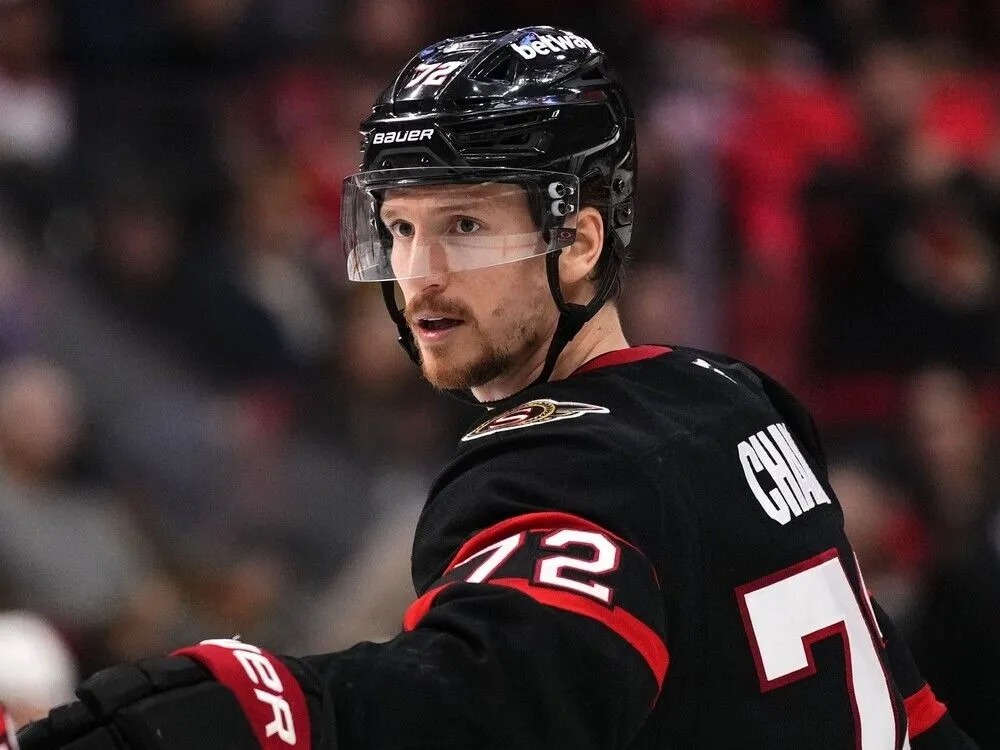
Ottawa Senators defenseman Thomas Chabot is poised to make a stunning comeback, just 2½ weeks after suffering a broken arm in a game against the New York Rangers. Ottawa Citizen Ottawa Citizen The 29-year-old will suit up for Thursday’s matchup versus the Florida Panthers, returning after missing only eight games. This rapid recovery defies the initial prognosis of one to two months sidelined following surgery on March 26. ESPN
The Senators, holding the second wild-card spot in the Eastern Conference, announced Chabot’s readiness as they push for a second consecutive playoff appearance. Ottawa sits two points ahead of the Columbus Blue Jackets, with three other teams lurking just one point back in a tightly contested race. NHL CBS Sports
The cross-check that changed everything
Chabot’s injury occurred on March 23 during a heated contest at Madison Square Garden against the Rangers. A cross-check from Rangers captain J.T. Miller sent Chabot to the ice, fracturing his arm and forcing him from the game early. The Senators still managed a 2-1 victory that night, tightening their grip on a playoff position. NHL
The immediate aftermath was grim. Ottawa’s medical staff confirmed the break, and Chabot underwent surgery three days later to repair the damage. Coach Travis Green initially outlined a recovery timeline of four to eight weeks, potentially sidelining the veteran blueliner through the early playoffs or worse. ESPN
Despite the setback, the Senators showed resilience without their top-pair defenseman. They rattled off three wins in their last four games, all against teams that had already clinched playoff spots, proving their depth amid the chaos of the stretch drive.
Chabot’s absence highlighted the blue line’s vulnerabilities, especially with partner Jake Sanderson also nursing an upper-body injury before returning last Saturday. The team’s ability to grind out results without two key defenders speaks to their growth under Green.
This injury wasn’t Chabot’s first rodeo with setbacks, but his history of bouncing back quickly fueled optimism from day one. Fans and analysts alike watched closely as practice updates trickled in.
A recovery ahead of schedule
What started as a potential season-ender turned into one of the fastest comebacks in recent NHL memory. Chabot was back on the ice for morning skates just 15 days post-injury, drawing praise from his coach. “He’s extremely tough,” Green said, marveling at the progress. Ottawa Citizen
Medical experts note that modern surgical techniques and rigorous rehab protocols played a role, but Chabot’s elite conditioning separated him from the pack. He skipped the typical month-long minimum, returning after only eight games missed—a testament to his work ethic.
The Senators’ training staff deserves credit too, tailoring a program that accelerated healing without risk. Early reports suggested he might play in the regular season finale, but Thursday’s announcement confirms he’s game-ready now.
Teammates rallied around him during the process. Sanderson, who logged heavy minutes in Chabot’s absence, called it “the fastest recovery I’ve ever seen.” TSN This unity has been a hallmark of Ottawa’s late-season surge.
Chabot himself downplayed the hype, focusing on contributing immediately. His presence on the ice during practices signaled business as usual.
Chabot’s pivotal role on the Senators’ defense
Before the injury, Chabot anchored Ottawa’s top defense pair, logging an average of 22:34 ice time per game—second only to Sanderson’s 24:50. ESPN In 55 games, he posted seven goals and 24 assists for 31 points, skating to a plus-6 rating while chipping in two power-play goals.
His all-situations reliability shines through:
- 96 shots on goal, showcasing offensive instincts from the back end.
- Key penalty-kill contributions, including one shorthanded goal.
- Pairing seamlessly with Sanderson for a stout top four.
Check his recent form prior to injury:
- March 21 vs. Toronto: 1 assist, 28:36 TOI in a 5-2 win.
- March 19 vs. Islanders: +1 rating, 30:53 TOI in 3-2 victory.
- March 15 vs. Sharks: Solid 28:29 TOI in 7-4 rout. ESPN
Without him, the blue line leaned heavily on youth and depth pieces, but cracks showed in high-danger chances against. His return restores balance.
Chabot’s veteran poise will be crucial as Ottawa faces playoff-tested foes down the stretch. For more on his season stats, see his ESPN profile.
Boosting Ottawa’s wild-card push
The Eastern Conference wild-card race is a dogfight, with Ottawa clinging to the No. 2 spot. Two points separate them from Columbus, while Montreal, Buffalo, and others hover nearby. Every point counts with the calendar flipping to April. CBS Sports ESPN
Chabot’s timely return comes amid a hot streak: three wins in four against clinched playoff teams like the Rangers and others. This momentum positions them well for Thursday’s test against Florida.
Key factors in their surge:
- Goaltending stabilization with recent shutouts.
- Secondary scoring from unlikely heroes.
- Defensive structure holding firm despite injuries.
- Favorable remaining schedule with home-heavy slate.
Details on the latest standings and projections are available via NHL.com.
Rivals like Columbus faltered recently, opening the door. Ottawa’s second straight playoff chase hinges on health and execution.
The Senators’ recent 4-2 win over Utah further solidified belief. Chabot’s insertion elevates their ceiling.
Chabot’s return injects playoff experience into a young core hungry for postseason glory. With the wild card in sight, Ottawa gains a massive edge—potentially flipping close games and extending their season. If they harness this boost, a deep run isn’t out of reach; the Senators are built for April now more than ever.
Frequently Asked Questions

Par Mike Jonderson
Mike Jonderson is a passionate hockey analyst and expert in advanced NHL statistics. A former college player and mathematics graduate, he combines his understanding of the game with technical expertise to develop innovative predictive models and contribute to the evolution of modern hockey analytics.