









Sidney Crosby’s legendary career with the Pittsburgh Penguins has reached heights that few could have predicted when he first laced up his skates as “Sid the Kid.” On October 21, 2025, the Penguins captain surpassed Mario Lemieux to become the franchise’s all-time points leader with 1,896 combined regular season and playoff points, a milestone that seemed untouchable just years ago. But what makes Crosby’s accomplishments even more remarkable is how his career can be dissected into three distinct Hall of Fame-worthy eras, each one impressive enough to warrant enshrinement in Toronto’s hallowed halls on its own merit.
When examining the Sidney Crosby three hall of fame careers concept, it becomes clear that this isn’t just hyperbole—it’S a legitimate framework for understanding the sustained excellence of one of hockey’s greatest players. Much like Tom Brady’s three distinct championship eras in the NFL, Crosby’s career arc showcases three separate periods of dominance, each punctuated by hardware, records, and moments that define greatness in professional hockey.
The foundation: Sidney Crosby’s first hall of fame career (2003-04 to 2009-10)
The first chapter of Sidney Crosby’s three hall of fame careers began before he even stepped onto NHL ice. As a 16-year-old phenom in the QMJHL, Crosby was already representing Canada at the World Junior Championship, competing against players up to four years his senior. This early dominance foreshadowed what was to come when the Penguins selected him first overall in 2005.
From his debut in 2005-06 through the 2009-10 season, Crosby accumulated 588 points in 433 games—more than any other player in the league during that span. He claimed his first Hart Trophy, Art Ross Trophy, and Ted Lindsay Award, establishing himself as not just a scoring threat but the face of a new generation of hockey. At just 19 years old, he became the youngest captain in NHL history when the “C” was stitched onto his Penguins jersey.
The crowning achievement of this first era came in 2009, when Crosby hoisted the Stanley Cup at just 21 years old, becoming the youngest captain to do so in NHL history. His 31 playoff points that postseason showcased his ability to elevate his game when it mattered most. But the defining moment was yet to come.
The 2010 Olympic gold medal game produced what many consider the most memorable goal in hockey history. Crosby’s overtime winner against the United States on home ice in Vancouver cemented his legacy as a clutch performer on the world’s biggest stage. With three NHL All-Star selections, a Maurice Richard Trophy, and a Mark Messier Leadership Award also adorning his résumé by age 22, this first career was already worthy of Hall of Fame induction.
Beyond the statistics and trophies, Crosby transformed the Penguins from a franchise on the brink of relocation into one of the league’s marquee teams. His impact on Pittsburgh hockey extended far beyond the ice, revitalizing a fanbase and ensuring the team’s long-term viability in the Steel City.
Adversity and triumph: The second hall of fame career (2010-11 to 2015-16)
The second phase of Sidney Crosby’s three hall of fame careers was marked by both struggle and unprecedented success. Concussions began to impact his availability significantly, forcing him to miss extensive stretches of games. Despite playing in just 398 games during this six-year period, Crosby posted a staggering 487 points—the highest points-per-game pace in the NHL among players with at least 100 games played.
His point-per-game dominance during these seasons demonstrated that even when battling injuries, Crosby remained the most dangerous player in hockey. He added two more Ted Lindsay Awards (2013 and 2014) and another Hart Trophy in 2014, proving that his peers and the hockey world still recognized him as the game’s premier talent. His plus-92 rating during this period also highlighted his complete two-way game.
The 2014 Olympics in Sochi provided another opportunity for Crosby to shine on the international stage. Leading Canada to another gold medal, he continued building his legacy as one of hockey’s great winners. His ability to perform in high-pressure situations became his calling card, with clutch performances becoming the expectation rather than the exception.
The 2015-16 season culminated in Crosby’s second Stanley Cup championship, but this time with added hardware—the Conn Smythe Trophy as playoff MVP. His 19 points in 24 playoff games demonstrated his value in leading the Penguins through a grueling postseason. This championship was particularly sweet as it validated Crosby’s perseverance through the injury-plagued years.
According to Daily Faceoff, this era solidified Crosby’s status as a player who could overcome adversity and still dominate. His resilience became as much a part of his legend as his on-ice brilliance, inspiring teammates and fans alike with his determination to return to form after each setback.
The veteran years: Sidney Crosby’s third hall of fame career (2016-17 to present)
The current era of Sidney Crosby’s three hall of fame careers showcases a player who has mastered the art of sustained excellence. With 821 points in 708 games since the start of the 2016-17 season—the eighth-most in the NHL during that span—Crosby has proven that age is merely a number. His production rivals that of Peter Forsberg’s entire Hall of Fame career, which featured 885 points in 708 games.
The 2016-17 season brought back-to-back Stanley Cup championships to Pittsburgh, a feat not accomplished since the Detroit Red Wings in the late 1990s. Crosby captured his second Conn Smythe Trophy, joining an elite group of players with multiple playoff MVP awards. His ability to guide the Penguins through consecutive championship runs demonstrated leadership that transcended statistics.
During this third career, Crosby has added another Maurice Richard Trophy (2017), five NHL All-Star selections, and a World Cup gold medal with Team Canada. His role has evolved from pure offensive dynamo to complete franchise cornerstone, mentoring younger players while maintaining elite production. The consistency he’s displayed well into his thirties separates him from many of his contemporaries.
The historic milestone achieved on October 21, 2025, when Crosby surpassed Mario Lemieux as the Penguins’ all-time combined points leader, represents the culmination of nearly two decades of excellence. Scoring his 1,896th point against the Vancouver Canucks, Crosby dethroned a legend many thought would hold the record forever. This achievement alone would define most players’ careers—for Crosby, it’s merely another chapter in an already incomparable story.
His 1,359 games played, 1,067 assists, and 629 goals (as of this milestone) place him at or near the top of virtually every Penguins franchise record. His 201 playoff points surpass both Lemieux and longtime teammate Evgeni Malkin, further emphasizing his postseason prowess. As detailed by The Hockey Writers, few players in NHL history can claim such comprehensive dominance across regular season and playoffs.
The numbers behind Sidney Crosby’s three hall of fame careers
When analyzing the statistical breakdown of each era, the Sidney Crosby three hall of fame careers concept becomes even more compelling:
First Career (2003-04 to 2009-10):
- 213 goals and 375 assists in 433 games
- Plus-67 rating
- League leader in total points during this span
- 3 NHL All-Star appearances
- 1 Stanley Cup, 1 Hart Trophy, 1 Art Ross Trophy, 1 Olympic Gold Medal
Second Career (2010-11 to 2015-16):
- 174 goals and 313 assists in 398 games
- Plus-92 rating
- Highest points-per-game pace in the NHL (minimum 100 games)
- 2 Ted Lindsay Awards, 1 Hart Trophy, 1 Stanley Cup, 1 Conn Smythe Trophy
Third Career (2016-17 to Present):
- 313 goals and 508 assists in 708 games
- Plus-58 rating
- Eighth-most points in the NHL during this period
- 1 Stanley Cup, 1 Conn Smythe Trophy, 5 NHL All-Star selections
Each of these statistical profiles compares favorably to actual Hall of Fame careers. The second career’s point-per-game pace, despite injury setbacks, showcases dominance that few players achieve even in their prime. The third career’s longevity and consistency mirror the careers of players like Forsberg and Steve Yzerman, both enshrined in the Hall.
What makes these numbers even more impressive is the context—different eras of hockey, various linemates, evolving playing styles, and the physical toll of playing in the NHL’s most demanding positions. Crosby adapted his game through each phase, from dynamic scorer to complete two-way center to veteran leader, all while maintaining elite production.
The playoff numbers deserve special attention, as Crosby’s 201 postseason points lead all Penguins players in franchise history. His ability to elevate his game in the playoffs, winning three Stanley Cups and two Conn Smythe Trophies, distinguishes him from many players with comparable regular-season statistics. Championship pedigree matters in Hall of Fame discussions, and Crosby possesses it in abundance.
International dominance across all three careers
Beyond NHL accomplishments, Sidney Crosby’s three hall of fame careers also feature remarkable international success. His two Olympic gold medals (2010, 2014) bookend the first two career phases, with the 2010 golden goal becoming Canadian hockey lore. The World Cup gold medal and tournament scoring title in 2016 bridged his second and third careers, demonstrating consistent excellence regardless of jersey color.
His early World Junior Championship and World Championship performances showed that even as a teenager, Crosby could compete with and dominate against grown men. These international tournaments provided a stage for Crosby to showcase his talents to global audiences, expanding hockey’s reach and inspiring a new generation of players worldwide.
The weight of expectation at each international tournament never seemed to burden Crosby; instead, he thrived under pressure. Whether facing the Russians, Americans, or Europeans, Crosby consistently delivered when his country needed him most. His 2010 Olympic overtime winner remains the most-watched hockey game in Canadian television history, a cultural moment that transcended sport.
Looking ahead to future international competitions, Crosby’s participation in events like the upcoming 4 Nations Face-Off adds another dimension to his third career. Even in his late thirties, he remains a player that Team Canada builds around, a testament to his enduring skill and leadership. His international résumé alone would warrant serious Hall of Fame consideration, making it just one component of his three remarkable careers.
The combination of NHL success and international glory separates Crosby from many of his contemporaries. While numerous players have achieved NHL stardom, fewer can claim multiple Olympic gold medals and World Championship titles. Crosby’s ability to excel in both the 82-game NHL grind and high-stakes international tournaments demonstrates versatility and mental fortitude that define true greatness.
The leadership factor in Crosby’s sustained excellence
One element that ties together the Sidney Crosby three hall of fame careers is his exceptional leadership. Becoming the youngest captain in NHL history at 19, Crosby has worn the “C” for nearly his entire career, guiding the Penguins through rebuilds, championships, and transitions. His work ethic became legendary, with teammates consistently citing his practice habits and preparation as setting the standard.
Former teammate Pascal Dupuis once said, “He’s the first guy on the ice and the last guy off. He never takes a shift off, never takes a day off. That’s what makes him special.” This commitment to excellence influenced an entire generation of Penguins players, creating a culture of accountability that fueled three Stanley Cup championships.
Crosby’s leadership evolved through each career phase. Early on, he led by example, letting his play speak louder than words. As he matured, particularly during the second career marked by injuries, he learned to guide teammates through adversity. In his third career, he’s become a mentor to younger stars like Jake Guentzel, passing along the wisdom accumulated through nearly two decades of professional hockey.
The Mark Messier Leadership Award he received in 2007 recognized his early leadership qualities, but his most impactful work came in the locker room and during crucial playoff moments. His ability to elevate teammates’ games made those around him better, a hallmark of truly great captains. Players consistently speak of Crosby’s competitiveness and refusal to accept anything less than their best efforts.
Off the ice, Crosby’s community involvement and charitable work in Pittsburgh solidified his standing as more than just a hockey player. His Sidney Crosby Foundation has contributed millions to various causes, while his personal commitment to youth hockey programs ensures his impact extends beyond his playing career. This holistic approach to leadership cements his legacy as one of hockey’s most complete stars.
Comparing Crosby to other all-time greats
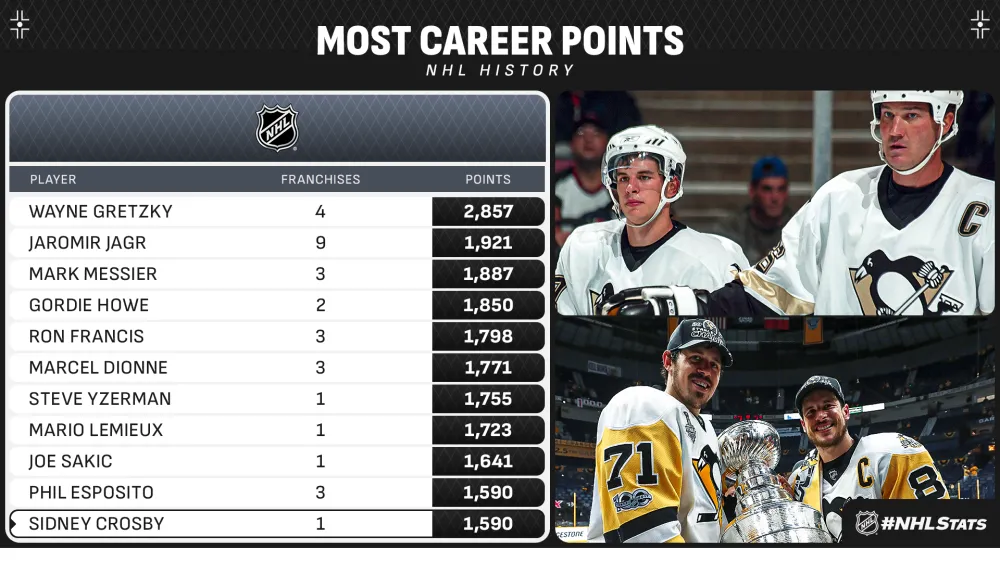
When discussing Sidney Crosby’s three hall of fame careers, comparisons to other hockey legends become inevitable. Wayne Gretzky remains the standard by which all players are measured, but Crosby’s career arc more closely resembles that of Mario Lemieux—fitting, given he broke Lemieux’s franchise records. Both dealt with significant health issues yet still dominated their eras.
Gordie Howe’s longevity and Steve Yzerman’s championship pedigree offer other reference points. Like Howe, Crosby has maintained elite production well into his thirties, adapting his game as his body aged. Like Yzerman, he transformed a franchise and captained multiple championship teams, becoming synonymous with the city he represents.
Bobby Orr revolutionized his position, and while Crosby didn’t reinvent the center position, he redefined what it meant to be a complete two-way player in the modern era. His defensive responsibility combined with offensive wizardry created a template that young centers still try to emulate. His faceoff prowess, penalty killing ability, and power play quarterbacking showcase versatility few possess.
Contemporary comparisons to Alex Ovechkin often arise, with the two defining the post-lockout era together. While Ovechkin may have the edge in goal-scoring prowess, Crosby’s complete game, championship success, and international golden goals give him advantages in other areas. The debate between the two has enriched hockey discourse for nearly two decades, much like Bird-Magic or Messi-Ronaldo debates in other sports.
Perhaps the most apt comparison comes from outside hockey—Tom Brady’s three distinct championship eras provided the framework for analyzing Crosby’s career this way. Both athletes sustained excellence across different roster constructions, coaching changes, and evolving competitive landscapes. Both became the faces of their franchises and elevated everyone around them. Both will be remembered as once-in-a-generation talents who somehow exceeded even the highest expectations.
Sidney Crosby’s journey from teenage phenom to all-time Penguins scoring leader represents more than just accumulated statistics—it embodies three distinct eras of Hall of Fame-caliber achievement. Each phase of his career stands alone as worthy of enshrinement: the young superstar who saved a franchise, the resilient champion who overcame injury adversity, and the veteran leader who surpassed legends. Few athletes in any sport can claim such sustained excellence across multiple distinct periods.
As Crosby continues adding to his legacy, the conversation shifts from whether he’s a Hall of Famer to where he ranks among hockey’s all-time greats. The Sidney Crosby three hall of fame careers framework provides a lens through which to appreciate not just what he’s accomplished, but how he’s accomplished it—through adaptation, perseverance, and an unwavering commitment to excellence. When his playing days conclude and the mandatory three-year waiting period expires, his enshrinement in the Hockey Hall of Fame won’t just honor one remarkable career—it will celebrate three.

Par Mike Jonderson
Mike Jonderson is a passionate hockey analyst and expert in advanced NHL statistics. A former college player and mathematics graduate, he combines his understanding of the game with technical expertise to develop innovative predictive models and contribute to the evolution of modern hockey analytics.