


Sweden defeats U.S. 6-3 to claim Group A supremacy at World Juniors
Lucas Pettersson and Eddie Genborg each tallied two goals as Sweden’s junior hockey team handed the United States its first loss of the tournament with a commanding 6-3 victory on New Year’s Eve in St. Paul, Minnesota. The win secured Sweden’s perfect 4-0 record through preliminary round play and established them as the top seed from Group A heading into the elimination stage.
The highly anticipated matchup between two undefeated powerhouses lived up to its billing early, with both teams displaying the speed and skill that has come to define modern junior hockey. However, Sweden’s clinical finishing and special teams efficiency ultimately proved too much for an American squad that entered the contest having outscored opponents 15-5 through its first three games.
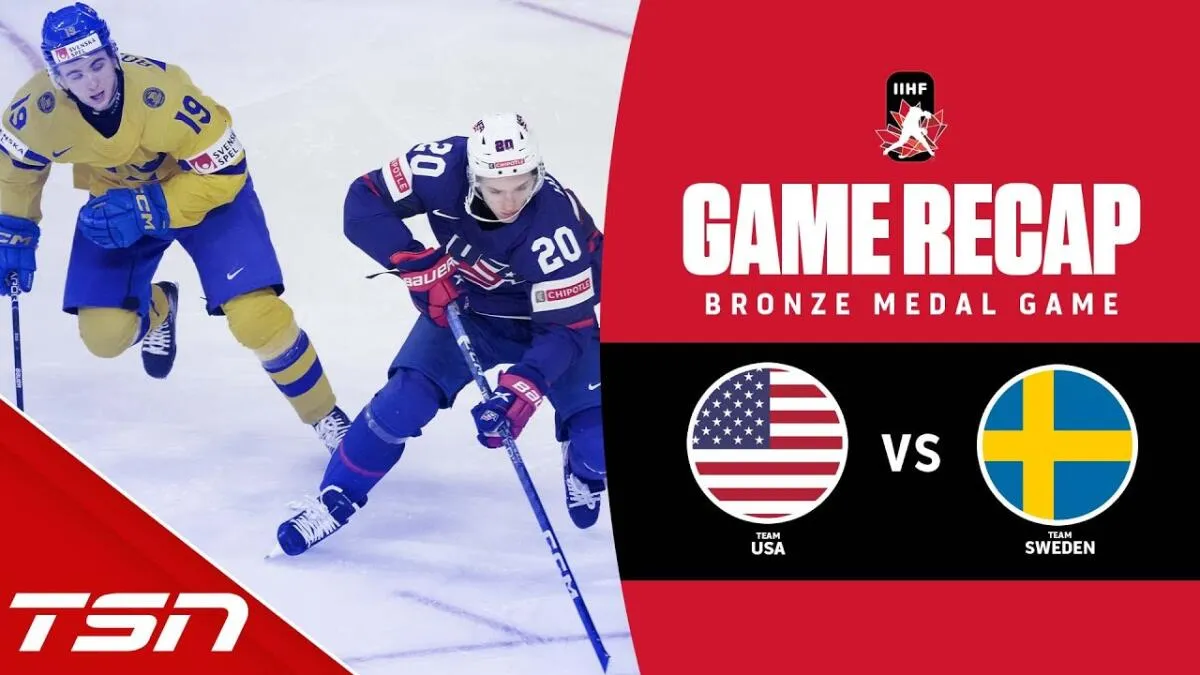
Sweden’s fast start sets the tone
Casper Juustovaara opened the scoring midway through the first period, redirecting a pass from Alfons Freij and Eric Nilson past American goaltender Brady Knowling. The goal came on Sweden’s fifth shot of the game and established an early rhythm that the Swedes would maintain throughout the opening frame.
Knowling, making his tournament debut in place of the injured regular starter, faced immediate pressure from Sweden’s top line. The 17-year-old from Connecticut showed flashes of the form that made him a highly regarded prospect, but struggled to find his footing against Sweden’s relentless forecheck.
“We knew they’d come out hard,” said U.S. head coach David Carle afterward. “Sweden’s a team that wants to establish possession early and control the pace. We weathered some storms but ultimately didn’t execute well enough in our own zone.”
The first period ended with Sweden holding a 1-0 advantage and a 12-8 edge in shots, though the territorial play felt even more lopsided than the numbers suggested.
Special teams tell the story
The second period belonged entirely to Sweden, who exploded for four goals in a span of 12 minutes to build what appeared to be an insurmountable lead. Eddie Genborg struck first on the power play at 3:42, with Liam Danielsson and Viggo Björck picking up assists on a perfectly executed one-timer from the slot.
Less than three minutes later, Lucas Pettersson extended the lead to 3-0, finishing a beautiful passing sequence from Jack Berglund and William Håkansson. The goal showcased Sweden’s puck movement and hockey IQ, with all three forwards touching the puck in a matter of seconds before Petterson buried his chance from the low slot.
The United States finally broke through at the 11:24 mark when Chase Reid converted a power-play opportunity, with assists from Cole Eiserman and Brodie Ziemer cutting the deficit to 3-1. The goal ignited the predominantly American crowd at Grand Casino Arena and temporarily shifted momentum.
That momentum proved fleeting. Just 2:13 after Reid’s goal, Pettersson struck again—this time shorthanded—to restore Sweden’s three-goal advantage. The Chicago Blackhawks prospect intercepted a pass at his own blue line, raced in alone, and beat Knowling with a deke to his backhand.
“We gave them too many chances on special teams,” Carle noted. “When you play a team this good, you can’t afford to give up power-play goals and then get beat shorthanded. That’s a recipe for disaster.”
Genborg added his second goal of the period with Sweden on the power play again, converting from the left circle after another crisp passing sequence. Will Zellers managed to get one back for the Americans late in the period, but Sweden carried a commanding 5-2 lead into the intermission.
Third period provides no relief
Any hopes of a miraculous American comeback were dashed just 3:47 into the third period when Teddy Stiga scored on the power play to cut the lead to 5-3. L.J. Mooney and Ryker Lee assisted on the goal, and suddenly the American bench showed renewed energy.
That energy lasted precisely 2:31 until Ivar Stenberg converted a 5-on-3 advantage for Sweden, blasting a one-timer from the point that effectively ended any drama. The goal was Stenberg’s first of the tournament and came at a critical moment when the Americans had finally begun to tilt the ice in their favor.
From there, Swedish goaltender Love Hårenstam took over. The 18-year-old netminder stopped 28 of 31 shots, including 12 in the final frame when the Americans pressed desperately to close the gap. His calm demeanor and efficient movement in the crease gave Sweden the confidence to play a more conservative third period, content to protect their lead rather than chase additional offense.
Implications for the medal round
With the victory, Sweden secures the top seed from Group A and will face Latvia in the quarterfinals. The Latvians finished fourth in Group B after a hard-fought preliminary round that saw them upset Germany and push Canada to the limit.
The United States, meanwhile, finished second in Group A and awaits the winner of the New Year’s Eve nightcap between Canada and Finland. A Finnish victory would set up a USA-Finland rematch—an enticing prospect given their thrilling 4-3 American win earlier in the tournament. A Canadian win would pit the Americans against the host nation in what would undoubtedly become the marquee quarterfinal matchup.
Both teams will have an off day on New Year’s Day before returning to action Friday, January 3, for their quarterfinal contests.
Key takeaways from Sweden’s statement win
This victory underscores Sweden’s status as a legitimate gold medal contender. Their balanced attack, featuring nine different players with at least one goal through four games, makes them difficult to defend against. The top line of Pettersson, Berglund, and Håkansson has combined for 15 points in the tournament, while their defense corps, led by Victor Eklund and Ivar Stenberg, has contributed offensively while maintaining defensive responsibility.
For the United States, the loss reveals areas that need immediate attention before medal play begins:
- Defensive zone coverage: Sweden’s forwards found too much open space in the high-danger areas
- Discipline: The Americans took six minor penalties, four of which Sweden converted
- Goaltending consistency: Knowling’s tournament debut showed promise but also revealed rust after not playing in the first three games
“We’ll learn from this,” said American captain James Hagens. “We’ve got a good group in here. We’ll watch some film, make some adjustments, and be ready to go on Friday. This isn’t how we wanted to end the group stage, but it doesn’t define our tournament.”
The United States entered this tournament with aspirations of winning their sixth gold medal since 2010, but they’ll need to navigate a more difficult path through the elimination rounds after this setback. Still, with offensive weapons like Hagens, Eiserman, and Ziemer, they remain capable of beating any team in a single-elimination scenario.
Sweden, meanwhile, carries the confidence of an unbeaten run through the toughest group in the tournament. Their special teams excellence—converting four of seven power-play opportunities while scoring shorthanded—could prove decisive in close medal-round games where margins become razor-thin.
The quarterfinals begin Friday, January 3, with Sweden facing Latvia and the United States awaiting their opponent.
Frequently Asked Questions

Par Mike Jonderson
Mike Jonderson is a passionate hockey analyst and expert in advanced NHL statistics. A former college player and mathematics graduate, he combines his understanding of the game with technical expertise to develop innovative predictive models and contribute to the evolution of modern hockey analytics.