












The Tampa Bay Lightning organization has built a reputation for developing prospects through their minor league affiliates, the Syracuse Crunch in the AHL and the Orlando Solar Bears in the ECHL. While the NHL roster battles through the rigors of an 82-game season, the future of the franchise continues to take shape in these developmental leagues. With the Lightning’s championship window requiring constant reinforcement, the performance of prospects in Syracuse and Orlando becomes increasingly critical to maintaining organizational depth and competitiveness.
The farm system has produced contrasting results early in the 2025-26 season. The Syracuse Crunch stormed out to a 6-1-0-0 record, leading the North Division and showcasing the depth of talent in the Lightning’s pipeline. Meanwhile, the Orlando Solar Bears have struggled with a 1-4-0-0 record, allowing 20 goals while scoring just 10. Despite the divergent team performances, individual prospects across both affiliates have demonstrated why Tampa Bay’s development program remains one of the most respected in professional hockey.
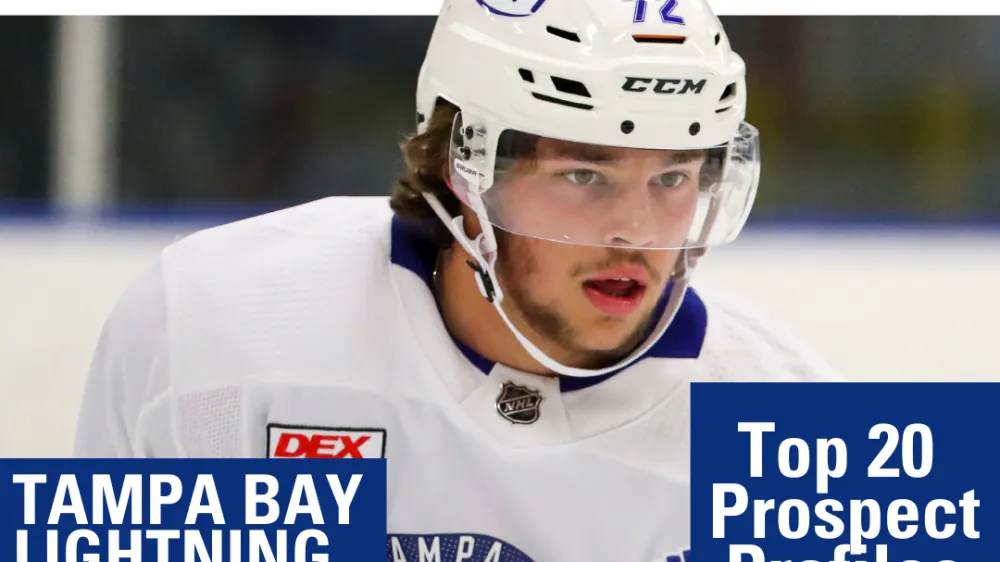
Top Tampa Bay Lightning minor league prospects in the AHL leading the Syracuse Crunch surge
The Syracuse Crunch’s exceptional start to the season has been fueled by several Lightning prospects making significant strides in their development. Under head coach and newly appointed general manager Joel Bouchard, the Crunch have established themselves as a perennial playoff contender while serving as the primary development hub for Tampa Bay’s most NHL-ready prospects.
Jakob Pelletier has emerged as the most pleasant surprise of the early season. The 24-year-old forward, signed to a three-year contract in the offseason after being non-tendered by Philadelphia, has found his offensive spark with Syracuse. Through seven games, Pelletier leads the team with nine points, including four goals and five assists, while maintaining a plus-1 rating. His performance represents a dramatic turnaround from his inconsistent stint with the Flyers, where he managed just eight points in 25 games after being traded from Calgary.
Originally selected 26th overall by the Flames in 2019, Pelletier showed flashes of his potential with Calgary, averaging the equivalent of 14 goals and 38 points over a full season in limited bottom-six minutes. His two-goal, one-assist performance in a 5-2 victory over Hershey demonstrated the offensive upside that made him a first-round selection. If Pelletier maintains this production level, the Lightning could consider recalling him to inject youth and speed into their NHL lineup.
Dylan Duke represents another success story in Syracuse’s early season surge. The 22-year-old forward, selected 121st overall after dominating at the University of Michigan, has transitioned smoothly into his second professional season. Duke leads the Wolverines in goals with 26 during his final collegiate campaign and finished third in points with 49, outproducing several higher-drafted teammates including current NHL players.
Duke’s seven points through seven games, including six assists that place him among the AHL’s top 20 in helpers, suggest significant growth from his rookie season when he produced 40 points in 62 games. His playmaking ability and two-way consciousness have made him a valuable contributor for the Crunch. At 22 years old, Duke has the developmental runway to become a legitimate NHL contributor, and his progression this season will be closely monitored by Lightning management. The organization’s patience with late-round picks has historically paid dividends, making Duke’s development arc particularly intriguing as he follows similar pathways taken by other successful Tampa Bay Lightning prospects who’ve navigated the system.
Beyond Pelletier and Duke, several other prospects are contributing to Syracuse’s success. Jack Finley, the towering 6-foot-6, 220-pound center selected 57th overall in 2020, is expected to make the Lightning’s opening night roster after demonstrating his readiness with 28 points in 40 AHL games last season. His size and defensive reliability could fill a bottom-six role similar to former Lightning center Brian Boyle. Max Crozier, a 25-year-old defenseman drafted in 2019, has also earned consideration for full-time NHL duty after producing 34 points in 52 AHL games last season, adding much-needed size to Tampa Bay’s blue line at 6-foot-3.
Developing Tampa Bay Lightning minor league prospects in the ECHL with Orlando’s challenges
The Orlando Solar Bears have faced significant challenges early in the 2025-26 season, but individual performances continue to justify the ECHL’s role as a critical developmental stepping stone within the Lightning organization. The double-affiliation system allows Tampa Bay to monitor prospects who need additional seasoning before advancing to Syracuse or returning players recovering from injury.
Spencer Kersten has been Orlando’s most consistent performer despite the team’s struggles. The 25-year-old forward spent four years at Princeton University and one at Bowling Green before signing with the Solar Bears in 2024. His rookie season was exceptional, producing 55 points through 60 games and earning a spot on the ECHL All-Rookie Team. Kersten’s blend of offensive creativity and work ethic caught the attention of Syracuse, leading to brief stints with both the Crunch and Belleville Senators on loan.
This season, Kersten has elevated his game even further with six points in five games, putting him on pace for 86 points over a full campaign. His three goals and three assists have provided nearly all of Orlando’s offensive production during their difficult start. The sustained excellence suggests Kersten has outgrown the ECHL level and could earn an extended opportunity with Syracuse if he maintains this trajectory. His development path exemplifies how the ECHL serves as a proving ground for undrafted college free agents looking to climb the professional hockey ladder.
The Solar Bears roster features several other prospects navigating the early stages of professional development. Veterans Aaron Luchuk and Tyler Bird provide leadership and stability for younger players adjusting to the professional game’s demands. The organization extended qualifying offers to forwards Jack Adams, Anthony Bardaro, Tyler Drevitch, and Kersten, along with defensemen who form the core of Orlando’s identity. These players represent the foundational depth that allows Tampa Bay to weather injuries and unexpected call-ups throughout the season.
While team success in the ECHL doesn’t always correlate with individual prospect development, the Lightning’s player development staff closely monitors how prospects respond to adversity. The ability to produce offensively and maintain defensive responsibility during difficult stretches often separates prospects who advance from those who plateau. Orlando’s early struggles will test the character and resilience of prospects hoping to follow Kersten’s path toward AHL opportunities.
Highly-touted Tampa Bay Lightning minor league prospects in the AHL and ECHL pipeline preparing for future impact
Beyond the prospects currently making immediate impacts in Syracuse and Orlando, the Lightning’s organizational depth includes several highly-regarded players who represent the franchise’s future. According to NHL.com’s prospect rankings, the organization acquired significant assets through shrewd trades and draft selections that position Tampa Bay for sustained competitiveness.
Sam O’Reilly stands atop the Lightning’s prospect hierarchy after being acquired from Edmonton in exchange for Isaac Howard on July 8, 2025. The 19-year-old center, selected 32nd overall in 2024, demonstrated his winning pedigree by helping London capture the Memorial Cup with six points in five games, including the primary assist on the championship-winning goal. O’Reilly’s 127 points in 135 Ontario Hockey League games over two seasons, combined with 34 points in 36 playoff contests, showcase his ability to elevate his game in crucial moments.
General manager Julien BriseBois praised O’Reilly’s substance over flash, noting that coaches recognize players who contribute to winning in meaningful ways. “You look at his age, the quality of that team, and the role he was able to play on that team, that tells us a lot about how good this player is and how he helps you win games,” BriseBois explained. The 6-foot-1, 178-pound forward is projected to reach the NHL by the 2027-28 season and could represent Canada at the 2026 World Junior Championship. Trading Howard, the Hobey Baker Award winner, demonstrated Tampa Bay’s belief in O’Reilly’s higher ceiling.
Ethan Gauthier has followed an exemplary development path since being selected 37th overall in 2023. The 20-year-old forward completed a long playoff run with Drummondville in the QMJHL, including participation in the Memorial Cup, before earning a spot on Canada’s 2025 World Junior Championship team. His 62 points in 50 QMJHL games last season preceded a three-game stint with Syracuse, providing him a taste of professional hockey’s demands. BriseBois emphasized the value of Gauthier’s international and playoff experience: “Both the long playoff run and playing for Canada at the World Juniors, those are very valuable experiences from a development standpoint, from a growth standpoint.” The 6-foot, 182-pound forward is expected to spend the full 2025-26 season with Syracuse unless he forces the Lightning’s hand with a dominant training camp.
Ethan Czata represents Tampa Bay’s commitment to skill and character after being selected 56th overall in 2025. The 18-year-old forward from Niagara in the OHL already signed a three-year entry-level contract on July 23, 2025, demonstrating the organization’s confidence in his development trajectory. Czata produced 55 points in 68 games last season and won gold with Canada at the 2025 Under-18 World Championship, contributing five points in seven games. BriseBois cited Czata’s skill, compete level, two-way ability, hockey sense, and passion as the qualities that attracted Tampa Bay’s attention. The 6-foot-1, 175-pound forward will return to Niagara for his third OHL season and could challenge for a World Junior Championship roster spot in 2026.
Evaluating Tampa Bay Lightning minor league prospects in the AHL and ECHL development infrastructure success
The Lightning’s minor league system operates with clear philosophical principles that have produced consistent results. Syracuse serves as the finishing school for prospects on the cusp of NHL readiness, while Orlando provides a developmental environment for players needing additional professional seasoning. This tiered approach allows Tampa Bay’s player development staff to place prospects in situations that maximize their growth while managing expectations appropriately.
Joel Bouchard’s dual role as Syracuse’s head coach and general manager reflects the organization’s integrated approach to player development. His ability to communicate prospect progress directly to Lightning management creates alignment between minor league deployment and NHL roster needs. The Crunch’s success as a perennial playoff team provides prospects with high-stakes experience that accelerates their readiness for NHL pressure. Playing meaningful games in March and April prepares young players for the intensity they’ll face when called upon by Tampa Bay.
The Orlando Solar Bears’ relationship with Tampa Bay operates differently given the ECHL’s role as a third-tier developmental league. Players assigned to Orlando typically fall into several categories: undrafted college free agents like Kersten proving their professional viability, prospects requiring additional development time before facing AHL competition, or players recovering from injury who need conditioning assignments. The Lightning’s player development staff maintains constant communication with Orlando’s coaching staff to ensure prospects receive appropriate ice time and are placed in situations that challenge their growth areas.
Statistical analysis provides one measurement of prospect development, but qualitative assessments often prove more valuable. The Lightning’s management team evaluates how prospects respond to coaching, their willingness to adapt their games to professional demands, and their ability to process information and implement adjustments. These intangible qualities often separate prospects who reach the NHL from those who plateau at the minor league level. According to reports from The Hockey Writers, the organization closely monitors not just point production but how prospects impact winning through their two-way play and situational awareness.
The Lightning’s track record of developing mid-to-late round picks and undrafted free agents into NHL contributors validates their development infrastructure. Players like Anthony Cirelli (selected 72nd overall in 2015), Erik Černák (acquired in a trade as a 2015 second-round pick), and Brayden Point (selected 79th overall in 2014) all spent significant time in Syracuse before establishing themselves as core NHL players. This historical success creates a development blueprint that current prospects follow as they navigate their professional careers.
The Tampa Bay Lightning’s minor league affiliates continue fulfilling their mandate of developing the organization’s future while providing NHL-ready depth when injuries or roster moves require call-ups. Syracuse’s dominant start demonstrates the quality of prospects in the system, particularly Pelletier and Duke, who have established themselves as legitimate NHL candidates. Orlando’s struggles test prospect resilience, though Kersten’s exceptional individual performance proves the ECHL’s value as a developmental proving ground.
The Lightning’s prospect pipeline extends beyond current minor league performers to include elite talents like O’Reilly, Gauthier, and Czata, who represent the franchise’s long-term future. Tampa Bay’s integrated development infrastructure, featuring clear communication between organizational levels and a proven track record of maximizing mid-round draft picks, positions the franchise to maintain competitiveness even as their championship core ages. As the season progresses, monitoring how these Tampa Bay Lightning minor league prospects in the AHL and ECHL continue developing will provide crucial insights into the organization’s ability to sustain success in an increasingly competitive NHL landscape.

Par Mike Jonderson
Mike Jonderson is a passionate hockey analyst and expert in advanced NHL statistics. A former college player and mathematics graduate, he combines his understanding of the game with technical expertise to develop innovative predictive models and contribute to the evolution of modern hockey analytics.