






The Tampa Bay Lightning have rediscovered their winning formula after a rocky start to the 2025-26 season. Following a concerning four-game losing streak that left fans questioning whether this veteran-laden roster still had what it takes to compete, the Bolts have surged back with three consecutive victories, returning to .500 and reigniting hopes for another deep playoff run. This Tampa Bay Lightning three-game winning streak analysis examines the key factors behind their resurgence and what it means for their championship aspirations moving forward.
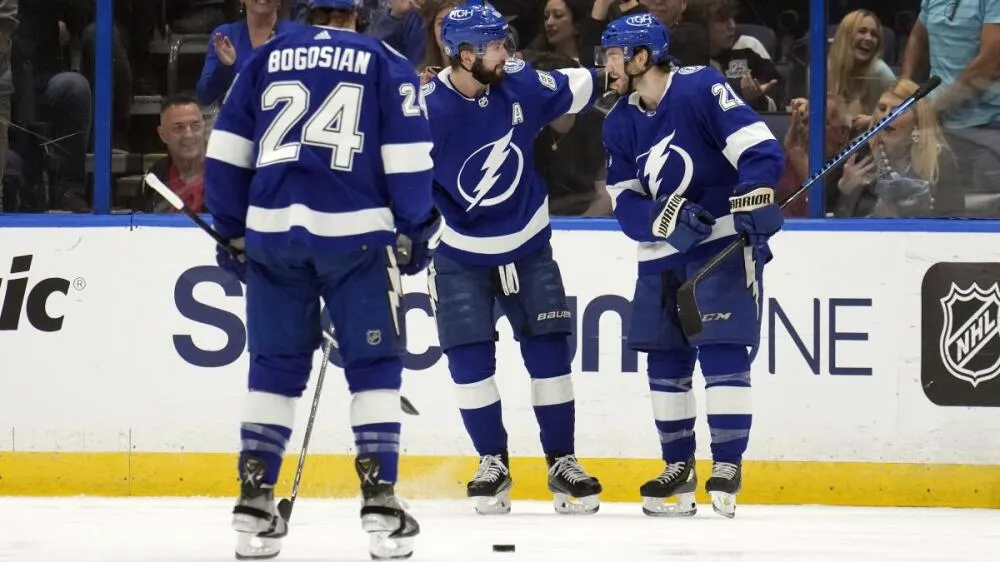
Star power awakens in Tampa Bay Lightning three-game winning streak analysis
The most significant development during this winning stretch has been the return to form of Tampa Bay’s elite offensive talent. Nikita Kucherov, who looked uncharacteristically sluggish through the season’s first four games with just three points, has exploded for seven points in his last four contests. The reigning Hart Trophy finalist has recorded multi-point performances in three of those four games, including an overtime-winning goal that exemplified his clutch gene.
Brandon Hagel’s transformation has been equally dramatic and perhaps even more critical to the team’s success. After managing just one point through his first six games and failing to find the net during a frustrating five-game scoreless drought, Hagel has racked up points in three consecutive multi-point games. His chemistry with Anthony Cirelli has been rejuvenated, and his speed on the forecheck has created havoc for opposing defensemen who suddenly find themselves under constant pressure.
The synergy between Kucherov and Hagel has created a domino effect throughout the lineup. When your top players produce, it opens up ice for depth contributors and forces opponents to make difficult decisions about matchups. Cirelli reached the 300-point milestone during the win over Nashville, a testament to his consistency as a two-way center who has become one of the league’s most underrated players.
What makes this offensive resurgence particularly encouraging is the diversity of scoring sources. Zemgus Girgensons, who managed just two goals in 82 games last season, scored twice against the Predators. Charles-Edouard D’Astous netted his first NHL goal in just his third game, showing the kind of opportunistic playmaking that championship teams require from their depth players. According to NHL.com’s game recap, coach Jon Cooper praised D’Astous’s confidence, noting that “he shot it with authority” on a play that “looks like he’s been doing it in this league for a long time.”
The psychological impact of star players performing cannot be overstated. When Kucherov and Hagel struggle, the entire team tightens up, gripping their sticks too hard and overthinking simple plays. But when those elite talents start producing, confidence flows through the locker room, fourth-liners start making smart plays, and suddenly everything clicks. This is the Lightning team that won back-to-back Stanley Cups, and their reemergence is a reminder of why they remain so dangerous.
Goaltending strategy emerges as key factor in Tampa Bay Lightning three-game winning streak analysis
Perhaps the most important tactical adjustment during this winning streak has been the management of Andrei Vasilevskiy’s workload. After missing the entirety of training camp due to injury, the franchise goaltender looked rusty in the early going, posting numbers well below his Hall of Fame standards. The temptation to ride your best player through adversity is always strong, but Cooper and his staff have shown remarkable restraint in spacing out Vasilevskiy’s starts.
The Lightning finished last season with Vasilevskiy in career-best form, finishing second in Vezina Trophy voting after the team prioritized his rest and recovery throughout the regular season. That blueprint appears to be returning this year, with Jonas Johansson stepping up admirably in a complementary role. Through three games, Johansson has posted a .913 save percentage, arguably the best hockey of his NHL career.
Vasilevskiy himself has looked sharper during the winning streak, making 18 saves in the victory over Nashville while displaying the calm presence that has defined his elite career. But the key isn’t just that he’s playing better—it’s that he’s playing less frequently, allowing his body to fully recover from the injury that cost him valuable preparation time. As noted by The Hockey Writers, “Another health scare has already been had. There is a very easy way to avoid it again.”
The analytics support this approach. Goaltenders who play fewer than 60 games during the regular season tend to perform better in the playoffs, when games become more intense and recovery time between contests shrinks. Vasilevskiy has carried this team through countless playoff battles, but those miles add up. Every game he can sit during October and November is an investment in playoff performance come April, May, and June.
Cooper’s willingness to trust Johansson also sends an important message to the entire roster: this is a team effort, and everyone has a role to play. When backup goaltenders know they’ll actually get meaningful starts rather than just mop-up duty, they stay sharper and more engaged. Johansson’s strong play has given the coaching staff confidence that they don’t need to overextend their franchise netminder, creating a virtuous cycle of rest and performance.
The lesson here extends beyond just goaltending. Teams that can distribute workload across their roster throughout the long NHL season consistently outperform those that burn out their stars before the games truly matter. Tampa Bay learned this lesson through painful experience, and they’re applying that knowledge during this winning streak.
Depth scoring transforms Tampa Bay Lightning three-game winning streak analysis
One of the most encouraging developments during this three-game run has been the emergence of contributions from throughout the lineup. While star power gets headlines, championships are won by third and fourth lines that can chip in offensively while maintaining defensive responsibility. The Lightning have found that balance during their recent success.
Zemgus Girgensons’s two-goal performance against Nashville exemplified this depth production. After scoring just twice in 82 games last season, Girgensons found himself in the right positions and capitalized on opportunities created by smart playmaking from Pontus Holmberg. “It definitely feels nice,” Girgensons said after the game. “The second one too, [Holmberg] kind of put it on my platter so it was pretty easy. But yes, definitely any time that happens it’s easier to play. Your mind is free.”
That mental freedom is crucial for depth players. When fourth-liners press too hard for offense, they inevitably make mistakes in their own zone. But when goals come naturally through smart positional play and finishing opportunities created by teammates, everyone relaxes into their roles. Girgensons’s comment about his mind being “free” captures this psychological shift perfectly.
Charles-Edouard D’Astous’s first NHL goal represented another example of depth contribution. Called up to fill roster needs, D’Astous could have played cautiously, focusing solely on defensive responsibility. Instead, he jumped into a 3-on-2 rush with confidence, received a perfect pass from Brayden Point, and buried a wrist shot from the slot that gave Tampa Bay crucial insurance. Cooper’s postgame praise—“It was one of those plays that looks like he’s been doing it in this league for a long time”—highlighted how seamlessly D’Astous has integrated into the lineup.
The difference between a good team and a championship team often comes down to these depth contributions. When every line can hurt opponents, coaching matchups become exponentially more difficult. Opponents can try to shut down Kucherov’s line, but then Cirelli’s unit takes advantage. Stack against both, and suddenly Girgensons is scoring goals. This multi-faceted attack is what made Tampa Bay so difficult to contain during their championship runs.
Special teams have also benefited from this depth scoring. Hagel’s goal came just eight seconds after a power play expired, a sign that Tampa Bay’s second unit is creating sustained pressure even when they don’t score with the man advantage. Evangelista’s power-play goal for Nashville briefly threatened Tampa Bay’s lead, but the Lightning’s depth immediately responded with D’Astous’s tally less than three minutes later.
Testing ahead for Tampa Bay Lightning three-game winning streak analysis
While this three-game winning streak has been encouraging, context matters significantly when evaluating its sustainability. Every opponent during this run has been a Western Conference team, and Tampa Bay’s schedule features a prolonged stretch of interconference play that runs from October 23 through November 8. The Lightning are 3-1-0 during this Western swing but managed just a 1-3-2 record against Eastern Conference opponents earlier in the season.
This scheduling quirk raises legitimate questions about whether the Lightning have genuinely solved their problems or simply benefited from facing unfamiliar opponents during an anomalous stretch. Eastern Conference teams see Tampa Bay multiple times per season and understand their systems, tendencies, and personnel far better than Western clubs who might face them just once. The margin for error shrinks considerably when opponents know exactly what’s coming.
The real test arrives in mid-November when the Lightning return to their typical diet of Metropolitan and Atlantic Division matchups. Games against the Washington Capitals, New York Rangers, and defending champion Florida Panthers will provide far more definitive answers about Tampa Bay’s true form. These are the teams standing between the Lightning and another deep playoff run, and performances against them matter exponentially more than wins over Nashville or other Western opponents.
However, dismissing this winning streak entirely would be equally misguided. The loss to Chicago on October 23—a Western Conference team—came during Tampa Bay’s four-game slide, suggesting that opponent quality alone doesn’t explain the turnaround. The Lightning are playing better hockey regardless of competition level, executing their defensive systems more consistently, generating higher-quality scoring chances, and displaying the confidence that comes from winning.
The psychological boost from any winning streak shouldn’t be underestimated. Professional athletes feed on momentum, and three consecutive victories can reset a team’s mentality after a difficult stretch. Whether that momentum translates into sustained success against tougher competition remains the defining question of Tampa Bay’s season.
As the Lightning navigate the rest of October and move into November, every game provides additional data points for evaluation. If they continue winning through their Western road trip and then stumble upon returning to Eastern Conference play, the concerns about competition level will be validated. But if this improved play persists regardless of opponent, then Tampa Bay’s championship window remains very much open. With just over one-tenth of the season complete, drawing definitive conclusions would be premature, but the trajectory has undeniably shifted in a positive direction.
The Tampa Bay Lightning’s three-game winning streak represents more than just a statistical correction after a difficult start. It demonstrates the resilience and championship pedigree that has defined this organization for over a decade. From Kucherov and Hagel rediscovering their offensive touch to smart goaltending management and crucial depth scoring, every element of a successful team has emerged during this stretch.
The true measure of this turnaround will come when the Lightning face their familiar Eastern Conference rivals in the weeks ahead. But for now, Tampa Bay has reminded the NHL why they remain one of the most dangerous teams in the league when healthy and playing with confidence. As they push toward the quarter-mark of the season, the Lightning have every reason to believe their championship window hasn’t closed—it was simply stuck for a few games, and now it’s swinging wide open once again.

Par Mike Jonderson
Mike Jonderson is a passionate hockey analyst and expert in advanced NHL statistics. A former college player and mathematics graduate, he combines his understanding of the game with technical expertise to develop innovative predictive models and contribute to the evolution of modern hockey analytics.