Fresh off their dramatic gold medal victory over Canada in the 2026 Milan-Cortina Winter Olympics, Team USA men’s hockey is already turning eyes toward the 2030 Games in the French Alps. Jack Hughes’ overtime goal sealed the first Olympic gold for the U.S. in 46 years, capping a tournament filled with standout performances from NHL stars. With the NHL and NHLPA’s collective bargaining agreement securing player participation through 2030, the roster will blend returning heroes with emerging talents.
Expect significant turnover due to age and the depth of American prospects. Veterans like Auston Matthews and the Hughes brothers anchor the core, but younger players from the orientation camp and recent NHL breakthroughs will vie for spots. Our projections for the 2026 roster set the stage; now, four years later, the landscape has evolved post-gold.[1][2]
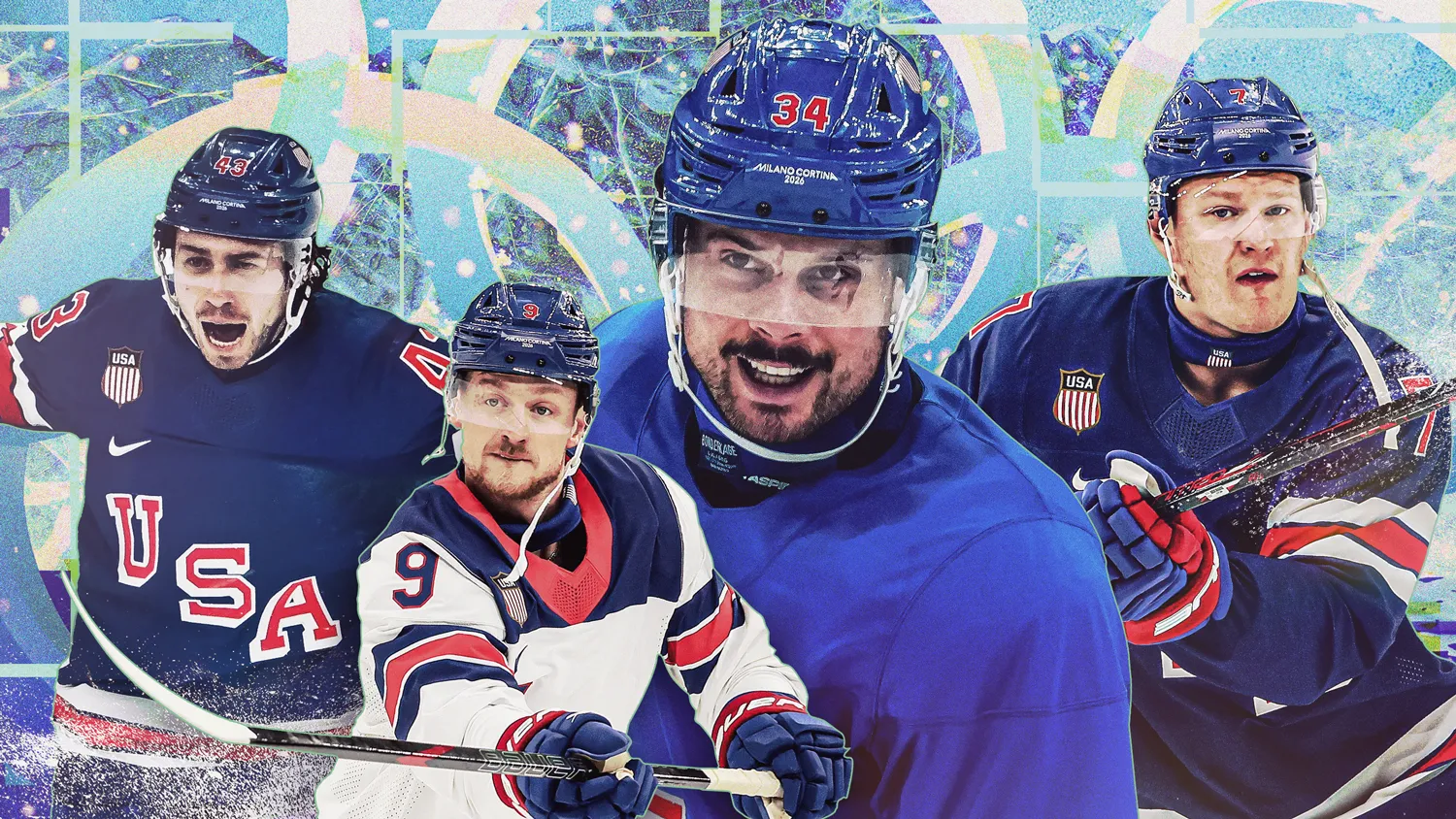
The locks
This group forms the undeniable core of Team USA’s 2030 hopes. Jack Eichel, now 33 and with the Vegas Golden Knights, thrived on a potent line with the Tkachuk brothers in 2026. His play alongside them under coach Mike Sullivan showcased elite chemistry that could carry over.
Jack Hughes, at 28 with the New Jersey Devils, emerged as a offensive dynamo despite early injuries and positional tweaks. Scoring the golden goal against Canada cemented his status—he started on the fourth line but climbed to pair with Dylan Larkin. Quinn Hughes, 30 and traded to the Minnesota Wild, was the top all-around defenseman, logging heavy minutes.
Auston Matthews, Toronto Maple Leafs captain at 32, led with his scoring prowess. Dylan Larkin, Detroit Red Wings center turning 33, delivered huge moments after shining at 4 Nations. Charlie McAvoy, 32 with the Boston Bruins, ranked second in ice time behind Quinn Hughes.
Tage Thompson’s case strengthened dramatically—from a 4 Nations snub to a goal-scoring machine with 48 tallies post-tournament, trailing only Nathan MacKinnon. The Buffalo Sabres forward at 32 is indispensable. Brady Tkachuk (30, Ottawa Senators), Matthew Tkachuk (32, Florida Panthers), and Zach Werenski (32, Columbus Blue Jackets) round out the locks with grit, skill, and blue-line reliability.
These 10 players embody the blend of skill, leadership, and proven Olympic success. Their return sets a high floor for the roster.[1]
Strong candidates from 2026
Several 2026 Olympians return as frontrunners, building on Milan performances. Matt Boldy, 31 with the Minnesota Wild, was a shooting machine, ranking seventh in points among U.S.-born players over two seasons (135 in 136 games). His net-front presence made him a borderline lock.
Brock Faber (27, Minnesota Wild) and Jake Sanderson (27, Ottawa Senators) logged regular shifts on the blue line. Faber paired with Jaccob Slavin effectively, while Sanderson scored in the 4 Nations final after replacing an injured Quinn Hughes.
Jackson LaCombe, 29 with the Anaheim Ducks, entered as Seth Jones’ injury replacement but sat out—more a depth issue than ability. His NHL upside positions him perfectly for 2030.
Jake Oettinger, Dallas Stars goalie at 31, backed up in the medal rounds after sitting group play. If he maintains top-NHL form, he’s a staple.
These players offer continuity with youth, bridging the 2026 champions to the next cycle. Their tournament experience gives them an edge.[1]
Question marks from 2026
Not every 2026 contributor is guaranteed a return. Kyle Connor, 33 with the Winnipeg Jets, boasts 100 goals over three seasons but endured healthy scratches, including the 4 Nations final.
Clayton Keller, 31 for the Utah Mammoth, saw limited ice and reserve duty in medals—solid but outshone by others. Noah Hanifin, 32 with Vegas, has management support despite modest minutes.
Jeremy Swayman, Boston Bruins netminder at 31, struggled in group play against Denmark, yielding a long-range goal that shifted duties to Oettinger. The U.S. goalie pool’s depth challenges him.
These spots hinge on NHL production and health over four years. Scrutiny intensifies with prospects rising.[1]
If age is just a number
Veterans could defy years. Connor Hellebuyck, 36 with Winnipeg, posted a .947 save percentage into the gold-medal game—older than past U.S. starters but elite.
Jake Guentzel (35, Tampa Bay Lightning) ranks high in points (217 in 202 games over three years). Seth Jones (35, Florida Panthers) missed 2026 injured but was initially named.
Jaccob Slavin (35, Carolina Hurricanes) offers defensive stability with a long shelf life. J.T. Miller (36, New York Rangers), Brock Nelson (38, Colorado Avalanche), and Vincent Trocheck (36, Rangers) provided grit in 2026, but Nelson’s age edges him toward retirement.
Hellebuyck and Slavin stand out; others face steeper climbs. Experience matters in best-on-best.[1]
The 2026 snubs
Oversights from 2026 could rebound. Cole Caufield (29, Montreal Canadiens) skipped worlds but dazzles as a scorer—size was the knock. Adam Fox (32, New York Rangers), ex-Norris winner, missed after 4 Nations but has 28 points in 30 games this year.
Lane Hutson (26, Montreal), rookie of the year, adds scoring from the blue line. Jason Robertson (30, Dallas Stars) was a top snub with 226 points over three years. Alex DeBrincat (32, Ottawa) and Alex Tuch (33, Buffalo) bring size and tenacity.
These wings and defenders fuel competition. Four years allows restating cases, as detailed in our 2026 predictions.[2]
The orientation class
Orientation camp invitees bubbled under. Logan Cooley (25, Utah Mammoth) scored 14 goals in 29 games before injury. Matthew Knies (27, Toronto Maple Leafs) pairs chemistry with Matthews as a power forward.
Luke Hughes (26, New Jersey Devils) could join brothers Quinn and Jack in a “Hughes Triforce.” Frank Nazar (26, Chicago Blackhawks) offers offense; Shane Pinto (29, Ottawa Senators) two-way play; Alex Vlasic (28, Chicago) defense.
Breakthroughs needed, but talent abounds. They represent the post-2026 bridge.
The next wave
Youth surges with Matty Beniers (27, Seattle Kraken), ex-rookie of the year, as a bottom-six do-it-all. Will Smith (24, San Jose Sharks) shines despite Macklin Celebrini’s shadow; Cutter Gauthier (26, Anaheim Ducks) has 45 goals in 138 games.
Ryan Leonard (25, Washington Capitals) impressed at juniors. Prospects like James Hagens (23, Boston Bruins), Jackson Blake (26, Carolina), Josh Doan (27, Buffalo), Jimmy Snuggerud (25, St. Louis), Zeev Buium (24, Vancouver—from Quinn Hughes trade), Dustin Wolf (28, Calgary), and Spencer Knight (28, Chicago) loom.
This group could dominate by 2030. Goalie battles intensify with Wolf and Knight.
Team USA’s depth positions them for back-to-back golds. Sustained NHL excellence from locks like Matthews and Hughes, plus prospect maturation, creates a juggernaut. As ESPN’s Greg Wyshynski notes, the French Alps await another medal run—watch for snubs-turned-stars to shake it up.[1]
Frequently Asked Questions

Par Mike Jonderson
Mike Jonderson is a passionate hockey analyst and expert in advanced NHL statistics. A former college player and mathematics graduate, he combines his understanding of the game with technical expertise to develop innovative predictive models and contribute to the evolution of modern hockey analytics.