


Team USA kicked off its 2026 Winter Olympics men’s ice hockey campaign with a solid 5-1 victory over Latvia on Thursday.[1][2] The game featured early drama with two successful coach’s challenges from Latvia overturning U.S. goals, but the Americans settled in and pulled away with goals from Tage Thompson, Auston Matthews, and two from Brock Nelson. Brady Tkachuk also scored the opener. This result puts Team USA in a strong position early in the preliminary round at the Milano Cortina Games.
The win comes after Canada dominated Czechia 5-0 in its opener, setting a high bar for the favorites.[1] Latvia showed resilience by tying the game at 1-1, but U.S. speed, physicality, and puck control overwhelmed them in the final two periods. Coach Mike Sullivan’s squad now looks ahead to tougher tests.
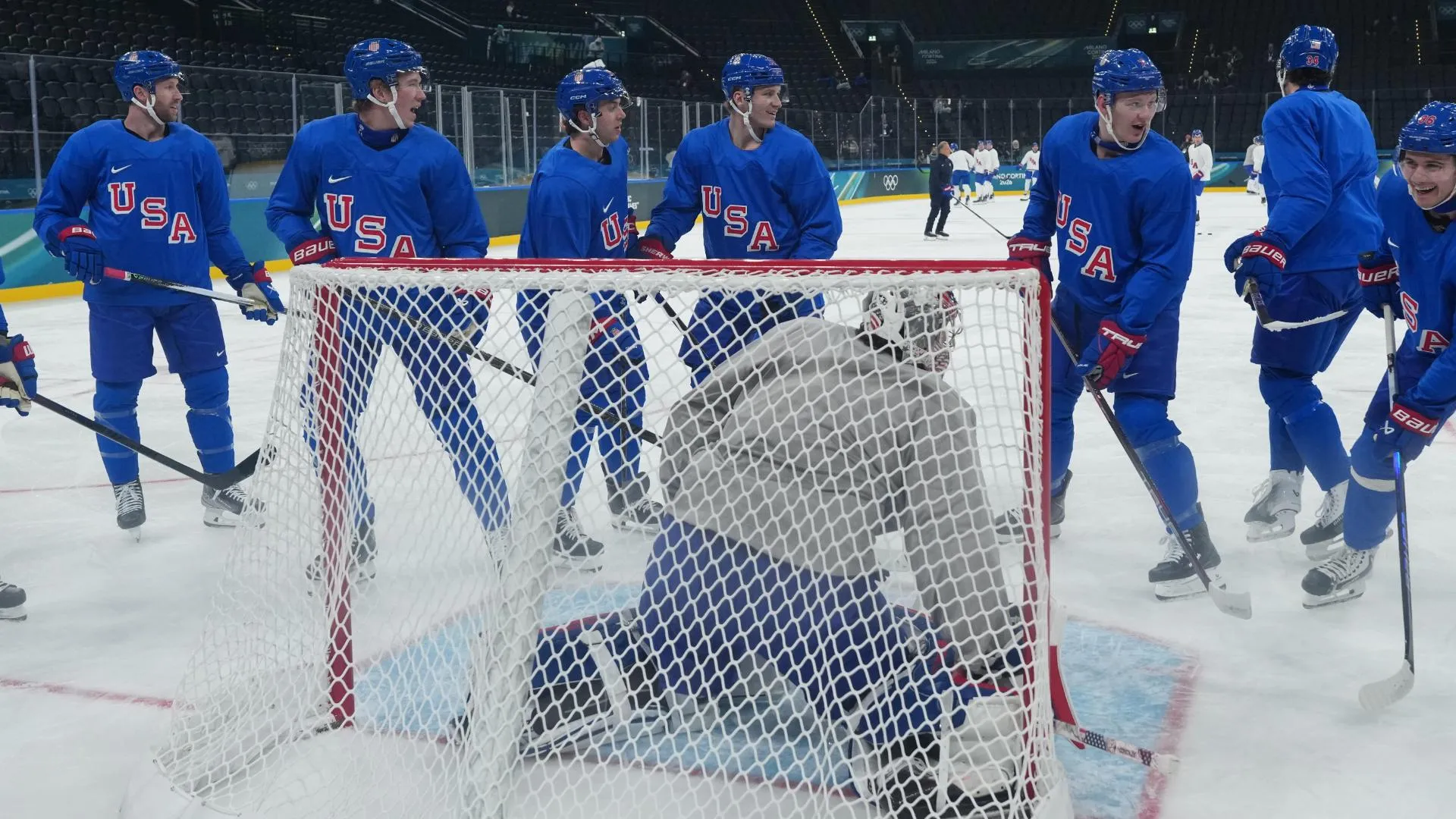
Hughes brothers vs. Tkachuk brothers: Who stepped up biggest?
Quinn Hughes emerged as arguably the most crucial player for Team USA, logging a team-high 21:29 of ice time on the top pairing.[1] His two assists highlighted his reliability in all situations, from defensive zone starts to power plays. Jack Hughes started on the fourth line but contributed two assists, showing versatility despite limited initial minutes. The brothers’ chemistry was evident, setting up plays that exploited Latvia’s defense.
On the other side, the Tkachuk brothers brought the physical edge that defined the game. Brady Tkachuk opened the scoring, rifling home a goal on the top line with Jack Eichel and Matthew Tkachuk. Matthew added two assists, using his size, speed, and skill to disrupt Latvia throughout. Their line created constant pressure, blending bruising hits with precise passing.
This matchup of sibling duos underscores Team USA’s depth. The Hughes provided elite puck-moving and transition play, while the Tkachuks enforced a physical tone. In a tournament format, balancing these styles will be key against more skilled opponents.
Comparisons to past Olympics highlight the impact. In 2014 Sochi, U.S. stars like Patrick Kane drove similar dominance, but today’s NHL-heavy roster adds layers. Sullivan praised the brothers post-game, noting their leadership without direct quotes available yet.
Looking forward, expect both pairs to log heavy minutes. Quinn’s endurance and the Tkachuks’ grit could define playoff matchups.
Lineup tweaks: Does Sullivan shuffle after fourth-line success?
Brock Nelson anchored the fourth line with Jack Hughes and J.T. Miller, delivering two goals in a standout shift.[1] He nearly had more, hitting the post and having one disallowed for goalie interference. This line outproduced expectations, with Jack Hughes adding assists and Miller logging over 12 minutes despite two setups on overturned goals.
Miller’s net-front presence drew ire for the interference call but showed his commitment. The trio combined for heavy forechecking, wearing down Latvia. Sullivan faces a dilemma: stick with success or elevate performers like Nelson higher?
Historical precedent suggests flexibility. In the 4 Nations Face-Off, U.S. lines adjusted mid-tournament for chemistry. Against Denmark on Saturday, tweaks could pair Nelson with top talent for matchup advantages.[3]
Fan reactions buzz online, with NBC Olympics highlighting Nelson’s dekes in a viral clip.[4] Sullivan’s decision will test his depth chart, especially with Germany looming Sunday.
Maintaining balance avoids over-reliance on stars. This opener proved bottom-six scoring wins games.
Fatigue factor: Can pace sustain against elite foes?
The U.S. set a blistering pace early, combining speed with physicality to exhaust Latvia.[1] Long shifts and puck possession led to penalties and four unanswered goals after the 1-1 tie. Latvia struggled post-first period, unable to match the intensity.
Echoing the 4 Nations finale versus Canada, this tempo wore down a lesser squad. But against NHL-laden teams like Canada or Sweden, sustainability questions arise. Latvia’s mix held briefly but faded.
Recovery protocols will intensify with back-to-backs possible. Team USA’s conditioning, honed in NHL seasons, gives an edge over international mixes.
Past Olympics saw fatigue doom favorites; 2010 Vancouver’s Canada thrived on rest. U.S. must replicate here.
Denmark’s 38 shots in a 3-1 loss to Germany signals shot volume ahead.[1] Pacing energy sets the medal tone.
Brock Nelson earns player of the game honors
Brock Nelson dominated, scoring twice while using his 6-foot-4 frame effectively.[1] His positioning created chaos, drawing coverage for linemates. Posts and disallowances aside, his impact was undeniable.
Beyond goals, Nelson’s forecheck and faceoffs bolstered the fourth line. In a physical affair, his size screened goalies perfectly.
Comparisons to past Olympians like Zach Parise fit; unsung heroes shine brightest. NBC tweeted “Everything coming up BROCK. NELSON.” capturing the buzz.
Versatility positions him for bigger roles. Against Denmark, expect top-six trials.
Nelson’s Isles tenure translates to Olympics: steady, clutch production.
Road ahead: Denmark test and gold chase
Saturday’s Denmark clash follows their 3-1 loss to Germany.[1] U.S. aims to build momentum toward playoffs. Schedule intensifies with Germany Sunday.[3]
Canada’s shutout raises stakes; U.S. must match efficiency. For full recap, check ESPN’s grades and questions.
Overall grade: A- with room to tighten
Team USA earned an A- for controlling play post-drama.[1] The lone goal stemmed from a scramble, but dominance followed. Skill flexed alongside strength.
Disallowed goals tested resolve; response impressed. Latvia’s challenges bought time, but U.S. adapted.
This start signals gold contention. Fatigue management and line balance key forward.
Momentum carries into Denmark, where scoring more solidifies favoritism. Team USA eyes history.
Frequently Asked Questions

Par Mike Jonderson
Mike Jonderson is a passionate hockey analyst and expert in advanced NHL statistics. A former college player and mathematics graduate, he combines his understanding of the game with technical expertise to develop innovative predictive models and contribute to the evolution of modern hockey analytics.