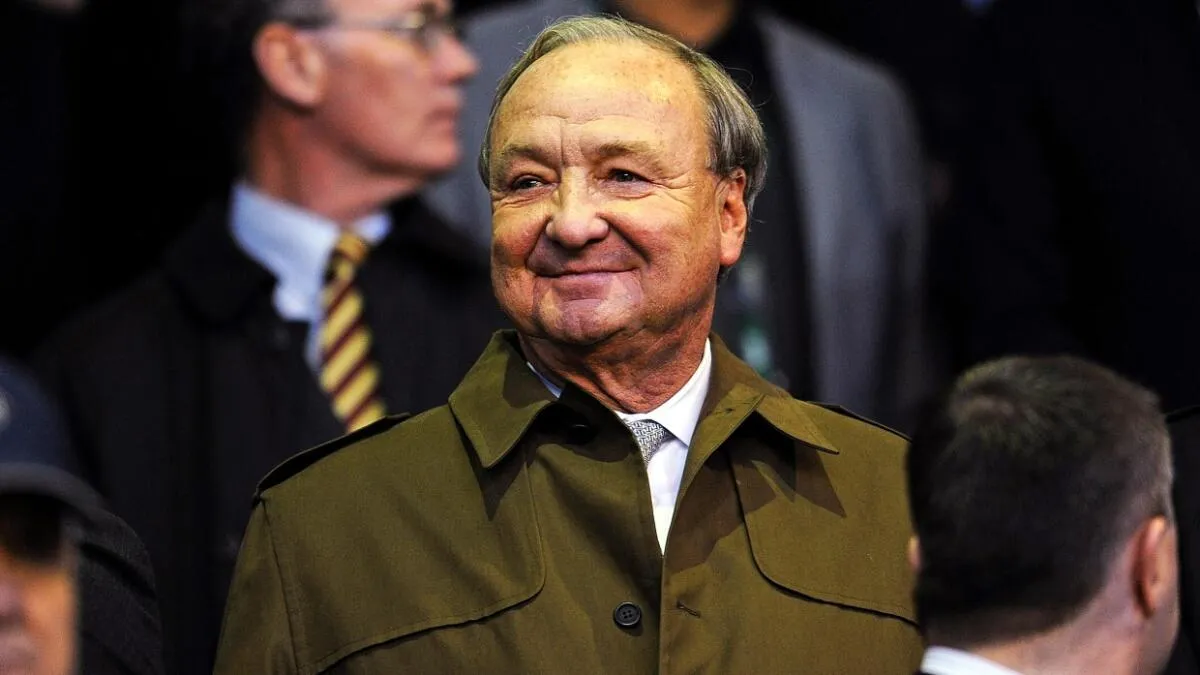
Thomas O. Hicks, the legendary Texas businessman who reshaped private equity investing and brought championship hockey to Dallas, passed away peacefully on December 6, 2025, surrounded by his family. He was 79. His death marks the end of an era for a man who embodied the quintessential Texas entrepreneur—bold, visionary, and unafraid to dream on a massive scale. From pioneering leveraged buyouts to signing the largest contract in baseball history, Hicks left an indelible mark on both the financial world and the sports landscape that will be debated and studied for decades.
To those who knew him best, Hicks was more than the headlines and controversies that sometimes defined his public persona. He was a devoted husband to his wife Cinda Cree Hicks for 35 years, a father to six children, and a grandfather to fourteen grandchildren who brought him his greatest joy. His legacy extends far beyond boardrooms and ballparks, touching countless lives through philanthropy, civic leadership, and personal mentorship that rarely made the front pages but meant everything to the recipients.
The life and legacy of Tom Hicks: private equity pioneer and sports visionary
Born on February 7, 1946, in Port Arthur, Texas, Hicks grew up in a family with media roots—his father owned a radio station. This early exposure to business sparked a passion that would eventually revolutionize private equity investing. After earning his bachelor’s degree in finance from the University of Texas in 1968 and an MBA from the University of Southern California in 1970, Hicks cut his teeth in venture capital at First National Bank of Dallas.
In 1984, he co-founded Hicks & Haas, executing one of the most successful leveraged buyout deals of the era by merging Dr Pepper and 7 Up. The firm transformed $88 million in investor funding into $1.3 billion in just 18 months when they took the combined company public. Longtime friend Richard Fisher captured Hicks’s impact perfectly: “Tom Hicks was a legend in finance who perfected the leveraged buyout and pioneered the ‘buy and build’ strategy by creating one of the world’s largest beverage companies. Best of all, he was a devoted, constant friend who supported me with gusto when I ran for the U.S. Senate, even though we were from different parties.”
His ambition grew larger in 1989 when he co-founded Hicks, Muse, Tate & Furst, which raised $12 billion in private equity funds and completed over $50 billion in leveraged acquisitions. The firm became one of the nation’s largest investment platforms, dominating consumer products, broadcasting, and food and beverage sectors. Yet even as his financial empire expanded, Hicks remained grounded in Texas values that emphasized loyalty, integrity, and giving back to the community.
Tom Hicks and the Dallas Stars: bringing the Stanley Cup to Texas
When Hicks purchased the Dallas Stars in 1995 for $82 million, hockey was still finding its footing in Texas. Few believed the sport could thrive in a football-obsessed state, but Hicks saw potential where others saw folly. He immediately became chairman of the board and the club’s representative on the NHL Board of Governors, positions he would hold throughout his transformative ownership.
The results spoke for themselves. Under Hicks’s leadership, the Stars won seven division titles, two Western Conference championships, two Presidents’ Trophies, and made consecutive appearances in the Stanley Cup Finals. The pinnacle came in 1999 when the Stars captured their first and only Stanley Cup championship, bringing the most prestigious trophy in hockey to Texas soil. Dallas Cowboys owner Jerry Jones reflected on that achievement: “Tom was a close friend and a great partner. He dreamed big and watching him bring the Stanley Cup here to Dallas was something that I will always cherish. Tom was a champion for sports, and we had the same vision for Arlington—to make it a destination where fans could feel the heartbeat of our teams and our community together.”
Hicks’s fingerprints are all over the American Airlines Center, which opened in 2001. He played an instrumental role in its development and planning, creating a world-class venue that remains the home of both the Stars and the NBA’s Dallas Mavericks. His vision extended beyond the ice, understanding that sports teams are civic institutions that can anchor urban renewal and community pride.
Building a championship culture in Dallas
The Stars’ success under Hicks wasn’t accidental. He invested in top-tier talent, hired proven executives, and created an organizational culture that demanded excellence while maintaining stability. The team consistently ranked among the NHL’s elite, attracting marquee players and developing homegrown talent through shrewd scouting and player development.
Beyond the players, Hicks understood that building fan loyalty required more than winning games. He engaged with the community, made the Stars accessible to Dallas families, and positioned hockey as a legitimate winter sport option in a region dominated by football. His promotional savvy and commitment to the fan experience helped the Stars become one of the league’s most valuable franchises during his tenure.
However, the global financial crisis of 2008 created challenges that even successful franchises couldn’t escape. In April 2010, Hicks’s company defaulted on $525 million in bank loans backed by the Stars and his 50% interest in the American Airlines Center. By September 2011, lenders voted to force the team into bankruptcy auction. Vancouver businessman Tom Gaglardi purchased the Stars for $240 million in November 2011, ending Hicks’s remarkable 16-year run as owner.
Texas Rangers ownership: soaring highs and painful lessons
Hicks’s foray into Major League Baseball began in June 1998 when he purchased the Texas Rangers from an investment group that included future President George W. Bush. The team immediately found success, winning the American League West Division in both 1998 and 1999, energizing a fanbase hungry for postseason baseball. Hicks positioned himself as a player-friendly owner willing to spend money to compete with baseball’s elite franchises.
The pinnacle moment—and arguably the decision that defined his baseball legacy—came in December 2000 when Hicks personally negotiated and signed shortstop Alex Rodriguez to a 10-year, $252 million contract, the largest in MLB history at the time. The deal instantly made headlines across all sports, demonstrating Hicks’s willingness to make bold moves to elevate the Rangers into championship contention.
Yet the Rodriguez contract would become a cautionary tale about the dangers of tying up too much payroll in a single player. The deal severely hampered the Rangers’ ability to build a competitive roster around their superstar. After finishing in last place for three consecutive seasons with Rodriguez, Hicks agreed to trade him to the New York Yankees before the 2004 season, even agreeing to supplement a portion of the remaining contract.
The Alex Rodriguez contract and its lasting impact
Looking back years later, Hicks expressed regret about the massive deal, calling it “one of his biggest mistakes.” The contract illustrated the double-edged sword of his ambition—a willingness to think big that sometimes outpaced practical considerations. While the Rangers did reach the World Series in 2010 under new ownership, Hicks’s tenure saw the team struggle to maintain consistency despite his financial commitment.
The signing of pitcher Chan Ho Park to a $65 million contract following the 2001 season compounded these challenges. Park, billed as the new staff ace, never adjusted to the hitter-friendly American League after thriving in pitcher-friendly Dodger Stadium. These high-profile misses stained Hicks’s reputation among Rangers fans, who grew frustrated as the team missed the playoffs more often than they made them.
Financial troubles eventually forced Hicks to sell. In January 2010, he agreed to sell the Rangers to a group led by Chuck Greenberg and baseball legend Nolan Ryan. The transaction became complicated when lenders accused Hicks of rejecting a higher offer, leading to a messy bankruptcy proceeding in May 2010. The team was ultimately sold at auction, with Ryan and his partners emerging as the new ownership group in August 2010.
Beyond American sports: Liverpool FC and international challenges
Never content to limit his ambition, Hicks expanded into international soccer in February 2007 by acquiring a 50% stake in Liverpool FC alongside Montreal Canadiens owner George Gillett Jr. The £218.9 million deal made Hicks one of the few individuals ever to hold simultaneous ownership positions across the NHL, MLB, and the English Premier League. The new owners promised to respect the club’s heritage and build a new Stanley Park stadium.
The Liverpool venture, however, became a source of controversy and heartache. Hicks and Gillett fell out publicly, engaging in bitter boardroom battles that played out in the media. Fans grew hostile as promised investments failed to materialize and debt mounted. The relationship deteriorated completely when Hicks’s son, Thomas O. Hicks Jr., resigned from the Liverpool board after sending an abusive email to a supporter.
The ownership saga reached its nadir in October 2010 when the club’s board voted 3-2 to sell Liverpool to New England Sports Ventures for £300 million—far below Hicks’s valuation of £600 million to £1 billion. Hicks and Gillett pursued legal action against the directors, claiming an “epic swindle,” but eventually dropped the case in 2013. Liverpool supporters celebrated the sale, with fan groups declaring “good riddance” and expressing relief that a “huge cloud had been lifted.”
Philanthropy and civic impact on Dallas
Beyond his sports ownership, Hicks’s commitment to Dallas transformed the city’s landscape. His partnership in the American Airlines Center helped revitalize downtown Dallas, creating an entertainment district that draws visitors year-round. He was instrumental in bringing the Santiago Calatrava-designed Margaret Hunt Hill Bridge to reality, an architectural landmark spanning the Trinity River that symbolizes Dallas’s emergence as a world-class city.
Education held special meaning for Hicks, who served on the University of Texas Board of Regents from 1994 to 1999. He helped establish UTIMCO, now the nation’s largest public university endowment, a contribution he regarded as one of his most meaningful achievements. His land donation to the Lewisville Independent School District led to the naming of Tom Hicks Elementary School in Frisco, creating a permanent legacy in Texas education.
His civic engagement extended to numerous charitable causes. Hicks served as co-chair of the Dallas Jewish Coalition for the Homeless “Vogel Alcove” project and received the Henry Cohn Humanitarian Award from the Anti-Defamation League in 2000. He donated a gymnasium to the prestigious St. Mark’s School of Texas, demonstrating his commitment to educational excellence across all levels.
What Tom Hicks’s passing means for Texas sports and business community
The death of Tom Hicks represents more than the loss of a successful businessman—it marks the passing of a visionary who helped define modern Texas entrepreneurship. His pioneering work in private equity created a playbook that countless investors still follow. His sports ownership demonstrated that Dallas-Fort Worth could support world-class franchises in any sport, not just football.
For the Rangers organization, Hicks’s legacy remains complex. While his tenure ended in financial distress, it also included division titles and laid groundwork for the World Series appearances that followed under new ownership. The team’s current front office learned valuable lessons—both positive and cautionary—from his approach to roster building and player contracts.
The Stars organization continues to benefit from foundations Hicks built. The 1999 championship remains the franchise’s only Stanley Cup victory, and the American Airlines Center stands as a testament to his vision for sports entertainment in Dallas. Current ownership inherited a franchise that Hicks had elevated to NHL elite status, even if financial challenges ultimately forced his exit.
Ross Perot Jr. captured Hicks’s multifaceted impact perfectly: “Tom Hicks was an innovative businessman and a pioneer in private equity. He combined his commitment to business and sports through his ownership of the Stars and the Rangers. Tom was dedicated to Dallas and, as a partner in the American Airlines Center, helped revitalize an important part of downtown. He was a great partner and a longtime friend, a man of vision and courage who loved his country and Texas.”
His six children shared a more personal perspective that cuts through the public narrative: “Of everything he accomplished in his remarkable life, Tom Hicks’s most cherished title was, ‘Dad’. No matter the trials and tribulations he faced in life, he was constant in his generosity and love for his family. He remains a guiding force for our family, and we are deeply honored to continue expanding his legacy.”
Services are pending, but the memorials have already begun in the hearts of those who love Dallas sports. Whether celebrating the Stars’ championship banner or debating the lessons of his Rangers tenure, Texans will be debating Tom Hicks’s complicated, impactful legacy for generations. He proved that Dallas could dream bigger than its oil and football roots—and while not every gamble paid off, his willingness to take those swings changed the city’s trajectory forever.
Frequently Asked Questions

Par Mike Jonderson
Mike Jonderson is a passionate hockey analyst and expert in advanced NHL statistics. A former college player and mathematics graduate, he combines his understanding of the game with technical expertise to develop innovative predictive models and contribute to the evolution of modern hockey analytics.