






The NHL’s 2026 Stadium Series has arrived in Tampa, Florida, bringing outdoor hockey to Raymond James Stadium for the first time. The Boston Bruins face the Tampa Bay Lightning on February 1 at 6:30 p.m. ET in a matchup that’s historic for its southernmost location since the series began in 2014. Previous games have taken place in Los Angeles, Raleigh and Nashville, but Florida marks uncharted territory. Chilly weather with lows around 32 degrees Fahrenheit has set the stage perfectly, mimicking true hockey conditions in the Sunshine State.
From the pirate ship overlooking the rink to fans decked out in themed gear, pregame scenes have captured the unique blend of Tampa’s pirate lore and NHL excitement. Thousands are gathering for a day filled with festivities, setting up what promises to be a memorable clash between two Atlantic Division powerhouses.
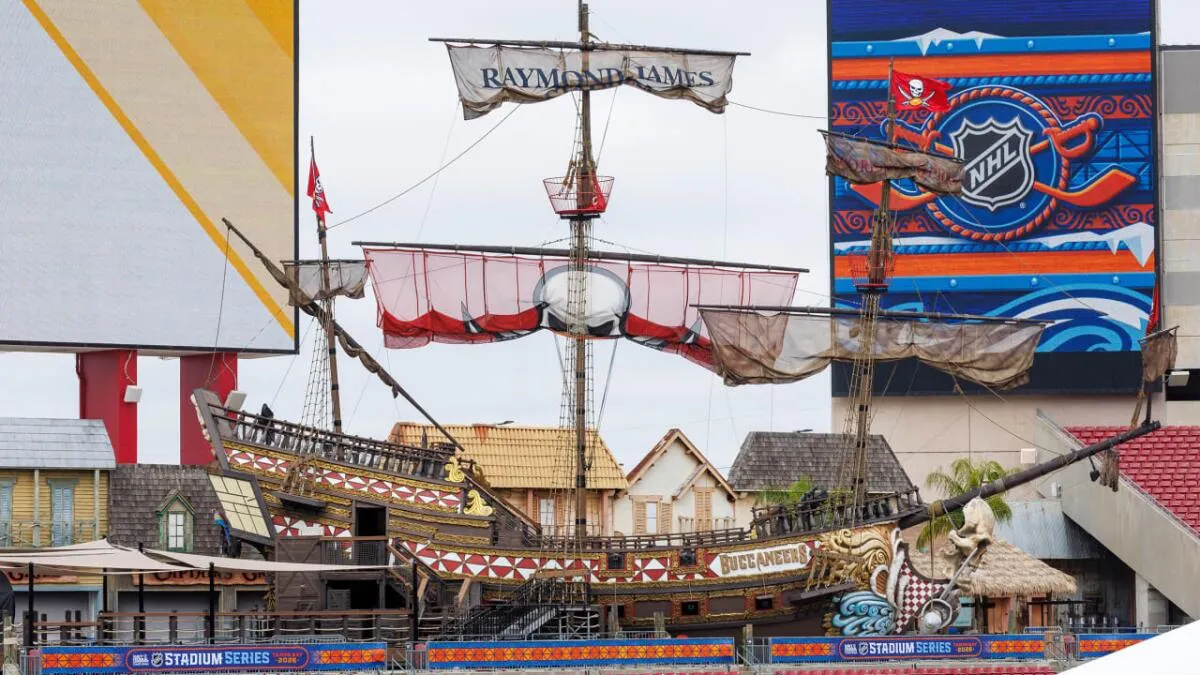
The iconic rink under the pirate ship
Raymond James Stadium’s famous pirate ship, known as the Jolly Roger, provides a dramatic backdrop for the outdoor rink. Crews completed the ice surface after weeks of preparation, including a timelapse-worthy build process that started with climate-controlled tents to combat Florida’s humidity. The early removal of protective coverings due to unexpectedly cold weather thrilled players from both teams, who skated on the exposed ice for practice.
This setup nods to Tampa Bay’s seafaring theme, with the rink positioned directly in view of the 103-foot pirate ship cannon. Fans have shared photos of the pristine ice surface gleaming under stadium lights, a sight unlike any indoor arena. The Lightning’s special Stadium Series jerseys, inspired by pirate motifs and Bolts history, add to the visual spectacle.
Bruins supporters counter with sun-ray patterned jerseys, embracing the Florida vibe while honoring their black-and-gold roots. Practice sessions showed players testing the footing, with Lightning captain Victor Hedman returning from injury and looking sharp alongside Nikita Kucherov. The atmosphere builds anticipation for puck drop.
Beyond the rink, ground crews transformed parking lots into fan zones, complete with interactive games and Stanley Cup photo ops. This fusion of stadium grandeur and hockey tradition creates scenes that fans will remember long after the final buzzer.
The weather’s cooperation has been a bonus, allowing for clear views and comfortable outdoor viewing. As gates open, expect the pirate ship to fire its cannons in celebration, amplifying the pregame energy.
Pregame festivities and fan experiences
The NHL PreGame fan festival in Parking Lots 5 and 7 kicks off at 1 p.m., drawing ticketed fans for hours of entertainment before gates open. Family-friendly attractions include hockey games, live music from country duo LOCASH at 4 p.m., and special guest appearances. No bags allowed ensures smooth entry into this vibrant block party atmosphere.
Themed pregame outfits dominate the scene, with Lightning fans sporting pirate hats, eye patches and custom scarves, while Bruins faithful rock beanies and gold-trimmed sun visors. Vendors sell Stadium Series merch like bomber jackets and straw hats, blending tropical flair with winter gear. Social media buzzes with selfies against the rink backdrop.
A 50/50 raffle benefiting Moffitt Cancer Center starts with a $100,000 jackpot, adding excitement with options like the Captain’s Special. Fans scan QR codes for tickets, heightening the stakes ahead of the game. The no-bag policy keeps lines moving, letting everyone focus on the fun.
Stanley Cup photo opportunities have lines forming early, a rare treat for Tampa fans experiencing their first outdoor NHL game. Country star Tim McGraw performs at first intermission, promising an over-the-top halftime show. These elements turn the day into a full festival.
As the sun sets, parking lots fill with tailgate vibes, complete with grills and chants. This pregame buildup underscores why Stadium Series events captivate, far beyond the on-ice action.
Team storylines and stars to watch
The Lightning enter at 34-14-4, atop the Atlantic Division on a hot streak, while the Bruins sit at 32-20-3 with a 10-1-1 run in their last 12. Goaltender Andrei Vasilevskiy anchors Tampa with a 2.04 GAA and .921 save percentage, his custom mask featuring stadium motifs. Kucherov leads with 82 points, a offensive force.
Hedman’s return from elbow surgery bolsters the blue line, his presence missed in 17-3-2 stretch without him. Bruins’ David Pastrnak eyes a breakout performance outdoors. Both squads vie for playoff positioning, with big points on the line.
Historical context adds weight: Lightning’s first outdoor home game, Bruins seeking momentum. Practices revealed loose vibes, players “getting loose” per NHL social posts.
Key NHL EDGE stats highlight speed and shots, favoring the surging Bolts. Vasilevskiy’s shutouts and Kucherov’s assists could decide it.
Fan reactions mix excitement and nerves, with alumni like Hall and Malone sharing outdoor tales. Commissioner Bettman praised owner Jeff Vinik’s role in bringing it south.
What the Stadium Series means for these rivals
Stadium Series games often deliver magic, and this Tampa edition sets a new benchmark with its location. The pirate ship rink, fan fest and celebrity entertainment elevate it beyond a regular matchup.
For the Lightning, it’s a franchise milestone; for Bruins, a chance to steal standings ground. Cold snap ensures prime ice, potentially leading to high-event hockey.
Postgame, expect analysis on how outdoor elements influenced play. This game could spark playoff intensity between rivals.
Looking ahead, the winner gains momentum toward the postseason. Stadium Series legacy grows, proving hockey thrives anywhere—even under a pirate’s watchful eye. Fans leave with stories, photos and perhaps a raffle win, cementing 2026 as unforgettable.
Frequently Asked Questions

Par Mike Jonderson
Mike Jonderson is a passionate hockey analyst and expert in advanced NHL statistics. A former college player and mathematics graduate, he combines his understanding of the game with technical expertise to develop innovative predictive models and contribute to the evolution of modern hockey analytics.