











Toronto Maple Leafs 2024-25 season injuries and roster instability analysis: How the blue and white navigate unprecedented adversity
The Toronto Maple Leafs 2024-25 season injuries and roster instability analysis reveals a franchise grappling with perhaps its most challenging regular season in recent memory. What began as a promising campaign under new head coach Craig Berube has devolved into a medical nightmare, with key players falling at an alarming rate while the front office simultaneously manages the fallout from significant offseason roster changes. As of late November 2025, the team has iced a lineup missing seven regular contributors, forcing depth players into unfamiliar roles and testing the organizational depth in ways that few Stanley Cup contenders ever experience. Yet amidst the chaos, the Leafs have somehow remained competitive, raising critical questions about sustainability, management strategy, and whether this roster can truly contend when healthy.
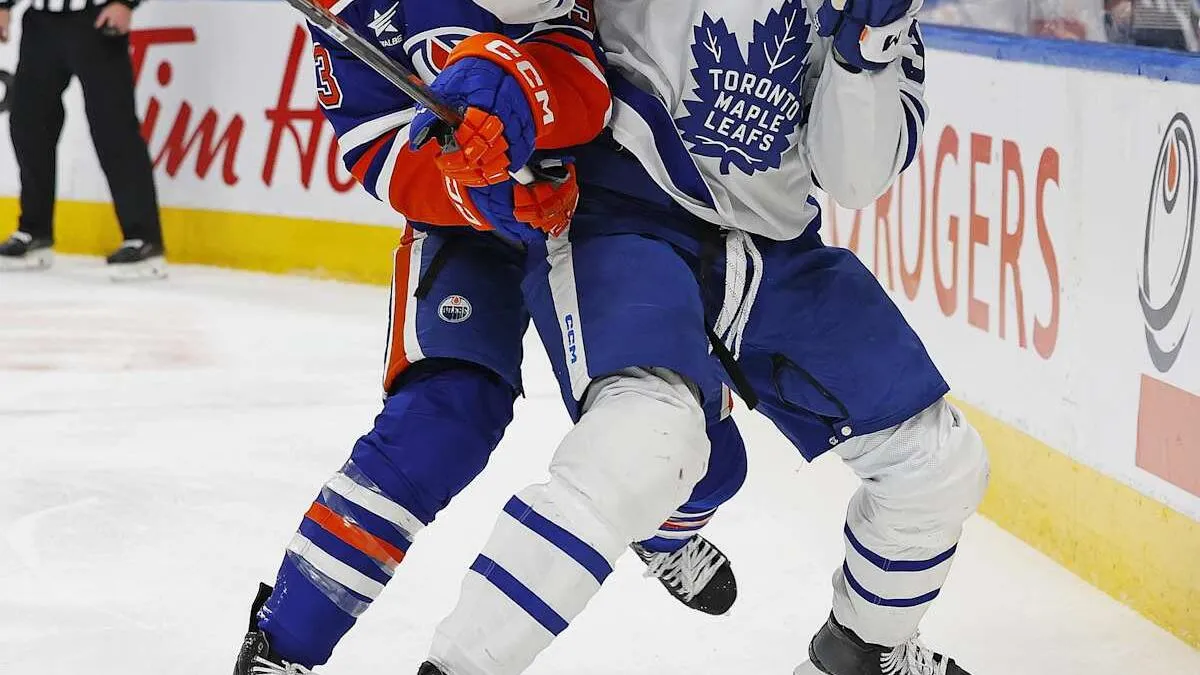
The anatomy of Toronto’s injury crisis in 2024-25
The Toronto Maple Leafs 2024-25 season injuries and roster instability analysis must begin with the sheer volume of personnel losses. On any given night, the team has been without its franchise center, two top-four defensemen, a key forward acquisition, and both goaltenders from its planned tandem. The situation reached a critical point during a mid-November matchup against St. Louis when Toronto dressed what amounted to a skeleton crew, yet still managed to steal a victory in overtime through William Nylander’s heroics.
Auston Matthews’ lower-body injury represents the most significant absence. The team has taken a patient approach with its superstar, holding him out for over a week with a target return date of November 23 against Montreal. General manager Brad Treliving provided a straightforward assessment: Matthews is “coming along” but remains doubtful for mid-week contests. This cautious timeline reflects both the player’s importance and the team’s desire not to risk long-term damage for short-term gains. When healthy, Matthews’ nine goals and five assists through early November demonstrated his typical dominance, drawing defenders and creating space that Toronto’s entire offensive structure depends upon.
The defensive corps tells an equally grim story. Jake McCabe’s recent upper-body injury forced him from a game against Montreal, with Coach Berube offering no sugarcoating: “I don’t know the timeline right now, but it’s bad enough that he couldn’t come back and play.” This loss compounds existing absences of Chris Tanev and Brandon Carlo, leaving Morgan Rielly as the only defenseman playing his intended role. McCabe had logged 21:16 per game, second only to Rielly, while providing the physical, accountable presence that Berube’s system demands. Without him, Toronto’s ability to suppress scoring chances against top opposition becomes severely compromised.
Roster instability compounds the injury nightmare
The Toronto Maple Leafs 2024-25 season injuries and roster instability analysis becomes more complex when factoring in deliberate roster changes made last summer. The organization finally moved on from Mitch Marner, trading the star winger to Vegas for Nicolas Roy and other assets. While the move provided salary cap relief and brought in a defensively responsible forward, it also removed a consistent point producer and power-play quarterback just as the team adjusted to Berube’s more structured system.
Roy’s own injury—a couple of games missed with an upper-body issue—highlighted the risk of reshuffling core pieces. He had begun finding his rhythm in Toronto’s middle-six, creating a reliable defensive presence and contributing secondary scoring. His absence stalled that momentum, leaving the coaching staff to once again recalibrate line combinations. The trade’s long-term wisdom remains debated among analysts, particularly as Marner thrives in Vegas while Toronto struggles to replace his offensive output.
Adding to the instability, the team brought in several new faces including free agent acquisitions and depth players on short-term deals. These players were expected to fill specific roles within Berube’s system, but injuries have forced them into expanded responsibilities they weren’t originally signed to handle. The constant lineup shuffling prevents chemistry development, particularly problematic for a team implementing a new coaching philosophy that emphasizes positional discipline and collective responsibility.
Defensive depth pushed beyond its limits
The Toronto Maple Leafs 2024-25 season injuries and roster instability analysis reveals a blue line operating on borrowed time. With McCabe, Tanev, and Carlo unavailable, Toronto has essentially lost its top shutdown pair and most reliable penalty killers. This forces unsustainable minutes onto remaining defenders and risks long-term fatigue injuries.
Simon Benoit suddenly finds himself as a top-four defenseman rather than the depth option he was signed to be. Benoit’s simple, physical game makes him an ideal candidate for defensive-zone starts and penalty killing, but expecting him to replace McCabe’s 21+ minutes against opposing top lines is unrealistic. His increased role exemplifies how injuries create a domino effect, pushing each defenseman up the depth chart into positions they’re not ideally suited for.
Philippe Myers now has a major opportunity to prove his NHL worth. The 6’5” defender possesses size, reach, and mobility that intrigue coaches, but consistency has plagued his career. With the blue line crisis, Myers may face situations he hasn’t regularly encountered this season. His performance could determine whether Toronto stays afloat or must explore external trade options, which become increasingly expensive as other teams recognize the Leafs’ desperation.
The coaching staff has been forced to adjust its systems to compensate. Berube’s preferred structured, heavy defensive style requires precise positioning and communication—difficult to execute with constantly changing personnel. The team has had to simplify its approach, sometimes reverting to a more basic zone coverage that opposing coaches can exploit with set plays and coordinated attacks.
Forward lines scramble to maintain production
The Toronto Maple Leafs 2024-25 season injuries and roster instability analysis extends to a forward group missing key contributors at every level. Matthew Knies’ day-to-day lower-body injury removed a power forward who brings size and straight-line energy to the top-six. Sammy Blais, himself pressed into service when Knies couldn’t play, left a game spitting blood after a scary incident before remarkably returning to practice clean-scan news.
Without Matthews and Knies, the top line burden falls entirely on Nylander and Tavares. While both have risen to the occasion—Nylander’s overtime winner against St. Louis being a prime example—the long-term sustainability concerns are obvious. Tavares is 34 years old and playing heavy minutes in Berube’s demanding system, while Nylander cannot be expected to produce magic every night without support.
The depth has been tested significantly. Jacob Quillan, an organizational prospect, finds himself centering an NHL line due to necessity rather than readiness. While his insertion provides valuable experience, it also exposes the thin margin between Toronto’s projected roster and its emergency options. The team’s ability to forecheck consistently and maintain offensive zone pressure suffers when depth players are forced into top-nine roles they’re not yet equipped to handle.
Special teams have taken a particular hit. The power play misses Matthews’ one-timer threat and Marner’s playmaking (even with the latter now in Vegas), while the penalty kill suffers without Roy, McCabe, and Carlo—the very players signed to improve that unit. This double-whammy on special teams can swing games, especially in the tightly contested Atlantic Division where playoff positioning may come down to a handful of points.
Goaltending tandem plans unravel
The Toronto Maple Leafs 2024-25 season injuries and roster instability analysis cannot overlook the crease, where Anthony Stolarz’s extended absence has disrupted the planned 1A/1B rotation with Joseph Woll. Stolarz hasn’t played up to his elite standards from last season, but the tandem was supposed to provide insurance against injury and workload management. Instead, Woll has been forced into consecutive starts just as he returns from his own health issues.
To Woll’s credit, he’s been “lights-out” in his first two games back, providing the stabilizing force his teammates desperately need. His performance takes enormous pressure off the patched-together defense, allowing them to play with more confidence. However, asking any goaltender to shoulder a starter’s workload immediately after returning from injury courts disaster, particularly with a condensed schedule ahead.
Behind Woll, the organizational depth grows thin. The team must carefully manage his starts to avoid burnout before the stretch run, but doing so requires either rushing Stolarz back before he’s fully healthy or turning to unproven AHL call-ups in crucial divisional games. Neither option appeals to a management team with championship aspirations, creating a potential trade target as the deadline approaches—though quality goaltending comes at a premium.
Can the Maple Leafs weather this storm?
The Toronto Maple Leafs 2024-25 season injuries and roster instability analysis ultimately asks whether this roster can survive until healthy bodies return. The honest answer is that survival is possible but not guaranteed, and the team’s current standing reflects this precarious position. Holding serve against St. Louis while missing seven regulars demonstrated admirable resilience, but that level of effort and execution night after night is unsustainable.
The schedule ahead provides little relief. Divisional matchups against Boston, Tampa Bay, and Florida loom large, each game carrying four-point implications. Dropping even a few winnable games during this injury spell could slot Toronto into a wild-card position, forcing a much tougher first-round playoff matchup. The margin for error has shrunk to almost nothing, requiring perfect execution from imperfect lineups.
Treliving faces difficult decisions. He could pursue a trade to shore up the defense or add forward depth, but any acquisition costs assets and potentially disrupts chemistry further. Alternatively, he could trust the internal depth chart, hoping prospects like Quillan and Myers seize their opportunities. The defensive depth analysis provides data showing how the blue line has performed under pressure, while the top-line depth examination reveals scoring distribution challenges.
Leadership becomes paramount during such adversity. Tavares’ work ethic and Nylander’s clutch performances set a tone, but Berube’s candid assessments—calling games “right off the rails” when warranted—keep expectations realistic. The team hasn’t shown panic or slumped shoulders, instead displaying a collective understanding that championship mettle is forged through hardship.
The path forward requires patience and perhaps a touch of luck. If Matthews and Knies return as scheduled, and if Tanev’s “light work” progresses to full contact within a week, Toronto might navigate this stretch without falling out of contention. The goaltending duo must get healthy together, the defense needs one more reliable body, and the forwards require their offensive catalyst back.
What this means for the championship picture remains uncertain. Teams that endure early-season hardship often emerge stronger, their systems tested and their depth proven. But those same teams sometimes exhaust themselves just reaching the playoffs, leaving nothing for a deep run. For the Maple Leafs, the 2024-25 season has become less about perfecting Berube’s system and more about simple survival—a test of organizational fortitude that will define this era regardless of playoff outcome. The coming weeks will determine whether Toronto’s championship window remains open or slams shut under the weight of injuries and instability.
Frequently Asked Questions

Par Mike Jonderson
Mike Jonderson is a passionate hockey analyst and expert in advanced NHL statistics. A former college player and mathematics graduate, he combines his understanding of the game with technical expertise to develop innovative predictive models and contribute to the evolution of modern hockey analytics.