






The Toronto Maple Leafs endured a disappointing 6-3 defeat at the hands of the Columbus Blue Jackets on Wednesday night at Nationwide Arena, a loss that exposed persistent defensive vulnerabilities despite a historic milestone. While John Tavares became the 49th player in NHL history to reach 500 career goals, the achievement was overshadowed by a comprehensive team collapse that saw Toronto surrender six goals for the second time in recent weeks. The loss snapped a two-game winning streak and dropped the Maple Leafs to 5-5-1 on the season, raising questions about their defensive structure under head coach Craig Berube.
Playing on the second night of a back-to-back after defeating Calgary 4-3 the previous evening, Toronto appeared sluggish and disorganized throughout long stretches of the contest. The Blue Jackets, also playing their second game in as many nights following an overtime victory against Buffalo, showed no signs of fatigue as they dominated the middle frame with three unanswered goals. Columbus improved to 6-4-0 and secured their third consecutive victory, marking five wins in their last six games while demonstrating the kind of depth scoring that has eluded the Maple Leafs.
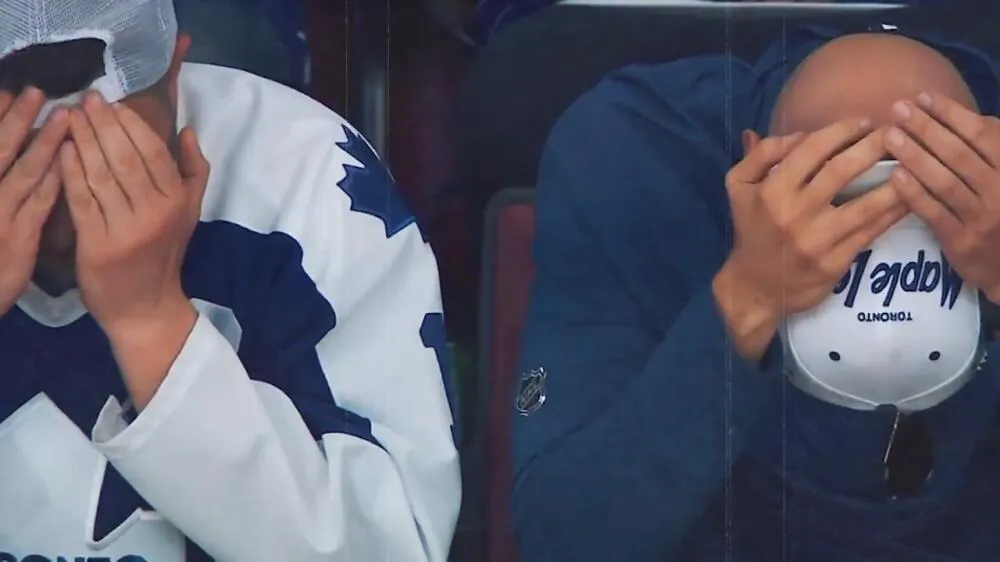
Defensive breakdowns plague the Maple Leafs in 6-3 loss to Blue Jackets game recap
Toronto’s defensive shortcomings were evident from the opening puck drop, as Columbus established an early rhythm that the visitors never managed to disrupt. The Blue Jackets struck first at 6:56 of the opening period when Cole Sillinger received a pass from Charlie Coyle inside the blue line and skated in alone on Cayden Primeau, beating the goaltender with a forehand shot past his blocker. The play marked Coyle’s 300th career assist and set the tone for what would become a dominant performance by Columbus’s third line.
Less than five minutes later, Zach Werenski extended the lead to 2-0 with a wrist shot from the right circle that found its way past Primeau on the glove side. Despite outshooting Columbus 9-6 in the opening frame, Toronto found themselves down by two goals heading into the first intermission. The statistical advantage in shot attempts meant little as the Maple Leafs consistently failed to generate high-danger opportunities while leaving their goaltender exposed to quality scoring chances.
The defensive issues have become a recurring theme for Toronto through the first quarter of the season. Berube’s system emphasizes aggressive forechecking and quick transitions, but the execution has been inconsistent. Turnovers in dangerous areas, failed gap control, and breakdowns in coverage have plagued the team, leading to goals against that could have been prevented with better structure and communication.
The Maple Leafs’ defensive corps struggled to contain Columbus’s speed through the neutral zone, allowing clean entries that led to extended offensive zone time for the Blue Jackets. Jake McCabe and the rest of Toronto’s blue line appeared a step slow, particularly on odd-man rushes where Columbus capitalized repeatedly. The absence of William Nylander due to a lower-body injury further compromised Toronto’s ability to maintain puck possession and generate sustained offensive pressure that could have relieved some defensive stress.
Second period collapse defines the Maple Leafs 6-3 loss to Blue Jackets game recap
The middle frame proved catastrophic for Toronto despite holding an 18-7 advantage in shots on goal. Sammy Blais, making his Maple Leafs debut after being claimed off waivers from Montreal and serving as a healthy scratch for 10 games, provided a spark at 2:43 when he batted a Jake McCabe shot into the net with the shaft of his stick. The goal briefly injected life into Toronto’s bench and seemed to signal a potential comeback.
However, Columbus responded with a devastating three-goal outburst over an 8½-minute stretch that effectively ended the contest. Ivan Provorov restored the two-goal cushion at 8:33, converting a backhand in the slot after pouncing on a rebound from a Dmitri Voronkov shot. The goal exemplified Toronto’s struggles in front of their own net, as defensive coverage collapsed and allowed Provorov to operate freely in the high-danger area.
Sillinger struck for his second goal of the night with 6:36 remaining in the period, finishing off a textbook 2-on-1 with Coyle after Toronto’s defense failed to properly support their forwards on the backcheck. The goal demonstrated the type of transition play that has tormented the Maple Leafs throughout the season, as they struggled to match Columbus’s speed and defensive awareness. Dante Fabbro added insult to injury just over three minutes later, receiving a drop pass from Mathieu Olivier and firing home from inside the left circle to make it 5-1.
“If you don’t take care of the puck and you don’t take care of certain team’s tendencies, you can get burnt by it and that’s what happened tonight,” Berube said in his post-game press conference. The coach’s assessment was accurate—Toronto’s careless puck management led directly to several Columbus goals, with errant passes and failed clearing attempts creating prime scoring opportunities for the home team.
The 5-1 deficit heading into the third period represented a complete system failure for Toronto. While Primeau faced criticism for allowing five goals on 18 shots through 40 minutes, the reality was that several of those goals came on high-quality chances created by defensive breakdowns in front of him. The Maple Leafs’ inability to execute their defensive zone coverage and support their goaltender proved more damaging than any individual mistake by Primeau.
Columbus’s third line dominance in the Maple Leafs 6-3 loss to Blue Jackets game recap
The historic performance by Columbus’s third line of Coyle, Olivier, and Sillinger proved to be the difference in this contest. The trio combined for an astounding 11 points, with Coyle recording four assists, Olivier adding a goal and three assists, and Sillinger contributing two goals and an assist. The production from a checking line represented a nightmare scenario for Toronto’s depth and exposed their inability to match up effectively throughout the lineup.
Coyle’s four primary assists tied him for third place in Blue Jackets franchise history for assists in a single game, joining Artemi Panarin and Scott Hartnell in that exclusive club. His vision and playmaking ability tortured Toronto’s defense all night, as he consistently found open teammates in dangerous positions. The veteran center demonstrated why depth scoring matters in the NHL, as Columbus rolled four effective lines that wore down Toronto’s defenders.
Olivier’s career-high four-point performance marked a personal milestone and validated Columbus’s commitment to building a deep, balanced roster. His physical presence and surprising offensive touch created problems for Toronto’s defenders, who struggled to contain his net-front work and transition speed. The chemistry between Olivier, Coyle, and Sillinger has been building throughout Columbus’s recent winning streak, and Wednesday’s explosion represented the culmination of their developing synergy.
“When we get the cycle going, we’re tough to knock off the puck,” Sillinger explained after the game. “If teams give us time and space, we can capitalize. Throughout this 10-game stretch here, we felt like we’ve done that. It’s just a matter of executing.” The 20-year-old center’s analysis highlighted a key weakness in Toronto’s approach—they allowed Columbus far too much time and space in all three zones, enabling the Blue Jackets to execute their system with minimal pressure.
Elvis Merzlikins provided solid goaltending for Columbus, stopping 33 of 36 shots to earn the victory. While Toronto generated shot volume, particularly in the second period, Merzlikins faced few truly difficult saves as the Maple Leafs’ offensive chances rarely came from high-danger areas. The Latvian netminder’s positioning and rebound control limited Toronto’s second-chance opportunities, forcing the visitors to generate offense from the perimeter.
Tavares milestone provides silver lining in Maple Leafs 6-3 loss to Blue Jackets game recap
Despite the lopsided defeat, John Tavares provided a moment of historical significance when he scored his 500th career NHL goal at 15:45 of the third period to cut Columbus’s lead to 6-2. The captain became the 49th player in league history to reach the milestone and the second player to achieve the feat while wearing a Maple Leafs jersey, following Mats Sundin who accomplished it on October 14, 2006. Tavares received a pass from Mitch Marner and beat Merzlikins with a wrist shot that brought the Nationwide Arena crowd to their feet in respectful recognition.
“You play this game to win as a team, and it’s all about the team,” Tavares said afterward. “And you know, you’d like to have had it make more of an impact in the game. But for sure, in the days ahead and moments ahead, I’ll appreciate it more.” The veteran forward’s humble response exemplified his leadership qualities, as he refused to celebrate individual achievement in the context of a team loss that exposed significant systemic problems.
Auston Matthews, who assisted on the historic goal alongside Marner, expressed admiration for his captain’s accomplishment despite the disappointing result. “It’s amazing,” Matthews said. “I can’t say enough great things about Johnny, the person that he is, the teammate, the professional, the guy that shows up to the rink every day and is one of the hardest workers, takes care of himself in all different ways.” The 500-goal milestone places Tavares in elite company and validates his 17-year career as one of the most consistent goal scorers of his generation.
The milestone extended Tavares’s point streak to six games, during which he has accumulated nine points on five goals and four assists. His production has been one of the few bright spots during Toronto’s inconsistent start to the season, as he continues to demonstrate the scoring touch that has defined his career. Playing on a line with Matthews and Marner, Tavares remains a critical component of Toronto’s offensive attack despite entering his age-35 season.
Nicholas Robertson added a late goal at 18:10, beating Merzlikins with a wrist shot to make the final score 6-3. The tally marked Robertson’s continued offensive contributions in an expanded role, as he recorded his second consecutive game with a goal and an assist. The 23-year-old winger has shown flashes of the offensive potential that made him a second-round pick, though his development has been hindered by injuries throughout his young career.
Key statistical breakdowns from the Maple Leafs 6-3 loss to Blue Jackets game recap
The shot differential told a misleading story, as Toronto held a commanding 38-24 advantage in shots on goal while surrendering six goals. The Maple Leafs’ inability to convert shot volume into quality scoring chances represented a concerning trend, as they generated most of their attempts from low-danger areas along the perimeter. Columbus’s defensive structure, anchored by Werenski and Provorov, effectively clogged shooting and passing lanes while allowing Toronto to fire shots from the outside.
According to detailed game statistics from NHL.com, Toronto won the faceoff battle 32-30 but lost the special teams battle. While neither team scored on the power play, Columbus generated more dangerous chances with the man advantage and maintained better puck possession. The Blue Jackets also dominated in transition, creating odd-man rushes and breakaways that resulted in multiple goals.
The efficiency gap between the two teams proved stark. Columbus converted 25% of their shots into goals, demonstrating clinical finishing on their quality chances. Toronto managed just 7.9% shooting accuracy, highlighting their struggle to generate high-danger opportunities despite controlling territorial play for extended stretches. The Blue Jackets’ ability to capitalize on mistakes and convert their chances proved decisive in a game where both teams played their second contest in as many nights.
Primeau’s performance raised questions about Toronto’s goaltending depth behind starter Joseph Woll. The backup netminder allowed six goals on 24 shots for a .750 save percentage, well below NHL standards. While several goals came on breakdowns that left him exposed, Primeau will need to make more timely saves if he hopes to earn additional starts. Toronto’s goaltending situation remains uncertain with Anthony Stolarz sidelined, placing additional pressure on Woll to shoulder the bulk of the workload.
Toronto’s injury report expanded during the game when forward Steven Lorentz left at 16:58 of the second period after going into the boards following a hit by Jake Christiansen. The team provided no postgame update on Lorentz’s condition, adding to existing concerns about Nylander’s lower-body injury that kept him out of the lineup. The mounting injury list could force Toronto to make roster moves ahead of their Saturday matchup in Philadelphia.
Looking ahead after the Maple Leafs 6-3 loss to Blue Jackets game recap
The defeat exposed fundamental issues that Toronto must address immediately if they hope to compete in the highly competitive Atlantic Division. Defensive zone coverage remains inconsistent, with players frequently losing their assignments and allowing opponents clean looks at their goaltender. The gap control through the neutral zone needs improvement, as teams continue to generate odd-man rushes and clean zone entries that lead to extended offensive pressure.
Berube faces critical decisions regarding lineup deployment and system adjustments. The back-to-back scheduling may have contributed to tired legs and mental lapses, but similar defensive breakdowns have occurred throughout Toronto’s five losses this season. The coaching staff must find solutions to shore up defensive play without sacrificing the offensive creativity that makes Toronto dangerous when clicking. According to ESPN’s comprehensive game recap, the Maple Leafs have now lost four times in six games while showing little defensive improvement.
The return of Nylander from his lower-body injury cannot come soon enough for a Toronto team that desperately needs his offensive zone possession skills and defensive awareness. His absence creates a ripple effect throughout the lineup, forcing players into unfamiliar roles and disrupting the chemistry that took months to develop. Toronto’s medical staff will need to balance the desire to get their star winger back on the ice with the necessity of ensuring he’s fully healthy to avoid reaggravation.
Toronto travels to Philadelphia on Saturday to face the Flyers in another test of their resilience and ability to respond to adversity. The Metropolitan Division matchup will provide an opportunity for redemption, but the Maple Leafs must demonstrate significant improvement in defensive structure and attention to detail. Columbus, meanwhile, hosts St. Louis on Saturday as they look to extend their winning streak to four games and continue their impressive early-season surge.
The loss serves as a stark reminder that talent alone does not guarantee success in the NHL. While Toronto possesses one of the league’s most skilled forward groups, they must play a more complete 200-foot game to compete with disciplined teams like Columbus that execute their system effectively. The coming weeks will reveal whether the Maple Leafs can make the necessary adjustments or if their defensive struggles will continue to undermine their offensive firepower. For now, the 6-3 defeat stands as a painful example of how quickly a game can unravel when fundamental defensive principles are ignored.

Par Mike Jonderson
Mike Jonderson is a passionate hockey analyst and expert in advanced NHL statistics. A former college player and mathematics graduate, he combines his understanding of the game with technical expertise to develop innovative predictive models and contribute to the evolution of modern hockey analytics.