




The Toronto Maple Leafs entered the 2025-26 season with fresh optimism under new head coach Craig Berube, promising a grittier, more balanced approach to complement their elite star power. Yet through the opening weeks of the campaign, familiar patterns have emerged that threaten to derail another promising year. While Auston Matthews, William Nylander, and the top unit continue to generate offense, the franchise’s persistent Achilles heel remains glaringly exposed: the Toronto Maple Leafs need balance and a second-line scoring unit capable of providing sustained support when the stars face shutdown opposition.
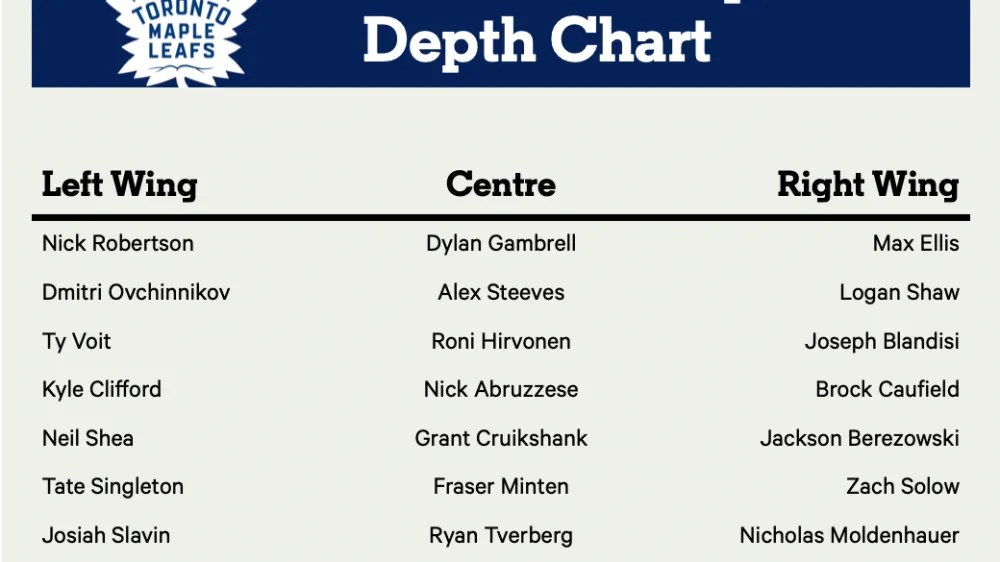
Why the Toronto Maple Leafs need balance and a second-line scoring unit more than star power
The conversation around Toronto’s needs often circles back to acquiring another marquee forward, but that narrative misses the fundamental issue. NHL insider Elliotte Friedman recently highlighted this disconnect, noting that adding one more skilled winger doesn’t address the core problem: teams simply aren’t afraid to play against the Maple Leafs. Unlike Stanley Cup champions like the Florida Panthers, who deploy relentless forechecking and sustained offensive zone pressure across all four lines, Toronto relies too heavily on individual brilliance rather than collective waves of attack.
The Toronto Maple Leafs lack of team cohesion early season has manifested in their mediocre 5-5-1 start to November, revealing defensive structure issues and inconsistent depth production. The top line generates chances, but when opponents successfully neutralize Matthews and Nylander through defensive matchups, there’s no secondary unit capable of making them pay for over-committing to shutdown assignments. This predictability allows teams to play aggressively, pinching defensemen and pressuring the puck without fear of consistent retaliation.
The solution isn’t necessarily about acquiring elite talent. Rather, Toronto requires complementary pieces that form a cohesive second line capable of possessing the puck, cycling effectively in the offensive zone, and creating sustained pressure that wears down opponents. These players don’t need to score every night, but they must force opposing coaches to respect their danger and allocate defensive resources accordingly. Without that threat, the Leafs remain a team that looks spectacular in spurts but ordinary over 60 minutes.
Championship teams understand this principle intimately. They don’t just outscore problems; they outwork opponents in layers, creating wave after wave of pressure that forces mistakes and generates scoring chances even when the top line is off the ice. Toronto has the talent foundation, but talent alone has proven insufficient season after season. The franchise desperately needs players who complement star power with work ethic, hockey intelligence, and the ability to capitalize when given opportunities against weaker defensive assignments.
The John Tavares conundrum and Toronto Maple Leafs need balance
John Tavares presents a fascinating case study in Toronto’s structural challenges. The 34-year-old center recently reached the 500-goal milestone and posted a respectable 38 goals and 74 points in 2024-25, proving he remains a productive NHL player. Yet despite his individual contributions, the question persists whether Tavares’ current iteration can anchor the second-line scoring unit Toronto desperately requires.
Tavares excels in specific situations—net-front presence, power play positioning, and finishing opportunities created by others. However, his declining foot speed limits his ability to drive play at even strength against quality competition. When examining Toronto’s even-strength possession metrics, the numbers reveal a concerning pattern: the team ranks 24th in shot attempt share and 20th in scoring chance share, according to advanced analytics from The Athletic. These statistics suggest Toronto struggles to control play when games tighten and special teams advantages disappear.
The challenge isn’t Tavares’ production in isolation but rather how his current skillset impacts the second unit’s ability to generate sustained offensive zone time. Effective second lines in today’s NHL must possess the puck, transition quickly, and maintain pressure through speed and puck movement. Tavares brings leadership, experience, and finishing ability, but the line around him requires complementary players who can compensate for his reduced mobility while maximizing his shooting prowess.
Several potential solutions exist. Toronto could surround Tavares with faster wingers capable of retrieving pucks and creating space for his shot. Alternatively, the coaching staff might deploy him primarily in offensive zone starts and power play situations while constructing the second line around a different center with greater speed and playmaking ability. The organization has explored both approaches without finding consistent success, suggesting the problem runs deeper than line combinations alone.
What remains clear is that merely assigning talented players to skate alongside Tavares hasn’t produced the balanced attack Toronto requires. Maple Leafs need external forward help for Auston Matthews’ line, with Kadri, Rakell, Tuch top targets, but the real question is whether those additions should complement the top unit or build out a truly dangerous second line. The franchise faces difficult decisions about resource allocation and whether maximizing Tavares’ remaining effectiveness serves the team’s broader structural needs.
Building depth scoring through systemic change in Toronto
Craig Berube arrived in Toronto with a reputation for demanding accountability and implementing structured systems that maximize team defense. His fingerprints appear throughout the early season—more physicality, improved defensive structure, and greater attention to positional responsibility. However, translating those principles into offensive production from secondary scorers remains an ongoing challenge. The Toronto Maple Leafs need balance and a second-line scoring unit, but achieving that balance requires more than X’s and O’s adjustments.
The systemic issue extends to how Toronto generates offense at even strength. Championship contenders create dangerous scoring chances through sustained offensive zone possession, winning puck battles, and forcing turnovers in high-danger areas. Florida’s success in 2024 stemmed from their ability to suffocate opponents with relentless forechecking, making every shift miserable for the opposition even when goals didn’t immediately follow. Toronto, by contrast, often generates offense through rush chances and individual skill plays that, while spectacular, don’t wear down opponents over 82 games.
Berube’s challenge involves reshaping Toronto’s identity without sacrificing the offensive creativity that makes Matthews and Nylander elite. The Leafs must develop the capacity to play multiple styles—dominating possession when possible, but also grinding out victories through structured defense and opportunistic scoring when star power gets neutralized. This versatility requires depth players who embrace defensive responsibility while possessing sufficient offensive skill to capitalize when opportunities arise.
The transition takes time. Players must internalize new systems, develop chemistry with linemates, and understand their roles within Berube’s structure. Early season struggles often reflect this adjustment period as the roster adapts to new expectations. However, time is a luxury Toronto may not possess if they hope to capitalize on Matthews and Nylander’s prime years. The franchise needs accelerated development from depth players and potentially external additions who already understand how to function in complementary scoring roles.
Building sustainable depth scoring also requires patience with younger players and acceptance of inconsistency during development. Prospects and role players won’t produce at star levels, but they must contribute enough offense to prevent opponents from solely focusing on shutdown assignments against the top line. This balance—allowing young players to make mistakes while demanding consistent effort—represents perhaps Berube’s greatest coaching challenge this season.
The competitive landscape and what Toronto Maple Leafs need balance means
Understanding Toronto’s needs requires examining the competitive landscape they must navigate. The Atlantic Division features several teams that have solved the depth scoring puzzle through different approaches. The Panthers built their championship core through relentless identity and complementary pieces who embrace physical play. The Boston Bruins have historically relied on balanced scoring across multiple lines, preventing opponents from keying on any single unit. Even teams like the Tampa Bay Lightning during their championship runs deployed multiple dangerous lines that could punish opponents for over-committing defensively.
Toronto’s current construction leaves them vulnerable to teams employing this balanced approach. When playing against elite depth, the Leafs’ star-heavy roster can win individual matchups but struggles when opponents roll four lines capable of possessing the puck and creating chances. This reality manifests most clearly in playoff series, where coaching adjustments and defensive focus neutralize top lines, and depth scoring becomes paramount. Toronto has experienced this pattern repeatedly—dominating regular season games against weaker opponents while struggling against structured playoff teams that limit mistakes and force secondary players to beat them.
The solution demands difficult personnel decisions. Cap space constraints limit Toronto’s flexibility, forcing management to choose between retaining existing pieces and pursuing external upgrades. Trading for established second-line players requires surrendering assets that could address future needs or develop into solution from within. Yet waiting for internal development risks wasting another year of Matthews’ and Nylander’s primes without addressing glaring weaknesses.
General Manager Brad Treliving faces mounting pressure to find creative solutions within these constraints. Recent reports suggest Toronto is actively exploring trades to create cap flexibility, potentially moving salary to acquire different pieces that better fit Berube’s system. These moves carry risk—the wrong addition could disrupt chemistry without solving the depth scoring issue, while trading away current roster players weakens an already thin supporting cast.
The competitive window adds urgency to these decisions. Matthews recently signed a long-term extension, but championship opportunities don’t last forever. Core players age, contracts expire, and windows close faster than organizations anticipate. Toronto cannot afford another season of hoping their star power alone will overcome structural deficiencies. The Toronto Maple Leafs need balance and a second-line scoring unit not as a luxury but as a necessity for legitimate championship contention.
Looking forward: paths to sustainable secondary scoring
Multiple paths exist for Toronto to address their depth scoring deficiencies, each carrying distinct advantages and risks. The internal development route relies on existing prospects and young players stepping into larger roles, providing cost-controlled production while preserving assets for future needs. This approach requires patience and acceptance of inconsistency, but it builds sustainable depth without mortgaging the franchise’s future. Players like Matthew Knies and others in the system possess the tools to become effective complementary scorers, but development timelines don’t always align with championship windows.
The trade market offers more immediate solutions but demands significant asset investment. Acquiring established second-line players requires surrendering draft picks, prospects, or roster players that weaken other areas. Toronto must carefully evaluate whether available targets genuinely solve their structural issues or merely add marginally better versions of what they already possess. The risk of acquiring another skilled but defensively limited forward who doesn’t address the underlying need for balanced, sustained offensive pressure remains very real.
Free agency presents another avenue, though limited cap space restricts Toronto’s options. Identifying undervalued players who fit Berube’s system and can contribute to a second-line scoring unit without breaking the budget represents a challenge many contending teams face. The best solutions often come from players seeking fresh starts or those whose skillsets better align with Toronto’s specific needs than their previous situations. However, free agency gambles don’t always pan out, and misjudgments consume precious cap resources without solving fundamental problems.
Perhaps the most realistic path combines all three approaches—marginal roster additions through smart free agency signings, strategic trades that address specific needs without gutting the prospect pipeline, and continued development of existing young players who show promise. This balanced approach acknowledges that no single move will transform Toronto’s depth scoring overnight while positioning the franchise for both immediate and sustained success. The key lies in accurate self-assessment: understanding exactly what Toronto needs rather than pursuing the shiniest available options that don’t genuinely address structural deficiencies.
As November progresses and the season gains momentum, Toronto faces mounting pressure to find answers. Their current trajectory—talented but unbalanced, capable of brilliance but lacking the sustained pressure that defines championship teams—feels depressingly familiar. Whether through shrewd management moves, tactical adjustments from Berube, or unexpected internal development, the Leafs must discover how to become a team opponents genuinely fear at all four lines. Until that transformation occurs, they’ll remain a talented squad falling short of their championship potential, talented enough to compete but too predictable to conquer.

Par Mike Jonderson
Mike Jonderson is a passionate hockey analyst and expert in advanced NHL statistics. A former college player and mathematics graduate, he combines his understanding of the game with technical expertise to develop innovative predictive models and contribute to the evolution of modern hockey analytics.