











The Toronto Maple Leafs made a dramatic coaching change on Monday by dismissing assistant coach Marc Savard just 35 games into the 2025-26 NHL season. The decision comes amid mounting pressure as the team finds itself at the bottom of the Atlantic Division and second-worst in the Eastern Conference standings. Savard, who oversaw the league’s worst power-play unit converting at a dismal 13.3 percent, became the first casualty in an organization desperately searching for answers to their underperformance. The move signals that general manager Brad Treliving and head coach Craig Berube are unwilling to wait for a turnaround as the holiday break approaches.
The former NHL star forward joined Toronto’s staff when Berube took over in March 2024, bringing high expectations given his offensive pedigree as a player and previous coaching experience with Calgary, St. Louis, and the Windsor Spitfires. However, the power play’s catastrophic struggles made Savard’s position untenable. Toronto has managed just two power-play goals in 27 attempts during December while surrendering two shorthanded goals—the same number they’ve scored with the man advantage. For a roster featuring Auston Matthews, William Nylander, and John Tavares, such futility is simply unacceptable.
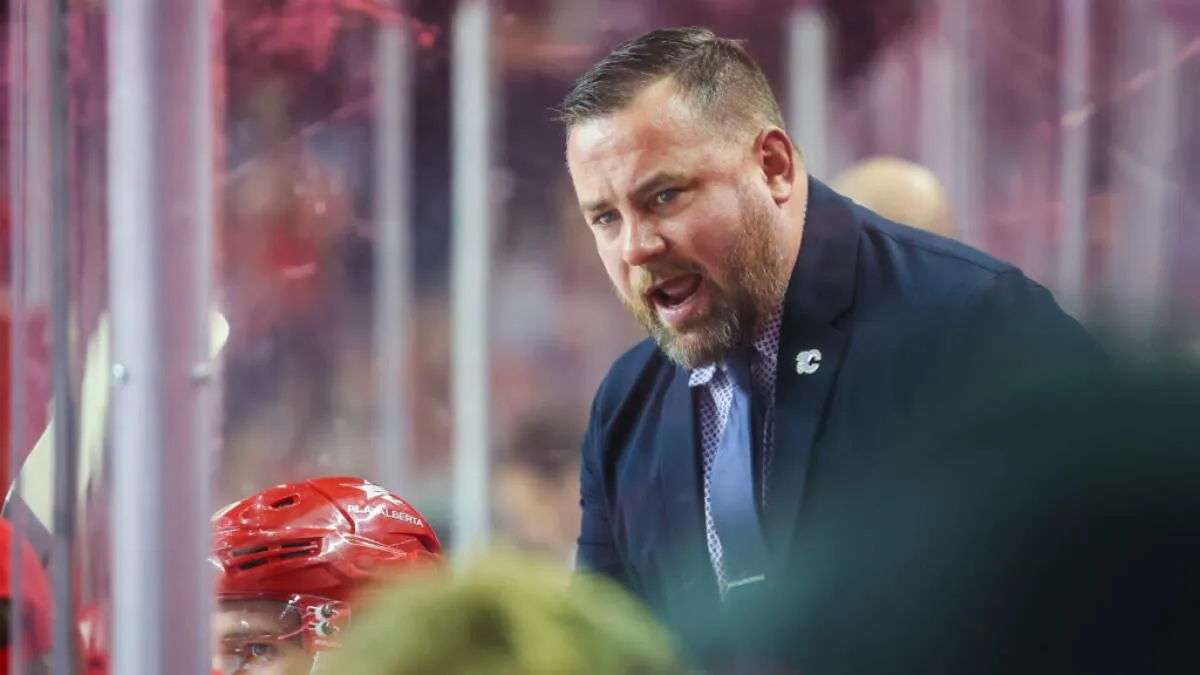
Toronto Maple Leafs fire assistant coach Marc Savard after power play collapse
Savard’s power play unit ranks dead last in NHL
The numbers tell a damning story of Toronto’s special teams disaster. Through 35 games, the Maple Leafs’ power play has converted at an embarrassing 13.3 percent rate, placing them 32nd in a 32-team league. The unit has been particularly brutal in December, going 2-for-27 while allowing two shorthanded goals against. This means Toronto has been equally likely to score on the power play as they are to get scored upon—a historically bad ratio for a team boasting three former 40-goal scorers.
Craig Berube entrusted Savard with the power play when he assembled his staff in 2024, hoping the former center’s creative offensive mind would unlock Toronto’s potential. The decision made sense on paper—Savard orchestrated one of the league’s most dangerous man-advantage units during his playing days, racking up 706 points in 807 career games with Calgary, Atlanta, and Boston. However, translating on-ice vision into coaching strategy proved more challenging than anticipated. The Leafs have looked stagnant and predictable with the extra man, often struggling to generate high-danger scoring chances despite overwhelming talent.
Star players underperform under Savard’s system
The most concerning aspect of Toronto’s power-play failure is the dramatic decline of their star forwards. Auston Matthews, a three-time Rocket Richard Trophy winner, has managed just 14 goals this season after scoring 69 last year. William Nylander has gone 11 games without finding the back of the net. Captain John Tavares has two goals in his past 14 contests. These aren’t ordinary players—these are elite talents who should thrive with additional space and time.
Berube acknowledged the disconnect when addressing reporters after practice. “We’re not generating the looks we need,” the head coach admitted. “We’ve got too much skill to be this ineffective.” The quote highlights the frustration building within the organization as point-producers consistently fail to produce. Savard’s systems, which relied heavily on perimeter passing and looked to set up one-timers from the point, never maximized Toronto’s net-front presence or quick-strike capabilities. The stars seemed handcuffed by structure rather than liberated by it.
Coaching tenure ends after just two seasons
Savard’s journey with the Maple Leafs began with optimism in the summer of 2024. He reunited with Berube, who he’d worked under during the 2019-20 season with the St. Louis Blues before stepping away from hockey to spend more time with family. The Toronto opportunity brought him back to the NHL after a three-year absence, and the fit appeared natural—a seasoned offensive mind joining a team built around scoring.
The former second-round pick brought 13 years of playing experience and previous assistant roles with Calgary and St. Louis. He’d also coached junior hockey with the Windsor Spitfires, developing young talent in the Ontario Hockey League. In Toronto, however, the pieces never came together. His power-play schemes lacked adaptation as opponents quickly diagnosed and neutralized their approach. Coaches who can’t adjust rarely survive, especially in a market as demanding as Toronto where championship expectations weigh on every decision.
What led to the Toronto Maple Leafs fire assistant coach Marc Savard decision
Three-game losing streak pushes management to act
The timing of Savard’s dismissal reveals how thin management’s patience had become. Toronto entered the holiday break on a three-game skid, including a particularly deflating weekend back-to-back where they scored just three total goals. When the special teams continued to sputter against division rivals, Brad Treliving and the front office decided they couldn’t wait until January for potential improvements.
The Maple Leafs sit at 15-20-0 through 35 games, putting them on pace for their worst season since the dark days of the early 1980s. They’ve allowed 113 goals while scoring just 108, a negative goal differential that suggests deeper systemic issues beyond one assistant coach. However, firing an assistant represents a smaller shakeup than replacing the head coach or making a blockbuster trade, making it the path of least resistance for an organization trying to spark change without completely blowing up their structure.
Special teams disaster extends beyond power play
While Savard took the fall for the power play, Toronto’s penalty kill hasn’t been much better, ranking 28th in the NHL at 75.2 percent. The complete special teams collapse has cost them multiple games in a tightly contested Atlantic Division. Four shorthanded goals against indicates not just a stagnant power play, but a dangerous one that creates quality chances for opponents through turnovers and poor puck management.
The coaching staff has tried various personnel combinations, moving Morgan Rielly between units, giving Timothy Liljegren more responsibility, and even benching Tyson Barrie at times. Nothing has worked. The power play has become so predictable that opponents aggressively pressure the points, knowing Toronto lacks a coherent plan to exploit the space created by such aggressiveness. Savard’s inability to install a viable counter-attack strategy ultimately sealed his fate.
Craig Berube’s job security now in question
The dismissal puts immediate pressure on Berube to turn things around. Coaches rarely survive multiple staff overhauls, and this represents his first major shakeup since taking the job. While general manager Brad Treliving publicly supported his head coach during recent press availability, actions speak louder than words. The organization has made it clear that results matter more than relationships or reputation.
Berube now faces the challenge of either taking over power-play duties himself or distributing them among remaining assistants. With the holiday break providing a brief respite, he’ll have minimal practice time to implement changes before Toronto faces Pittsburgh on Tuesday. The Penguins present a difficult opponent, and another loss would extend the skid to four games while raising further questions about whether Berube himself should be concerned about his position behind the bench.
Toronto Maple Leafs fire assistant coach Marc Savard: What happens next
Internal replacement likely for remainder of season
Team officials haven’t indicated whether they’ll pursue an external hire, suggesting the remaining staff will absorb Savard’s responsibilities. Assistant coaches Mike Van Ryn, Mike Grier, and Dylan McIlrath already handle defense, forwards, and other specialized areas, leaving limited bandwidth for power-play specialization. However, promoting from within maintains continuity during a turbulent period.
The most likely scenario has Berube taking a more hands-on role with the man advantage, potentially delegating other responsibilities to his assistants. This approach allows the head coach to directly implement his vision without teaching an entirely new system. Given the roster’s talent level, simplification might prove more effective than complexity—letting Matthews, Nylander, and Tavares read and react rather than forcing rigid structure.
Trade rumors intensify around core players
Coaching changes rarely solve fundamental roster issues, and speculation continues about potential player movement. The Mitch Marner trade from last summer already signaled a willingness to shake up the core, and if results don’t improve quickly, more changes could follow. The organization’s championship window with this group appears to be closing rapidly, and management knows they can’t waste another year of prime talent.
Auston Matthews’ contract situation adds another layer of urgency. The superstar center’s deal expires after next season, and Toronto can ill afford another disappointing campaign if they hope to retain him long-term. While Matthews has remained publicly supportive of the organization, elite players have limited patience for losing. The Savard firing represents management’s attempt to show they’re proactively addressing problems, but players ultimately judge based on wins and losses.
Maple Leafs face critical holiday stretch
Toronto’s schedule doesn’t ease up after Pittsburgh. They’ll face division rivals Boston, Florida, and Tampa Bay in early January, games that could determine whether they remain in playoff contention or pivot toward selling at the trade deadline. The organization currently sits seven points out of a wild-card spot with three teams to leapfrog—a manageable deficit if they get hot, but a canyon if they continue stumbling.
Tuesday’s game against the Penguins takes on added significance. It’s not just about ending a losing streak; it’s about proving that removing Savard was the right move and that this roster can still compete at a high level. The players know another poor performance will intensify speculation about bigger changes coming. For now, all eyes are on how they respond to their first major coaching casualty of the season.
The Toronto Maple Leafs fire assistant coach Marc Savard decision reflects an organization running out of patience and answers. How the team responds will determine whether this proves to be a turning point or merely the first domino in a larger rebuild. For a franchise with the longest Stanley Cup drought in the NHL at 58 years, time is never on their side. The pressure to win now has never been greater, and the path forward has never been less clear. If the power play doesn’t immediately improve and the losses continue piling up, nobody’s job in Toronto should feel safe. Not even the head coach who made the call to bring Savard aboard in the first place.
Frequently Asked Questions

Par Mike Jonderson
Mike Jonderson is a passionate hockey analyst and expert in advanced NHL statistics. A former college player and mathematics graduate, he combines his understanding of the game with technical expertise to develop innovative predictive models and contribute to the evolution of modern hockey analytics.