















The Leafs woke up Monday morning with seven regulars on the shelf, the most crowded trainer’s room the club has seen since the 2020 bubble year. Auston Matthews (illness plus knee maintenance), Mitch Marner (shoulder), William Nylander (upper-body), Morgan Rielly (thumb), Calle Järnkrok (groin), Jake McCabe (ankle) and Ilya Samsonov (neck) all missed practice, leaving head coach Craig Berube with a skeleton lineup that featured five Marlies call-ups and a 21-year-old emergency goalie.
While the team insists none of the ailments are season-ending, the sheer volume has forced Toronto to juggle cap space, recall waivers and even taxi-squad paperwork for the first time since the flat-cap era. Below is the most up-to-date medical timeline, the ripple effects on special teams, and what the front office must decide before the March 8 trade deadline.
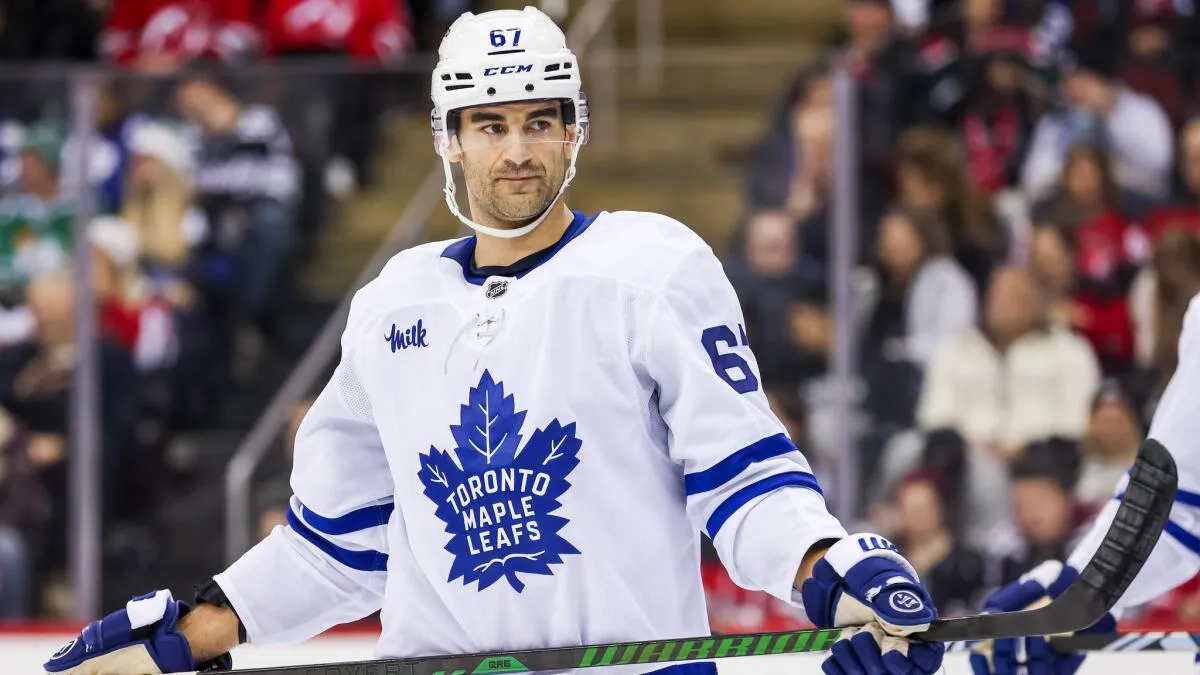
Toronto Maple Leafs seven-regulars injury report: status of every star as of 17 November 2025
Auston Matthews – day-to-day with dual issues
Matthews sat out the 5-2 loss in Boston after feeling “heavy legs” during the morning skate. Team doctors later revealed the centre is fighting a non-COVID virus while also receiving injections for lingering knee soreness dating back to last spring’s playoff run. Berube told reporters the plan is “rest through the weekend, re-evaluate for Thursday vs Florida,” but the club has already ruled him out of the upcoming three-game road trip.
Mitch Marner – separated shoulder, 2-3 weeks
Marner crashed awkwardly into the boards late in Saturday’s win over Seattle. An MRI on Sunday confirmed a Grade-2 AC joint separation. The winger will avoid surgery but must wear a harness for ten days. Toronto’s power-play, operating at 28 % with Marner on the half-wall, dropped to 9 % in the two games he has already missed.
William Nylander – upper-body, week-to-week
Nylander was injured on a hit from Ottawa’s Travis Hamonic that the league later deemed clean. The team will only say “upper-body,” yet Sportsnet’s Elliotte Friedman reports the Swede has a slight wrist sprain. Nylander has not yet resumed stick-handling drills, placing his return somewhere between 10–14 days.
Morgan Rielly – torn thumb ligament, 4-6 weeks
Rielly blocked a slap shot against Colorado on 5 November and played three subsequent games before swelling forced imaging. The top-pairing defenceman underwent surgery last Wednesday; the earliest possible return is 20 December, meaning Toronto will be without its minute-leader for at least 15 contests.
Calle Järnkrok – groin strain, 10 days
Järnkrok felt tightness after a morning skate last week. An ultrasound showed a mild groin strain. The versatile forward has begun light cycling but has not taken contact.
Jake McCabe – high-ankle sprain, 6-8 weeks
Mcabe’s left leg twisted under him during a net-front scrum in Buffalo. High-ankle sprains are notorious lingerers; the medical staff will re-assess in mid-January. His absence leaves Toronto with only three healthy left-shot defencemen.
Ilya Samsonov – neck whiplash, day-to-day
Samsonov was bowled over by Brady Tkachuk and left in the third period. Backup Joseph Woll finished the game. Samsonov has been diagnosed with whiplash and passed concussion protocol, but the club is exercising caution. Anthony Stolarz has been recalled on an emergency basis.
How the Toronto Maple Leafs seven-regulars injury report reshapes lines and pairings
Berube iced the following units at Monday’s practice:
Forwards Bunting – Tavares – Robertson Knies – Domi – Steeves Gregor – Holmberg – Simmonds (AHL) Aston-Reese – Kampf – Clark (AHL)
Defence Brodie – Liljegren Benoit – Klingberg Lagesson – Timmins
Goaltenders Woll Stolarz
The coach admitted the lineup is “shelter-heavy,” meaning Toronto will lean on low-risk, north-south hockey until skill returns. Expect Tavares’ line to see 22-plus minutes, including offensive-zone starts, while the Kampf trio will be deployed for the bulk of defensive draws. On the blue line, Brodie has already logged 29 minutes in two games without Rielly, a pace the staff concedes is unsustainable.
Special teams have taken the biggest hit. The first power-play unit—traditionally Marner, Matthews, Nylander, Rielly and Tavares—has been broken up entirely. Toronto promoted two right-handed Marlies (Max Ellis, Ty Voit) to run the second wave, a move that paid off when Ellis scored his first NHL goal during Sunday’s 3-1 win over Utah. Meanwhile, the penalty kill remains sturdy (83 %, 7th in NHL) thanks to the stay-at-home duo of Brodie and Benoit.
Cap gymnastics: how the Leafs fit seven replacements under the ceiling
Because all seven players are on the active roster, Toronto has been able to place them on standard injured reserve, not LTIR, saving only their daily cap hits. GM Brad Treliving still has roughly $450 k in deadline space, according to PuckPedia, but that evaporates if any player stays out longer than 24 days and 10 games—the threshold for long-term relief. The front office is exploring two avenues:
- Papering down waiver-exempt forwards (Knies, Robertson) for a single off-day, banking cap space by the hour.
- A dollar-in, dollar-out trade, likely involving pending UFAs such as Ryan Reaves or Connor Timmins, to accrue enough room for a mid-tier rental once the infirmary empties.
Treliving declined to comment on trade targets, yet sources tell The Athletic that Toronto has inquired about Anaheim’s Ilya Lyubushkin and Philadelphia’s Nick Seeler as insurance on the right side.
What the Toronto Maple Leafs seven-regulars injury report means for the Atlantic race
Toronto entered Monday three points behind first-place Florida with three games in hand. The upcoming slate—@FLA, @TBL, vs BOS—could decide whether the Leafs chase a banner or settle for wild-card seeding. History says they can survive a short-term storm: in 2021 the club earned points in 11 of 13 games without Matthews and Marner for stretches, largely because Jack Campbell posted a .939 SV%. Woll’s early numbers (.927 SV%, 2.18 GAA) inspire similar confidence.
Still, the club cannot afford an extended slide. Sports Club Stats puts Toronto’s playoff probability at 91 % today, but a 3-7-0 record over the next 10 games would drop that figure to 74 %. The cushion evaporates faster in the top-heavy Atlantic, where Tampa, Detroit and Buffalo all lurk within five points.
Call-up watch: three Marlies seizing the moment
- Nicholas Robertson – The 22-year-old scored twice in back-to-back weekend games, finally translating his AHL dominance (14-9-23 in 16 games) to the big stage. Berube praised his “goal-scorer’s reload” and hinted at second-unit power-play time.
- Topi Niemelä – Finland’s 2021 third-rounder has slid into Rielly’s spot on PP-2, showcasing elite lateral movement. His 5-on-5 minutes remain sheltered, but the coaching staff values his quick outlets.
- Dennis Hildeby – The 6-foot-6 Swedish goalie was the emergency third on Sunday. With Woll shouldering the starter’s load, Hildeby may get his first start if Samsonov remains out past the weekend.
Fan reaction and locker-room mood
Social media lit up after the team released a graphic listing seven “OUT” tags. Hashtag #LeafsInjuryPandemic trended across Canada, while die-hards on Reddit debated whether the club should tank for college phenom Michael Misa—a non-starter for a team with Toronto’s expectations. Inside the room, alternate captain John Tavares struck a defiant tone: “Adversity reveals character. We’ve talked about wanting different results in May; well, the test starts now.” Veteran defenceman T.J. Brodie added that the spate of injuries forces “everyone to upgrade their detail game,” a sentiment Berube echoed when he shortened the bench to nine forwards by the third period on Sunday.
Historical context: how past Leafs clubs navigated similar avalanches
The 2003-04 squad lost Ed Belfour, Mats Sundin, Alexander Mogilny and Bryan McCabe for a combined 86 games yet still finished second in the conference under Pat Quinn, thanks to stingy team defence and league-best goaltending (.920 team SV%). Conversely, the 2013 lockout-year team saw a 6-9-1 nosedive when Joffrey Lupul, James van Riemsdyk and Tyler Bozak simultaneously hit the IR, ultimately coughing up a playoff spot to the Islanders on the final weekend. The lesson: elite goaltending and structure can paper over missing stars, but only if the group buys in before the standings tighten.
Looking ahead: key dates on the Toronto Maple Leafs seven-regulars injury report calendar
- 21 Nov @ Florida – Matthews unlikely, Marner out
- 23 Nov @ Tampa – First possible Nylander return
- 28 Nov vs Boston – Rielly still minimum 3 weeks away
- 5 Dec vs Seattle – Target for Samsonov
- 20 Dec @ Chicago – Earliest Rielly activation
- 3 Jan vs Detroit – McCabe re-evaluation
- 8 Mar – Trade deadline; Treliving wants clarity on LTIR by this date
If the club can hover near .500 through Christmas, the cavalry could arrive in waves, giving Berube a full deck for the stretch run. Until then, the coach’s mantra is simple: “Play fast, play simple, stay in the fight.”
For continuous updates on lineup decisions and cap implications, bookmark our Toronto Maple Leafs injury tracker page, updated daily with practice lines and medical timelines. You can also revisit our preseason breakdown of Maple Leafs depth chart projections to see how dramatically the plan has changed in just six weeks.
The next 20 days will reveal whether this rash of bad luck derails a Cup contender or galvanizes a roster that has long been knocked for lacking grit. Either way, the Toronto Maple Leafs seven-regulars injury report is no longer a footnote—it’s the story of the 2025 season’s first quarter.
Frequently Asked Questions

Par Mike Jonderson
Mike Jonderson is a passionate hockey analyst and expert in advanced NHL statistics. A former college player and mathematics graduate, he combines his understanding of the game with technical expertise to develop innovative predictive models and contribute to the evolution of modern hockey analytics.