










Nathan MacKinnon has spent the better part of a decade turning heads with his all-out skating and playmaking. This season, however, the Colorado Avalanche star drew attention for something far simpler that happened at the practice rink. Clips surfaced of MacKinnon handling the puck left-handed, a switch from his usual right-handed grip. The footage looked basic at first, more like something out of a youth session than an NHL drill, yet it sparked plenty of discussion about whether such experiments represent the next frontier in player development.
The speculation grew when a second clip appeared in March. NHL defenseman-turned-broadcaster Erik Johnson, who spent years alongside MacKinnon in Colorado, recalled watching Hall of Famer Paul Kariya practice with an off-hand stick during his time in St. Louis. Kariya had told him the switch “tricked his neural pathways,” ultimately building core strength and improving his regular grip. Content creators quickly amplified the idea, framing the technique as a deliberate skill-building method. MacKinnon later clarified the real motivation behind his own attempts.
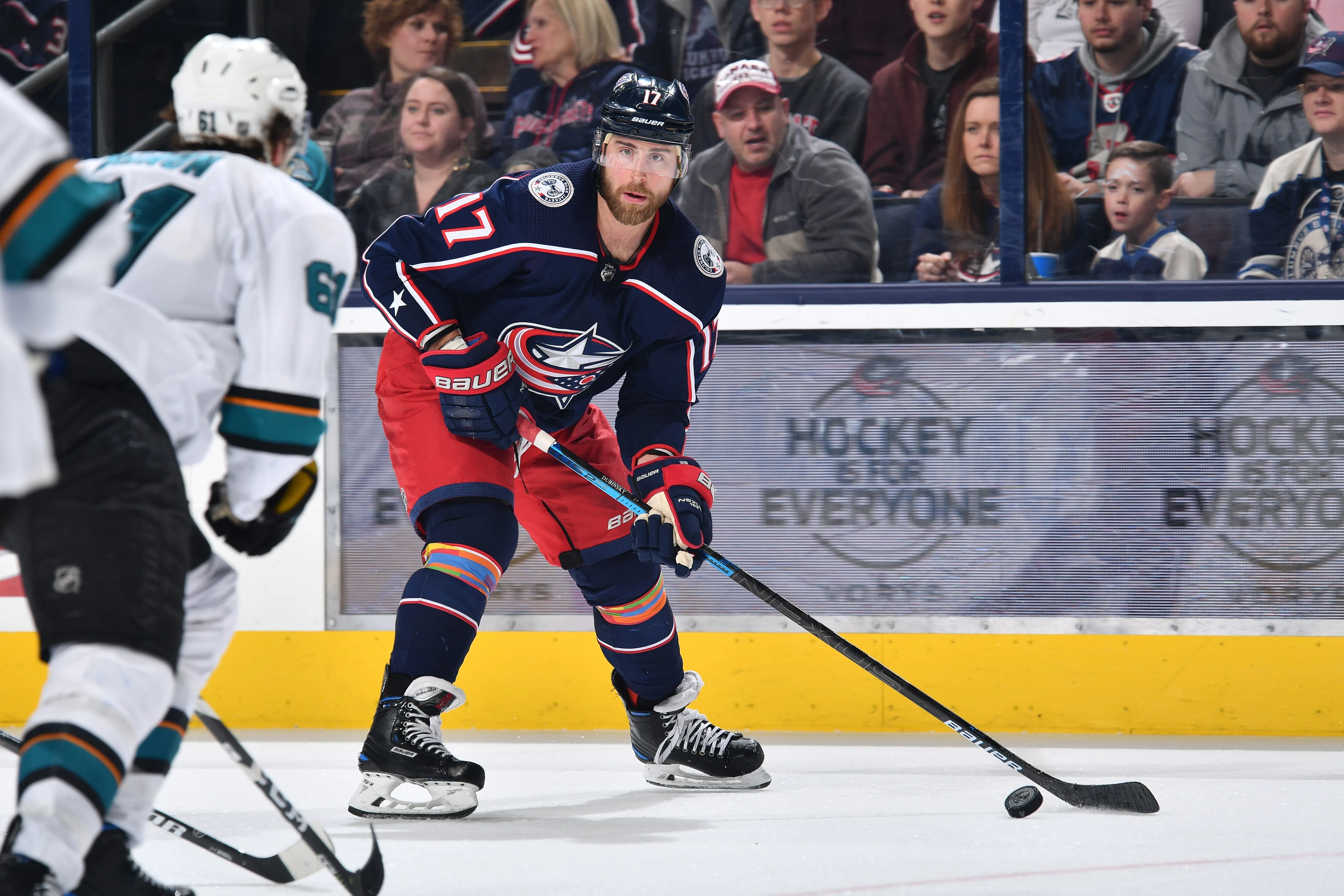
MacKinnon’s take on the left-handed experiment
MacKinnon kept his explanation straightforward. “It’s more just having fun,” he said. “It definitely feels good when you go back to your normal hand…It’s nothing too serious.” The casual tone stood in contrast to the theories swirling online. One can understand why observers read more into the clips, especially in an era when training has moved far beyond traditional camp sessions. Every summer now brings new gadgets, drills, or approaches that promise marginal gains.
Practices at the professional level already include eye-catching elements. Vancouver Canucks center Aatu Raty has become a switch hitter at the faceoff dot over the past few seasons, adjusting handedness based on the situation and winning more than 60 percent of his draws. In Dallas, rookie Arttu Hyry drew notice for winning faceoffs in practice using only the butt end of his stick. These examples sit alongside broader trends like the slip-skills stickhandling sessions popularized by Connor McDavid’s summer workouts.
Ron Johnson’s view on modern training trends
Elite Hockey Science founder Ron Johnson, who has trained NHL players including Joe Pavelski, Patrick Marleau, and Dylan Larkin for more than 35 years, sees many of these innovations as recycled ideas. “We used to take faceoffs with the butt end of our stick when I was 12 or 13 years old. Big deal,” he noted. Johnson tracks hundreds of goals each season and breaks down the video for skating, shooting, and puckhandling. In more than 1,400 goals analyzed last season, only six resulted from slip skills.
“That’s ridiculous to spend that much time training it,” he said. “It’s more important to work on puck protection and evasion and puck control with speed than anything else. That’s what the data shows, but people won’t train it because you don’t make money doing that.” Johnson worries that the emphasis on individualized tricks has shifted hockey development toward a “me” game rather than a “we” game, sidelining fundamentals such as vision and situational awareness. He added that trying to replicate McDavid’s style rarely produces another McDavid because “he sees the game at a completely different level.”
Eli Wilson’s approach with goaltenders
Goaltending development has followed a similar path of experimentation. Eli Wilson, whose clients include current NHL netminders Logan Thompson, Stuart Skinner, and Joel Hofer, incorporates tools such as tennis-ball machines used off the ice. “We have goaltenders that are in the net off ice facing a tennis-ball machine,” he said. “I use that a lot. You’re not stopping tennis balls on the ice in games, but off the ice, I find it is a fantastic tool to get guys to execute proper save selection. It works on hand-eye coordination, allows them to adjust to speeds of different shots, all that kind of stuff.”
Wilson also brings strobe glasses and Binovi vision boards into off-ice sessions to sharpen reaction speed. The off-ice work keeps sessions fresh and competitive. Still, he stresses that nothing replaces on-ice repetition and that tools should only be used when the skill can be taught naturally. “The thought process is, ‘If it’s not in the game, then I’m not using it on the ice,’” he said.
Finding the right balance in player development
Both Wilson and Johnson ultimately land on the same principle. Johnson put it plainly: “That’s what the martial-arts community discovered after 500 years of training. Just do what you’re supposed to do. Don’t mess around with it.” The message echoes across positions. Whether a forward experiments with opposite-hand stickhandling or a goaltender trains with strobe glasses, the most effective work remains rooted in game-relevant skills practiced at high intensity.
For fans and young players watching these clips, the takeaway is clear. Flashy drills can look impressive, yet the data and veteran coaches point back to fundamentals executed at speed. MacKinnon’s lighthearted switch may have entertained viewers, but it also served as a reminder that even the game’s best athletes sometimes just want to have fun on the ice. As the league continues to evolve, the real edge still belongs to those who prioritize the basics over the latest trend.
Frequently Asked Questions

Par Mike Jonderson
Mike Jonderson is a passionate hockey analyst and expert in advanced NHL statistics. A former college player and mathematics graduate, he combines his understanding of the game with technical expertise to develop innovative predictive models and contribute to the evolution of modern hockey analytics.