









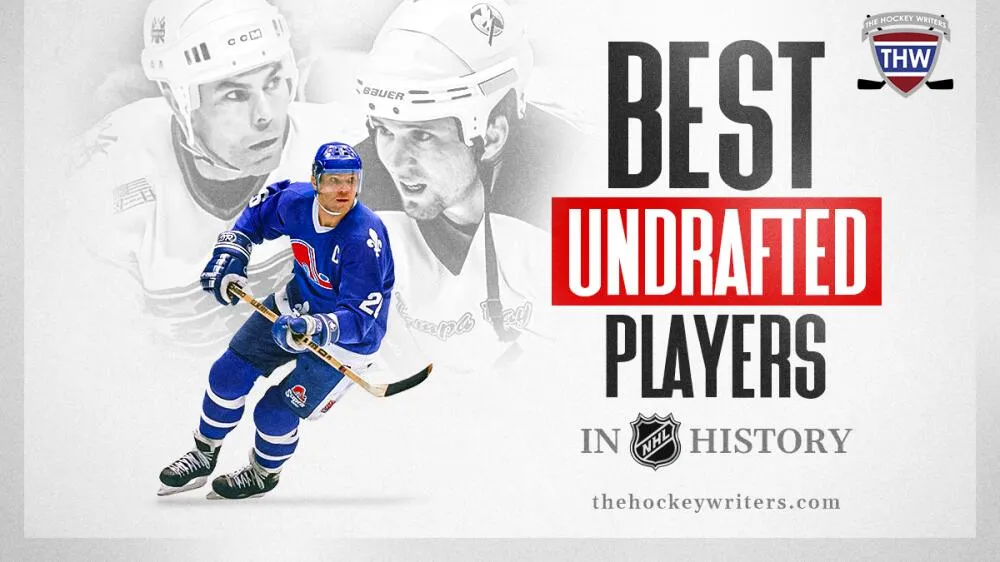
The NHL Draft serves as the primary gateway for young hockey players to realize their professional dreams. Scouts meticulously evaluate prospects, teams invest countless resources into their draft selections, and fans eagerly anticipate each pick with the hope of landing a future superstar. Yet throughout the league’s storied history, some of the most remarkable careers have been forged by players who never heard their names called on draft day. These athletes defied the odds, overcame rejection, and proved that talent and determination can triumph over conventional scouting wisdom. From Hall of Fame legends to Stanley Cup champions, the best undrafted players in NHL history have rewritten the narrative of what it means to make it to the highest level of professional hockey.
The path for undrafted players is arduous and filled with obstacles. Without the security of a draft selection or the organizational commitment that comes with being a chosen prospect, these athletes must fight for every opportunity. Many sign as free agents, accepting invitations to training camps where they compete against drafted players who have already earned their team’s investment. Others develop their skills overseas or in college before eventually catching the attention of NHL scouts. The journey requires not only exceptional talent but also resilience, self-belief, and an unwavering work ethic. Those who succeed in reaching the NHL despite going undrafted represent a unique breed of competitor—players who turned perceived weakness into their greatest strength.
The Great One who was never drafted in NHL history
Wayne Gretzky stands as perhaps the most notable name among the best undrafted players in NHL history, though his situation remains somewhat unique. When the Edmonton Oilers joined the NHL from the World Hockey Association in 1979, Gretzky was already under contract through a personal services agreement with Oilers owner Peter Pocklington. This arrangement meant that Gretzky never entered the NHL Entry Draft, technically making him an undrafted player despite everyone knowing he was destined for greatness.
The statistics Gretzky compiled over his 20-year career remain almost incomprehensible. He scored 894 goals and recorded 1,963 assists for a staggering total of 2,857 points in 1,487 games. His assist total alone exceeds any other player’s combined goals and assists. Gretzky won the Hart Trophy as league MVP nine times, captured the Art Ross Trophy as scoring champion ten times, and led the Oilers to four Stanley Cup championships. He was named to the All-Star Game 18 times and won the Conn Smythe Trophy as playoff MVP twice.
Beyond the numbers, Gretzky revolutionized how hockey was played. His vision, hockey intelligence, and ability to anticipate plays transformed the center position. He popularized setting up behind the opponent’s net, an area that became known as “Gretzky’s office.” His influence extended beyond statistics—he changed the culture of the game itself, proving that skill and creativity could dominate in an era when physicality often took precedence.
The impact of Gretzky’s career resonates through every discussion about hockey excellence. When he retired in 1999, the NHL retired his number 99 league-wide, an honor never before or since bestowed upon any player. He was inducted into the Hockey Hall of Fame immediately, with the traditional three-year waiting period waived. While his undrafted status was circumstantial rather than a reflection of his abilities, his inclusion in this conversation underscores just how unpredictable the path to NHL success can be.
Elite playmakers among undrafted NHL legends
Adam Oates exemplifies the type of elite talent that somehow slipped through the cracks of the draft process. Signed as a free agent by the Detroit Red Wings in 1985 after completing his college career at RPI, Oates went on to become one of the most gifted playmakers in hockey history. Over 19 seasons with seven different teams, Oates amassed 1,079 assists—ranking eighth all-time—and 1,420 total points, placing him 20th on the NHL’s all-time scoring list.
Oates led the league in assists three times and was selected to nine All-Star Games. His vision on the ice was extraordinary, with an ability to thread passes through seemingly impossible lanes and set up teammates in prime scoring positions. Playing alongside Brett Hull in St. Louis, Oates helped transform Hull into one of the most prolific goal scorers of his generation. Their chemistry demonstrated Oates’s unique ability to elevate the play of those around him, a hallmark of truly elite playmakers.
What makes Oates’s undrafted status particularly puzzling is that he posted impressive offensive numbers in college hockey. His 60 assists in his senior year at RPI should have garnered significant attention, yet NHL teams passed on him entirely. This oversight proved costly for those organizations, as Oates went on to finish in the top ten in Hart Trophy voting multiple times and maintained a points-per-game average of 1.062 throughout his career.
Martin St. Louis represents another remarkable playmaker who defied his undrafted status to achieve greatness. After going unselected in any NHL draft, St. Louis signed with the Calgary Flames in 1998 but managed just 69 games over parts of two seasons. The Tampa Bay Lightning took a chance on him in 2000, and St. Louis blossomed into a superstar. He won the Art Ross Trophy twice as the league’s leading scorer, captured the Hart Trophy as MVP, claimed the Lady Byng Trophy three times, and earned the Ted Lindsay Award as the players’ choice for most outstanding player.
St. Louis compiled 1,033 points in 1,134 career games, including six seasons with 30 or more goals. At just 5’8”, he faced constant skepticism about whether his size would limit his effectiveness. Instead, he used his low center of gravity, exceptional skating ability, and relentless compete level to become one of the most dynamic offensive forces in the league. His Stanley Cup championship with Tampa Bay in 2004 validated his status among the game’s elite, and his induction into the Hockey Hall of Fame in 2018 cemented his legacy as one of the best undrafted players in NHL history.
Goaltending greatness without draft pedigree
Ed Belfour carved out one of the most accomplished goaltending careers in NHL history despite never being drafted. Signed by the Chicago Blackhawks in 1987, “Eddie the Eagle” became an immediate sensation in his first full NHL season in 1990-91, winning the Calder Trophy as rookie of the year, the Vezina Trophy as best goaltender, and the William Jennings Trophy for fewest goals against. This unprecedented triple crown announced his arrival as an elite netminder.
Over 17 seasons with five different teams, Belfour compiled a career record of 484-320-125 with a .906 save percentage and 2.50 goals-against average. He won two Vezina Trophies, four William Jennings Trophies, and was selected to 12 All-Star Games. His fierce competitiveness and athletic style made him one of the most dominant goalies of the 1990s and early 2000s. Belfour captured his lone Stanley Cup with the Dallas Stars in 1999, cementing his legacy with the ultimate team achievement.
Curtis Joseph, known affectionately as “Cujo,” represents another stellar example of goaltending excellence from the undrafted ranks. After signing with the St. Louis Blues in 1989, Joseph went on to play 943 career games, compiling a 454-352-96 record with a .906 save percentage. He was selected to six All-Star Games and represented Canada in Olympic competition, consistently ranking among the league’s best goaltenders throughout the 1990s and early 2000s.
Joseph’s acrobatic style and ability to make spectacular saves endeared him to fans wherever he played. He finished in the top five in Vezina Trophy voting five times and won the King Clancy Memorial Trophy in 2000 for his leadership and humanitarian contributions. While he never won a Stanley Cup, his consistent excellence over nearly two decades established him as one of the era’s premier netminders. His career serves as a testament to how talent evaluation in goaltending can be particularly challenging, with many elite goalies developing later than their drafted counterparts.
Offensive dynamos who defied the draft
Dino Ciccarelli stands as the highest-scoring draft-eligible player in NHL history never to be selected. After signing with the Minnesota North Stars in 1980, Ciccarelli embarked on a 19-year career that saw him score 608 goals and accumulate 1,200 points in 1,232 games. His goal total ranks among the top 25 all-time, an extraordinary achievement for someone passed over entirely by every NHL team.
Ciccarelli was a dynamic offensive force with a physical edge that made him difficult to play against. He combined a lethal shot with excellent positioning around the net and wasn’t afraid to pay the price in high-traffic areas. His 608 goals represented the NHL record for an undrafted player until his retirement, and his induction into the Hockey Hall of Fame in 2011—his eighth year of eligibility—finally gave him the recognition his production warranted.
What makes Ciccarelli’s undrafted status particularly noteworthy is that he played junior hockey in the OHL, where NHL scouts had ample opportunity to evaluate him. Yet concerns about his skating and size led teams to pass on him repeatedly. Ciccarelli transformed these perceived weaknesses into motivation, developing into one of the most consistent goal scorers of his generation and proving that scouts don’t always get it right.
Joe Mullen’s journey to NHL stardom took an unconventional path through the college ranks before he signed with the St. Louis Blues in 1979. The native New Yorker went on to become the first American-born player to score 500 NHL goals, finishing his career with 502 goals and 1,063 points in 1,062 games. He won three Stanley Cup championships, captured two Lady Byng Trophies, and was selected to nine All-Star Games.
Mullen scored 40 or more goals seven times in his career, including a 51-goal campaign in 1988-89. His smooth skating stride and excellent shot made him a constant offensive threat, while his two-way play earned him respect as a complete player. His induction into the Hockey Hall of Fame in 2000 recognized his pioneering role as an American player who achieved the highest levels of success in a league traditionally dominated by Canadians.
Defensive stalwarts in undrafted NHL history
Mark Giordano’s path to NHL success took longer than most, but his eventual arrival proved the value of perseverance. After going undrafted and spending time in junior hockey with the Owen Sound Attack, where he led defensemen in scoring, Giordano still couldn’t crack an NHL roster. He enrolled at York University to pursue a business degree, seemingly ready to move on from hockey. The Calgary Flames offered him a lifeline, inviting him to their development camp where he impressed enough to earn a contract.
Giordano spent several years developing his game, including a season in Russia’s KHL, before finally establishing himself as an NHL regular in his mid-20s. His patience paid dividends as he developed into one of the league’s most complete defensemen. In 2018-19, at age 35, Giordano won the Norris Trophy as the NHL’s best defenseman after posting 17 goals and 74 points. His two-way excellence, leadership qualities, and consistent performance made him a cornerstone of the Flames’ defense for over a decade.
The Giordano story resonates because it demonstrates that development timelines vary significantly among players. Some NHL teams gave up on him, others never gave him a chance, yet he eventually proved himself worthy of the league’s highest individual honor for defensemen. His career serves as inspiration for late bloomers and reminds organizations that player evaluation is an inexact science.
Dan Boyle represents another defensive success story among the best undrafted players in NHL history. Signed by the Florida Panthers in 1998, Boyle went on to play 1,093 games over 17 seasons, recording 163 goals and 605 points. His offensive contributions from the blue line were substantial, and he finished in the top ten in Norris Trophy voting three times. Boyle was selected to seven All-Star Games and won a Stanley Cup with the Tampa Bay Lightning in 2004.
Boyle’s skating ability and hockey sense allowed him to transition effectively between defense and offense, making him a valuable asset on both special teams and at even strength. He represented Canada in the 2010 Olympics, adding an international dimension to his already impressive resume. His consistent production and reliability over nearly two decades proved that undrafted players can not only reach the NHL but sustain excellence throughout long careers.
Modern undrafted success stories shaping today’s NHL
Sergei Bobrovsky has emerged as one of the premier goaltenders of his generation despite going undrafted in 2006. The Philadelphia Flyers considered selecting him but worried about the difficulty of signing Russian players at the time. They eventually signed him as a free agent in 2010, though his career truly flourished after a trade to the Columbus Blue Jackets. In Columbus, Bobrovsky won two Vezina Trophies and established himself as an elite netminder.
In 2019, Bobrovsky signed a seven-year, $70 million contract with the Florida Panthers, one of the richest goaltending contracts in NHL history. His performance justified the investment as he helped lead the Panthers to the Stanley Cup Final in 2023. With multiple Vezina Trophies, All-Star selections, and international medals with Russia, Bobrovsky has built a Hall of Fame-caliber resume that ranks him among the best undrafted players currently active in the league.
Artemi Panarin represents another modern success story from the undrafted ranks. After developing his skills in the KHL, Panarin signed with the Chicago Blackhawks in 2015 and immediately made an impact, winning the Calder Trophy as rookie of the year. He has since blossomed into one of the NHL’s most dynamic offensive players, consistently ranking among league leaders in points while playing for the New York Rangers.
Panarin’s creativity, playmaking ability, and scoring touch have made him one of the most valuable players in the league. His success demonstrates that the NHL’s increasing willingness to embrace international free agents has created new pathways for undrafted players to reach the league. As teams continue to scout globally and recognize that player development doesn’t follow a single timeline, more undrafted players are finding opportunities to prove themselves at hockey’s highest level.
The stories of the best undrafted players in NHL history share common threads of perseverance, self-belief, and exceptional talent that refused to be denied. From Wayne Gretzky’s unique circumstances to modern stars like Sergei Bobrovsky and Artemi Panarin, these players have proven that the draft is not the only pathway to NHL success. Their achievements challenge conventional wisdom about player evaluation and remind us that scouts, despite their expertise, cannot predict every player’s trajectory. The Hall of Fame credentials earned by many of these undrafted players—including Gretzky, Oates, St. Louis, Belfour, and others—demonstrate that greatness can emerge from unexpected places.
For young players who go undrafted, these legends provide both inspiration and a roadmap. The path may be more difficult, requiring patience, resilience, and unwavering commitment to improvement, but it remains viable for those willing to embrace the challenge. As the NHL continues to evolve with expanded international scouting and greater recognition of varied development timelines, opportunities for undrafted players will likely continue to grow. The legacy of those who came before serves as proof that talent, work ethic, and determination can overcome any obstacle—even the disappointment of never hearing your name called on draft day.

Par Mike Jonderson
Mike Jonderson is a passionate hockey analyst and expert in advanced NHL statistics. A former college player and mathematics graduate, he combines his understanding of the game with technical expertise to develop innovative predictive models and contribute to the evolution of modern hockey analytics.