The stage is set for the ultimate showdown in men’s Olympic hockey. On Sunday, February 22, at 8:10 a.m. ET, undefeated Team USA faces undefeated Team Canada in the gold medal game at Milano Santagiulia Arena in Milan, Italy. [1] [2] Both North American powerhouses have dominated the tournament, going 5-0 through preliminaries and knockouts. This rematch echoes last year’s 4 Nations Face-Off final, where Canada edged the U.S. 3-2 in overtime. [3]
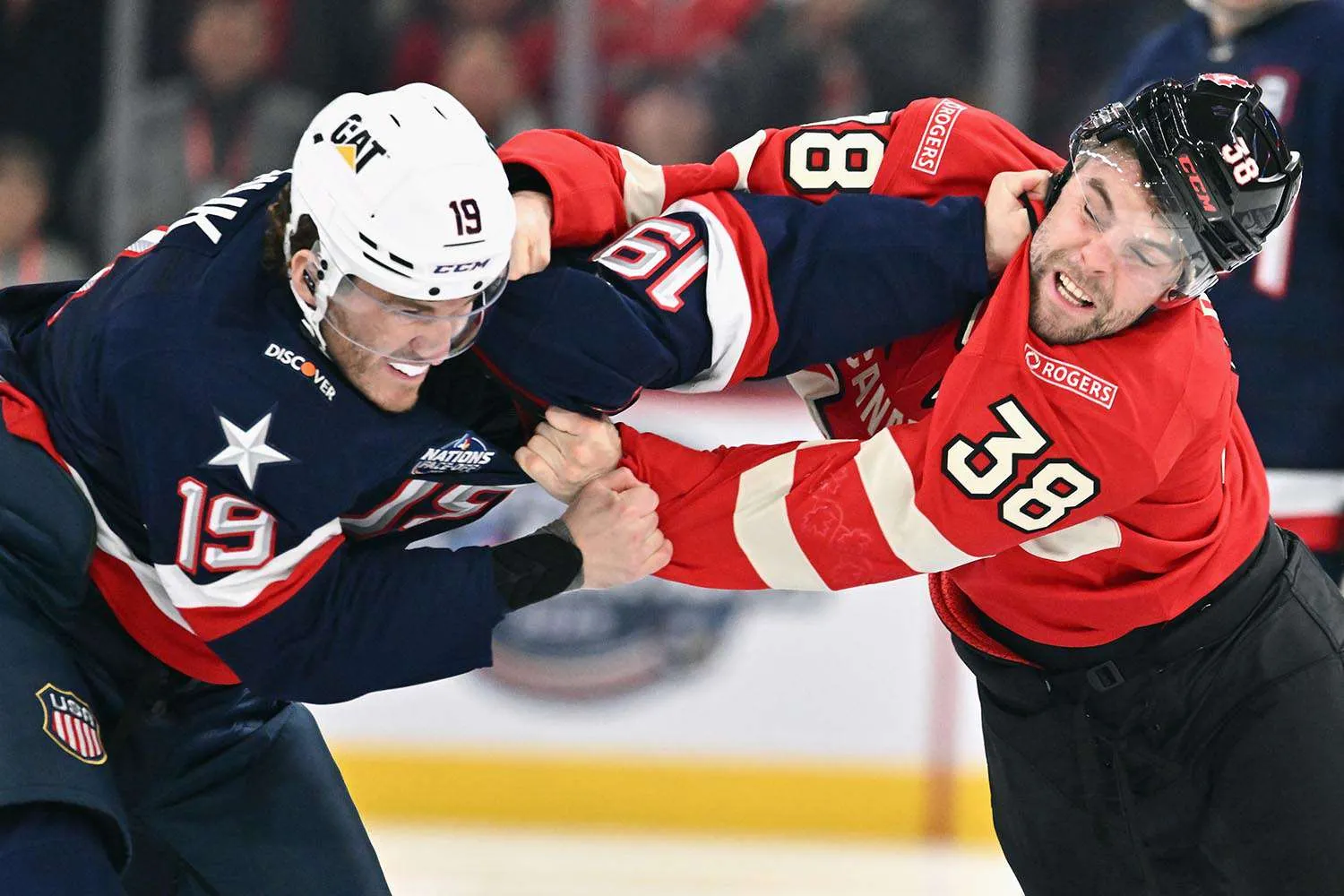
Brady Tkachuk captured the intensity perfectly. “There’s hatred there,” the U.S. forward told ESPN’s Emily Kaplan. “They’ve been the top dog… and for us, we want to be in that position.” [4] With the U.S. chasing its first Olympic gold since the 1980 Miracle on Ice—a 46-year drought—the stakes could not be higher.
The storied USA-Canada rivalry
Few matchups in sports carry the weight of USA vs. Canada in men’s hockey. They’ve met 20 times at the Olympics, with Canada holding a 12-4 edge overall. [1] When NHL stars participate, Canada leads 4-1, including the iconic 2010 Vancouver final where Sidney Crosby’s overtime goal sealed a 3-2 win.
The rivalry transcends borders. Last year’s 4 Nations tournament saw the U.S. beat Canada in round-robin play, only to fall in the final. Tkachuk’s family ties add fuel—his father Keith starred in the 1996 World Cup of Hockey, the last U.S. best-on-best win over Canada. [4]
Recent history favors Canada in high-stakes games. Yet the U.S. stunned in 2022 Beijing group play, winning 4-2. This gold medal clash revives memories of intense battles, from physical scraps to skill showcases.
As detailed in NHL Insight’s preview of the USA-Canada gold medal game, the bad blood runs deep. Fans on both sides dream of dominance.
Experts note the emotional edge. Vincent Trocheck called it “as good as it gets.” [4] Sunday’s game promises fireworks.
Path to the gold medal final
Team USA has been relentless. They routed Slovakia 6-2 in the semifinals after an overtime quarterfinal win. Perfect on the penalty kill at 15-for-15, they’ve controlled games with depth and defense. [3]
Canada’s road featured comebacks. They trailed 2-0 against Finland in semis before Nathan MacKinnon’s power-play tally with 36 seconds left secured a 3-2 victory. Overtime in quarters tested their resolve. [1]
Both teams scored heavily—Canada leads tournament goals at 27. USA’s margin in wins shows dominance, often by four-plus goals early. [3]
No losses mean peak form. Injuries loom: Canada’s Crosby is questionable after missing the semi; USA’s Tage Thompson sat precautionary but is expected back. [1]
The final caps a flawless run. Check NHL Insight on whether the U.S. can finally beat Canada for gold for deeper tournament analysis.
History suggests tension. Canada led just six minutes in elimination rounds, relying on clutch plays.
Team USA preview
USA boasts forward depth with elite centers like captain Auston Matthews and Jack Eichel. Matthew and Brady Tkachuk bring grit—Matthew with six assists, Brady three goals and five points. [3]
Defensively, Quinn Hughes leads with seven points (1G, 6A), topping all blueliners. Brock Faber and Seth Jones add mobility and shutdown ability. [5]
Goaltending is a strength. Connor Hellebuyck boasts a .945 save percentage, allowing five goals on 90 shots. [1] Jake Oettinger and Jeremy Swayman provide depth.
Roster graded B+ by ESPN for balance. [5] Snubs like Cole Caufield highlight tough cuts, but surprises like Clayton Keller shine.
Top line: Matthew Tkachuk-Jack Eichel-Brady Tkachuk. Matthews centers the second. [1] They’re peaking at the right time.
Team Canada preview
Canada’s attack is unmatched. Connor McDavid sets records with 13 points (tournament-high), including 11 assists. Macklin Celebrini, the 19-year-old phenom, has 10 points (5G, 5A). [1]
Nathan MacKinnon adds four goals, three assists, clutch as ever. Sam Reinhart and Cale Makar bolster the power play, 7-for-16. [3]
Jordan Binnington anchors net, steady in tight games. Defensemen like Drew Doughty bring experience. [5]
Graded A-, Canada’s forward talent edges all. [5] Crosby’s status adds intrigue—he captained semis if playing.
Best shooting percentage at 13.43%. They’re built for this stage.
Key players to watch
- Connor McDavid (Canada): World’s best, chasing legacy. 13 points already. [1]
- Quinn Hughes (USA): Possession master, seven points from blue line.
- Macklin Celebrini (Canada): Rookie sensation, 10 points.
- Brady Tkachuk (USA): Agitator with five points, rivalry fire.
- Connor Hellebuyck (USA): Goaltending wall, elite SV%.
- Nathan MacKinnon (Canada): Semifinal hero, power-play threat.
These stars could decide it. McDavid wears the “C” if Crosby sits.
Depth matters too. Tkachuk brothers vs. Reinhart-MacKinnon lines promise battles.
Goalie matchup: Binnington vs. Hellebuyck
Jordan Binnington thrives in pressure for Canada. Consistent, he’s key to comebacks. [3]
Connor Hellebuyck is lights-out. .945 SV%, tournament-best. “Is there a number greater than 100%?” he quipped. [3]
USA’s penalty kill faces Canada’s potent power play. Binnington must handle Matthews, Hughes.
This duel tilts on first shots. Hellebuyck’s edge gives USA confidence.
History favors steady nets in rivalry games. Expect under 6.5 goals bets.
Expert predictions and X factors
Predictions split. ESPN staff: three pick Canada (two OT), two USA. [3] NHL.com leans USA, citing peaking form and Hellebuyck (four USA picks). [6]
X factors: USA’s perfect PK vs. Canada’s PP; early game control; lead protection. For more, see ESPN’s full predictions. [3]
Betting favors Canada slightly. But USA’s resilience echoes women’s gold sweep. [4]
Head-to-head stats at Olympics.com show Canada’s edge, but USA hungers to flip it. [1]
Whoever wins claims supremacy. OT looms large.
This gold medal game crowns a legend. A U.S. victory ends decades of hurt, fulfilling “gold or bust.” Canada seeks to extend dominance. Tune in—hockey’s best rivalry delivers on the world stage. [4]
Frequently Asked Questions

Par Mike Jonderson
Mike Jonderson is a passionate hockey analyst and expert in advanced NHL statistics. A former college player and mathematics graduate, he combines his understanding of the game with technical expertise to develop innovative predictive models and contribute to the evolution of modern hockey analytics.