The Utah Mammoth’s inaugural Stanley Cup playoff campaign came to an end on Friday with a 5-1 defeat to the Vegas Golden Knights in Game 6 of their first-round matchup.[1] Despite the disappointment of a 4-2 series loss, the Mammoth’s regular-season success and their ability to push a battle-tested Vegas squad signal a franchise on the rise. Utah even held a 2-1 series lead at one point, showcasing the potential of their young core.
Mitch Marner’s two goals and an assist paced Vegas in the clincher, underscoring the experience gap that proved decisive.[1] Mammoth coach Andre Tourigny captured the raw emotion post-game: “I’m disappointed. I’m not mad at the players… your failure makes you stronger. You learn from it and it makes you better, but in order to make sure that happens, it has to hurt.”[1] While the exit stings, it provides invaluable experience for a team poised for future contention.
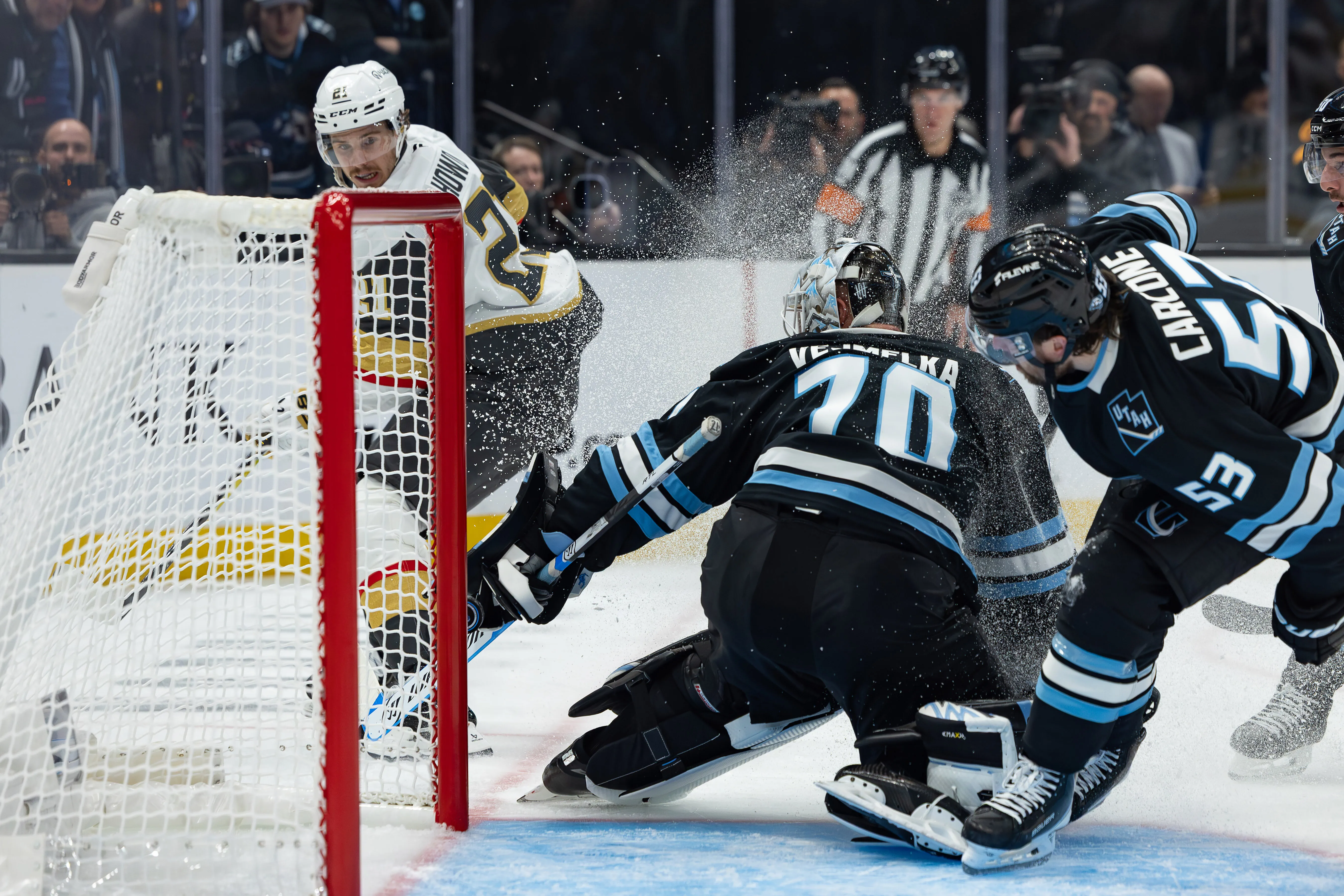
What went wrong for the Mammoth?
Utah’s youth and relative inexperience stood out against Vegas’ veteran lineup, many of whom won the 2023 Stanley Cup. The Mammoth rank 13th in the NHL in average age according to eliteprospects.com, not among the league’s youngest squads, but lacking the playoff pedigree of their opponents. Vegas capitalized on this, rallying from third-period deficits in multiple games, including overtime losses for Utah in Games 4 and 5.
The series exposed issues with closing out games. Utah held third-period leads in the first five contests but dropped three, including a pair of heartbreaking OT defeats.[2] Power-play struggles compounded the problem, converting just 1-for-16 overall and going 0-for-10 in the final three games while allowing two shorthanded tallies. Defensive turnovers also hurt, with Vegas generating 43.8% offensive-zone time—the second-most against any playoff team.
Captain Clayton Keller reflected on the tight margins: “We fought, gave everything we had, never quit… When you lose and you go through that pain, that’s when you learn the most.”[1] Eight Mammoth players made their playoff debuts, and even stars like Keller and Lawson Crouse entered with minimal prior postseason exposure. This inexperience showed in high-pressure moments, as Tourigny noted the “different” intensity of playoff hockey.
For context on the matchup, our Mammoth-Golden Knights first-round preview highlighted Utah’s wild-card momentum clashing with Vegas’ division-title push. Despite the veterans’ edge, Utah’s effort kept games close until the end.
Vegas goaltender Carter Hart’s poise and timely scoring from depth players like Brett Howden sealed the deal. Utah’s Karel Vejmelka faced 26 shots in Game 6, but the offense managed only Kailer Yamamoto’s lone marker. These lapses prevented an upset but offered clear areas for growth.
What’s next for the Mammoth?
The offseason brings contract decisions for several key pieces. Pending unrestricted free agents include forwards Alexander Kerfoot and Kevin Stenlund, both vital penalty killers—Stenlund leads the NHL in average shorthanded ice time. Right winger Kailer Yamamoto, who tallied five points in the series, is also a UFA after 59 regular-season games.[3]
- Forwards: Kerfoot, Stenlund (UFAs); Barrett Hayton (RFA with arbitration rights).
- Defense: Veteran Ian Cole (37 years old, nearing 1,000 games) enters free agency.
- Goal: Backup Vitek Vanecek’s one-year deal expires.
Three players become extension-eligible July 1: left wingers Lawson Crouse (+42 plus-minus, league-leading) and Liam O’Brien, plus defenseman John Marino. Retaining this mix will balance youth and grit.
Prospects loom large too. Tij Iginla, Caleb Desnoyers, and Cole Beaudoin are nearing NHL readiness, while Daniil But and Dmitri Simashev impressed in the AHL. Logan Cooley and Dylan Guenther, both in their early 20s, headline the young core that shone late in the season, including Yamamoto’s line chemistry.
As covered in our piece on Utah Mammoth’s first NHL playoff appearance, the roster is built for sustained success. Defenseman Mikhail Sergachev echoed the optimism: “I believe in the future we’re going to be there.”[4]
Tourigny views the pain as fuel: “What we’re going through tonight, it’s important for our future.”[4] With cap space and talent pipelines, Utah can address gaps while building on this debut.
The Mammoth’s first playoff step, though ending short of hopes, validates their trajectory. Fans can look ahead to a deeper run next spring, armed with hard-earned wisdom from Vegas. Expect an active summer to solidify contention in the West.
Frequently Asked Questions

Par Mike Jonderson
Mike Jonderson is a passionate hockey analyst and expert in advanced NHL statistics. A former college player and mathematics graduate, he combines his understanding of the game with technical expertise to develop innovative predictive models and contribute to the evolution of modern hockey analytics.