













Vancouver Canucks legendary playoff goaltenders who defined Stanley Cup Final runs
When championship glory hangs in the balance, few positions influence an NHL playoff series quite like the goaltender. For the Vancouver Canucks franchise, three remarkable netminders have etched their names into Stanley Cup Final lore through performances that transcended mere statistics and became the stuff of legend. Their stories represent different eras, distinct styles, and unique paths to immortality, yet each man carried the weight of a hockey-crazed city on his shoulders when the stakes were highest. These are the stories of Kirk McLean, Roberto Luongo, and the goaltending excellence that defined Vancouver’s deepest playoff runs.
From dramatic penalty kill saves to multiple-overtime heroics, these goaltenders delivered moments that still spark heated debates in British Columbia sports bars decades later. Their contributions extended far beyond the crease, shaping how the Canucks approached roster construction, defensive systems, and the very culture of winning that permeates the organization today.
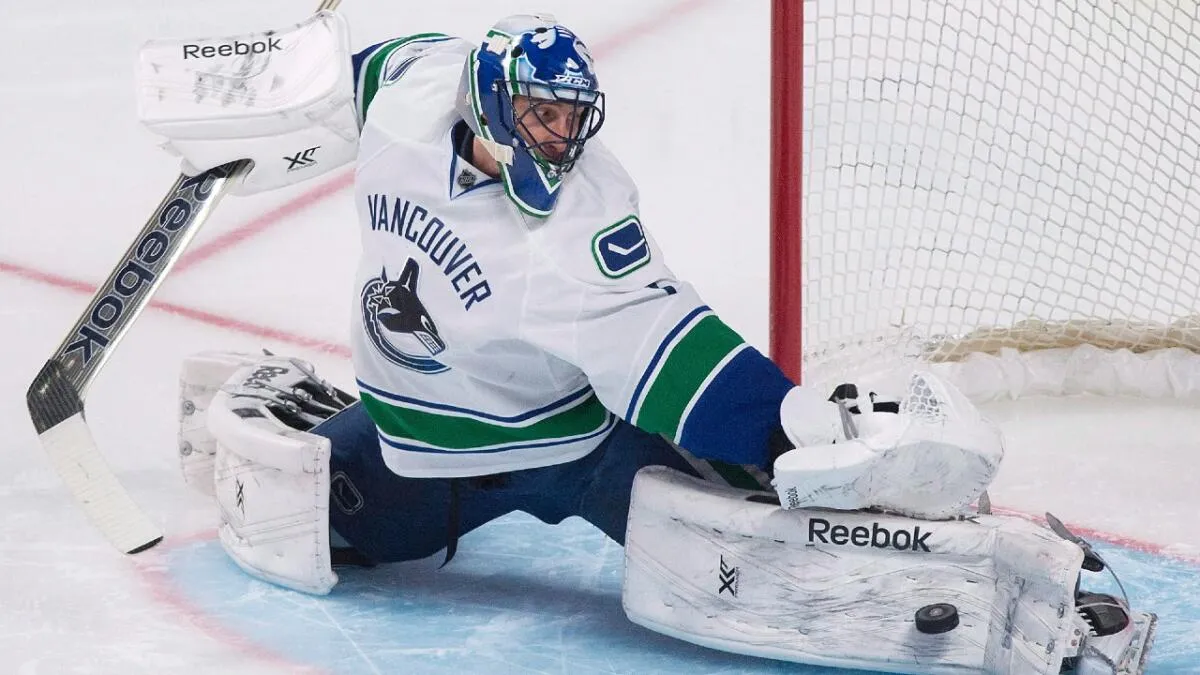
Kirk McLean: the heart of 1994 Stanley Cup Final magic
The 1993-94 season transformed Kirk McLean from a reliable starter into a Vancouver Canucks legendary playoff goaltender who defined Stanley Cup Final runs through sheer brilliance under pressure. McLean’s journey began with an unassuming trade from New Jersey in 1987, but his legend crystallized during that magical spring when the Canucks captured the imagination of an entire province. His 52-save performance in Game 1 against the Calgary Flames during the opening round established the tone for what would become the most memorable playoff run in franchise history.
McLean’s butterfly style, combined with exceptional lateral movement and rebound control, frustrated opponents throughout the postseason. During the Western Conference Final against Toronto, his 31-save shutout in Game 5 proved pivotal, but his signature moment arrived in the Stanley Cup Final against the New York Rangers. Game 1 at Madison Square Garden saw McLean turn aside 41 shots, including several spectacular stops against Mark Messier and Brian Leetch, stealing a 3-2 overtime victory that announced Vancouver’s legitimate championship aspirations to the hockey world.
The statistics from that 1994 run remain awe-inspiring: a 2.29 goals-against average and .928 save percentage across 24 games, numbers that would impress even in today’s analytics-driven era. Teammate Trevor Linden later reflected on McLean’s impact, noting, “Kirk gave us the belief that we could win every single night. When you looked back at him during timeouts, you saw complete calm. That calmness transferred to everyone on the bench.”
McLean’s performance in Game 5 of the Final deserves special recognition. With the Canucks trailing 3-0 midway through the third period, he made a series of spectacular saves that kept Vancouver within striking distance, ultimately enabling a dramatic comeback victory. His glove save on Stephane Matteau during the second overtime of Game 1 remains one of the most replayed moments in Canucks history, a perfect encapsulation of his lightning-quick reflexes and positional mastery that defined the series.
Roberto Luongo: franchise savior and 2011 Stanley Cup Final journey
Two decades after McLean’s heroics, Roberto Luongo arrived in Vancouver carrying astronomical expectations and a franchise-altering contract that made him the highest-paid goaltender in NHL history. His arrival in 2006 signaled the beginning of a new era, but it was the 2011 postseason that cemented his status among Vancouver Canucks legendary playoff goaltenders who defined Stanley Cup Final runs. Luongo’s technical precision and intimidating 6’3” frame created a fortress in net that carried Vancouver to within one victory of hockey’s ultimate prize.
The 2011 playoffs showcased Luongo’s remarkable consistency and ability to rebound from adversity. After a shaky start against Chicago in the opening round, he posted consecutive shutouts in Games 5 and 7, stopping all 58 shots he faced when elimination seemed imminent. His performance against the San Jose Sharks in the Western Conference Final was masterful, particularly his 54-save effort in Game 5 that included 21 stops in the third period alone, preserving a narrow 3-2 victory that put the Canucks on the brink of their third Final appearance.
Against the Boston Bruins in the championship series, Luongo’s brilliance alternated with unexpected struggles, creating a narrative that still polarizes fans. Games 1, 2, and 5 saw him surrender just one goal each, posting a microscopic 0.67 goals-against average in those victories. His 31-save shutout in Game 1 at Rogers Arena set an early tone, while his 28-save performance in Game 5 provided Vancouver with a 3-2 series lead and the city with dreams of its first Stanley Cup.
However, Games 3, 4, and 6 in Boston presented different challenges, as TD Garden’s hostile environment and the Bruins’ physical style disrupted his rhythm. Luongo’s honesty in post-game interviews, where he acknowledged struggling with certain saves, endeared him to many fans while drawing criticism from others. Former coach Alain Vigneault defended his star netminder, stating, “Roberto gave us a chance to win the Cup. Period. Without him, we’re not even in that position. The courage he showed bouncing back game-to-game exemplified our entire team.”
Statistical dominance and record-setting performances
The numbers behind Vancouver Canucks legendary playoff goaltenders who defined Stanley Cup Final runs reveal a level of dominance that transcends era-specific comparisons. Kirk McLean’s 1994 campaign featured a remarkable 1.98 goals-against average during the Final series itself, stopping 158 of 168 shots against a Rangers attack featuring five future Hall of Famers. His four overtime wins tied an NHL record for a single postseason, while his 1,537 total minutes played demonstrated both durability and coach trust in high-leverage situations.
Roberto Luongo’s 2011 statistics tell a story of two series within one championship run. His home numbers were historically elite: a 1.29 goals-against average and .959 save percentage at Rogers Arena, including two shutouts in the Final alone. The 20-save perfect game in Game 1 marked Vancouver’s first Stanley Cup Final shutout since 1982, while his 31 saves in Game 5 featured a penalty kill sequence where he stopped three consecutive prime scoring chances from Patrice Bergeron and Brad Marchand.
Advanced metrics further illustrate their impact. McLean’s high-danger save percentage during the 1994 Final exceeded .850, a figure that becomes more impressive considering the era’s lack of structured defensive systems compared to modern hockey. Luongo’s goals-saved-above-average during the 2011 playoffs ranked second among all goaltenders, trailing only Tim Thomas, his counterpart in the Final. These statistical achievements validated their reputations as franchise cornerstones capable of stealing games when offensive production faltered.
The legacy beyond the crease
The influence of Vancouver Canucks legendary playoff goaltenders who defined Stanley Cup Final runs extends far beyond their on-ice performances, fundamentally altering the franchise’s approach to team building and identity. Kirk McLean’s success in 1994 established the template that elite goaltending could compensate for roster limitations, leading management to prioritize the position in subsequent decades. His Conn Smythe Trophy-worthy run (he finished second in voting) created an expectation that Canucks playoff hockey required a backbone of goaltending excellence.
Roberto Luongo’s tenure represented the apex of this philosophy, with the organization committing unprecedented resources to secure an elite netminder. His ability to play 60+ regular-season games while maintaining playoff-level performance changed how Vancouver evaluated backup goaltenders and rest schedules. The “goaltending culture” that Luongo fostered manifested in the development of Eddie Lack and Jacob Markstrom, both of whom studied his preparation methods and mental approach to high-pressure situations.
Their playoff journeys also shaped fan expectations and the emotional connection between the city and its team. McLean’s 1994 run coincided with Vancouver’s emergence as a world-class city following Expo 86, giving residents a collective identity beyond geographic location. Luongo’s 2011 quest unified a fractured fan base, bringing together old-school purists and new-era supporters in shared hope. The nerve-wracking games against Boston created communal viewing experiences that strengthened Vancouver’s hockey community, even in defeat.
Modern Canucks management continues applying lessons learned from these iconic runs. Thatcher Demko’s development has incorporated elements from both McLean’s athletic, instinctive style and Luongo’s technical, positional mastery. The organization’s investment in goaltending coaches, video analysis, and sports psychology traces directly back to recognizing how crucial the position becomes during deep playoff pushes. When general manager Patrik Allvin evaluates prospects, he specifically references the mental fortitude displayed by McLean during the ‘94 run and Luongo’s resilience during the 2011 roller-coaster.
What makes these goaltenders truly legendary isn’t just their statistics or highlight-reel saves—it’s how they elevated entire franchises when the sport’s brightest lights shone upon them. Their stories remind us that while championships require complete team efforts, individual brilliance in the crease can transform good teams into unforgettable ones. As Vancouver continues pursuing its first Stanley Cup, the ghosts of McLean’s glove saves and Luongo’s penalty kill heroics serve as both inspiration and standard for every netminder who follows in their crease-stained skates.
For more insights into Canucks playoff history and goaltending excellence, explore our detailed analysis of Vancouver’s most memorable postseason moments and discover how modern goaltending trends compare to legendary eras. These deep dives provide additional context for understanding how these legendary performances shaped the franchise’s identity.
The current generation of Canucks fans, watching Thatcher Demko establish his own playoff legacy, should appreciate the foundation laid by these giants. Their performances weren’t just games; they were cultural events that defined eras, created traditions, and proved that in hockey’s greatest crucible, a hot goaltender can make the impossible seem inevitable.
Frequently Asked Questions

Par Mike Jonderson
Mike Jonderson is a passionate hockey analyst and expert in advanced NHL statistics. A former college player and mathematics graduate, he combines his understanding of the game with technical expertise to develop innovative predictive models and contribute to the evolution of modern hockey analytics.