











The New York Rangers entered the 2024-25 season with championship aspirations and a revamped roster under new head coach Mike Sullivan. Those hopes were dealt an early blow when Vincent Trocheck, their indispensable two-way center, suffered an upper-body injury during just the second game of the season against the Buffalo Sabres on October 9. The 32-year-old’s absence has exposed critical vulnerabilities in the Rangers’ roster construction and highlighted just how vital he has become to their success since arriving in Manhattan.
Trocheck’s placement on long-term injured reserve, which required him to miss a minimum of 10 games and 24 days, couldn’t have come at a worse time for a team trying to establish chemistry under Sullivan’s system. The ripple effects of losing their most reliable center have been felt across every facet of the Rangers’ game, from their offensive production to special teams effectiveness.
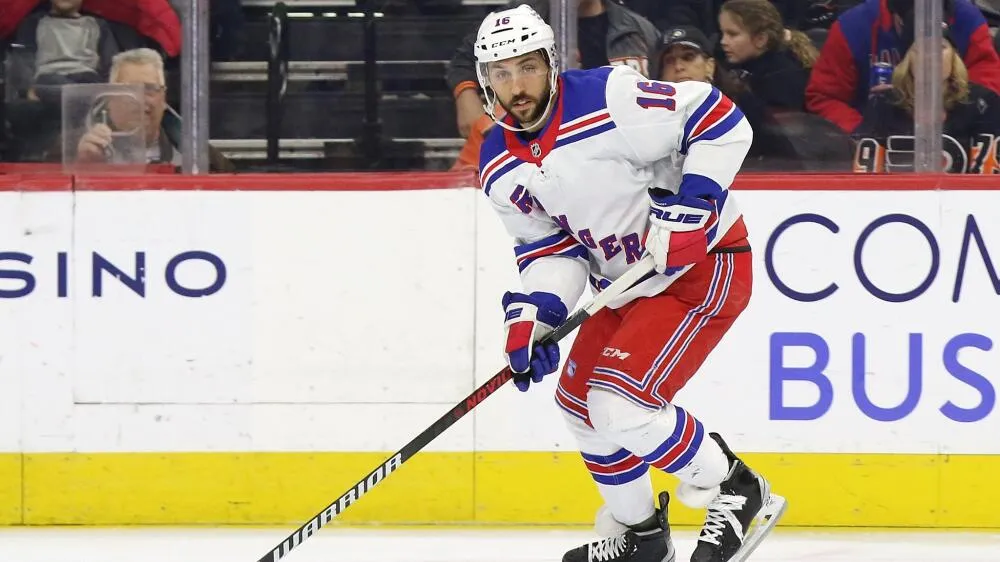
How Vincent Trocheck injury impact on New York Rangers 2024-25 season extends beyond statistics
The immediate statistical void left by Trocheck’s absence tells only part of the story. Since signing his seven-year, $39.375 million contract before the 2022-23 season, he had been the Rangers’ ultimate ironman, appearing in all 248 regular-season games prior to his injury. His reliability had become something the organization took for granted.
During the 2023-24 campaign, Trocheck established career-highs with 77 points, including 25 goals and 52 assists. He also maintained his reputation as one of the league’s premier faceoff specialists, winning 59.3 percent of his draws to finish third in the NHL. His 214 hits demonstrated his physical commitment, while his contributions on both the power play and penalty kill showcased his versatility.
Beyond the numbers, Trocheck brought intangibles that don’t appear on score sheets. His non-stop motor, abrasiveness, and big-game mentality made him one of the most respected voices in the dressing room. As an alternate captain, his leadership helped bridge the gap between the Rangers’ veteran core and younger players trying to establish themselves.
His impact in crucial moments was perhaps best illustrated during the 2024 playoffs, when he scored a double-overtime winner against the Carolina Hurricanes in Game 2 of the second round. Those are the plays that define a player’s value beyond their regular-season contributions.
When Trocheck logged his final shift at 6:50 of the second period against Buffalo, few could have anticipated how dramatically his absence would derail the Rangers’ early-season momentum. In just 7:48 of ice time that night, he had still managed to record an assist before quietly departing the bench, never to return that game.
The Vincent Trocheck injury impact on New York Rangers 2024-25 season reveals concerning depth issues
The Rangers’ roster construction entering the 2024-25 season placed enormous pressure on their top players to produce consistently. With Adam Fox as their lone proven offensive defenseman and a collection of bottom-six forwards and underperforming top-six players, the margin for error was razor-thin. Trocheck’s injury immediately exposed these vulnerabilities.
Coach Sullivan was forced to make significant lineup adjustments. Mika Zibanejad, who had begun the season experimenting at right wing, returned to center to fill Trocheck’s spot on the top line alongside Artemi Panarin and Alexis Lafreniere. While Zibanejad is an experienced center, the move disrupted the chemistry he had been developing with J.T. Miller and Will Cuylle on the second line.
Sullivan acknowledged the difficult balancing act after practice, stating: “Well, he’s a tough guy to replace. He’s an extremely talented guy, plays in a lot of key situations for us, one of our better center-icemen in the face-off circle. Obviously plays in every situation. Those guys aren’t easy to replace, but now it’s going to provide opportunities for others to step up, and we’ll see what we have.”
The coaching staff promoted veteran Conor Sheary into the top six, a player who spent most of the previous season in the AHL and earned his roster spot through a professional tryout during training camp. The 33-year-old, despite his championship pedigree with Pittsburgh, had scored 20 goals only once in his career and was best suited for a bottom-six role.
Juuso Parssinen, who had been a healthy scratch for the first two games, was inserted into the lineup. The 24-year-old tried to maintain a positive outlook, telling reporters: “A lot of energy. First game of the season for myself, so that’s always fun. I’m trying to bring my game and help the guys get the win.”
The Rangers’ lack of proven offensive depth meant these replacements simply couldn’t replicate Trocheck’s contributions. His ability to play in all situations—5-on-5, power play, penalty kill—made him irreplaceable by committee. The team carried 22 healthy players, but quality depth proved far more important than quantity.
Vincent Trocheck injury impact on New York Rangers 2024-25 season manifests in offensive struggles
The offensive consequences of Trocheck’s absence became painfully apparent as the season progressed. According to reports from The Hockey Writers, the Rangers started 3-4-2 through their first nine games and managed just 21 total goals. More alarmingly, they were shut out in their first three home games of the season—an unprecedented drought at Madison Square Garden.
The Rangers lost their first five home games, a stunning collapse for a team with championship expectations. Their inability to capitalize on scoring chances became a recurring theme. While they defended better than the previous season and received excellent goaltending, the lack of finish proved fatal in close games.
In a bizarre twist, Taylor Raddysh—a career bottom-six forward—led the team with four goals after recording a hat trick in a 6-5 overtime loss to the San Jose Sharks on October 23. The fact that Raddysh topped the scoring charts spoke volumes about the struggles facing New York’s established offensive weapons.
Young forwards who were expected to take developmental steps instead regressed. Alexis Lafreniere and Will Cuylle combined for just two goals and two assists in the Rangers’ first nine games. Their struggles compounded the team’s offensive woes and left Sullivan with few options to generate consistent scoring.
The power play, which had relied heavily on Trocheck’s net-front presence and ability to win crucial faceoffs in the offensive zone, lost its effectiveness. Lafreniere moved up from the second unit to fill Trocheck’s spot on the top unit, but the chemistry that had developed over previous seasons couldn’t be replicated overnight.
Sullivan explained his decision to split up preferred linemates for the sake of balance: “Because I think we need balance and we need to give some of our other offensive people a center-iceman that can think the game at their level and give them an opportunity to set them up for success.” Despite the coach’s rationale, the shuffled combinations failed to produce the desired results.
The Vincent Trocheck injury impact on New York Rangers 2024-25 season affects special teams effectiveness
Trocheck’s value extended far beyond even-strength play, making his absence particularly damaging to New York’s special teams units. His elite faceoff ability—he won nearly 60 percent of his draws the previous season—was crucial for both power play zone entries and penalty kill defensive-zone draws. Losing that advantage in critical situations proved costly.
On the penalty kill, Trocheck’s combination of skating ability, hockey IQ, and willingness to block shots made him an ideal penalty killer. He could read plays developing, apply pressure at the right moments, and transition quickly when the Rangers cleared the puck. Finding someone who could replicate even a portion of that skillset proved impossible.
The power play suffered from the loss of his net-front presence and his ability to win draws cleanly. Trocheck had mastered the art of positioning himself to deflect shots, create chaos around the crease, and collect rebounds for second-chance opportunities. His removal from the top unit forced the Rangers to reimagine their entire power play structure.
Without Trocheck anchoring the faceoff circle, the Rangers struggled to maintain consistent offensive zone time during man-advantage situations. Clean zone entries became more difficult, and when they did establish possession, the lack of a reliable net-front presence diminished their ability to generate quality scoring chances.
The penalty kill percentage dropped as opponents found it easier to establish zone time and work their systems. Trocheck’s ability to disrupt passing lanes and take away time and space from opposing power plays was sorely missed. His replacement players, while willing, lacked his instincts and experience in those high-leverage situations.
Vincent Trocheck injury impact on New York Rangers 2024-25 season creates leadership vacuum
Beyond his on-ice contributions, Trocheck’s absence removed a crucial leadership presence from a Rangers team navigating change. As one of the alternate captains and most respected voices in the dressing room, his influence extended far beyond his 18-20 minutes of ice time per game.
Trocheck’s work ethic set the standard for the entire roster. He never took shifts off, never complained about his role, and consistently delivered when the stakes were highest. Younger players looked to him as an example of how to approach the professional game. His absence during a challenging start to the season meant one fewer voice to help maintain perspective and confidence.
The ironman streak he had established—248 consecutive games played with the Rangers—demonstrated his commitment and durability. Teammates knew they could count on him night after night, regardless of the opponent or situation. That reliability becomes even more valuable when a team faces adversity.
His big-game mentality, forged through deep playoff runs and clutch performances, brought a calming influence during tight games. The Rangers found themselves losing close contests early in the season, games where Trocheck’s composure and experience might have made the difference. His absence meant one fewer player who could deliver in moments when the margin for error disappeared.
The Rangers needed their leaders to step up and keep the team afloat while Trocheck recovered. With the team winning just one of their last six games at one point, that leadership void became increasingly apparent. Veterans like Zibanejad and Chris Kreider faced added pressure to not only produce offensively but also provide the emotional stability the team desperately needed.
How the Vincent Trocheck injury impact on New York Rangers 2024-25 season shapes their path forward
As the Rangers navigated the early weeks of the season without their stalwart center, the organization faced critical questions about their roster construction and depth. The “week-to-week” designation initially provided, followed by the LTIR placement, left the timeline for Trocheck’s return uncertain. Every game without him increased the urgency of finding solutions.
The silver lining, if one existed, was that younger players received opportunities to prove themselves in expanded roles. Parssinen, Sheary, and others got chances to demonstrate they could contribute at a higher level. Whether they could seize those opportunities would determine how successfully the Rangers weathered this storm.
Sullivan’s coaching acumen was being tested. His decision to juggle line combinations and redistribute ice time aimed to create the balance necessary for the team to remain competitive. The early results were mixed, but the Rangers’ defensive improvements and strong goaltending suggested the foundation existed for better outcomes.
The team’s home struggles became impossible to ignore and represented a concerning trend that extended beyond just Trocheck’s absence. However, his return would undoubtedly provide a significant boost across all areas—offensive production, faceoff proficiency, special teams effectiveness, and leadership.
For a Rangers team that entered the season with legitimate championship aspirations, Trocheck’s injury served as an early reality check. It exposed the fine line between success and struggle in the NHL, where the loss of even one key player can derail carefully laid plans. How they responded to this adversity would define their season and reveal the character of this new-look roster.
The Rangers organization and their fans anxiously awaited Trocheck’s return, knowing that getting their ironman center back in the lineup would go a long way toward righting the ship. Until then, they faced the challenging task of staying competitive in the ultra-competitive Metropolitan Division while their most dependable player worked his way back to full health. The Vincent Trocheck injury impact on the New York Rangers’ 2024-25 season would ultimately be measured not just in games missed, but in whether the team could emerge from this early-season adversity stronger and more resilient.

Par Mike Jonderson
Mike Jonderson is a passionate hockey analyst and expert in advanced NHL statistics. A former college player and mathematics graduate, he combines his understanding of the game with technical expertise to develop innovative predictive models and contribute to the evolution of modern hockey analytics.