The Washington Capitals are gearing up for an active offseason, with general manager Chris Patrick expressing strong confidence in their ability to land a top-six forward. This move aims to add much-needed scoring depth to support their playoff push. Meanwhile, the Vancouver Canucks are plotting a roster overhaul amid a rebuild, focusing on shedding contracts and evaluating key players across positions.[1][2]
Both teams face unique challenges in a thin free-agent market, potentially pushing them toward trades. The Capitals boast attractive assets, while the Canucks prioritize flexibility for the long term. These developments could spark intriguing deal discussions league-wide.
Capitals’ hunt for top-six scoring punch
Washington has long sought a reliable top-six forward to elevate their lineup. GM Chris Patrick recently voiced optimism, highlighting their strong position entering the offseason. “I’m optimistic in that I think we’re in really the best spot we’ve been in, as far as having the stuff to trade that a team might want,” Patrick said. “You know, we’ve got picks. We’ve got some good prospects. I mean, there’s obviously some prospects that we’re not going to move in these deals. From that perspective, our wallet’s full. If there’s an opportunity there, we’d like to jump on it.”[1]
The Capitals hold two first-round picks, including one from the Anaheim Ducks acquired in the John Carlson deal. Their recent playoff appearance adds extra value to that selection. Cap space provides further flexibility, allowing aggressive pursuits in free agency or trades.
Prospects like Ilya Protas and Ivan Miroshnichenko are poised for larger roles internally. However, external help remains a priority given the shallow free-agent pool. President Brian MacLellan emphasized the need to “buck up” in a competitive market for talent.
Trade rumors have swirled around potential targets, though no names have surfaced prominently. Our coverage of 2026 NHL trade deadline prospects noted Washington’s involvement in deals that bolstered their asset pool.[3]
Patrick’s comments suggest readiness to act swiftly. This positions the Capitals well to contend, especially around aging stars like Alex Ovechkin.
Canucks’ positional reset amid rebuild
Vancouver’s offseason blueprint calls for offloading long-term contracts, even those with trade protection. Thomas Drance of The Athletic outlined a depth chart emphasizing veteran additions at bargain prices to offset moves. The focus is on a 2.5-3 year contention window through asset accumulation.[2]
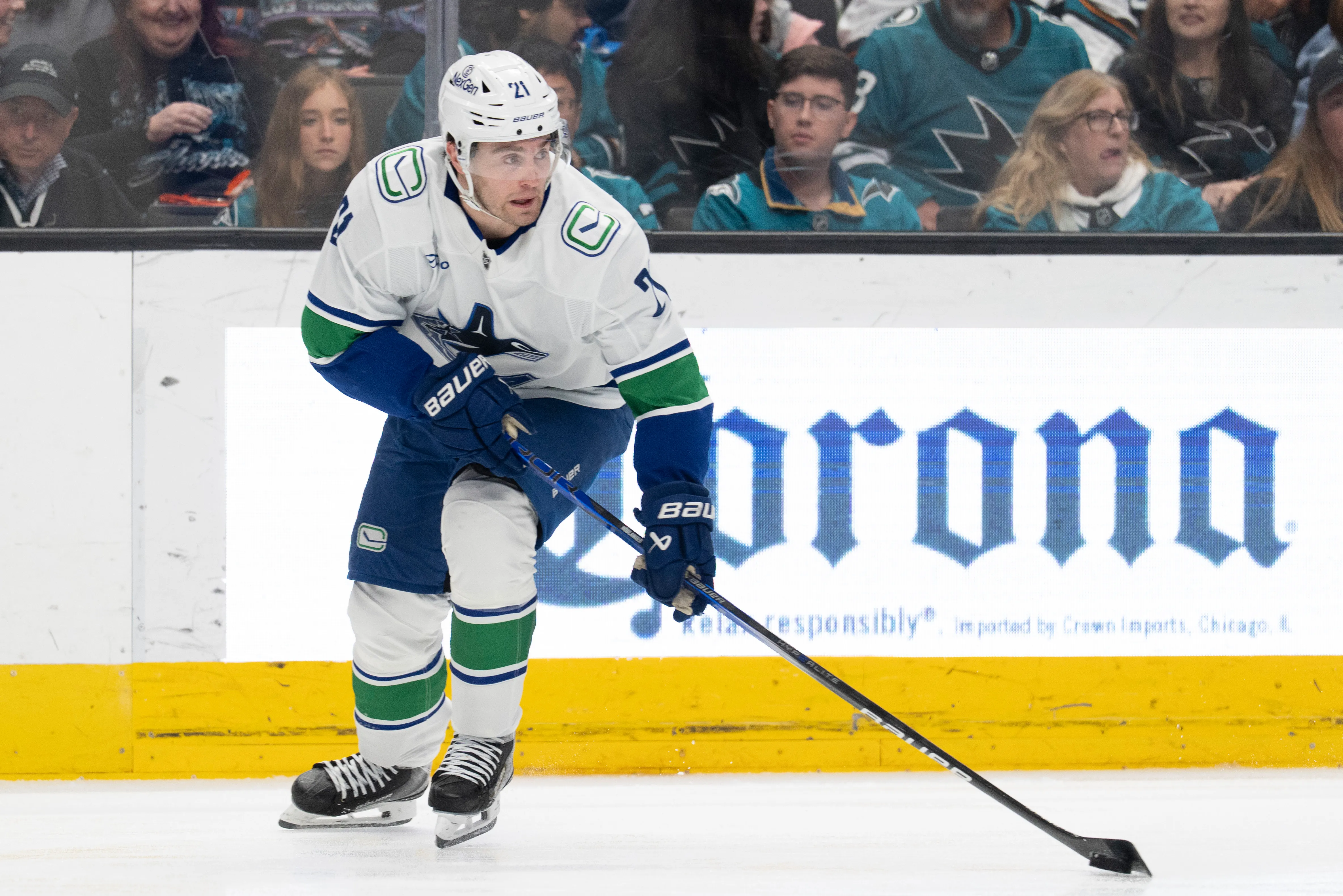
At left wing, Evander Kane is a pending UFA with zero trade value and won’t return after an inconsistent stint. Drew O’Connor emerges as a trade asset for next year’s deadline due to his steady two-way play. Nils Höglander, 25 with two years left at $3 million AAV, faces pressure to prove middle-six worth amid limited trust from coaches.[4]
Center remains a question mark with Elias Pettersson’s future uncertain after a disappointing season. Teddy Blueger, a pending UFA, showed no trade value at the deadline. Nils Åman and Jayden Grubbe are unlikely to receive qualifying offers.
On left defense, P.O. Joseph warrants a qualifying offer as a versatile depth piece. Goaltending could see three keepers: Thatcher Demko, Kevin Lankinen, and Nikita Tolopilo, who faces waivers next year. Recent turmoil, including the firing of GM Patrik Allvin, underscores the rebuild—details in our Vancouver Canucks GM search coverage.[3]
Trade buzz intensifies around Pettersson, with reports of aggressive pursuits by other clubs and his own hints at preferring Vancouver but open to change.[5]
Key players and trade chips
Here’s a quick look at standout Canucks situations:
- Evander Kane (LW, UFA): Gone after lackluster effort and early departure.
- Nils Höglander (LW): Speedy but unproven; potential trade candidate.[6]
- Elias Pettersson (C): Core piece with swirling rumors; Vancouver leans on him amid uncertainty.[7]
- Drew O’Connor (LW, UFA): Valuable chip for future deadlines.
- Nikita Tolopilo (G): Waiver risk; part of potential three-goalie tandem.
For Washington, assets like the Ducks pick and prospects form a solid trade foundation. No direct links to Canucks players yet, but overlapping needs could align.
The Capitals’ cap flexibility pairs well with Vancouver’s willingness to move contracts. Historical examples, like Washington’s past forward grabs, show feasibility.
As the offseason nears, both clubs’ strategies signal bold shifts. Washington’s asset haul could snag a scorer to chase another Cup run, while Vancouver’s purge aims for draft capital and youth infusion.[1]
Fans should watch for trade connections—perhaps a Canucks winger fits Washington’s top-six gap. Stay tuned; these rumors could reshape both rosters dramatically.
Frequently Asked Questions

Par Mike Jonderson
Mike Jonderson is a passionate hockey analyst and expert in advanced NHL statistics. A former college player and mathematics graduate, he combines his understanding of the game with technical expertise to develop innovative predictive models and contribute to the evolution of modern hockey analytics.