




















The New York Rangers have constructed one of the most perplexing narratives in recent NHL memory. While they own the league’s best road record with 11 victories away from the Big Apple, their performance at Madison Square Garden has bordered on historically inept. After Saturday’s 4-1 loss to the surging Tampa Bay Lightning, the Rangers dropped to a stunning 2-8-1 on home ice, creating a split personality that has players, coaches, and analysts scrambling for answers.
This isn’t merely a slump. It’s a full-blown identity crisis. The team that looks like a Stanley Cup contender in opposing arenas transforms into something nearly unrecognizable when the bright lights of MSG shine upon them. The numbers tell a story so bizarre they seem like a statistical anomaly rather than a legitimate trend.
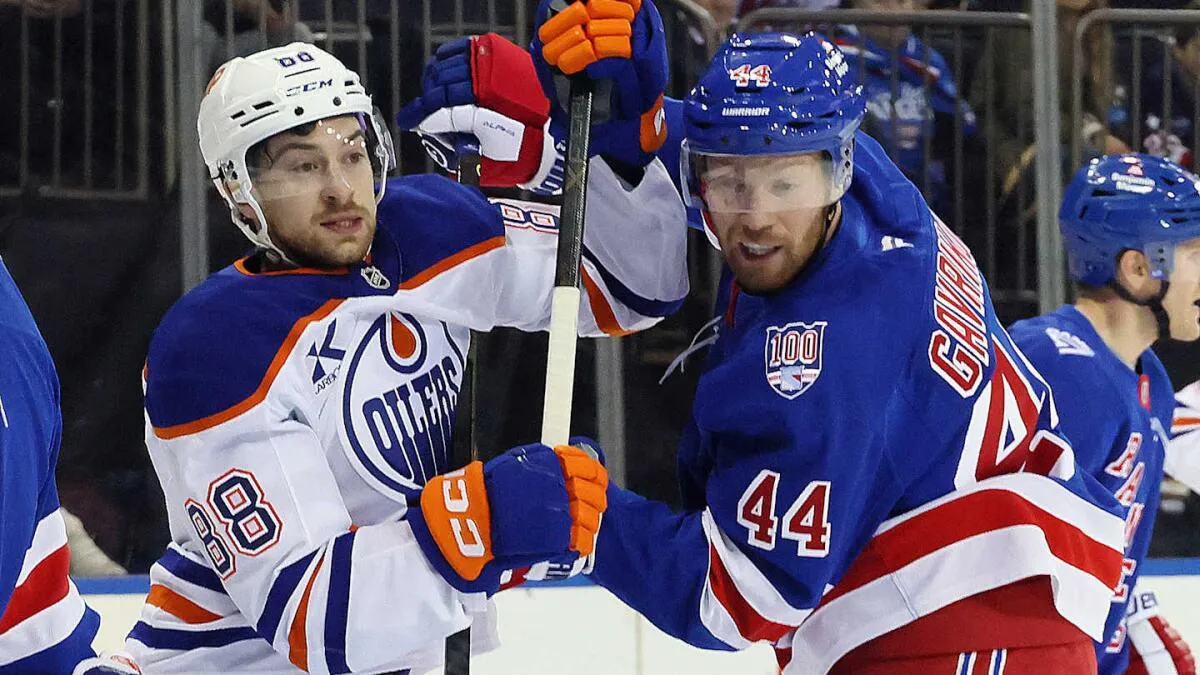
The staggering home-ice disadvantage behind the New York Rangers poor home record at Madison Square Garden 2-8-1
The contrast between New York’s home and road performance represents perhaps the most extreme divergence in modern hockey. On the road, the Rangers have outscored opponents 29-17, playing with a swagger and cohesion that has made them the NHL’s most dangerous visiting team. At home, they’ve been outscored 23-6 in regulation, with seven of those goals against coming via empty-netters.
Saturday’s defeat to Tampa Bay encapsulated the entire maddening pattern. After impressive victories in Carolina and Boston had extended their overall winning streak to three games, the Rangers returned to Manhattan and promptly reverted to their home form. They managed just two shots on goal in the first period while surrendering 11 to the Lightning, setting a tone of defensive disarray and offensive impotence that persisted throughout the contest.
Captain J.T. Miller, who scored the Rangers’ lone goal, didn’t mince words in his postgame assessment. “They were more willful than we were today. They were ready to go into every battle,” Miller said. “At no point in that game were we deserving of winning.” The frustration in the locker room mirrors what’s happening in the stands, where boos have become a familiar soundtrack during home games.
Offensive futility that defies explanation
The scoring drought at Madison Square Garden has reached historic proportions. Through their first seven home games, the Rangers were shut out five times, tying a record set by the now-defunct 1928-29 Pittsburgh Pirates. In their eight regulation home losses, they’ve scored just three total goals.
Coach Mike Sullivan has run out of explanations. “We didn’t have our best,” he said after the Lightning loss. “I’m stating the obvious.” The problem extends beyond simple bad luck or hot opposing goaltenders. MSG analyst and former NHL goaltender Steve Valiquette has identified a technical flaw that suggests a psychological block.
“To be honest and fair, I don’t think enough of the Rangers worked on their shot all summer,” Valiquette noted during a recent broadcast. “I’m not seeing one-timers from either flank, I’m not seeing quick releases off of first touch, I’m not seeing any corners hit tonight again. There was a lot of breadbasket. That looked like a group of guys that haven’t been working on their shot.”
Valiquette’s analysis reveals the bizarre dichotomy: on the road, the Rangers hit corners, find five-hole openings, and attack low-glove and low-blocker areas. At home, they shoot directly into goalies’ stomachs or at their pads. The team has generated 20.74 expected goals on home ice but has converted just six times in seven games—a finishing rate that would embarrass a peewee team.
The psychological component has become impossible to ignore. After ringing a shot off the crossbar and missing a one-timer, Mika Zibanejad, the team’s most tenured player, slammed the bench door in visible frustration. Late in the loss to the Islanders, Miller broke his stick against the Rangers net after an empty-net goal sealed the defeat.
“They got frustrated, and visibly frustrated from their leadership guys,” Valiquette observed. “It’s not a good look. You can’t lose your composure. In my lifetime in hockey, I’ve never seen anybody improve when they get frustrated. The captain does it, the leadership guys do it, guess what, everybody thinks it’s okay.”
Historical context and the weight of expectations
This home-ice nightmare represents a stunning reversal from recent success. Just two seasons ago, the Rangers dominated at MSG with a 30-11-0 home record on their way to a league-best 114 points. The current squad features many of the same core players, making the collapse even more baffling.
The timing couldn’t be worse. The Rangers are celebrating their centennial season, with pre-game ceremonies honoring franchise legends and key moments in team history. Instead of rising to the occasion, the current roster has performed as if weighed down by the legacy they represent.
The contrast with their road warrior mentality makes the home struggles more perplexing. After beating Detroit 4-1 on the road, the Rangers returned home and promptly lost to the Islanders 5-0, despite outshooting them 33-26 and holding a 12-9 edge in high-danger chances, according to Natural Stat Trick. The difference wasn’t opportunity—it was execution under the bright lights of their own building.
What the New York Rangers poor home record at Madison Square Garden 2-8-1 means for the playoff picture
Despite the home horrors, the Rangers remain in playoff contention thanks entirely to their road excellence. Their 11 road wins lead the NHL, and they’ve managed to stay afloat in the Metropolitan Division race. However, the mathematical reality is stark: they play 41 home games each season, and currently, they’re surrendering points at an alarming rate in half their contests.
The schedule ahead offers no respite. The Rangers face seven home games in their next 10 contests, starting with Tuesday’s matchup against the potent Dallas Stars. That game will be followed by weekend visits from the league-leading Colorado Avalanche and the Vegas Golden Knights. If the home woes continue, the Rangers could find themselves in a deep hole by mid-December.
Assistant captain Vincent Trocheck acknowledges the mental battle ahead. “This game is majority mental. It’s up to you to fight off the negativity,” he said. “It’s just a matter of us playing the right way.” Trocheck’s philosophy of taking it “one game at a time” reflects the coaching staff’s effort to simplify the challenge and prevent the home struggles from becoming a self-fulfilling prophecy.
The search for solutions to the Madison Square Garden curse
The Rangers have tried various approaches to snap the home slump. After beginning the season with shutout losses to Pittsburgh, Washington, and Edmonton, they finally broke through with a 6-3 win over Nashville on November 10, their eighth home game. The relief was short-lived, as they dropped their next two home contests to Detroit and St. Louis before the Lightning debacle.
Coach Sullivan has maintained a consistent message about focusing on process over results, but even he admitted after the Tampa Bay loss that the team’s compete level was unacceptable. The Rangers were outshot 27-9 through two periods, a margin that speaks to a lack of engagement rather than systemic issues.
The injury to top defenseman Adam Fox, who absorbed a hard hit against the Lightning, adds another complication. Fox leads the team in points with 26 and anchors the power play and transition game. His absence would further test a team already struggling to find any positive momentum at home.
The fanbase’s reaction has been understandably harsh. Boos rained down during Saturday’s loss, and Miller understands the sentiment. “I understand the reaction from our fans,” he said. “We’re more frustrated than they are.” That frustration is evident in the team’s body language, from Zibanejad’s bench door slam to Miller’s broken stick.
Breaking the psychological barrier at MSG
The Rangers’ challenge now is fundamentally psychological. They must find a way to compartmentalize their home record and approach each game at the Garden with the same freedom they display on the road. The talent is clearly there—they’ve proven it in hostile environments across North America. The difference is mental.
Their first home win against Nashville might provide a template. In that 6-3 victory, the Rangers played with pace, attacked the middle of the ice, and didn’t overthink their scoring chances. They’ll need that same aggressive mindset against Dallas, Colorado, and Vegas in the coming days.
The Rangers’ first home win at Madison Square Garden last season offered similar relief, showing that these slumps can be broken. The current situation feels different, though—the gap between home and road performance has never been this wide.
As the Rangers-Sharks preview earlier this season noted, young players and veterans alike feel the weight of expectations at MSG. The key will be turning that pressure into fuel rather than allowing it to become an anchor.
What it means for the championship chase
If the New York Rangers cannot solve their home-ice issues, their Stanley Cup aspirations will disintegrate regardless of their road prowess. Playoff hockey demands stealing games in hostile environments while protecting home ice, and the Rangers have essentially surrendered their territorial advantage.
However, if they can flip the script, this early-season adversity might ultimately strengthen their resolve. Teams that overcome significant struggles often develop the mental toughness required for deep playoff runs. The challenge is ensuring this doesn’t snowball into a full-blown crisis.
The next 10 games will define the Rangers’ season. With seven at home, they have an opportunity to rewrite their narrative or cement their place among the most bizarre statistical anomalies in NHL history. The talent, coaching, and experience exist within that locker room. What’s missing is the belief that they can be the same dominant team in Manhattan that they are everywhere else.
As Miller succinctly put it: “We did it to ourselves. There was no urgency today. It’s unacceptable.” Those words apply to every home game this season. The time for moral victories and philosophical discussions has ended. The Rangers must find wins at Madison Square Garden, or their centennial celebration will end with another spring of disappointment.
Frequently Asked Questions

Par Mike Jonderson
Mike Jonderson is a passionate hockey analyst and expert in advanced NHL statistics. A former college player and mathematics graduate, he combines his understanding of the game with technical expertise to develop innovative predictive models and contribute to the evolution of modern hockey analytics.