














Why the New York Rangers home record at Madison Square Garden 2-8-1 represents hockey’s most puzzling crisis
The New York Rangers have concocted a recipe for inconsistency that defies hockey logic. While dominating opponents in their opponents’ buildings, they’ve transformed Madison Square Garden into a house of horrors. The Rangers carry an NHL-best 11 road victories into December, yet their 2-8-1 home record at Madison Square Garden ranks among the league’s worst. This bizarre split personality has players baffled, coaches searching for answers, and fans voicing their frustration with boos that echo through the World’s Most Famous Arena.
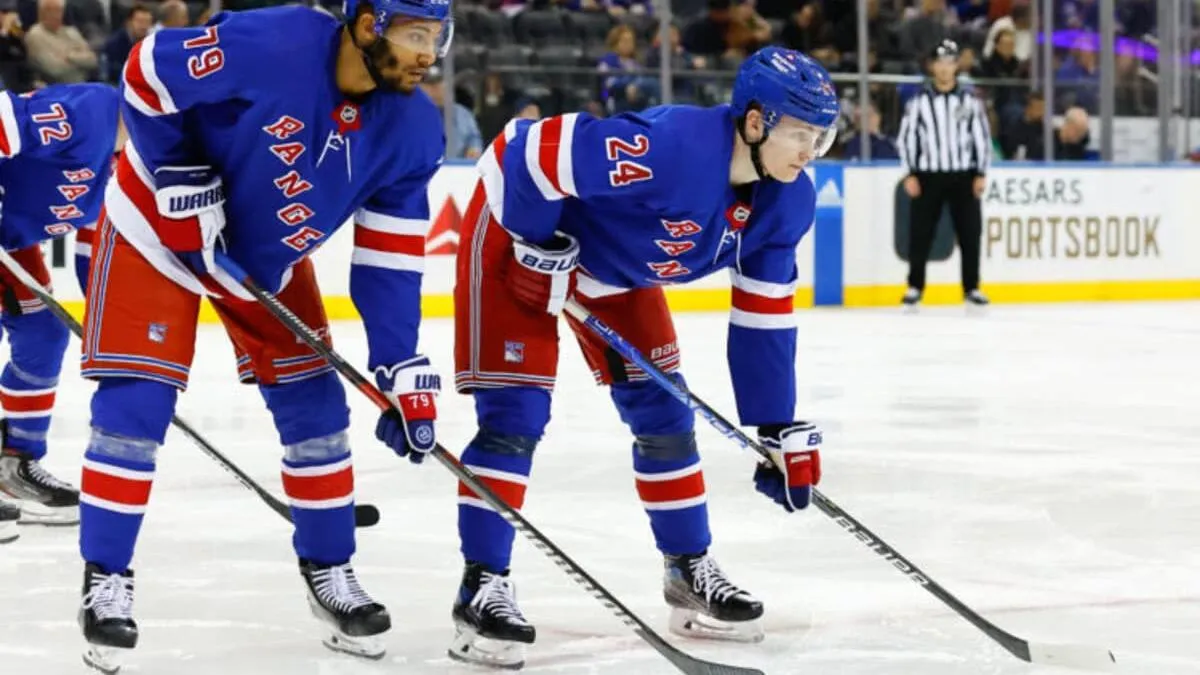
The stark contrast between home and away success
The numbers tell a tale of two entirely different teams. On the road, the Rangers skate with confidence, precision, and offensive firepower. Their 11-4-1 road record showcases a squad that can beat anyone, anywhere. Yet the moment they step onto their home ice, the scoring touch vanishes. In their eight regulation home defeats, they’ve managed just three total goals. Three. That’s not a misprint—it’s a crisis.
The absurdity peaked when the Rangers tied a nearly century-old record for futility. Five shutout losses in their first seven home games matched the ignominious mark set by the 1928-29 Pittsburgh Pirates, a franchise that no longer exists. While that ancient squad had the excuse of playing in hockey’s prehistoric era, these Rangers feature modern stars, advanced analytics, and a championship pedigree that makes their home struggles even more inexplicable.
Inside the locker room: Players and coaches grapple with the Garden ghosts
Captain J.T. Miller hasn’t minced words about the team’s Jekyll-and-Hyde act. After a recent 4-1 loss to Tampa Bay that dropped the Rangers to 2-8-1 at home, Miller pulled no punches. “We did it to ourselves,” he said. “There was no urgency today. It’s unacceptable.”
Miller’s frustration reflects the broader sentiment in a locker room that understands the stakes. The Rangers have become a punchline for their home woes despite their road excellence, and the mental toll is evident. When a team leader openly calls performances “unacceptable,” the problem runs deeper than X’s and O’s.
Head coach Mike Sullivan faces the unenviable task of solving a puzzle that seems to have no logical solution. “We didn’t have our best,” Sullivan admitted after the Lightning defeat. “I’m stating the obvious.” The coach’s understated assessment belies the mounting pressure as the Rangers approach a critical stretch where seven of their next ten games will be played at Madison Square Garden.
A season of strange milestones and unwanted history
The Rangers’ first home victory finally arrived on November 10, a 6-3 win over Nashville that felt like lifting a curse. It took eight attempts. For context, the team had managed just nine goals total in their first seven home games combined before exploding for six against the Predators. The relief was palpable but short-lived, as subsequent home losses to Detroit and St. Louis reinforced the pattern.
Their most recent defeat to the Lightning highlighted every facet of their home struggles. Outshot 11-2 in the first period and 16-7 in the second, the Rangers looked like a team skating in quicksand. Tampa Bay’s willful, aggressive approach contrasted sharply with New York’s passive, disjointed effort. As Miller noted, “At no point in that game were we deserving of winning.”
The historical context makes this season even more baffling. Just two campaigns ago, the Rangers posted a 30-11-0 home record en route to a league-best 114 points. The same building that once provided a fortress now feels foreign. What’s changed? The roster features many of the same core players. The coaching staff remains intact. The passionate fanbase still fills the seats. Yet something intangible has shifted.
The psychological battle: Mental hurdles at Madison Square Garden
Assistant captain Vincent Trocheck identified the core issue when he said, “This game is majority mental. It’s up to you to fight off the negativity.” The Rangers have discussed making the Garden a daunting place for visiting teams, but the opposite has occurred. Opponents now sense blood in the water when they enter the building, feeding off the tension and uncertainty that permeates the ice.
Mika Zibanejad, the team’s longest-tenured player, understands the fans’ reaction. “I understand the reaction from our fans,” he said after the Lightning loss. “We’re more frustrated than they are.” When the most experienced Ranger validates the booing, you know the situation has reached a critical point.
The mental aspect extends beyond just confidence. The Rangers have developed almost a home-ice phobia, gripping their sticks too tightly, forcing plays that aren’t there, and seemingly waiting for something to go wrong. On the road, they play free and loose. At home, they carry the weight of expectations, history, and a demanding fanbase that expects results.
What the New York Rangers home record at Madison Square Garden 2-8-1 means for playoff hopes
The playoff math grows increasingly concerning. With a 7-7-2 overall record through 16 games, the Rangers sit sixth in the Metropolitan Division and sixth in the Wild Card race, two points behind a playoff position. While their road prowess provides hope, the schedule won’t always be so kind. Teams that struggle at home historically face uphill battles to secure postseason berths, regardless of road success.
The upcoming schedule offers no respite. After hosting Dallas on Tuesday, the Rangers face the league-leading Colorado Avalanche next weekend, followed by Vegas. Seven home games in the next ten contests represents either a golden opportunity to right the ship or a potential death spiral that could bury their season before winter officially begins.
Trocheck’s advice to focus on “one game at a time” reflects the only viable approach, but time is becoming a factor. Each home loss doesn’t just cost two points—it reinforces the psychological barrier they’ve built. Breaking the cycle requires not just a win, but a dominant performance that reminds everyone, players and fans alike, what this team is capable of.
Can the Rangers reverse their Madison Square Garden fortunes?
The question haunting Rangers Nation is simple: Can this team figure it out? The talent is undeniable. Adam Fox leads the team with 26 points and is playing at an elite level before getting injured against Tampa Bay. Igor Shesterkin remains capable of stealing games when his teammates provide support. The forward group features scorers who’ve proven they can produce in big moments.
Yet something fundamental needs to change. Perhaps it’s a lineup adjustment. Maybe it’s a simplified approach that emphasizes puck possession and reduces risk-taking. It could be a renewed focus on creating traffic in front of opposing goaltenders, something that’s been noticeably absent during home games.
The internal pressure cooker will only intensify. Rangers management made bold moves in the offseason, bringing back Miller to captain the team after shipping out former captain Jacob Trouba. Missing the playoffs last year was supposed to be a wake-up call, not the new normal. If the home struggles continue, difficult decisions loom about coaching, personnel, and the direction of the franchise.
For now, the Rangers must find a way to channel their road warrior mentality inside their own building. They need to treat Madison Square Garden like any other hostile environment, feeding off energy rather than wilting under expectations. The blueprint exists—they’re executing it beautifully in 30 other NHL arenas. The mystery is why those same strategies crumble the moment they hear the home crowd’s roar.
The stakes couldn’t be clearer. The Rangers’ season, and perhaps the futures of several key figures, depends on solving the most puzzling home-ice advantage reversal in modern NHL history. Forget about climbing the standings or competing for division titles—for now, the Rangers would settle for just feeling comfortable in their own beds and on their own ice.
For more analysis on the Rangers’ struggles, check out this deeper dive into the psychological factors affecting the team. You can also revisit when the Rangers finally secured their first home win of the 2024-25 season to see what worked that night.
External sources: ESPN coverage of Rangers home struggles, AMNY analysis of home record
Frequently Asked Questions

Par Mike Jonderson
Mike Jonderson is a passionate hockey analyst and expert in advanced NHL statistics. A former college player and mathematics graduate, he combines his understanding of the game with technical expertise to develop innovative predictive models and contribute to the evolution of modern hockey analytics.