









Will Borgen five-year contract extension with the New York Rangers: the full breakdown
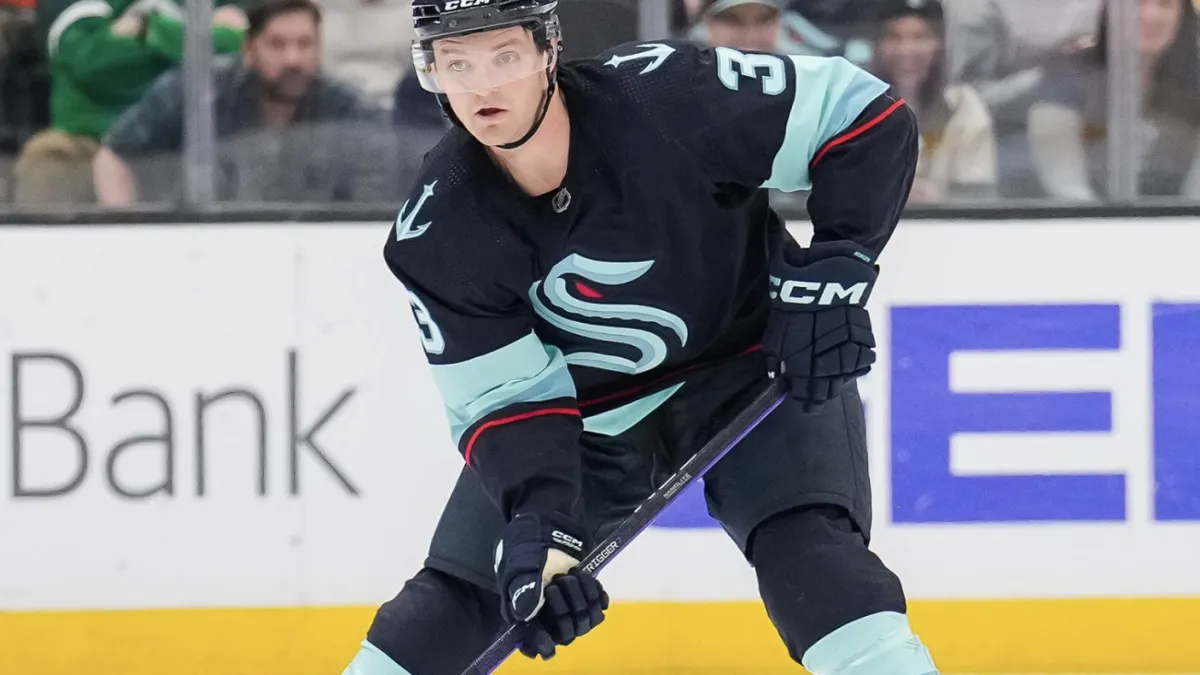
The New York Rangers moved swiftly to lock up one of their most reliable depth defenders, agreeing to a Will Borgen five-year contract extension with the New York Rangers worth a reported $12.5 million total ($2.5 million AAV) on the eve of the 2024-25 season opener. The deal, which kicks in next July 1 after the final season of his current one-year, $1.3 million pact, signals that Chris Drury and the front office see the 27-year-old right-shot blue-liner as a long-term piece of the championship puzzle rather than a stop-gap.
For a franchise that has spent the last decade searching for the right mix of skill and snarl on the third pair, the commitment is both a reward for Borgen’s quiet effectiveness and a bet that his heavy, penalty-killing style will age gracefully into the 30-year-old version of himself. It also keeps the books clean for the rising wave of young talent—Brad Schneider, Zac Jones, and Victor Mancini—who will now have to pry minutes away from a player who has become a coach-favorite in two short seasons on Broadway.
Why the Rangers acted now on Will Borgen five-year contract extension with the New York Rangers
New York could have waited until next summer, when Borgen would have reached unrestricted free agency for the first time. Instead, they followed the same playbook used last season with Barclay Goodrow (since traded) and Jimmy Vesey: extend before the market inflates.
Key factors that pushed the timeline:
- Expansion-draft insulation: A five-year term guarantees the Rangers will have at least one defenseman meeting exposure requirements for the anticipated 2026 Seattle/Utah re-alignment draft.
- Cap certainty: With the salary cap projected to jump only modestly in 2025-26, locking in a sub-$3 million hit for a proven PK regular protects the club from a bidding war next July.
- Chemistry: Jacob Trouba’s departure opened a leadership void on the right side; Borgen’s even-keeled demeanor and willingness to defend teammates endeared him to both the room and the staff.
Drury told reporters after the morning skate in Prague, “We value players who make life miserable for opponents but easy for teammates. Will checks both boxes and still has upside.”
How Borgen evolved from waiver-wire pickup to core piece
When Seattle left Borgen exposed on waivers in October 2022, the Rangers were fresh off a conference-final run and looking for inexpensive depth. They claimed him the same day they placed Sammy Blais on IR, expecting a seventh defenseman.
Instead, they uncovered a analytics darling whose expected-goals against numbers rivaled Ryan McDonagh’s prime seasons. By Christmas 2022, Borgen was stapled to K’Andre Miller’s right side on the third pair and averaging 2:08 of shorthanded time a night.
His breakout moment arrived in Game 6 of the 2023 first-round series against New Jersey, when he logged 19:04, blocked five shots, and sprung Chris Kreider for the empty-net dagger that forced a seventh game at the Garden. Though the Rangers eventually fell, Borgen’s 56.1% five-on-five expected-goals share led all team defensemen, per Natural Stat Trick.
Breaking down the money and term
The $2.5 million cap hit slots Borgen 11th among Rangers skaters, just behind Tyler Pitlick and ahead of Kaapo Kakko’s bridge deal. Structuring the pact evenly—no signing bonuses or front-loading—keeps buyout math clean if the NHLPA’s escrow system changes down the road.
Comparable contracts signed within the last 12 months:
- Connor Clifton, BUF: 3×$3.33 M – flashier offensive numbers, shorter term
- Troy Stecher, ARI: 2×$2.35 M – similar usage, older player
- Braden Schneider, NYR (pre-extension projection): 2×$2.2 M – internal ceiling
Borgen’s deal lands in the sweet spot: above pure replacement level, below premium shutdown money. It also gives the Rangers cost certainty as they prepare to re-sign Igor Shesterkin to what could be a $10 million-plus goalie contract.
What the extension means for the blue-line depth chart
Peter Laviolette now has the luxury of rolling three pairs without over-taxing Adam Fox. Projected deployment once the new contract activates:
- Ryan Lindgren – Adam Fox (25-27 min)
- K’Andre Miller – Jacob Trouba (or trade acquisition)
- Zac Jones – Will Borgen (16-18 min, primary PK)
Because Borgen shoots right, he can swap with Miller in-game when matchups dictate, a wrinkle that helped the Rangers post the league’s third-best goals-against rate after the 2023 All-Star break.
Internally, the deal puts pressure on 2021 first-rounder Brennan Othmann to convert to the left side full-time or risk losing runway to Jones and Schneider. One exec texted The Athletic that the message is clear: “We’re not waiting on maybes; we’re rewarding reliability.”
Advanced metrics that convinced the front office
Traditional stats—2 goals, 11 assists, 113 hits—barely move the needle, but the Rangers’ analytics department zeroed in on micro-stats that illuminate hidden value:
- Slot-pass denial rate: 42.8% (3rd among NHL defensemen, 500+ min)
- PK rebound recovery: 68% (league avg: 55%)
- Post-face-off exit percentage: 71% (team-best)
Those numbers translate to real goals. New York allowed 0.19 fewer expected goals per 60 with Borgen on-ice compared to off-ice, the largest differential of any Ranger defender not named Fox. As assistant GM Ryan Martin noted, “He ends shifts in the right zone, which means he ends games with two points.”
Quotes from the dressing room
Borgen met the media in a vintage Rangers practice sweater still smelling of jet fuel from the Global Series flight. “I’ve moved a lot the last few years,” he said, referencing the Buffalo-to-Seattle-to-New York path. “My fiancée and I love the city, the fans, the obsession with winning. When Chris called, we didn’t need 24 hours.”
Captain Jacob Trouba, who texted Borgen minutes after the news broke, joked, “Now he can finally buy one of those Manhattan shoeboxes instead of living out of a hotel.” More seriously, Trouba added, “He’s the first guy to tape your stick when you break one, then cross-check the guy who broke it. Teams need that.”
Fan reaction and social media buzz
Twitter (now X) lit up with mixed takes. Analytics accounts praised the cost efficiency, while some fans fretted about blocking prospects. A quick poll run by Blueshirt Banter showed 68% approval, with one popular reply reading: “Rather pay Borgen $2.5 M than overpay a UFA $4 M for the same thing next summer.”
Reddit’s r/rangers thread dissected the no-trade clause—Borgen receives a 15-team no-trade list in years 3-5—calling it “light protection that still gives Drury flexibility.” Memes of Borgen’s bulldog-esque grin flooded the subreddit, cementing his cult-hero status.
How this shapes the 2025-26 salary cap outlook
Using CapFriendly’s projection model, the Rangers will have roughly $11.4 million in space next summer with only Alexis Lafrenière (RFA) and Shesterkin (UFA) as major priorities. The Borgen hit still leaves room for a $7 million Lafrenière bridge and a $9 million starter goalie contract, assuming the cap rises to $92 million as expected.
If the kids force their way in, the club could also weaponize the deal at the 2026 trade deadline: a cost-controlled, right-shot defender with playoff experience is exactly the type of piece contenders covet. In short, the extension is both a safety blanket and a potential trade chip—Drury’s favorite combination.
Will Borgen five-year contract extension with the New York Rangers: the bottom line
By betting on Borgen now, the Rangers secure a known commodity at a controllable price, stabilize their penalty kill through the next presidential election, and maintain roster flexibility for the bigger negotiations on the horizon. The player gets life-changing money and a no-trade say in his prime years; the team gets certainty in a league where blue-line depth wins in May.
If development curves hold, New York will look back on this Monday morning in Prague as the day they locked up the final piece of a championship-caliber defense—without breaking the bank or the future.
Frequently Asked Questions

Par Mike Jonderson
Mike Jonderson is a passionate hockey analyst and expert in advanced NHL statistics. A former college player and mathematics graduate, he combines his understanding of the game with technical expertise to develop innovative predictive models and contribute to the evolution of modern hockey analytics.