







The Philadelphia Flyers’ 2025-26 season ended in disappointment with a second-round playoff exit against the Carolina Hurricanes. Injuries piled up, notably Owen Tippett missing the entire series and Noah Cates battling a foot injury, contributing to inconsistent offense and defensive fatigue.[1] General manager Danny Briere now faces key offseason decisions. Experts like Anthony Di Marco from The Fourth Period emphasize defense as a top priority, particularly acquiring a power-play quarterback.[2]
While the forward group shows promise with internal growth from Matvei Michkov, Porter Martone, and a healthy Tyson Foerster and Trevor Zegras, the blue line lacks a dynamic offensive leader. Di Marco noted on Sirius XM NHL Network Radio, “I think it’s a defenseman and a power play defenseman.”[2] This need stands out after the Flyers’ postseason run exposed gaps despite strong individual efforts.
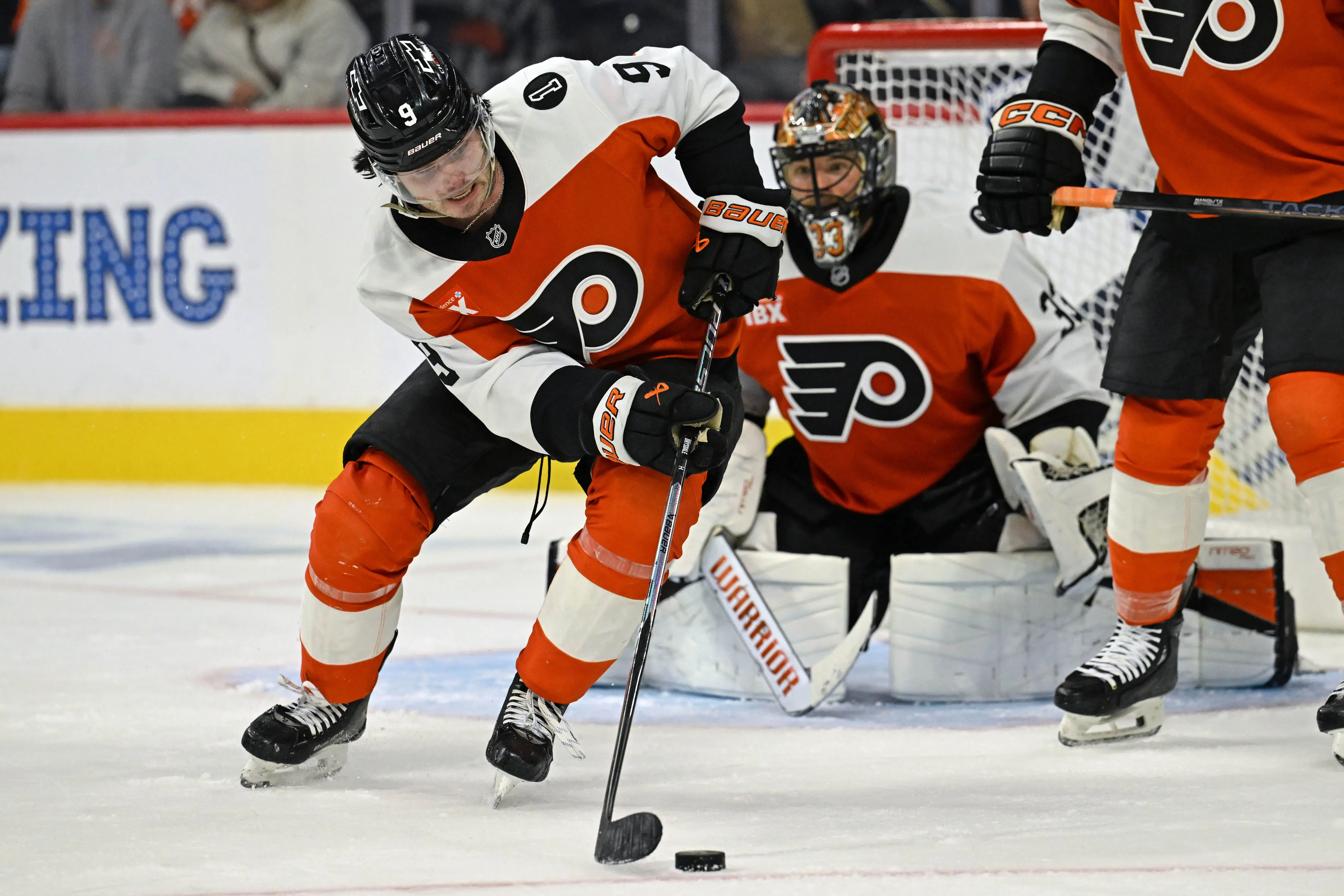
Assessing the current defensive core
Cam York, Jamie Drysdale, Travis Sanheim, and Rasmus Ristolainen formed a solid top-four unit during the playoffs. Di Marco praised their performance: “They’ve all been fantastic,” especially amid anemic forward offense.[2] York and Sanheim anchored the left side reliably, while Drysdale and Ristolainen provided stability.
However, the group struggled to transition the puck effectively or generate offense. None consistently drove play up ice, limiting zone entries and power-play contributions. This was evident in the Hurricanes series, where defensemen appeared worn from physical play and blocked shots.[1]
Contracts add complexity. York is in year one of a five-year deal, but Drysdale and Sanheim need extensions. Ristolainen remains a steady presence, yet the core feels complete without that “top dog” offensive spark Di Marco described.[2]
Overall, the quartet excels defensively but plateaus offensively. Adding a complementary piece could elevate the group without major upheaval.
Power-play woes demand a quarterback
The Flyers’ power play ranked as the worst among playoff teams at 1% efficiency before their elimination.[2] In nine postseason games, they converted just 3 of 33 chances, even allowing a short-handed goal.[3] This inefficiency doomed them against Carolina’s stout penalty kill.
Tippett’s absence exacerbated the issue, removing a key shooting threat and disrupting structure. Foerster fought through injury recovery, further hampering special teams. Without a defenseman to quarterback, setups lacked creativity and net-front presence.
Di Marco highlighted this gap: “They need a quarterback on the power play, 100%.” Current options like York and Drysdale manage but don’t dictate offensively.
Improving the man advantage could unlock the forwards’ potential. A targeted addition here addresses a glaring weakness without overhauling the roster.
Pipeline lacks left-shot depth
The Flyers’ prospect pool ranks eighth league-wide per Scott Wheeler, bolstered by forwards like Porter Martone and centers Jett Luchanko and Jack Nesbitt.[4] However, defensive reinforcements skew right-handed.
Top blueline hopefuls include Oliver Bonk (RHD), David Jiricek (RHD), and Christian Kyrou (RHD). Bonk projects as a smart No. 4-5 with strong coverage; Jiricek offers size and a point shot but mobility concerns.[4] No prominent left-shot defensemen loom near NHL readiness.
This imbalance leaves York and Sanheim without clear succession. Di Marco stressed, “All their defensemen who are coming up are right-shot guys. On the left side, they’re really lacking.”[2]
While the system holds depth, it doesn’t solve the immediate offensive need. Free agency or trades become essential.
Bowen Byram emerges as ideal target
Buffalo Sabres defenseman Bowen Byram fits perfectly as a left-shot power-play specialist. His playoff performances and availability amid Buffalo’s surplus make him attractive, despite contract hesitations.[2]
Reports link the Flyers to Byram repeatedly, even post his Sabres extension.[5] With one year left, Buffalo might entertain offers, especially given their depth.
Briere and assistant GM Keith Jones reportedly view him as priority one. Yet, a $9-10 million extension raises eyebrows for a lefty addition. Trade rumors suggest packages involving assets like Owen Tippett could bridge the gap.
Byram’s upside aligns with needs, but cost and term will test commitment. For more on potential deals, see NHL trade candidate discussions.[6]
Balancing center and defense priorities
Debate rages between center and defense. Di Marco initially pushed defense but later noted, “I feel like they will prioritize center more obviously.”[7] Zegras experiments at center highlight forward tweaks.
League-wide center scarcity favors trades, perhaps with Ottawa. Yet defense contracts like Drysdale’s loom large.
Forwards offer more runway via growth; blue line feels stagnant. Full details in center vs. defense analysis.
Ultimately, a hybrid approach—targeting a defensive quarterback while eyeing centers—maximizes cap space.
The Flyers sit at a crossroads with cap flexibility and draft capital. Prioritizing a left-shot offensive defenseman like Byram could transform their power play and blue line.[2] While center remains critical, addressing defense now prevents future regrets.
Briere’s moves will signal retooling aggression. Fans await clarity amid a competitive East, where special teams often decide playoffs.
Frequently Asked Questions

Par Mike Jonderson
Mike Jonderson is a passionate hockey analyst and expert in advanced NHL statistics. A former college player and mathematics graduate, he combines his understanding of the game with technical expertise to develop innovative predictive models and contribute to the evolution of modern hockey analytics.