Lord Stanley of Preston paid exactly ten guineas for a silver bowl that received its first engravings of “Dominion Hockey Challenge Cup” and “From Stanley of Preston” before any team claimed it.
The 1892 Commissioning
Lord Stanley purchased the trophy in London for ten guineas, equivalent to ten and a half pounds sterling or US$48.67 at the time. R. Collis and Company performed the initial work, engraving the official name on one side of the outside rim and the donor inscription on the other. The bowl measured approximately seven and a half inches high with a diameter of eleven and a half inches at the top.
The governor general donated it as an award for Canada’s top-ranking amateur ice hockey club. Rules attached to the gift required each winning team to add its name and the year on a silver ring at its own expense. The cup could never become the permanent property of any club.
These instructions created the mechanical foundation for future engravings. Teams attached rings below the original bowl, expanding the trophy vertically as champions accumulated.
First Award and Early Markings
The Montreal Hockey Club received the cup in 1893 after posting the best amateur record. Its name and the year became the first champion engraving added after the 1892 purchase. Ottawa Hockey Club followed with multiple early claims, each adding a ring under the same protocol.
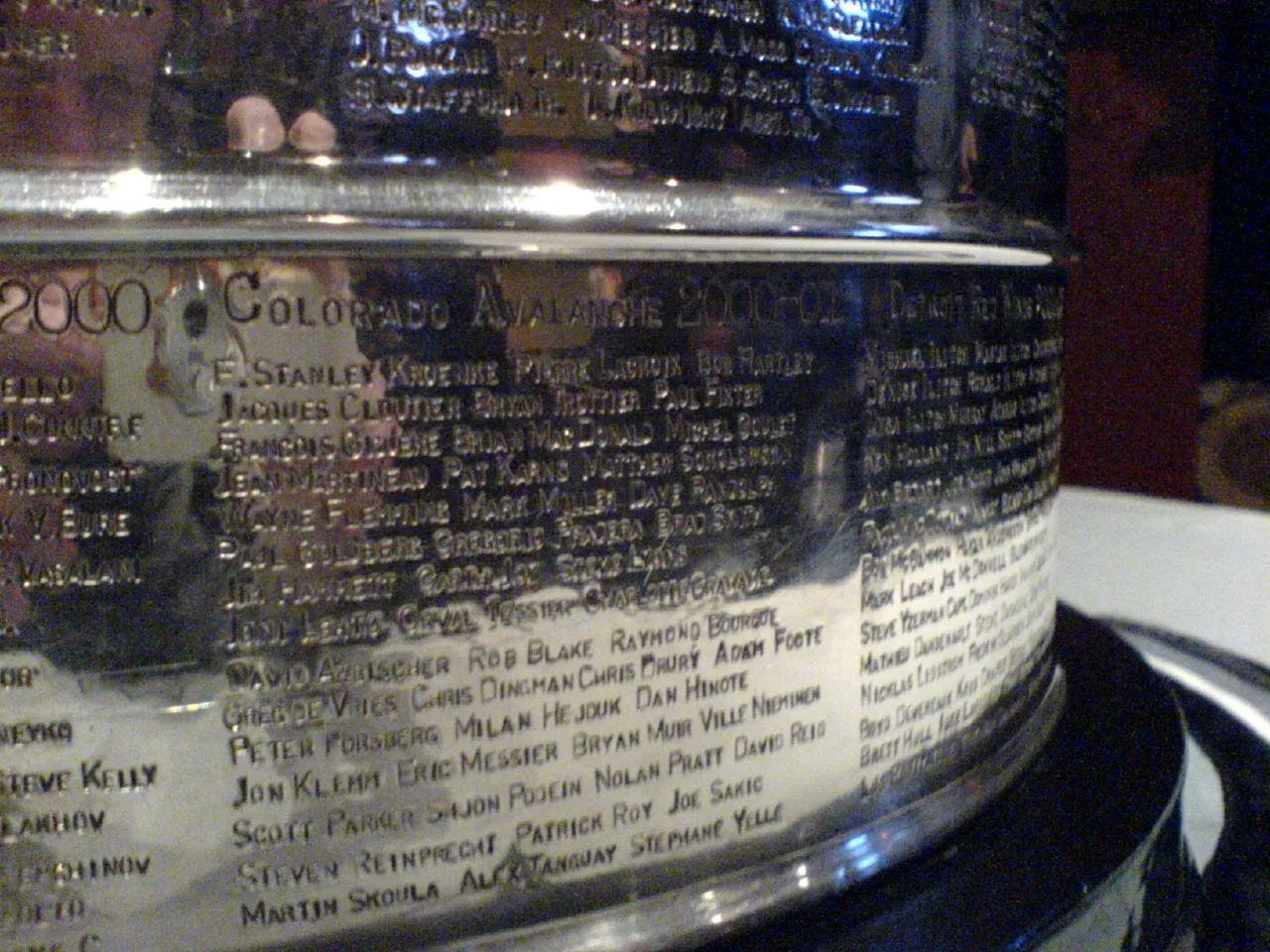
The special process of disassembling the trophy from top to bottom began immediately to accommodate new rings without damaging prior work. Silversmiths removed bands, added fresh ones, then reassembled the structure. This method ensured legibility across growing layers.
By 1924 the NHL standardized annual player-name engraving using a letter punch on the rings. Every champion from 1893 onward appears on the trophy through this continuous system.
Lasting Mechanical Tradition
The original 1892 bowl stayed in active use until 1970. It now sits in the Hockey Hall of Fame Vault Room in Toronto. Successor Presentation and Permanent Cups replicate the engraving process for modern presentation while preserving the 1892 artifact.
The disassembly technique remains identical to the 1892 method. Silversmiths still separate components, engrave new names, and reassemble without altering earlier markings. This continuity links every champion directly to Lord Stanley’s initial commission.
Frequently Asked Questions
Sources

Par Mike Jonderson
Mike Jonderson is a passionate hockey analyst and expert in advanced NHL statistics. A former college player and mathematics graduate, he combines his understanding of the game with technical expertise to develop innovative predictive models and contribute to the evolution of modern hockey analytics.