














Now I’ll create the comprehensive blog post about the all-time best player from every NHL team:
Identifying the all-time best player from every NHL team
Debating hockey greatness is one of the sport’s oldest traditions. Every fanbase has cherished memories of legendary players who defined their franchise, carried teams to championships, and created moments that transcend generations. When it comes to selecting the all-time best player from every NHL team, the conversation becomes even more complex as we compare icons across different eras, positions, and playing styles.
From Wayne Gretzky’s dominance in Edmonton to Bobby Orr’s revolutionary play in Boston, the NHL’s 32 franchises have been graced by some of the greatest athletes in professional sports history. This comprehensive examination explores the singular player who stands above all others for each team, considering Hall of Fame credentials, franchise records, championships, individual awards, and lasting legacy. While some selections are unanimous, others require careful consideration of what truly defines greatness within a specific franchise’s context.
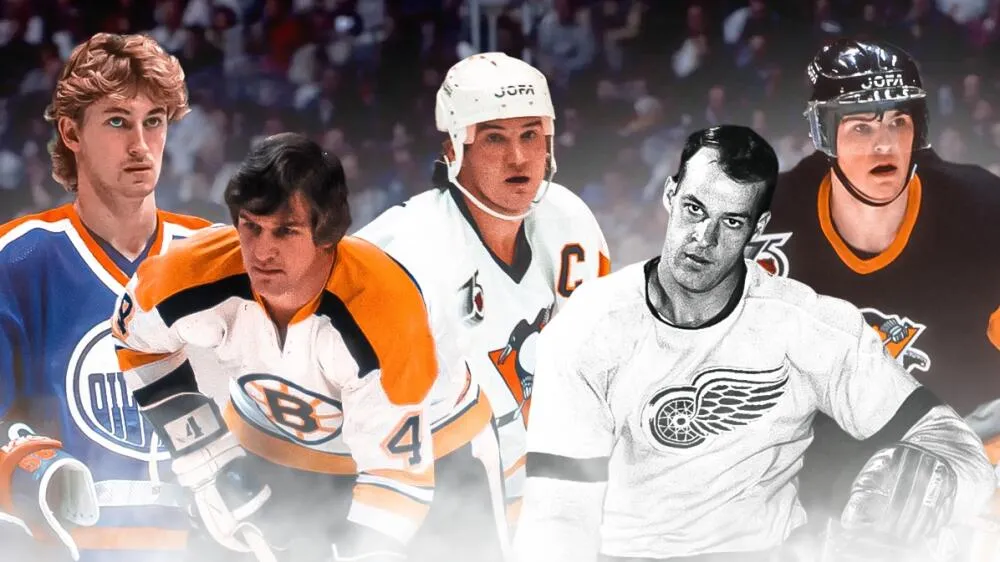
The Original Six legends who defined NHL excellence
The six founding teams of the modern NHL era boast some of hockey’s most storied histories. For the Boston Bruins, Bobby Orr revolutionized the defensive position with his speed, scoring ability, and playmaking vision. The iconic image of Orr flying through the air after scoring the 1970 Stanley Cup-clinching goal remains hockey’s most recognizable photograph. His eight consecutive Norris Trophies and three Hart Trophy wins as the league’s MVP established a standard that defensemen still chase today. He remains the only defenseman to win the Art Ross Trophy as the league’s leading scorer, accomplishing this feat twice before knee injuries tragically shortened his career at age 30.
The Toronto Maple Leafs present perhaps the most difficult selection given their 62 Hall of Famers. While Darryl Sittler and Mats Sundin have strong cases, Dave Keon’s two-way excellence and championship pedigree make him the franchise’s greatest. His four Stanley Cup championships and status as the only Maple Leafs player to win the Conn Smythe Trophy solidify his legacy. Keon’s ability to neutralize opponents’ top centers while contributing offensively made him invaluable during Toronto’s last golden era in the 1960s.
The Montreal Canadiens required sorting through legends like Maurice Richard, Guy Lafleur, and Patrick Roy. Jean Béliveau emerges as the greatest with his 10 Stanley Cup championships as a player and remarkable consistency over 18 seasons. Known as “Le Gros Bill,” Béliveau’s 1,219 points in 1,125 regular season games and elite playoff performance (176 points in 162 games) demonstrated his ability to elevate his game when it mattered most. His inaugural Conn Smythe Trophy win in 1965 recognized what teammates already knew—he was Montreal’s most complete player.
The Detroit Red Wings have seen generational talents from Gordie Howe to Steve Yzerman, but Nicklas Lidström’s case as the franchise’s best player is compelling. The Swedish defenseman’s seven Norris Trophies, four Stanley Cups, and status as the first European captain to hoist the Cup created a legacy that transcended traditional measurements. His 981 points in 1,129 games with Detroit demonstrated offensive prowess, while his defensive reliability made him the perfect player for coach Scotty Bowman’s system during the Wings’ dynasty years.
Western Conference powerhouses and their franchise icons
The Edmonton Oilers decision was straightforward—Wayne Gretzky remains not only their greatest player but arguably the best to ever play the game. “The Great One” accumulated 894 goals and 1,963 assists for 2,857 career points, numbers that seem almost impossible in the modern era. His four Stanley Cups with Edmonton and record of 61 NHL records upon retirement cemented his status as hockey royalty. Gretzky’s ability to anticipate plays before they developed, combined with his “office” behind the opponent’s net, changed how offensive hockey was played.
For the Colorado Avalanche, Joe Sakic’s 21-year career with the Nordiques/Avalanche franchise produced 1,641 points and two Stanley Cup championships. His 2001 playoff performance, where he collected 26 points and won the Conn Smythe Trophy, showcased his ability to carry a team through adversity. Sakic’s lethal wrist shot and leadership made him the face of hockey in Denver for two decades, and his seamless transition to general manager demonstrates his hockey intelligence extended beyond playing.
The Calgary Flames find their greatest player in Jarome Iginla, whose 525 goals and 1,095 points over 16 seasons established franchise records that may never be broken. His captaincy during the 2004 Stanley Cup Final run, combined with two Maurice Richard Trophy wins as the league’s top goal scorer, demonstrated consistent excellence. Iginla’s physical style and community involvement made him beloved in Calgary, and his 2020 Hall of Fame induction was celebrated throughout Alberta.
The Vancouver Canucks benefited from the Sedin twins’ incredible chemistry, but Henrik Sedin edges his brother Daniel as the franchise’s best. His franchise records in games played (1,330), assists (830), and points (1,070) reflect consistent excellence over 17 seasons. Winning both the Art Ross Trophy and Hart Memorial Trophy in 2010 made him the first Canuck to capture the Hart, validating his status as one of the game’s elite playmakers. The greatest hockey players of all time conversations always include discussions about players who elevated teammates, and Henrik exemplified this quality throughout his career.
Metropolitan Division legends and their enduring impact
The Pittsburgh Penguins have featured multiple generational talents, but Mario Lemieux stands above Sidney Crosby, Evgeni Malkin, and Jaromir Jagr. Despite missing 513 regular season games due to injuries and illness, including Hodgkin’s lymphoma, Lemieux compiled 690 goals and 1,723 points in just 915 games. His .754 goals-per-game average ranks second only to Mike Bossy, and his ability to score in all five possible situations (even strength, power play, shorthanded, penalty shot, and empty net) demonstrated complete offensive mastery. Beyond statistics, Lemieux saved the franchise from bankruptcy in 2000, becoming the first player-owner in North American sports history.
The Washington Capitals find their greatest player in Alex Ovechkin, whose relentless pursuit of goal-scoring excellence recently saw him surpass Gretzky’s all-time record. His nine Maurice Richard Trophies as the league’s top goal scorer demonstrate sustained excellence across nearly two decades. The 2018 Stanley Cup championship, where Ovechkin won the Conn Smythe Trophy, removed the only blemish from his resume and cemented his status as one of hockey’s all-time greats.
The New York Rangers had several worthy candidates, including Henrik Lundqvist and Rod Gilbert, but Brian Leetch’s revolutionary play from the blue line earns him top honors. His 1994 Conn Smythe Trophy win made him the first American-born player to receive the award, and his role in ending the Rangers’ 54-year championship drought created lasting legacy. Leetch’s offensive brilliance from the defensive position, culminating in being the last defenseman to reach 100 points in a season before Erik Karlsson in 2023, demonstrated his elite status.
Eastern Conference stalwarts and championship pedigree
The Boston Bruins showcase Bobby Orr’s dominance, while the New Jersey Devils highlight Martin Brodeur’s unprecedented goaltending excellence. Brodeur’s 691 career wins, 125 shutouts, and three Stanley Cup championships established him as arguably the greatest goaltender in NHL history. His ability to play the puck revolutionized the position until the NHL implemented the trapezoid rule specifically to limit goalies’ puck-handling abilities—the ultimate compliment to his skill set.
The Philadelphia Flyers identify Bobby Clarke as their franchise icon. His leadership of the “Broad Street Bullies” to back-to-back Stanley Cup championships in 1974 and 1975 created a legacy that transcends statistics. Three Hart Trophy wins and his status as the team’s all-time leading scorer with 1,210 points demonstrate both individual excellence and team success. Clarke’s toothless smile while hoisting the Cup remains one of hockey’s most iconic images.
According to The Hockey Writers, the Tampa Bay Lightning find their greatest player in Steven Stamkos, who recently departed in free agency but left an indelible mark. His 500 goals and 1,000 points in Tampa Bay, combined with captaining the team to back-to-back Stanley Cup championships in 2020 and 2021, established records that define franchise excellence. Stamkos represents the last player to captain consecutive Cup-winning teams, an achievement that may not be repeated for decades.
Expansion era success stories and franchise builders
The Vegas Golden Knights made history with their improbable run to the Stanley Cup Final in their inaugural 2017-18 season. Jonathan Marchessault, one of the original “misfits,” became the franchise’s first Conn Smythe Trophy winner when Vegas captured the Cup in 2023. His franchise records in goals, assists, and points through the team’s first seven seasons established him as their greatest player, though his 2024 free agency departure leaves the door open for future challengers.
The Seattle Kraken, as the NHL’s newest franchise, currently recognizes Jared McCann as their best player. As the first Kraken to reach 100 goals and 100 points, McCann has separated himself through consistent production. His four consecutive seasons leading the team in scoring demonstrates reliability that expansion franchises desperately need. With several years remaining on his contract, McCann has the opportunity to build an untouchable legacy in Seattle.
The Florida Panthers present an interesting case where Pavel Bure’s short but dominant tenure earned him the title despite playing just 223 games for the franchise. “The Russian Rocket” scored 152 goals in those games, winning back-to-back Maurice Richard Trophies in 2000 and 2001. His 117 goals across those two seasons represented 26 percent of the Panthers’ total offensive output, demonstrating how completely he dominated as the team’s offensive engine. Understanding how elite forwards shape franchise success helps explain why discussions about the best NHL forwards lineup of all time often center on players who elevated entire organizations through individual brilliance.
Canadian market legends and national heroes
The Ottawa Senators modern era found its greatest player in Daniel Alfredsson, whose 17 seasons and 1,108 points nearly doubled the totals of the franchise’s second-leading scorer. His 2022 Hall of Fame induction validated a career defined by consistency and leadership. Winning the Calder Trophy as Rookie of the Year and collecting the King Clancy and Mark Messier Leadership Awards demonstrated Alfredsson’s impact both on ice and in the community.
The Winnipeg Jets legacy includes Dale Hawerchuk, whose nine seasons established franchise records that stood for decades. His 1981 Calder Trophy season saw him become the youngest player to reach 100 points, and his six 100-point seasons with the Jets demonstrated sustained excellence. Hawerchuk’s 379 goals and 929 points in Winnipeg established a standard that defined the franchise through its first incarnation.
The Montreal Canadiens and their 24 Stanley Cup championships created the NHL’s most successful dynasty. Jean Béliveau’s 10 championships as a player, plus seven more as an executive, created an unmatched connection to winning that spanned five decades. His elegance on ice matched his grace off it, making him the perfect ambassador for hockey’s most storied franchise.
Modern stars redefining franchise excellence
Today’s NHL features several players building Hall of Fame resumes who may eventually claim their franchise’s greatest player designation. Connor McDavid’s dominance in Edmonton raises questions about whether he could eventually surpass Gretzky, though The Great One’s four Stanley Cups in Edmonton remain the differentiator. Similarly, Auston Matthews’ goal-scoring prowess in Toronto generates debates about whether he could eventually challenge Dave Keon’s legacy with sustained success and championship glory.
The St. Louis Blues recognize Brett Hull as their greatest despite Bernie Federko’s longer tenure. Hull’s 527 goals in just 744 games created a goals-per-game average that demonstrated pure scoring excellence. His 86 goals in the 1990-91 season remain the third-highest single-season total in NHL history, and his three consecutive seasons from 1989-92 where he scored 228 goals showcased sustained dominance rarely seen in professional sports.
The Dallas Stars identify Mike Modano as their franchise icon, with his 557 goals and 1,359 points establishing records across nearly two decades. His status as the highest-scoring American-born player in NHL history (1,374 points) created national significance beyond Dallas. Modano’s 1999 Stanley Cup championship, where he played through a broken wrist in the Final, exemplified the toughness that made him beloved in Texas.
Young franchises building their legacies
Several NHL franchises continue building their histories with players who may eventually claim the title of greatest ever. The Columbus Blue Jackets currently recognize Sergei Bobrovsky, whose two Vezina Trophies and 213 wins in seven seasons established goaltending excellence. His 2019 playoff performance, sweeping the heavily favored Tampa Bay Lightning, gave the franchise its first playoff series victory and created a moment that defines Blue Jackets history.
The Nashville Predators built their franchise around Pekka Rinne, whose 15-year career and 369 wins created a foundation of goaltending excellence. His 2018 Vezina Trophy validated his status among the league’s elite netminders, and his franchise records in every significant goaltending category demonstrate sustained excellence. Nashville’s decision to retire his number and erect a statue outside their arena before he entered the Hall of Fame speaks to his impact on the franchise and city.
The Arizona Coyotes, now relocated to become the Utah Hockey Club, recognize Shane Doan as their franchise’s greatest player. His 21 seasons and status as the NHL’s longest-serving captain until 2017 created loyalty rarely seen in professional sports. Doan’s 402 goals and 972 points established franchise records that survive the relocation, and his two leadership awards demonstrated impact beyond statistics.
Weighing championships versus individual excellence
Selecting the all-time best player from every NHL team requires balancing championship success against individual statistical dominance. Some selections favor players who delivered championships, like Dave Keon in Toronto, while others recognize sustained individual excellence, such as Marcel Dionne in Los Angeles despite never winning a Cup. This tension reflects broader debates about how we measure greatness in team sports.
The Los Angeles Kings chose Marcel Dionne over Wayne Gretzky, recognizing Dionne’s longer tenure and greater impact on the franchise during its formative years. His 1979-80 Art Ross Trophy, won in a tiebreaker over Gretzky, and his eight 100-point seasons demonstrated elite production. The Triple Crown Line with Charlie Simmer and Dave Taylor created one of hockey’s most prolific scoring units during the 1980s.
The Chicago Blackhawks faced a similar choice between Bobby Hull’s goal-scoring prowess and Stan Mikita’s complete game. Mikita’s four Art Ross Trophies and his historic back-to-back seasons winning the Hart, Ross, and Lady Byng trophies in 1967 and 1968 demonstrated unprecedented versatility. His 1,467 points in 1,396 games established franchise records that endure decades after his retirement.
The future of franchise greatness debates
As the NHL continues evolving, current stars like Connor McDavid, Auston Matthews, and Cale Makar build resumes that could eventually challenge their franchises’ established greatest players. McDavid’s sustained excellence in Edmonton generates inevitable comparisons to Gretzky, though championship success remains the differentiator. His recent playoff performances, including leading the Oilers to the 2024 Stanley Cup Final, demonstrate his ability to carry a team through adversity.
The San Jose Sharks selected Patrick Marleau over Joe Thornton, recognizing Marleau’s longer tenure and status as the NHL’s all-time games played leader with 1,779. His 522 goals and 1,111 points in a Sharks uniform established records that may never be broken. Marleau’s durability and consistency across more than two decades created a model for professional longevity that current players study and attempt to emulate.
These debates will continue as long as hockey is played, with each generation producing new legends who challenge established hierarchies. The beauty of selecting the all-time best player from every NHL team lies not in finding unanimous agreement but in celebrating the incredible talents who shaped their franchises and created memories that transcend statistics. From Gretzky’s dominance to Orr’s revolution to Lemieux’s artistry, the NHL’s greatest players created legacies that inspire future generations to pursue hockey excellence.
The distinction of being recognized as a franchise’s greatest player carries immense weight, representing not just statistical achievement but cultural impact, championship success, and the ability to elevate teammates and organizations. As we analyze these selections from Original Six teams to expansion franchises, we celebrate the diversity of greatness across eras, positions, and playing styles that make hockey one of sport’s most compelling narratives.

Par Mike Jonderson
Mike Jonderson is a passionate hockey analyst and expert in advanced NHL statistics. A former college player and mathematics graduate, he combines his understanding of the game with technical expertise to develop innovative predictive models and contribute to the evolution of modern hockey analytics.