






The Anaheim Ducks have seized a commanding 3-1 series lead over the Edmonton Oilers in the first round of the 2026 Stanley Cup playoffs, outscoring their opponents 20-15 across four games.[1][2] This dominance stems largely from Edmonton’s persistent defensive lapses, which the young Ducks have eagerly exploited with their speed and skill. Heading into Game 5, the pressure mounts on the Oilers to shore up their back end or risk an early exit.
Edmonton’s defensive woes have plagued them all season and carried over into the postseason. Analysts point to below-average play at five-on-five, where the skaters rank poorly in preventing scoring chances among playoff teams.[3] High-event games favor Anaheim’s counterpunching style, turning potential track meets into routs for the Ducks.
Oilers’ defensive struggles under the microscope
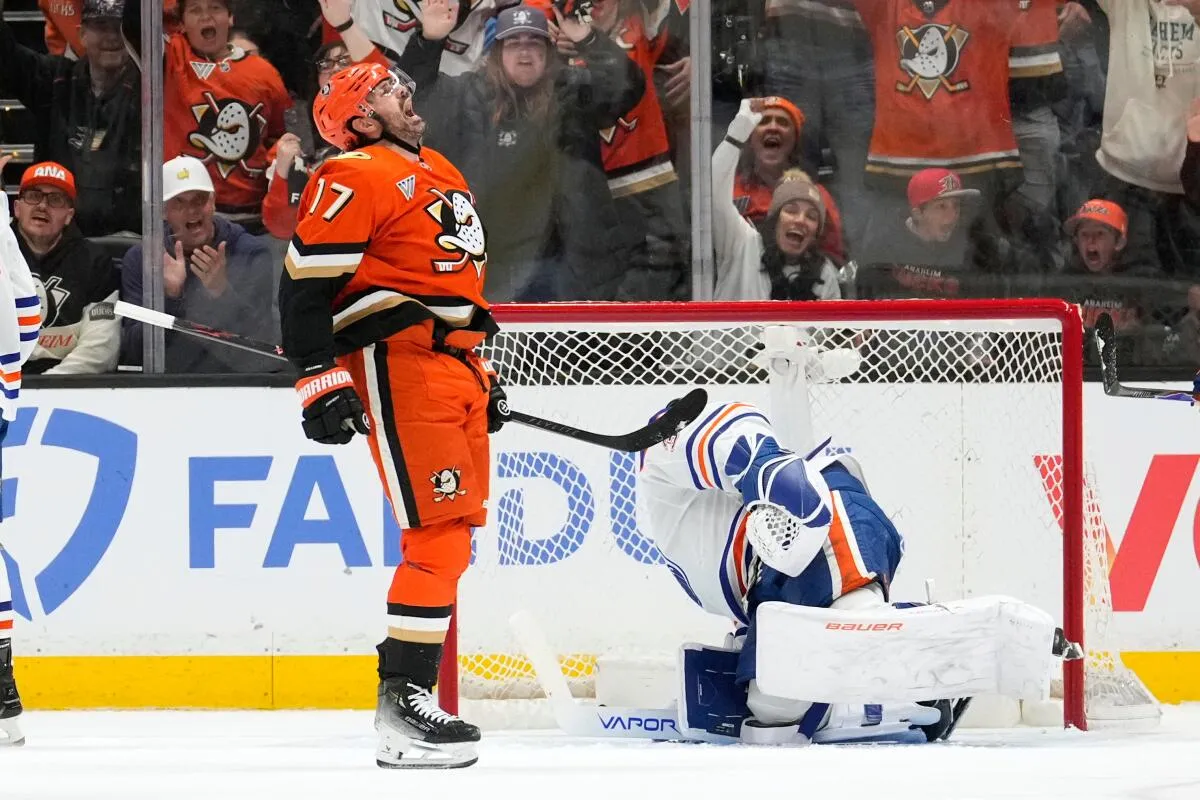
Edmonton entered the series with known vulnerabilities, having struggled defensively throughout the 2025-26 campaign. These issues have intensified against Anaheim, with the Ducks capitalizing on turnovers and gaps in coverage. In Game 4, despite goals from Kasperi Kapanen, Ryan Nugent-Hopkins, and Evan Bouchard, the Oilers fell 4-3 in overtime after allowing 38 shots.[4] Defensive breakdowns, particularly in transition, have left goaltenders exposed repeatedly.
Leon Draisaitl recently addressed these problems candidly, noting the team’s inability to defend effectively and poor penalty kill after a regular-season loss. “We’re giving up too many goals… it’s not good enough,” he said, highlighting a shift from their Stanley Cup Final appearances.[5] This mindset echoes broader concerns, as the Oilers rank low in preventing high-danger chances.
Coaches have emphasized tightening up ahead of Game 4, but lapses persisted, including soft coverage on Anaheim’s overtime winner. Historical parallels to Pittsburgh’s pre-Cup struggles from 2010-2015 loom large, where offensive talent couldn’t mask defensive frailties. Edmonton’s back end, including questions around Evan Bouchard, faces scrutiny.[6]
For more on Edmonton’s early playoff defensive analysis, check this breakdown from Oilersnation.[3]
- Key defensive stats (playoffs so far):
- Shots against per game: 35+ in losses
- High-danger chances allowed: 12th of 16 teams at 5v5[3]
- Penalty kill efficiency: Struggling against Ducks’ power play
These metrics underscore why Edmonton must elevate their game urgently.
Ducks’ young offense overwhelming Edmonton
Anaheim’s forwards have thrived in the chaos, with Cutter Gauthier notching 40 regular-season goals and continuing to shine. Leo Carlsson and Mason McTavish add depth, while veterans like Jacob Trouba and Radko Gudas deliver playoff physicality. The Ducks’ power play has clicked, contrasting Edmonton’s special teams woes.
Jim Biringer of NHLRumors.com captured this matchup perfectly on TSN Radio: “This could be a high-scoring series… Anaheim can trade blows with them, and they have the goaltending to just stop one of those pups from going in and steal a game or two.”[5] Lukas Dostal has been the X-factor, standing tall amid defensive lapses.
Over the last two games, Anaheim outscored Edmonton 17-11, showcasing their transition game. Connor McDavid, despite four points, was held pointless in Games 1 and 2 and battles an injury.[2] Ducks defenders like Jackson LaCombe have limited the superstar effectively.
The Ducks’ playoff series coverage highlights their resilience, rallying from deficits multiple times.
- Ducks’ top playoff contributors:
- Leon Draisaitl (Oilers): 6 points (but team struggling)
- Cutter Gauthier: Multi-goal threat
- Leo Carlsson: Emerging star
- Trouba/Gudas: Physical presence
This blend keeps Edmonton off-balance.
Goaltending uncertainty plagues Oilers
The Tristan Jarry-Stuart Skinner trade haunts Edmonton, with neither thriving. Connor Ingram started but struggled, prompting talks of Calvin Pickard. Jarry may return for Game 4, but inconsistencies persist.[7]
Ducks’ Dostal, meanwhile, echoes his international form, stealing games. Edmonton’s crease carousel mirrors broader defensive chaos, unable to bail out the skaters.
Analysts note goaltending as a two-way street, per Draisaitl, but fewer quality chances would help. Anaheim avoids penalties, neutralizing Edmonton’s lethal power play.
Injuries compound issues: McDavid’s ailment and Draisaitl’s recent return limit offensive bailouts. Pickard as a wildcard remains unproven in this spotlight.
Path forward for Game 5 and beyond
Game 5 looms as do-or-die for Edmonton, demanding defensive structure and McDavid/Draisaitl dominance. Zach Hyman’s return bolsters them, but Ducks’ speed tests resolve.
Anaheim must stay disciplined, leveraging home ice. Biringer warned of Oilers’ potential if healthy, but momentum favors the Ducks.
The Ducks’ ability to overcome lapses via offense mirrors young teams upsetting veterans. For Edmonton, cleaning defense unlocks everything else—failure risks a quick series slip. Expect high drama, but Anaheim’s edge positions them to advance. Follow the full series highlights for updates.[2]
Frequently Asked Questions

Par Mike Jonderson
Mike Jonderson is a passionate hockey analyst and expert in advanced NHL statistics. A former college player and mathematics graduate, he combines his understanding of the game with technical expertise to develop innovative predictive models and contribute to the evolution of modern hockey analytics.