







Brad Marchand elbow to Mike Matheson no suspension 2025 NHL decision
In a ruling that has ignited fierce debate across the hockey world, the NHL Department of Player Safety has decided not to suspend Florida Panthers forward Brad Marchand for his elbow to the head of Montreal Canadiens defenseman Mike Matheson during Tuesday night’s overtime clash. The incident, which occurred on December 30, 2025, at Amerant Bank Arena, has become the latest controversial test of the league’s commitment to protecting players from head injuries and maintaining consistent disciplinary standards.
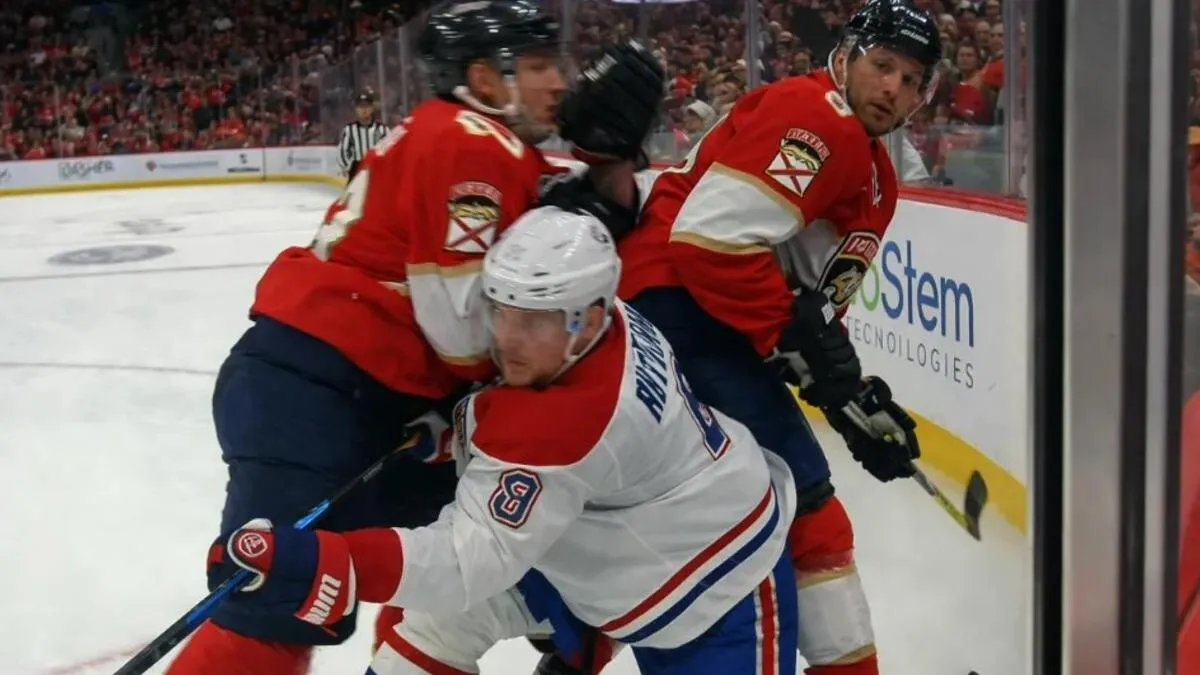
The incident in overtime sparks heated controversy
The sequence that triggered this firestorm unfolded in the extra frame of what had already been a dramatic contest. The Panthers had controlled much of the third period, building a 2-0 lead on goals from Marchand himself and teammate Sam Reinhart. However, Montreal mounted a furious comeback, with Cole Caufield and Nick Suzuki scoring late to force overtime.
In the extra frame, Marchand delivered what many observers considered a dangerous elbow to Matheson’s head. The veteran defenseman was visibly shaken by the contact, and officials immediately assessed Marchand a two-minute roughing penalty. The Canadiens capitalized on the man advantage when Suzuki buried the game-winner just moments later, completing Montreal’s stunning turnaround and handing Florida a painful 3-2 defeat.
The hit itself became instant fodder for social media debate. Video clips circulated rapidly, with multiple angles appearing to show Marchand’s elbow making direct contact with Matheson’s head. The violence of the collision and its timing in a crucial moment of the game amplified the controversy, with many calling for swift disciplinary action from the league.
NHL player safety decision stuns insiders
Perhaps most surprising about the league’s ruling was the reaction from NHL insiders who typically have reliable intelligence on the Department of Player Safety’s thinking. Sportsnet’s Elliotte Friedman, widely regarded as one of the league’s most connected journalists, openly expressed his astonishment at the decision.
“No hearing for Brad Marchand regarding OT roughing penalty on Mike Matheson,” Friedman posted on X. “I admit I’m surprised, I thought there would be for the contact to the head.”
Friedman’s surprise carried significant weight because he had outlined several reasons why he expected at least a hearing. In a follow-up post, he speculated on the league’s reasoning: “My suspicions on why it won’t be a suspension: *NHL felt it was a penalty on the ice, that’s it *Marchand elbow low and tucked; Matheson low to ice.”
The insider’s comments revealed the apparent logic behind the NHL’s decision. According to this interpretation, league officials determined that since referees had already penalized Marchand during the game, no additional punishment was warranted. Furthermore, they apparently viewed Marchand’s elbow as being in a “low and tucked” position rather than extended outward, while also noting that Matheson was in a lowered posture toward the ice.
Why the no suspension ruling defies expectations
The decision not to even hold a hearing for Marchand represents a significant departure from recent precedent regarding head contact. Several factors made this case particularly notable:
-
Reputation and history: Marchand carries one of the league’s most extensive disciplinary rap sheets, with multiple suspensions throughout his career for various infractions, including blows to the head. Typically, repeat offenders face heightened scrutiny from the Department of Player Safety.
-
Direct head contact: The video evidence appeared to show clear contact to Matheson’s head, which normally triggers automatic review under Rule 48 governing illegal checks to the head.
-
Game circumstances: The hit occurred in overtime of a closely contested game between divisional opponents, raising questions about whether game context influenced the decision.
-
Injury and impact: Matheson was visibly affected by the hit, and the penalty directly impacted the game’s outcome by creating the power-play opportunity that Montreal converted.
The league’s apparent position that the on-ice penalty was sufficient punishment contradicts its stated emphasis on player safety and protecting athletes from head trauma. Critics argue that this philosophy effectively penalizes teams twice for dangerous plays—once during the game and again through supplemental discipline—but the Marchand case shows the NHL remains selective about when to apply that standard.
Fan and analyst reaction reveals deep frustration
The response across hockey media and social platforms has been overwhelmingly critical of the NHL’s handling of the incident. Legal analyst Eric Macramalla, who frequently comments on NHL disciplinary matters, shared the play on X and wrote: “Marchand should be suspended for this shot to Matheson’s head. The head was the main point of contact, and the contact was avoidable (Rule 48). But he’ll just get fined.”
His assessment reflected the sentiment of many observers who saw a clear violation of league rules regarding head contact. Fan responses emphasized the perceived inconsistency in how discipline is applied, with some suggesting Marchand received preferential treatment as a star player on a contending team.
One fan sarcastically noted, “Yeah, he plays for Florida. He doesn’t get suspended anymore,” referencing the notion that marketable players on successful teams sometimes receive more lenient treatment from the league office.
The controversy has been particularly acute in Montreal, where the Canadiens have dealt with several high-profile hits to their players in recent seasons. The decision not to punish Marchand more severely has reinforced perceptions that the NHL’s player safety system lacks consistency and transparency.
What this means for the Winter Classic and beyond
The timing of the incident made the league’s decision especially consequential. By declining to suspend Marchand, the NHL ensured that the veteran forward would be available for the Panthers’ marquee appearance in the Winter Classic on January 2, 2025, against the New York Rangers at LoanDepot Park in Miami.
The Winter Classic represents one of the league’s premier showcase events, and having a high-profile player like Marchand in the lineup benefits television ratings and overall fan interest. While the NHL has consistently denied that such considerations factor into disciplinary decisions, critics point to this case as evidence that business interests sometimes influence player safety rulings.
For Florida, Marchand’s availability provides a significant boost as they prepare to host the Rangers. The Panthers enter the outdoor contest with a 21-15-3 record, while New York sits just outside the playoff picture at 19-17-5. Having their veteran leader—who leads the team in scoring and provides invaluable experience—in the lineup could prove decisive in such a high-profile setting.
Meanwhile, the Canadiens must move forward knowing that a dangerous hit to one of their key defensemen went essentially unpished. Matheson’s status moving forward will be closely monitored, particularly as Montreal prepares for their next game Thursday night in Raleigh against the Carolina Hurricanes. The lack of supplemental discipline may also affect how the Canadiens approach future matchups against the Panthers, potentially raising the temperature when these Atlantic Division rivals meet again.
The troubling pattern of inconsistent NHL discipline
This decision represents another chapter in the ongoing saga of inconsistent supplemental discipline that has plagued the NHL for years. While the league has made strides in addressing head contact and dangerous plays, cases like this undermine confidence in the system.
The criteria for what constitutes a suspendable offense remain frustratingly opaque. Similar hits have resulted in multi-game bans, yet this incident merited not even a hearing. The league’s emphasis on whether the elbow was “tucked” versus extended, and Matheson’s posture at the time of contact, feels like parsing technicalities at the expense of player safety.
Furthermore, Marchand’s extensive disciplinary history should have, by the league’s own standards, made this a prime candidate for enhanced punishment. Instead, the decision suggests that reputation and past transgressions carry less weight than the NHL publicly claims.
This inconsistency creates confusion for players trying to understand the boundaries of physical play. If a hit like this goes unpunished, it sends a message that certain types of head contact are acceptable, provided they occur in specific contexts or involve players in particular positions.
Final thoughts on the Marchand-Matheson controversy
The NHL’s decision not to suspend Brad Marchand for his elbow to Mike Matheson represents a troubling moment for a league that professes to prioritize player safety above all else. Despite clear video evidence of head contact, a perpetrator with a lengthy disciplinary record, and widespread expectation of supplemental discipline, the league chose inaction over accountability.
For fans frustrated by the lack of consistency in NHL player safety rulings, this case provides fresh ammunition for criticism. The apparent rationale—that the on-ice penalty was sufficient and technical factors mitigated the severity—feels insufficient given the potential for serious injury and the league’s stated commitment to eliminating head contact from the game.
As the Panthers move forward with Marchand in their lineup for the Winter Classic, and the Canadiens process the reality that this hit went essentially unpunished, the NHL faces renewed questions about whether its disciplinary system truly serves its stated purpose. Until the league provides clearer, more consistently applied standards for what constitutes a suspendable offense, controversies like this will continue to plague the sport and undermine confidence in player safety initiatives.
For more analysis of NHL disciplinary decisions and player safety issues, check out our coverage of recent controversial rulings and the league’s concussion protocol challenges.
Frequently Asked Questions

Par Mike Jonderson
Mike Jonderson is a passionate hockey analyst and expert in advanced NHL statistics. A former college player and mathematics graduate, he combines his understanding of the game with technical expertise to develop innovative predictive models and contribute to the evolution of modern hockey analytics.