






The Buffalo Sabres have made their first significant front office move under newly appointed general manager Jarmo Kekalainen, terminating associate general manager Jason Karmanos on Saturday, December 20, 2025. This decision marks Kekalainen’s initial management change since taking control of the organization’s hockey operations just five days after owner Terry Pegula promoted him to replace the fired Kevyn Adams.
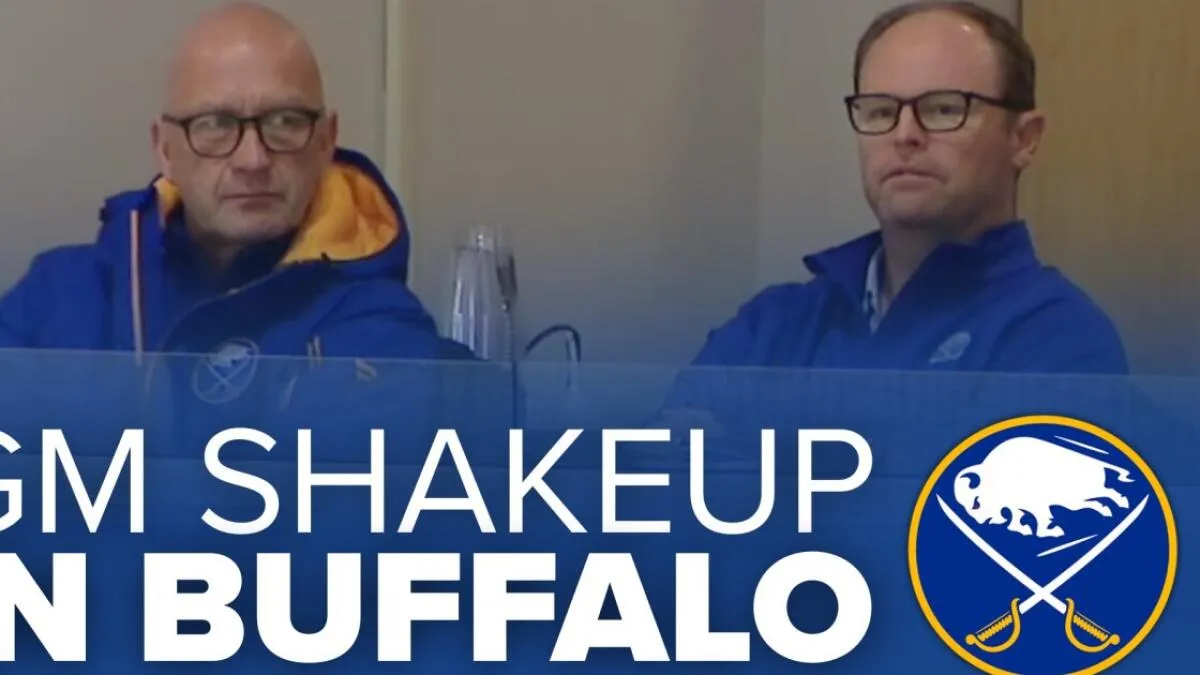
Kekalainen wastes no time making his mark on Sabres organization
The swift execution of a management shakeup
Jarmo Kekalainen’s decision to dismiss Jason Karmanos came with startling speed, occurring less than a week after his own introductory press conference on December 16, 2025. During that media availability, Kekalainen addressed reporters in Buffalo and outlined his vision for a franchise desperate for direction. While he spoke in measured terms about building team character and establishing a winning culture, few expected such a dramatic personnel move so quickly.
Karmanos had been with the Sabres organization for five seasons, serving as the primary overseer of the Rochester Americans, Buffalo’s AHL affiliate. This role gave him significant influence over player development and the crucial pipeline between the minor leagues and the NHL roster. His termination represents more than just a change in personnel—it signals a potential shift in how the Sabres will approach talent evaluation and developmental philosophy moving forward.
The Associated Press reported Kekalainen’s official statement as concise and professional: “We thank Jason for his contributions to the Buffalo Sabres and Rochester Americans and wish him the best in his future endeavors.” This boilerplate language, common in sports executive dismissals, belies the underlying significance of the move.
A broader pattern of front office instability
The Sabres have struggled with front office continuity for years, cycling through multiple regimes while trying to build a competitive roster. Karmanos himself represented a link to previous management structures, having been hired during a period when the franchise was still searching for sustainable leadership. His departure leaves another void in an organization already adjusting to Kekalainen’s arrival.
This pattern of turnover extends beyond Buffalo. Karmanos’s career reflects the interconnected nature of NHL management circles. He began his executive journey in 1998 with the organization then known as the Hartford Whalers, working under his father Peter Karmanos, the team’s owner. That connection provided early opportunities but also created perceptions of nepotism that followed him throughout his career.
Who was Jason Karmanos and why does his firing matter?
An executive with deep hockey connections
Jason Karmanos wasn’t just another front office staffer—he carried significant hockey pedigree and experience. As the son of Peter Karmanos, longtime owner of the Hartford Whalers/Carolina Hurricanes franchise, Jason grew up immersed in the sport’s business side. His career included two Stanley Cup victories during a stint with the Pittsburgh Penguins, giving him firsthand experience with championship-caliber organizations.
His primary responsibility with Buffalo involved managing the Rochester Americans, the Sabres’ top minor league affiliate. This position meant Karmanos had direct oversight of player development, coaching staff decisions at the AHL level, and the crucial evaluation of prospects preparing for NHL promotion. The Rochester Americans have served as a vital developmental pipeline, and Karmanos’s five-season tenure meant he had established relationships and systems that now face disruption.
The challenge of managing perceptions
Working in professional sports while being the son of a team owner creates unique challenges. Throughout his career, Jason Karmanos faced questions about whether his opportunities stemmed from merit or family connections. His time in Buffalo was no different, though he had worked to establish his own credibility through his AHL management duties.
The firing also raises questions about internal dynamics within the Sabres organization. Associate general managers typically serve as key advisors to the GM, providing input on roster decisions, contract negotiations, and long-term strategic planning. Kekalainen’s decision to remove this layer of management suggests he either wants to install his own trusted advisors or prefers a flatter organizational structure with less hierarchy.
Context and implications for the Sabres franchise
A franchise at a crossroads
The Sabres enter 2025 with the NHL’s most glaring failure—14 consecutive seasons without a playoff appearance, dating back to 2011. This drought weighs heavily on every decision, creating urgency that few other organizations face. Owner Terry Pegula’s willingness to fire Kevyn Adams and bring in Kekalainen reflected desperation for a new direction, and Kekalainen’s quick firing of Karmanos demonstrates he’s operating with similar urgency.
Buffalo’s current position at the bottom of the Atlantic Division compounds the pressure. The team appears destined to extend its playoff misery to 15 seasons, a potential mark of futility that would further erode fan confidence and organizational credibility. In this context, no one’s job security is guaranteed, and Kekalainen seems determined to evaluate every aspect of the hockey operations department.
What this means for player development
The timing of Karmanos’s dismissal, mid-season, creates immediate operational challenges. With the Rochester Americans’ season underway, the Sabres must quickly determine who will assume AHL oversight responsibilities. Player development doesn’t pause for front office restructuring, and prospects like those discussed in our analysis of Buffalo’s organizational philosophy need consistent guidance.
Kekalainen now faces the task of either absorbing these responsibilities himself, delegating them to remaining staff, or identifying a replacement. Given his recent arrival and the complexity of learning a new organization’s entire operation, this represents a significant additional burden during his early days on the job.
How this firing sets the tone for the Kekalainen era
Establishing authority and a new direction
First moves by new executives send powerful messages throughout organizations. By firing an associate GM so quickly, Kekalainen establishes that his evaluation of personnel will be based on his own assessment, not loyalty to existing staff or concerns about timing. This creates a sense of urgency among remaining employees while potentially attracting external talent interested in working under a decisive leader.
The move also distances Kekalainen from the previous regime’s decisions and philosophies. Even though Karmanos served under multiple GMs in Buffalo, his continued presence represented institutional memory and established ways of operating. Removing him gives Kekalainen a cleaner slate to implement his vision for how a modern NHL organization should function.
Looking ahead: more changes likely coming
Kekalainen’s decisive action with Karmanos suggests this may be the first of several personnel moves. New GMs typically want to surround themselves with trusted lieutenants who share their hockey philosophy and understand their expectations. The Columbus Blue Jackets staffers who worked under Kekalainen during his successful tenure there could become candidates for roles in Buffalo.
The recent front office overhaul that brought Kekalainen to Buffalo may have only been the opening act. As Kekalainen settles into his role and evaluates the entire hockey operations department, from scouting to player development to analytics, additional changes shouldn’t surprise observers. His reputation in Columbus was built on thoroughness and attention to detail, characteristics that will drive comprehensive organizational review.
Conclusion
The firing of Jason Karmanos represents Jarmo Kekalainen’s first but likely not last management change as he attempts to transform the Buffalo Sabres into a playoff contender. For a franchise burdened by historic failure and desperate for leadership, Kekalainen’s willingness to make difficult decisions quickly may prove refreshing, even as it creates short-term disruption.
As Buffalo continues what seems like another lost season, the focus shifts entirely to the future. Kekalainen must now balance evaluating current personnel, building his own front office team, and developing young talent through a suddenly leaderless AHL affiliate. The success or failure of this multifaceted challenge will ultimately determine whether the Sabres can finally end their playoff drought and return to relevance in the NHL landscape.
For fans who have endured 14 years of frustration, Kekalainen’s decisive action offers hope that this time, the solution might be different. The path forward remains uncertain, but one thing is clear: status quo was never an option, and Kekalainen intends to leave his mark on this organization starting now.
Frequently Asked Questions

Par Mike Jonderson
Mike Jonderson is a passionate hockey analyst and expert in advanced NHL statistics. A former college player and mathematics graduate, he combines his understanding of the game with technical expertise to develop innovative predictive models and contribute to the evolution of modern hockey analytics.