




The Buffalo Sabres organization finds itself at a critical crossroads in franchise history, mired in what can only be described as a complete organizational malaise. With a record-breaking 14-season playoff drought stretching into what should have been a competitive 2024-25 campaign, the team’s struggles extend far beyond on-ice performance. The root cause lies in a fundamental disconnect between ownership, management, and any coherent vision for success. The franchise that once promised Stanley Cup glory now finds itself ranked dead last in NHL front office confidence, a damning indictment of the leadership that was supposed to guide this young roster to prominence.
What makes the situation particularly frustrating for Buffalo’s loyal fanbase is the undeniable talent on the roster. With Rasmus Dahlin anchoring the defense as a perennial Norris Trophy candidate, Tage Thompson establishing himself as a 40-goal scorer, and Alex Tuch providing two-way excellence, the Sabres possess core pieces that playoff teams would covet. Yet somehow, these pieces refuse to fit together into a cohesive winning formula, raising serious questions about whether the problem lies with the players or with those making the decisions above them.
The Buffalo Sabres identity crisis front office direction under scrutiny
The organizational chaos begins at the very top with owner Terry Pegula, whose tenure since 2011 has been marked by broken promises and shifting philosophies. When Pegula purchased the team, he made two bold declarations that now ring hollow: that the Sabres’ sole reason for existence would be winning a Stanley Cup, and that there would be no financial mandates on the hockey department. These statements generated tremendous excitement in Western New York, where fans believed they finally had an owner committed to doing whatever it took to bring championship hockey back to Buffalo.
Fast forward to 2020, and Pegula introduced a drastically different organizational philosophy centered on being “effective, efficient and economic.” This pivot marked a seismic shift in how the franchise operated. Staff cuts followed, including significant reductions to the scouting department, and the team began routinely leaving millions in salary cap space unused each season. For a franchise desperate to end its playoff drought, the decision to operate well below the cap ceiling while competitors loaded up for postseason runs sent a troubling message to players and fans alike.
The economic approach has created a competitive disadvantage that manifests in multiple ways. While other teams spend to the cap ceiling and utilize long-term injured reserve creatively to add depth, the Sabres operate with self-imposed restrictions. This penny-pinching mentality has prevented the team from making the kind of free agent splashes that could push them over the playoff threshold. Since 2023, the most significant free agent additions have been goaltender Alex Lyon and forward Jason Zucker—solid depth pieces, but hardly the impact players needed to transform a perennial lottery team into a postseason contender.
The physical state of KeyBank Center itself reflects the organization’s economic mindset. Reports of deteriorating seats and an arena in desperate need of upgrades paint a picture of an ownership group unwilling to invest in the fan experience. When the product on ice disappoints year after year and the venue itself shows signs of neglect, it becomes increasingly difficult to convince fans to continue supporting the team with their attendance dollars. The attendance numbers bear this out, as the Sabres have struggled to fill seats even for home openers, a traditional celebration in hockey markets.
General manager Kevyn Adams and the Buffalo Sabres identity crisis front office direction
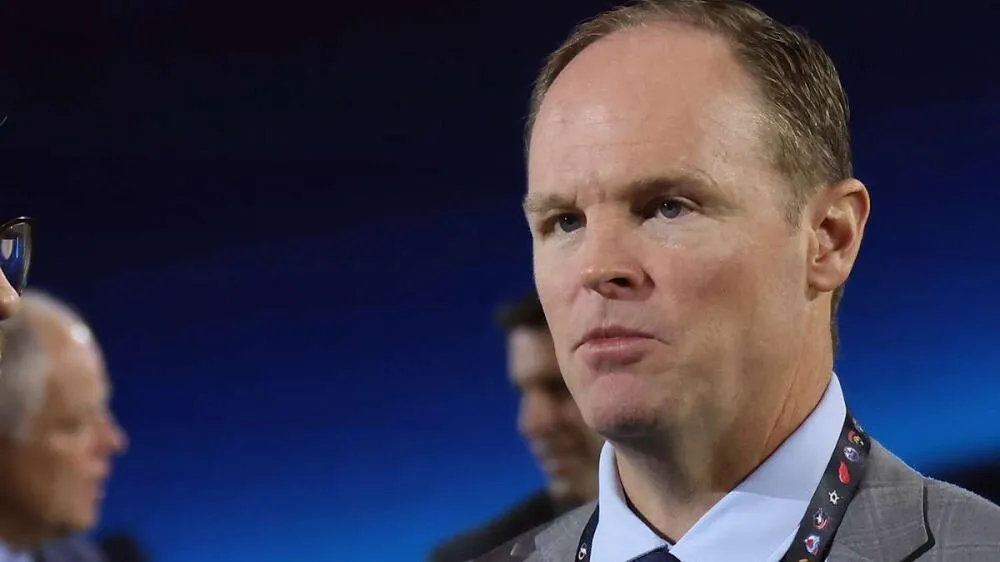
Kevyn Adams entered his sixth season as general manager in 2025-26, a tenure that has produced minimal tangible progress toward playoff contention despite managing what should be a promising young core. Adams took over in June 2020 amid organizational upheaval, inheriting a difficult situation but also receiving the benefit of the doubt as he implemented his vision. That vision, however, has become increasingly unclear with each passing season, leaving fans and analysts struggling to identify any coherent long-term strategy.
The 2022-23 season appeared to represent a turning point. The Sabres finished with 91 points, missing the playoffs by just one point in a campaign that generated genuine optimism about the team’s trajectory. Young players were breaking out, the roster appeared to be gelling, and the future looked bright. Players like Tage Thompson, Dylan Cozens, Casey Mittelstadt, JJ Peterka, and Jack Quinn all showed promise as foundational pieces for sustained success. For the first time in years, there seemed to be a clear direction and identity emerging for the franchise.
What followed that near-miss playoff campaign, however, has been a steady regression that raises serious questions about Adams’ decision-making. Rather than building on the momentum of 2022-23, the Sabres have seen their point totals decline in subsequent seasons. The breakout players from that campaign have been systematically traded away, creating the impression that Adams is either unwilling or unable to commit to a defined roster construction philosophy. Mittelstadt was dealt to Colorado for Bowen Byram, Cozens went to Ottawa for Josh Norris, and Peterka headed to Utah for Josh Doan and Michael Kesselring.
While the individual returns in these trades can be defended—Byram brings puck-moving ability on defense, Norris provides two-way center depth when healthy, and the Utah package added organizational depth—the cumulative effect has been a roster in constant flux without clear improvement. Each offseason brings roster turnover, but not the kind of significant additions that signal a team ready to take the next step. Adams has been active making trades, but the moves feel reactive rather than proactive, addressing immediate needs without advancing a larger strategic vision.
The lack of impact free agent signings represents one of the most glaring failures of Adams’ tenure. In a league where successful teams supplement their cores with veteran additions who bring playoff experience and specific skill sets, the Sabres have consistently sat out the marquee free agent market. This isn’t simply about spending for spending’s sake—it’s about identifying the specific pieces needed to transform a talented but incomplete roster into a playoff team. That Adams has failed to convince impact free agents to sign in Buffalo, or hasn’t been given the resources to make competitive offers, speaks to deeper organizational dysfunction.
The coaching carousel and systemic instability affecting Buffalo Sabres identity crisis front office direction
The return of Lindy Ruff as head coach for the 2024-25 season represented an attempt to recapture past glory, but the decision also highlighted the organization’s tendency to look backward rather than forward. Ruff enjoyed tremendous success during his first stint with the Sabres from 1997 to 2013, including a trip to the Stanley Cup Final in 1999. His return was marketed as bringing stability, experience, and familiarity with the Buffalo market back to a franchise desperate for consistent leadership behind the bench.
However, nostalgia alone doesn’t win hockey games, and Ruff inherited many of the same systemic problems that hampered his predecessors. The roster construction issues, the lack of depth, and the absence of a clear organizational identity all persisted regardless of who stood behind the bench. When the Sabres stumbled to a 5-8-4 start in 2025-26, sitting last in the Eastern Conference, it became clear that changing coaches without addressing the underlying front office dysfunction would produce limited results.
The assistant coaching staff presents another concern that has received less attention but may be equally important. These coaches have been with the organization since 2020-21, providing continuity but also potentially contributing to stagnation. Systems become predictable, messages grow stale, and players can tune out voices they’ve heard delivering the same critiques for multiple seasons. The lack of fresh perspectives and new approaches in the coaching staff mirrors the broader organizational tendency to maintain the status quo rather than pursuing meaningful change.
Special teams performance, defensive structure, and power play execution all fall under the purview of assistant coaches, and the Sabres have struggled in these areas throughout Adams’ tenure. While head coaches typically receive the bulk of attention and criticism, assistant coaches play crucial roles in player development and tactical preparation. The decision to retain the same assistants for multiple seasons while the team consistently misses the playoffs suggests either an unwillingness to identify and address coaching deficiencies or a front office that doesn’t recognize the problem.
Roster construction paradoxes in the Buffalo Sabres identity crisis front office direction
The fundamental question facing the Sabres organization is what type of team they’re trying to build, and different signals point in conflicting directions. They possess star-level talent in Dahlin, Thompson, and Tuch that suggests a team ready to compete now. Yet the roster also includes numerous young players still developing their games, which typically indicates a team in the middle stages of a rebuild. This identity crisis—are they rebuilding or contending?—creates roster construction challenges that have proven impossible to resolve under current management.
If the Sabres view themselves as playoff contenders, the roster requires significant additions of proven veteran talent, particularly on defense and in goal. Playoff teams typically feature at least two legitimate top-four defensive pairings and goaltending capable of stealing games. Buffalo has Dahlin but lacks a consistent second pairing that can match up against opponent’s top lines. In net, the goaltending situation has been in flux for years, with no clear franchise netminder emerging from the various options Adams has cycled through the organization.
Alternatively, if management views this as still a rebuilding situation, trading away pending free agents and acquiring additional draft capital would make sense. However, the team hasn’t committed to this approach either, instead existing in a middle ground that maximizes neither present competitiveness nor future asset accumulation. This indecision—or perhaps inability to make difficult decisions—characterizes the Adams era. The Sabres have been stuck in mediocrity, too talented to bottom out for high draft picks but not good enough to seriously threaten for playoff positions.
The treatment of young players who showed promise in 2022-23 exemplifies this confused approach. Rather than building around the cohort that nearly made the playoffs, Adams traded several of them away in separate deals. While each individual transaction can be rationalized, collectively they raise questions about whether the front office truly believed in that group or simply got cold feet when faced with the financial commitments required to keep them together long-term. Cozens, in particular, had signed an extension at $7.1 million per season before being dealt, suggesting the organization wasn’t comfortable with that salary commitment.
The impact of injuries and adversity on Buffalo Sabres identity crisis front office direction exposed
The 2025-26 season has tested the organization’s depth in ways that have revealed significant roster construction flaws. When Dahlin took a leave of absence to support his fiancée dealing with health issues, the defense immediately struggled without his stabilizing presence. Jason Zucker’s illness, Jiri Kulich’s serious blood clot diagnosis, and Zach Benson’s injury combined to deprive the Sabres of multiple regulars simultaneously. These circumstances would challenge any team, but they’ve been particularly devastating for a Buffalo squad that lacks the organizational depth to absorb such losses.
Successful NHL teams build rosters with sufficient depth to weather inevitable injuries without completely falling apart. The Buffalo Sabres’ injury crisis revealed that the organization hasn’t achieved this level of depth despite years of drafting and development. When key players miss time, the replacements called up from Rochester haven’t been able to maintain even a replacement-level performance. This speaks to either deficiencies in the AHL roster construction, problems with player development systems, or both.
The five-game losing streak that dropped the Sabres to 5-8-4 coincided with these injury issues, and the team managed only one win in nine games during this difficult stretch. While injuries provide context for poor performance, they don’t fully excuse it. Every team faces adversity during an 82-game season, and playoff contenders find ways to remain competitive even when dealing with significant absences. The Sabres’ inability to do so suggests the foundation simply isn’t strong enough to support success even under ideal circumstances, let alone when tested by injuries.
Before the injury crisis struck, Buffalo had posted a 5-3-4 record, at least staying competitive in most games even if not consistently winning. This .538 points percentage over 12 games would project to approximately 88 points over a full season—not good enough for playoffs, but at least respectable. The subsequent collapse, however, demonstrated how fragile that early performance had been. Without Dahlin, without a healthy forward group, and without answers from the organizational depth, the team quickly fell to the bottom of the league standings.
The organizational culture problem within Buffalo Sabres identity crisis front office direction
At Buffalo’s end-of-season availability in April 2025, players and management all referenced the need for cultural change, but identifying problems and solving them are two different challenges entirely. Veteran players acknowledged that “culture is earned” and spoke about addressing the team’s shortcomings, but these words ring hollow after 14 consecutive seasons without playoff hockey. The losing has become so ingrained in the organization that even players who arrived in Buffalo with winning pedigrees from other organizations seem unable to change the trajectory.
The constant turnover of players and coaches makes establishing a consistent culture nearly impossible. Players who might provide veteran leadership are traded away or leave via free agency. Coaches arrive with new systems and approaches, only to be fired when immediate results don’t materialize. Management speaks about building something sustainable, but the actions taken suggest an organization constantly reacting to immediate circumstances rather than following a long-term vision. This cycle of disruption prevents the kind of stability required to establish winning habits and expectations.
Comparing Buffalo’s situation to successful rebuilds around the league highlights what the Sabres have failed to accomplish. Teams like the Carolina Hurricanes, New Jersey Devils, and even division rival Detroit Red Wings have demonstrated that patient, purposeful rebuilding can produce playoff contenders within reasonable timeframes. These organizations identified clear styles of play, committed to player development, made strategic veteran additions, and most importantly, maintained consistent leadership that executed a coherent vision. The Sabres have managed none of these consistently.
The fanbase’s growing apathy represents perhaps the most concerning cultural indicator. Buffalo traditionally ranks among the NHL’s most passionate hockey markets, but the KeyBank Center has seen declining attendance as the playoff drought extends into its second decade. Season ticket renewals have dropped, casual fans have stopped engaging, and even die-hard supporters express exhaustion with the constant cycle of false hope followed by disappointment. When fans stop caring—when they no longer believe management’s assurances that meaningful change is coming—the organization has lost something precious that proves extremely difficult to recover.
The path forward for addressing Buffalo Sabres identity crisis front office direction
Breaking the cycle of dysfunction requires changes at the highest organizational levels, starting with ownership’s approach to running the franchise. Terry Pegula must decide whether he’s truly committed to building a championship-caliber organization or if the Sabres have become simply another business asset managed for economic efficiency. If it’s the former, that commitment must manifest in concrete actions: authorizing competitive spending up to the salary cap, investing in scouting and player development infrastructure, upgrading KeyBank Center, and empowering hockey operations to make decisions based on competitive rather than financial considerations.
Many successful franchises employ a two-tier hockey management structure with a President of Hockey Operations overseeing a general manager, providing experienced oversight and multiple perspectives on major decisions. According to reports, the Sabres could benefit from adding such a position, particularly if filled by a veteran executive with proven success. Names like Ken Holland and Lou Lamoriello represent the type of experienced, Cup-winning hockey minds that could provide needed direction, though attracting such figures would require genuine organizational commitment to winning rather than simply window dressing.
Alternatively, promoting Adams to a President role while hiring a new general manager could provide a middle path, though this approach risks being merely cosmetic rather than substantive. For such a structure to work, there must be clear delineation of responsibilities and authority. The new GM would need genuine autonomy to implement their vision without interference, while Adams in a President role would focus on big-picture strategy and organizational development. If this is simply a way to maintain the status quo while claiming changes have been made, it will fool no one and accomplish nothing.
At the roster level, the Sabres must finally answer the fundamental question about their competitive timeline. If the goal is making the playoffs in 2025-26, then aggressive moves are required immediately—trading futures for immediate help, spending to the cap ceiling on impact veterans, and treating every game with playoff-or-bust urgency. If the organization determines that another short rebuild is necessary, then honesty about that timeline matters, and high-value pending free agents should be moved for draft capital and prospects. The worst option is continuing to exist in the uncomfortable middle ground, neither rebuilding nor truly competing.
What Buffalo Sabres identity crisis front office direction means for the future
The Buffalo Sabres’ organizational crisis extends beyond simple win-loss records into fundamental questions about leadership, vision, and commitment to excellence. With elite talent like Dahlin, Thompson, and Tuch entering their prime years, the window for building around these players won’t remain open indefinitely. Every season lost to organizational dysfunction and front office indecision represents a wasted opportunity that cannot be recovered. The franchise stands at a crossroads where meaningful change becomes increasingly urgent with each passing month.
For Buffalo’s long-suffering fanbase, patience has long since expired. They’ve endured 14 seasons without playoff hockey, watched prospect after prospect fail to develop into impact players, and seen management make promises that went unfulfilled. The franchise that once competed for Stanley Cups and regularly sold out the building now struggles to fill seats for marquee matchups. Rebuilding trust with this fanbase will require not just words but sustained actions that demonstrate genuine commitment to winning. Half-measures and cosmetic changes will no longer suffice.
The broader NHL landscape makes Buffalo’s struggles even more glaring. This isn’t an era where most teams miss the playoffs for extended periods—other franchises that hit rock bottom have rebuilt and returned to contention in shorter timeframes than the Sabres’ current drought. The expanded playoff format means 16 of 32 teams make the postseason, yet Buffalo consistently finishes outside that group. When over half the league qualifies for playoffs and you repeatedly finish in the bottom third, the problems run deeper than bad luck or tough competition.
Moving forward, every decision made by Sabres leadership will be scrutinized through the lens of whether it represents genuine change or more of the same dysfunction that has characterized the franchise for over a decade. The organizational identity crisis, the lack of clear front office direction, and the fundamental questions about ownership’s commitment to winning all must be addressed before this proud franchise can return to respectability. Until then, Buffalo remains hockey’s most visible example of how organizational dysfunction can waste talent, alienate fans, and extend a cycle of losing that becomes harder to escape with each passing season.
Frequently Asked Questions

Par Mike Jonderson
Mike Jonderson is a passionate hockey analyst and expert in advanced NHL statistics. A former college player and mathematics graduate, he combines his understanding of the game with technical expertise to develop innovative predictive models and contribute to the evolution of modern hockey analytics.