


Clayton Keller plays after father’s death Utah Mammoth vs Dallas Stars 2025
Utah Mammoth captain Clayton Keller took the ice Friday night at American Airlines Center, stepping onto the rink just 24 hours after his father Bryan Keller passed away unexpectedly. In a game that transcended the final score, Keller’s presence became a poignant reminder of resilience, leadership, and the healing power of hockey. The Mammoth ultimately fell 4-3 to the Dallas Stars, but the result seemed secondary to the emotional weight of watching their captain lead them through unimaginable grief.
The 27-year-old forward played 18:07 minutes, registered five shots on goal, and was named the game’s first star—a fitting tribute that acknowledged both his performance and his courage. Coach Andre Tourigny confirmed before puck drop that Keller wanted to be there, not just for himself but for his teammates. The decision to play wasn’t about hockey statistics; it was about finding normalcy during chaos and drawing strength from the brotherhood that defines the sport.
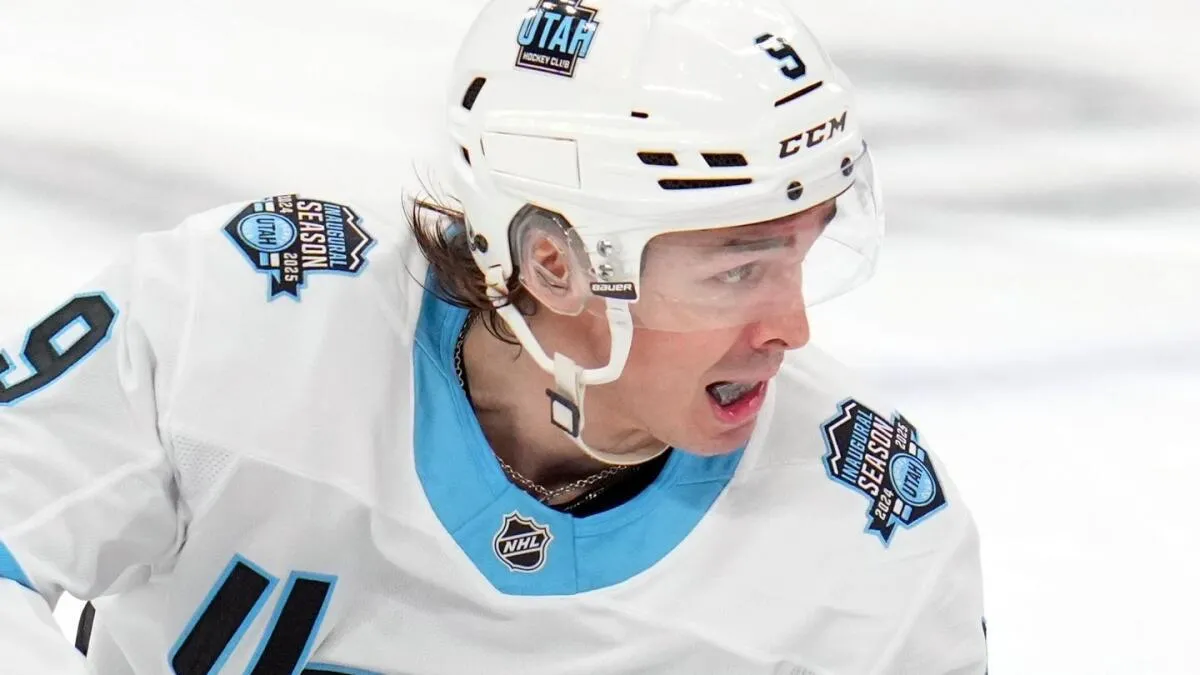
Keller’s emotional performance against Dallas Stars
Keller’s teammates understood the significance of his presence immediately. Lawson Crouse, who has played alongside Keller for over a decade, spoke candidly about the locker room atmosphere: “Obviously, Kell’s our leader in the locker room but also away from the rink. He’s done an incredible job leading us and guiding us. It’s really our turn to support him. It’s hard news, and we’re all trying to deal with it in the best way that we can.”
The emotional toll was visible throughout the contest. Even Dallas Stars coach Glen Gulutzan expressed admiration after the game: “I don’t know how the young man played, to be quite honest with you. A lot of credit to him. My heart goes out to him and his family.” These words from an opposing bench boss highlighted how Keller’s decision resonated beyond Utah’s organization, touching the entire NHL community.
The game itself featured typical playoff-intensity hockey, with both clubs battling for positioning in the Central Division. The Stars jumped to an early lead, but the Mammoth fought back, never letting the deficit grow beyond one goal. Keller’s line generated several quality chances, and his commitment to defensive responsibilities never wavered despite the emotional weight he carried.
How teammates supported their captain in Dallas
Support manifested in subtle ways throughout the evening. Players tapped their sticks on the boards a little louder when Keller hopped over them. The bench rose collectively when he handled the puck. Tourigny strategically deployed his captain, ensuring he had appropriate rest while still maintaining the rhythm of his normal shift patterns. Every interaction was intentional, every gesture meaningful.
The organization had announced Bryan Keller’s passing Thursday evening, noting he died unexpectedly in his sleep. The shock rippled through the franchise just as players were preparing for a two-game road swing. Team management immediately offered Keller the option to return home, but he chose to stay with the group—a decision that spoke volumes about his character and the bonds he’d forged in Utah.
Crouse emphasized the reciprocal nature of their relationship: “I’ve been with him for 10-plus years now. … It’s hard news and we’re trying to all deal with it in the best way we can. Just trying to be there for him, support him, and give him the love and friendship that he needs.” This decade-long connection, which began when both were prospects in the Arizona Coyotes system, created a foundation of trust that allowed Keller to lean on his brothers when family tragedy struck.
The captaincy defined: leadership through adversity
Tourigny’s post-game comments perfectly captured what makes Keller special: “He loves his teammates so much, and his teammates just love him so much. He drives our passion and our competitiveness every night. He’s the kind of guy who wants to be better every night. We cannot have a better example of a captain.” This sentiment reflects why the franchise chose Keller to wear the “C” when they relocated from Arizona to Utah before last season.
The timing of this tragedy carries additional weight. The Mammoth play Saturday in St. Louis—Keller’s hometown—creating a collision of personal grief and professional responsibility. “I think the emotions are still going to be running,” Crouse noted. “Obviously, it’s Kells’ hometown. We can use that energy and lift our group up. It’s a very sad time for everyone, but we’ve just got to do what we can here.” The team will likely have increased emotional support staff available as they navigate this difficult weekend.
Keller’s statistical accomplishments this season—21 points in 25 games, ranking second on the club—pale in comparison to his role as the emotional compass of the franchise. The 2016 seventh-overall pick has spent his entire 10-year career with this organization, witnessing its transformation from the Arizona Coyotes to the Utah Mammoth. His journey mirrors the franchise’s evolution, making him the ideal bridge between past and future.
What this means for the Mammoth’s season
The 4-3 loss dropped Utah to 12-10-3, putting them fourth in the competitive Central Division as the season approaches its midpoint. While playoff positioning matters, Friday’s game reminded everyone that some victories can’t be measured in points. The cohesion displayed under duress suggests this team has the fortitude to weather storms that extend far beyond the rink.
Dallas Stars fans showed remarkable class, offering sustained applause when Keller was announced as first star. This moment of sportsmanship transcended rivalry, acknowledging that certain human experiences unite us all. The Levitt family’s ownership of the Stars has long emphasized community and character, making their fanbase’s response particularly fitting.
Looking ahead, the Mammoth must balance supporting their grieving captain with maintaining their competitive edge. The NHL schedule offers no pause button, and the next opponent won’t show mercy. Yet there’s something powerful about playing for something larger than yourself—Keller’s teammates now have a cause that bonds them more tightly than any system or strategy could.
The road doesn’t get easier. Saturday’s game in St. Louis will feature hometown fans who’ve watched Keller grow from a promising youth player into an NHL captain. The emotional weight might be even heavier, but the team has already shown they can transform pain into purpose. As Tourigny stated: “Put our heart out there, do everything we can to show our love to him and his family. I think that’s what a team is, what a family is. You need to be there for each other, so we'll be there for him.”
In the coming weeks, the Mammoth will need to rely on their deep well of character. Every player who wears the jersey now carries a piece of this moment with them—a reminder that leadership isn’t about being fearless, but about showing up when fear would be the easier choice. Keller’s courage in the face of personal tragedy will define this season regardless of how the standings ultimately shake out.
For a league built on stories of perseverance, this chapter adds another layer to what makes hockey special. When the final horn sounded Friday night, the scoreboard showed Dallas 4, Utah 3. But the real story was written in the hearts of everyone who witnessed a young man honor his father by doing what he loved, surrounded by the only family that could truly understand.
Frequently Asked Questions

Par Mike Jonderson
Mike Jonderson is a passionate hockey analyst and expert in advanced NHL statistics. A former college player and mathematics graduate, he combines his understanding of the game with technical expertise to develop innovative predictive models and contribute to the evolution of modern hockey analytics.