


In an extraordinary display of resilience and dedication, Utah Mammoth captain Clayton Keller will take the ice Friday night against the Dallas Stars just hours after learning of his father Bryan’s unexpected passing. The 27-year-old forward, who has spent his entire decade-long NHL career with the Arizona-Utah franchise, made the difficult decision to suit up alongside his teammates rather than retreat from the game he loves during this devastating personal loss. The announcement, made by head coach André Tourigny early Friday morning, has sent waves of both heartbreak and admiration throughout the hockey community, highlighting the profound bonds that define professional sports teams as extended families.
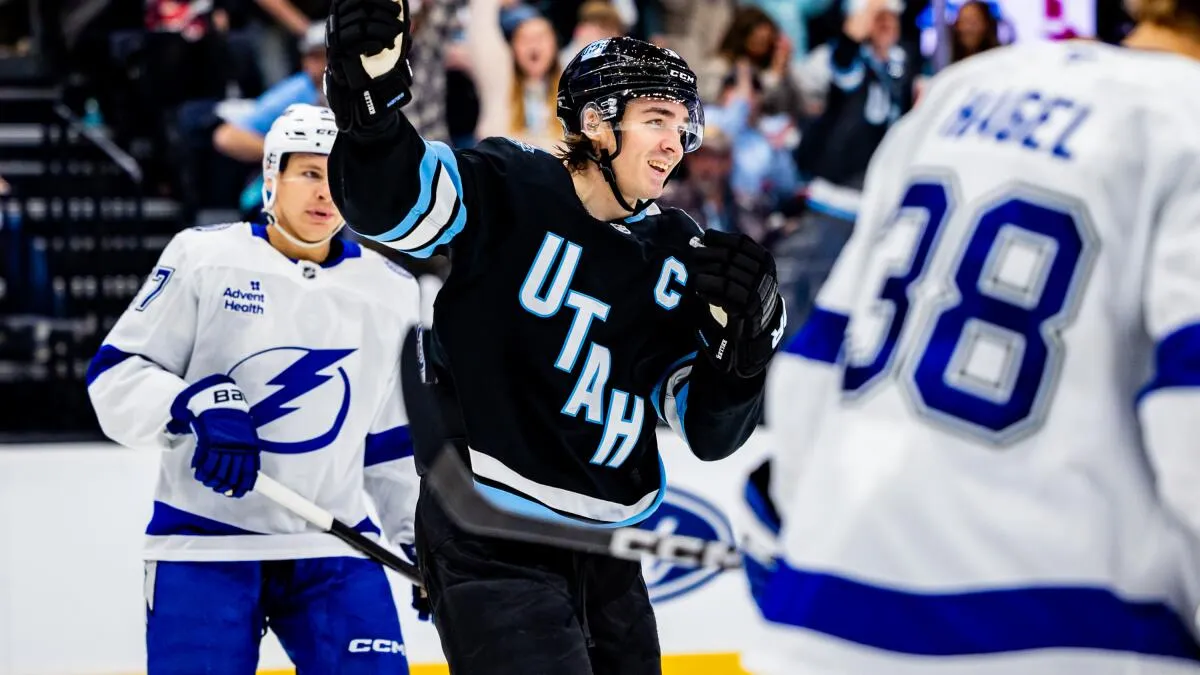
The sudden loss and Keller’s immediate decision
The Mammoth organization received the devastating news Thursday night that Bryan Keller had died unexpectedly in his sleep, leaving Clayton, his mother Kelley, and brother Jake to grapple with an unimaginable loss during what should have been a celebratory Thanksgiving holiday. Rather than automatically taking a leave of absence, Keller made the remarkable choice to remain with his team and play in Friday’s critical Central Division matchup.
Coach Tourigny addressed the media with visible emotion, explaining the situation while respecting the family’s privacy. “Clayton wants to play, wants to be with the team,” Tourigny stated, his voice carrying the weight of the moment. The coach emphasized that while the decision was ultimately Keller’s, the entire organization stood firmly behind him, whatever choice he made. This delicate balance between personal grief and professional duty represents one of the most challenging situations any athlete can face.
The timing proved particularly cruel, as the Mammoth were in Dallas preparing for a game that could significantly impact their playoff positioning. Instead of focusing solely on line combinations and defensive schemes, the team found itself rallying around its heartbroken captain, transforming their hotel into a support center where grieving and game preparation strangely coexisted.
A leader defined by loyalty and perseverance
Keller’s decision to play reflects the same character traits that earned him the captaincy before last season’s franchise relocation from Arizona to Utah. Named the seventh overall pick in the 2016 NHL Draft, Keller has evolved from a promising rookie into one of the league’s most consistent offensive threats, posting career highs last season with 60 assists and 90 points while establishing himself as the face of the franchise.
His on-ice performance this season has remained stellar despite the organization’s transition challenges, with 21 points (eight goals, 13 assists) through 24 games entering Friday’s contest. These statistics, however, pale in comparison to the intangible leadership he provides daily. Teammates consistently describe Keller as the first to arrive at practice and the last to leave, a player who leads not through loud speeches but through quiet example and unwavering commitment.
The captain’s “C” on his jersey represents more than seniority or scoring ability—it symbolizes responsibility to the collective. In choosing to play through his grief, Keller demonstrates a profound understanding that leadership isn’t convenient or scheduled. His presence on the ice, even at less than full emotional capacity, provides a stabilizing force for a young team navigating its own identity.
Organizational support and the meaning of family
Coach Tourigny”s comments following the announcement revealed the depth of the Mammoth’s organizational culture. “There’s nothing really you can say or do in that moment but be there,” he reflected. “Big thing for us is to be there and support him. Loyalty is when people need you to be there, it’s not when you pick and choose.”
This philosophy extends beyond platitudes. The Mammoth have reportedly made grief counselors available to players and staff, adjusted travel schedules to accommodate Keller’s family needs, and created a private channel for teammates to share memories and messages without intruding on the family’s privacy. The coaching staff has also adjusted line combinations to ensure Keller can take moments away from the bench when needed, allowing him to process his emotions without abandoning his responsibilities entirely.
The team’s response exemplifies modern professional sports’ evolving understanding of mental health and personal tragedy. Where previous generations might have expected athletes to “tough it out” silently, today’s organizations recognize that true support requires active, compassionate intervention. The Mammoth’s handling of this crisis could establish a new standard for how teams support players during profound personal loss.
The broader context: Hockey’s fraternity rallies
News of Keller’s loss spread rapidly across NHL social media channels, with players from rival teams posting messages of support. The hockey community, known for its tight-knit nature despite on-ice animosity, has demonstrated its characteristic solidarity. Former teammates, opponents, and even players from the Utah Grizzlies, the Mammoth’s minor league affiliate, have reached out privately and publicly.
This fraternity becomes especially important during moments of tragedy. Many NHL players have experienced similar losses while balancing demanding schedules and travel requirements. The shared understanding that professional athletes cannot simply pause their lives creates a unique bond among those who have played through pain—both physical and emotional.
The Mammoth’s opponent Friday night, the Dallas Stars, reportedly offered their condolences and private support through coaching staff and player representatives. This gesture reflects hockey’s unwritten code: compete ferociously during play, but support each other as human beings when the final horn sounds. The pre-game moment of silence planned for Bryan Keller will mark a rare pause in the relentless NHL schedule, acknowledging that some things transcend standings and statistics.
Looking forward: Navigating grief during the season
The Mammoth’s schedule offers little time for extended mourning. Following Friday’s game in Dallas, Utah faces a back-to-back scenario against Central Division rivals, with travel and preparation leaving minimal space for reflection. How the organization manages Keller’s playing time and emotional well-being will require delicate navigation in the coming weeks.
Team management has indicated they’ll follow Keller’s lead regarding his availability. “Clayton will play tonight, but all the organization is with him with all our heart,” Tourigny emphasized, leaving the door open for future absences if needed. This player-first approach prioritizes long-term mental health over short-term lineup stability.
The situation raises broader questions about grief management in professional sports. While Keller’s choice to play is deeply personal and admirable, mental health experts note that processing loss requires time and space that the NHL’s 82-game schedule rarely accommodates. The Mammoth’s challenge lies in supporting their captain’s decision while ensuring he doesn’t suppress necessary emotional work.
Keller’s brother Jake, who works in the team’s hockey operations department, remains with the organization, providing a crucial family connection during this difficult period. The ability to grieve alongside a sibling who understands the unique pressures of NHL life offers a comfort that cannot be replicated.
The enduring power of sports as sanctuary
For many athletes, the playing field becomes a sanctuary from life’s chaos—a place where patterns, routines, and muscle memory provide structure when everything else feels overwhelming. Clayton Keller’s choice to play Friday night may reflect this phenomenon, using the predictable rhythms of a hockey game to anchor himself during emotional turbulence.
The decision also honors his father’s legacy. Bryan Keller supported his son’s hockey journey from youth leagues through professional stardom, attending games whenever possible and providing the steady parental presence that allows young athletes to pursue their dreams. By playing, Clayton ensures that his father’s impact on his career receives the ultimate tribute: continuing the work they built together.
This perspective transforms Friday’s game from a simple regular-season matchup into something far more significant. Every shift Keller takes, every pass he completes, becomes a quiet elegy for the man who helped make his NHL fairy tale possible. Teammates understand they’ll be playing for something larger than two points in the standings—they’ll be supporting their captain as he writes the first chapter of his career without his father watching from the stands.
The Utah Mammoth organization has requested privacy for the Keller family while simultaneously opening their arms to a grieving son. It’s a delicate balance, but one that reflects the best aspects of professional sports: recognizing that behind every jersey number is a human being navigating life’s triumphs and tragedies.
As fans watch Keller skate onto the American Airlines Center ice Friday night, they should understand they’re witnessing more than a hockey game. They’re seeing a young man choose presence over absence, work over withdrawal, and team loyalty over personal escape. Whether he scores a goal or records an assist becomes secondary to the simple act of showing up when it would be easier to disappear.
The Mammoth’s season continues, the NHL schedule marches forward, and Clayton Keller begins his journey through grief in the most public of workplaces. His decision doesn’t diminish his loss or establish expectations for others facing similar tragedies—it simply represents his personal path through an impossible moment. The organization’s response, characterized by empathy and flexibility, ensures he won’t walk that path alone.
Clayton Keller to play NHL game after father’s death serves as a powerful reminder that sports, at their best, provide community when we most need it. The scoreboard will show a winner and loser, but the true outcome will be measured in loyalty, love, and the unbreakable bonds that define a team as family.
What it means for the championship race: While the Mammoth currently sit fourth in the Central Division, their handling of this crisis could strengthen team chemistry in ways that directly impact playoff performance. Teams that unite through adversity often develop the resilience required for postseason success. Keller’s leadership, already unquestioned, becomes even more galvanizing as teammates rally around his strength and their shared humanity.
Frequently Asked Questions

Par Mike Jonderson
Mike Jonderson is a passionate hockey analyst and expert in advanced NHL statistics. A former college player and mathematics graduate, he combines his understanding of the game with technical expertise to develop innovative predictive models and contribute to the evolution of modern hockey analytics.